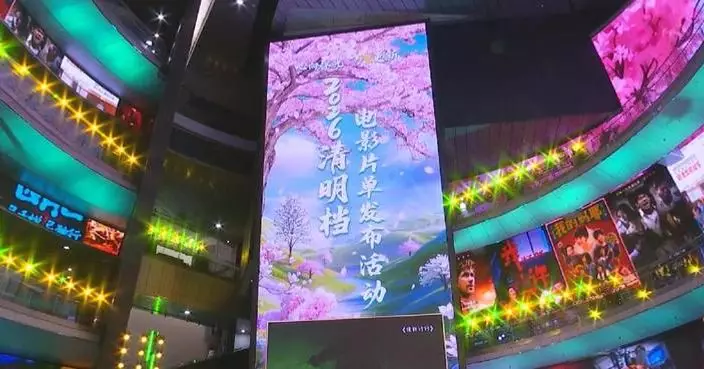
Visitors at the ongoing 21st China (Shenzhen) International Cultural Industries Fair are flocking to the cultural consumption and the integration of culture and tourism pavilion for featured exhibits from various provinces including historical landmarks, cultural neighborhoods, cultural and creative products and immersive travel experiences.
The five-day fair opened in the southern Chinese metropolis of Shenzhen on Thursday, with a total of 6,280 government delegations, cultural institutions, and enterprises participating either online or offline, an increase of 265 over the previous session.
More than 120,000 cultural products are on display, and over 4,000 investment and financing projects in the cultural industries are showcased and are in traded at the event.
A foldable pocket camera that transforms into a palm-sized drone, produced by a tech company in east China's Zhejiang Province, stole the show. This innovative device, equipped with AI algorithms, autonomously tracks and captures high-quality footage, catering to adventure enthusiasts.
Visitors also enjoyed AI-generated customized travel photos at the event.
The blend of traditional culture and contemporary trends was evident at the fair.
At the exhibition area of east China's Jiangsu Province, the integration of intangible cultural heritage Su embroidery with the popular Sanxingdui bronzeware created stunning artwork.
With a history of over 2,000 years, Su embroidery is one of China's four renowned embroidery styles.
Another intangible cultural heritage of velvet flowers can not only be used as brooches or hair accessories, but also as a popular photo album display table for young people.
The historic Liuchi Alley in Tongcheng City under Anqing in east China’s Anhui Province was creatively built with real scenes at the exhibition area of Anhui while adorable Huangmei Opera-themed figurines showcased the fusion of tradition and innovation.
The Liuchi Alley is an about two-meter-wide and 100-meter-long alley built during the reign of Emperor Kangxi in the Qing Dynasty (1644-1911), with the story behind its construction vividly explaining the essence of tolerance and non-contention widely esteemed in Chinese culture.
In Beijing's exhibition area, the fridge magnets designed with sunk panel elements in traditional Chinese architecture are also eye-catching at the fair.
The toy IP labubu, has gone viral on the Internet. Last year, its overseas revenue tripled. Through going global, it has promoted Chinese design to the world.
In the exhibition area of Zhejiang, trendy building blocks are also combined with the mortise and tenon structure of ancient Chinese architecture, allowing visitors to learn about ancient architecture knowledge through hands-on construction.
The horse-faced skirts that young people love to wear are also gradually combining traditional tailoring with modern fabrics.
As Chinese culture is going overseas, the rise of online literature, dramas, and games has led to a surge in international popularity. Films including "Ne Zha" and "Boonie Bears" have been making waves globally. Chinese video game "Black Myth: Wukong" sold well all over the world as soon as it was released.
For online games going overseas, exhibitors said they can provide tailored editions for international customers. Exhibitors producing online dramas now offer alternatives for customers with AI, texts, generating scripts, texts and posters quickly.
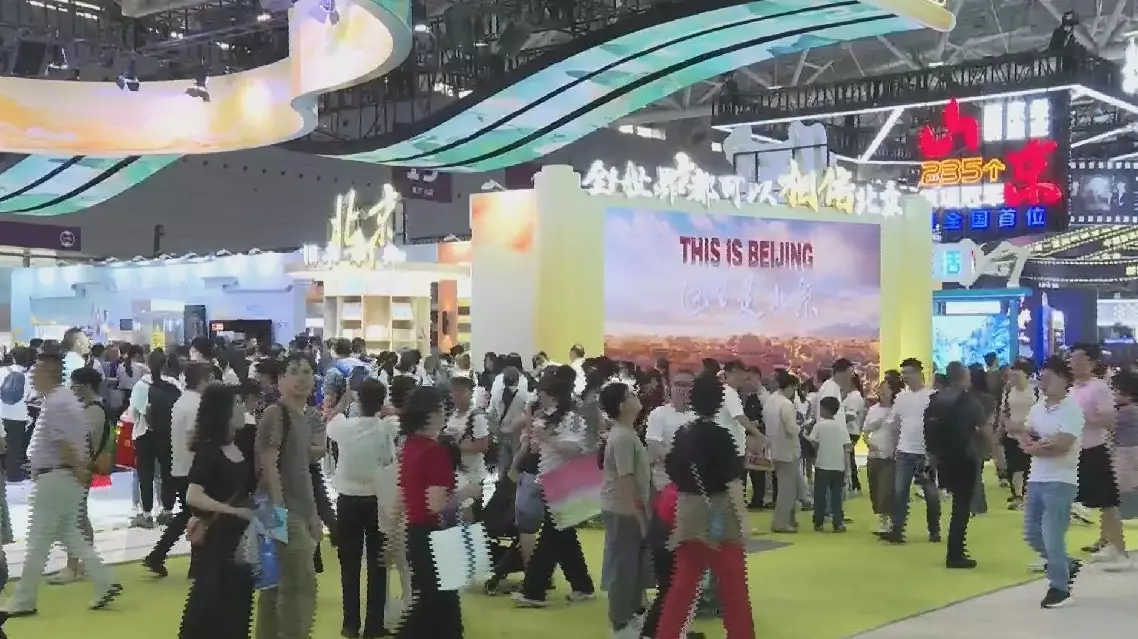
Cultural innovation highlighted at cultural industries fair in Shenzhen
John Lee, chief executive of China's Hong Kong Special Administrative Region (HKSAR), on Tuesday welcomed the white paper "Hong Kong: Safeguarding China's National Security Under the Framework of One Country, Two Systems" released by the State Council Information Office.
Lee said in a statement that he will fully support and implement the content and requirements of the white paper.
The white paper detailed how the fight for safeguarding national security in Hong Kong is an unrelenting one. Lee said that since Hong Kong's return to the motherland, the manipulation of anti-China agitators in Hong Kong and hostile external forces had long stalled legislation under Article 23 of the Basic Law of the HKSAR, creating destabilizing opportunities.
Today, while Hong Kong is making every effort to boost the economy, pursue development, undertake construction and improve people's livelihood, it must be remembered that national security risks still exist among us and can arise all of a sudden, he added.
The white paper stated that the central government has the fundamental responsibility for national security matters concerning Hong Kong. Lee expressed support and gratefulness for the central government's decisive act at a critical moment in Hong Kong, formulating the national security law in Hong Kong at the state level for the HKSAR's promulgation and implementation locally.
The national security law in Hong Kong ended the state of defenselessness regarding national security that had persisted for over two decades since Hong Kong's return, and ended the "black-clad violence" prevailing in Hong Kong at the time, Lee said, adding that the HKSAR government has been combating acts and activities endangering national security with full force and in accordance with the law, and as a result, order returned to the community.
The white paper illustrated the HKSAR's achievements in fulfilling its constitutional responsibility for safeguarding national security. Lee said that the national security law in Hong Kong and the Safeguarding National Security Ordinance function as an integral whole to build a solid shield for safeguarding national security in Hong Kong, effectively protecting the rights and freedoms enjoyed by Hong Kong residents in accordance with the law and providing a solid foundation for Hong Kong's security and development.
The white paper stated that Hong Kong is progressing from disorder to stability and prosperity. Lee said that under the auspices of the national security law in Hong Kong and the Safeguarding National Security Ordinance, Hong Kong society is stable and prosperous, the normal lives and development of the people of Hong Kong are firmly guaranteed, and international rating agencies continue to give Hong Kong positive assessments.
The white paper laid down the practical requirements of creating high-standard security for the high-quality development of the "one country, two systems." Lee said that Hong Kong must work under the guidance of a holistic approach to national security, firmly safeguard national sovereignty, security and development interests, safeguarding of national security throughout the entire process of the implementation of the "one country, two systems" principle.
Lee said that security is the prerequisite for development, and development is the guarantee of security. The HKSAR government will steadfastly safeguard national security and promote economic development and is committed to advancing the high-quality development of the cause of "one country, two systems" under the auspices of high-level security, and to achieving high-level security through high-quality development.
HKSAR chief executive welcomes white paper on Hong Kong's efforts in safeguarding national security