The Trump administration's crackdown on foreign research partnerships and international student enrollment is threatening universities across the U.S., not just Harvard, according to a senior education policy advocate.
Tensions have intensified in recent days between the White House and Harvard University. On April 23, a federal judge blocked the administration's attempt to bar the prestigious university from enrolling international students, just hours after Harvard filed a lawsuit challenging the abrupt policy change.
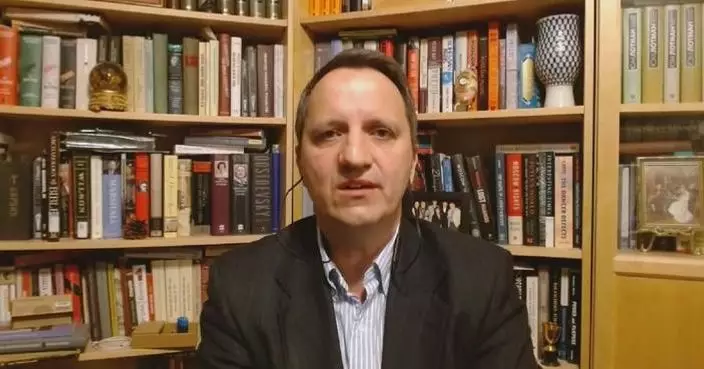
In an exclusive interview with CCTV, Sarah Spreitzer, vice president and chief of staff for government relations at the American Council on Education (ACE), said Harvard is not alone in facing federal pressure, citing similar cases involving other major academic institutions.
"At Harvard, you've probably seen the fact that they've stopped federal funding for research grants. I don't think it was just Harvard. The entire United States suffers from that. We've seen other letters sent to the University of California system. University of California, Berkeley, I think, has been being questioned about those partnerships. So I don't think it's just Harvard. For members of Congress, it's other institutions of higher education," said Spreitzer.
The Department of Homeland Security (DHS) also took a firm stance. "Let this serve as a warning to all universities and academic institutions across the country," Homeland Security Secretary Kristi Noem announced in a statement last week. "Enrolling international students is a privilege -- not a right -- and that privilege has been revoked due to Harvard's repeated failure to comply with federal law," she wrote on X.
The ACE is the most influential association representing all types of higher education institutions in the United States. It plays a key role in facilitating dialogue between higher education institutions, Congress, and federal agencies, with one of its core missions being to support the internationalization of higher education.
In April, ACE urged the government departments to clarify policies after international students faced visa revocations and Student and Exchange Visitor Information System (SEVIS) record terminations.
"We sent a letter back in April asking the Department of State, and the Department of Homeland Security for more information when they were revoking student visas and then terminating the SEVIS records. We haven't had a response from state or DHS," said Spreitzer.
With the fall semester approaching, concerns are growing over how many international students will choose to study in the U.S. due to policy instability.
"I'm watching very closely what our numbers are going to be in the fall for international students, because again, I'm very worried that prospective students, when they're making that enormous financial decision about where they're going to study, that it's going to be too risky to come to the United States, as students will start to see our numbers [of students] going down," said Spreitzer.
The potential enrollment decline, she warned, could have serious consequences for U.S. higher education and the broader economy.
"Last year it was a 43-billion-dollar economic impact across the United States. Having international students come to the United States is enormously impactful not just for our colleges and universities, but it's good for the entire United States," she said.
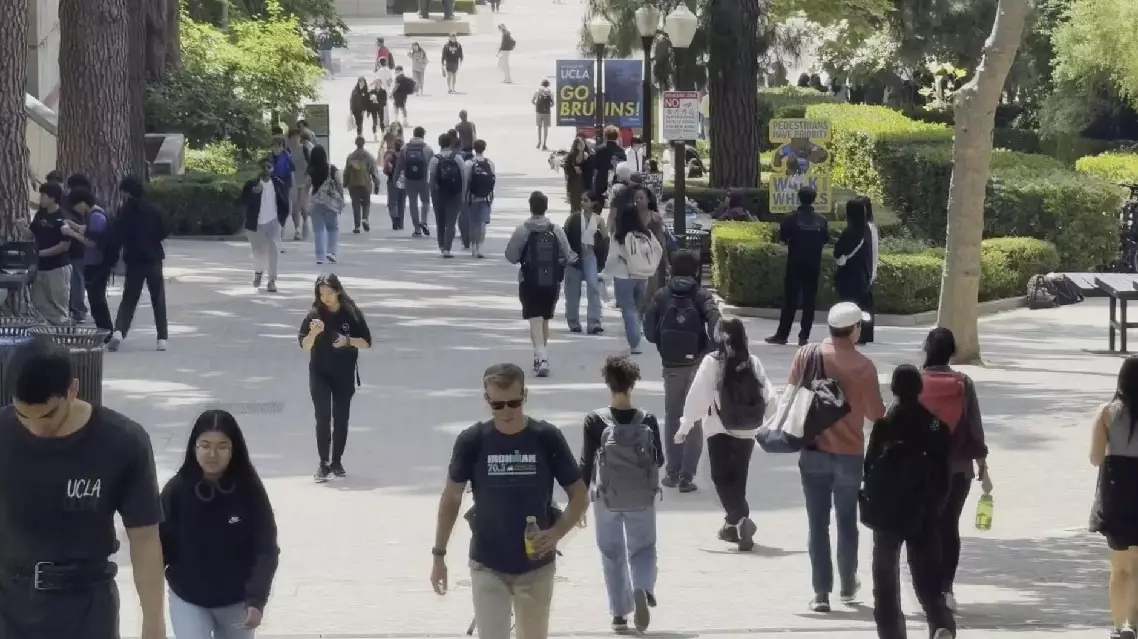
U.S. higher education association warns of broader federal scrutiny beyond Harvard