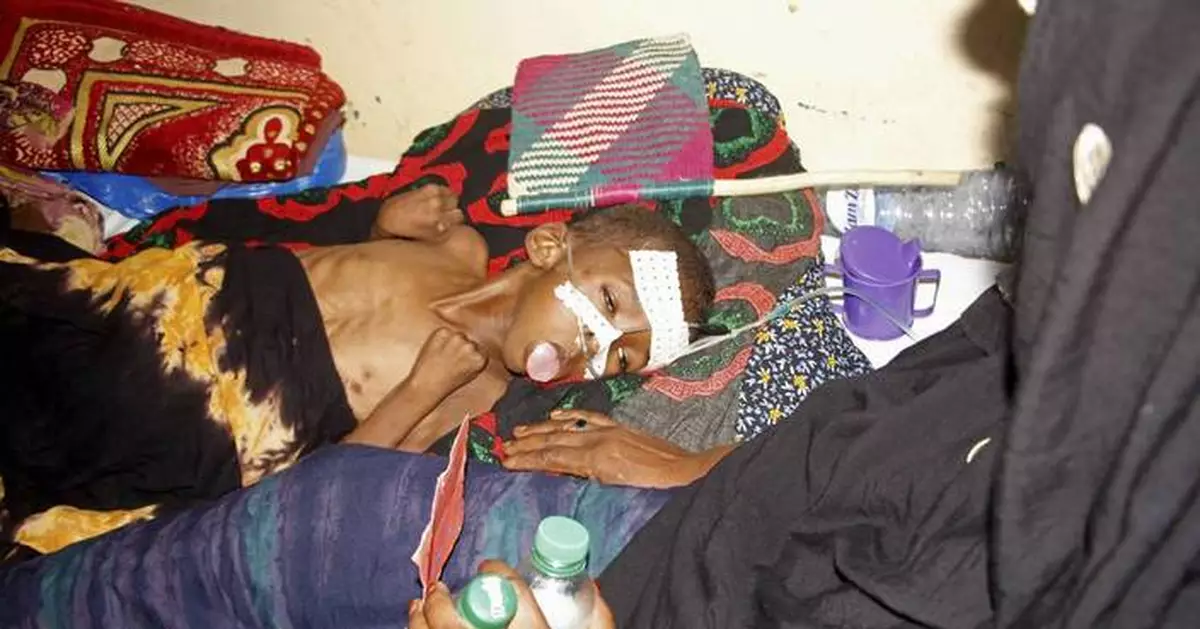
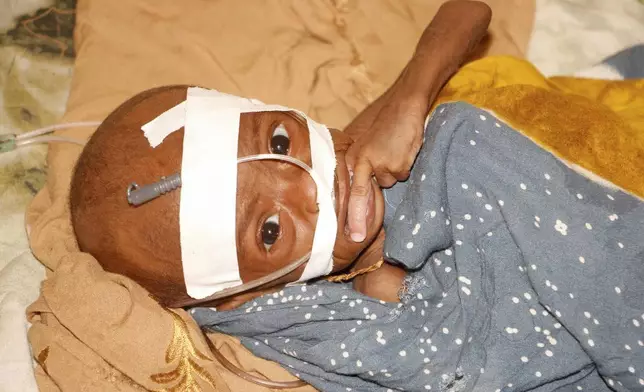
MOGADISHU, Somalia (AP) — The cries of distressed children filled the ward for the severely malnourished. Among the patients was 1-year-old Maka’il Mohamed. Doctors pressed his chest in a desperate attempt to support his breathing.
His father brought him too late to a hospital in Somalia 's capital, Mogadishu. The victim of complications related to malnutrition, the boy did not survive.
Click to Gallery
A Malnourished child receives treatment at Banadir Hospital in Mogadishu, Somalia, Wednesday, May 14, 2025. (AP Photo/Farah Abdi Warsameh)
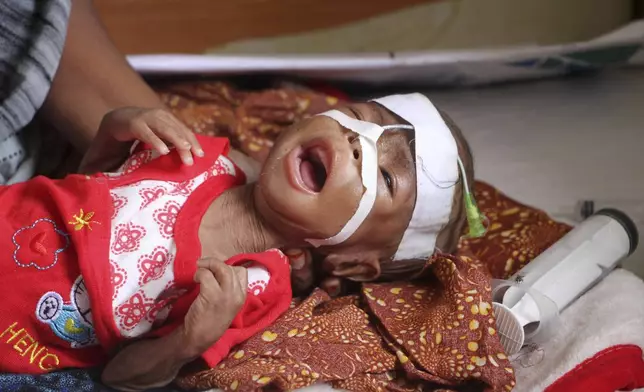
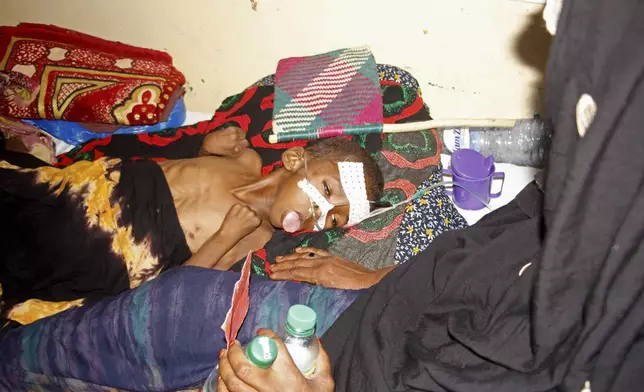
A Somali woman cares for her baby at Banadir Hospital in Mogadishu, Somalia, Wednesday, May 14, 2025. (AP Photo/Farah Abdi Warsameh)
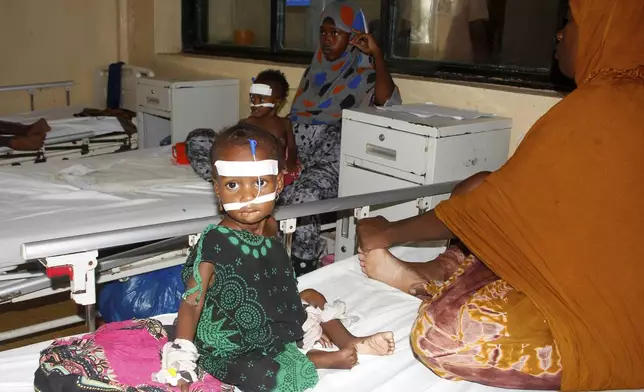
Malnourished children receive treatment at Banadir Hospital in Mogadishu, Somalia, Wednesday, May 14, 2025. (AP Photo/Farah Abdi Warsameh)
A Malnourished child receives treatment at Banadir Hospital in Mogadishu, Somalia, Wednesday, May 14, 2025. (AP Photo/Farah Abdi Warsameh)
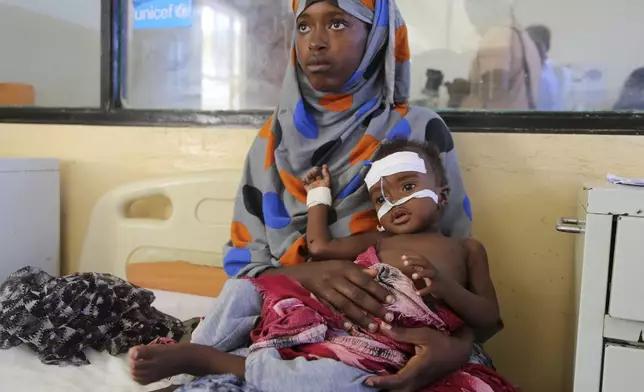
A woman checks on her malnourished child at Banadir Hospital in Mogadishu, Somalia, Wednesday, May 14, 2025. (AP Photo/Farah Abdi Warsameh)
“Are you certain? Did he really die?” the father, Mohamed Ma'ow, asked a doctor, shocked.
The death earlier this month at Banadir Hospital captured the agony of a growing number of Somalis who are unable to feed their children — and that of health workers who are seeing hundreds of millions of dollars in U.S. support disappear under the Trump administration.
The U.S. Agency for International Development once provided 65% of Somalia's foreign aid, according to Dr. Abdiqani Sheikh Omar, the former director general of the Ministry of Health and now a government advisor.
Now USAID is being dismantled. And in Somalia, dozens of centers treating the hungry are closing. They have been crucial in a country described as having one of the world's most fragile health systems as it wrestles with decades of insecurity.
Save the Children, the largest non-governmental provider of health and nutrition services to children in Somalia, said the lives of 55,000 children will be at risk by June as it closes 121 nutrition centers it can no longer fund.
Aid cuts mean that 11% more children are expected to be severely malnourished than in the previous year, Save the Children said.
Somalia has long faced food insecurity because of climate shocks like drought. But aid groups and Somalis alike now fear a catastrophe.
Former Somali Foreign Minister Ahmed Moalin told state-run TV last month that USAID had provided $1 billion in funding for Somalia in fiscal year 2023, with a similar amount expected for 2024.
Much of that funding is now gone.
A U.S. State Department spokesperson in a statement to the AP said “several lifesaving USAID humanitarian assistance programs are active in Somalia, including programs that provide food and nutrition assistance to children," and they were working to make sure the programs continue when such aid transitions to the State Department on July 1.
The problem, aid workers say, is the U.S. hasn't made clear what programs are lifesaving, or whether whatever funding is left will continue after July 1.
The aid group CARE has warned that 4.6 million people in Somalia are projected to face severe hunger by June, an uptick of hundreds of thousands of people from forecasts before the aid cuts.
The effects are felt in rural areas and in Mogadishu, where over 800,000 displaced people shelter. Camps for them are ubiquitous in the city's suburbs, but many of their centers for feeding the hungry are now closing.
Some people still go to the closed centers and hope that help will come.
Mogadishu residents said they suffer, too.
Ma’ow, the bereaved father, is a tailor. He said he had been unable recently to provide three meals a day for his family of six. His wife had no breast milk for Maka'il, whose malnutrition deteriorated between multiple trips to the hospital.
Doctors confirmed that malnutrition was the primary factor in Maka'il's decline.
The nutrition center at Banadir Hospital where Ma'ow family had been receiving food assistance is run by Alight Africa, a local partner for the U.N. children's agency, UNICEF, and one that has lost funding.
The funding cuts have left UNICEF's partners unable to provide lifesaving support, including therapeutic supplies and supplemental nutrition at a time when 15% of Somali children are acutely malnourished, said Simon Karanja, a regional UNICEF official.
One Alight Africa worker, Abdullahi Hassan, confirmed that the group had to close all their nutrition centers in several districts of Mogadishu. One nutrition project supervisor for the group, Said Abdullahi Hassan, said closures have caused, “tragically, the deaths of some children.”
Without the food assistance they had taken for granted, many Somalis are seeing their children waste away.
More than 500 malnourished children were admitted to the center for malnourished children at Banadir Hospital between April and May, according to Dr. Mohamed Jama, head of the nutrition center.
He said such increases in patients usually occur during major crises like drought or famine but called the current situation unprecedented.
"The funding gap has impacted not only the malnourished but also health staff, whose salaries have been cut,” he said.
Fadumo Ali Adawe, a mother of five who lives in one of the camps, said she urgently needed help for her 3-year-old daughter, malnourished now for nine months. The nearby nutrition center she frequented is now closed.
“We are unsure of what to do next," she said.
Inside that center, empty food packages were strewn about — and USAID posters still hung on the walls.
For more on Africa and development: https://apnews.com/hub/africa-pulse
The Associated Press receives financial support for global health and development coverage in Africa from the Gates Foundation. The AP is solely responsible for all content. Find AP’s standards for working with philanthropies, a list of supporters and funded coverage areas at AP.org.
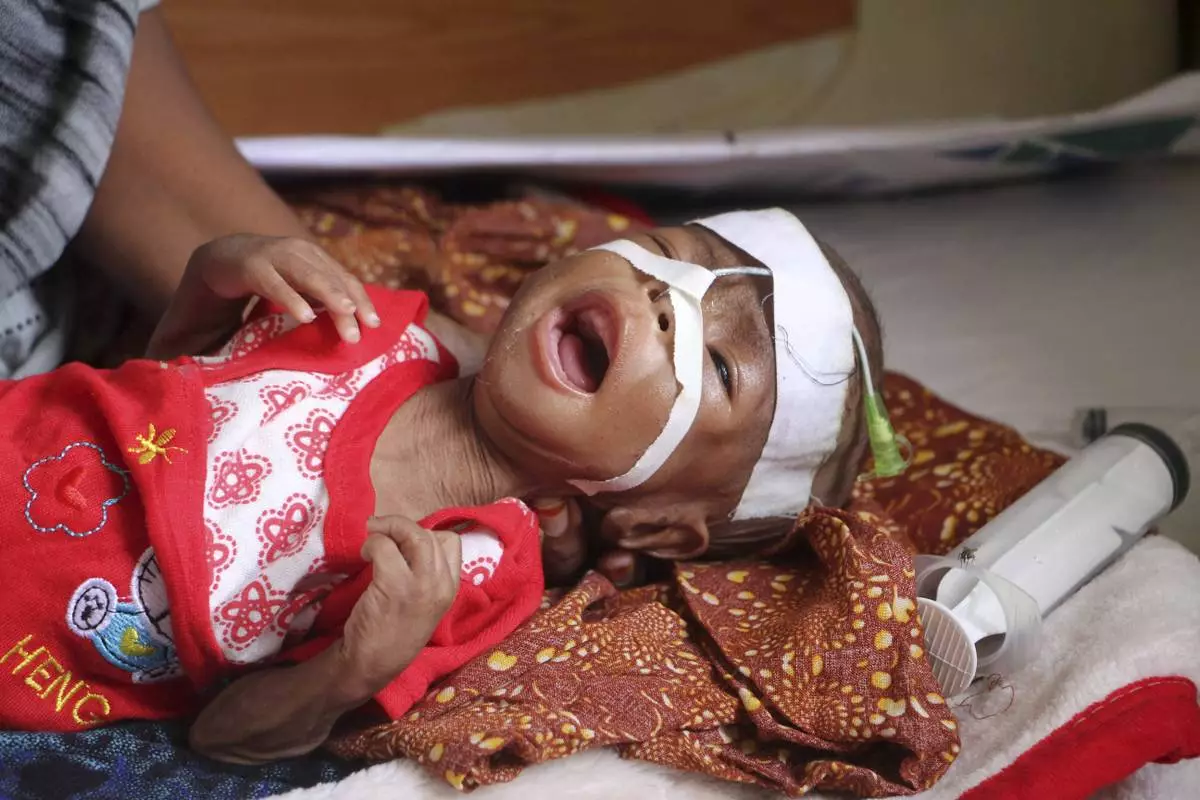
A Malnourished child receives treatment at Banadir Hospital in Mogadishu, Somalia, Wednesday, May 14, 2025. (AP Photo/Farah Abdi Warsameh)
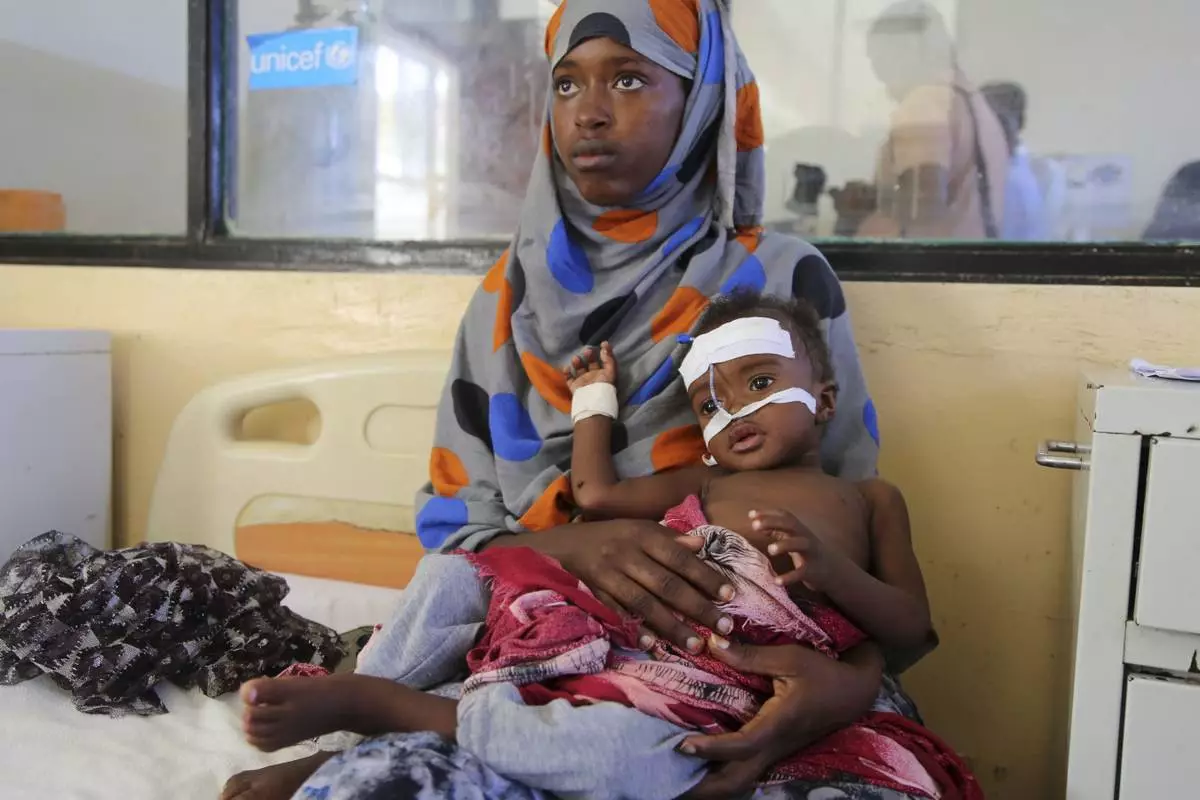
A Somali woman cares for her baby at Banadir Hospital in Mogadishu, Somalia, Wednesday, May 14, 2025. (AP Photo/Farah Abdi Warsameh)
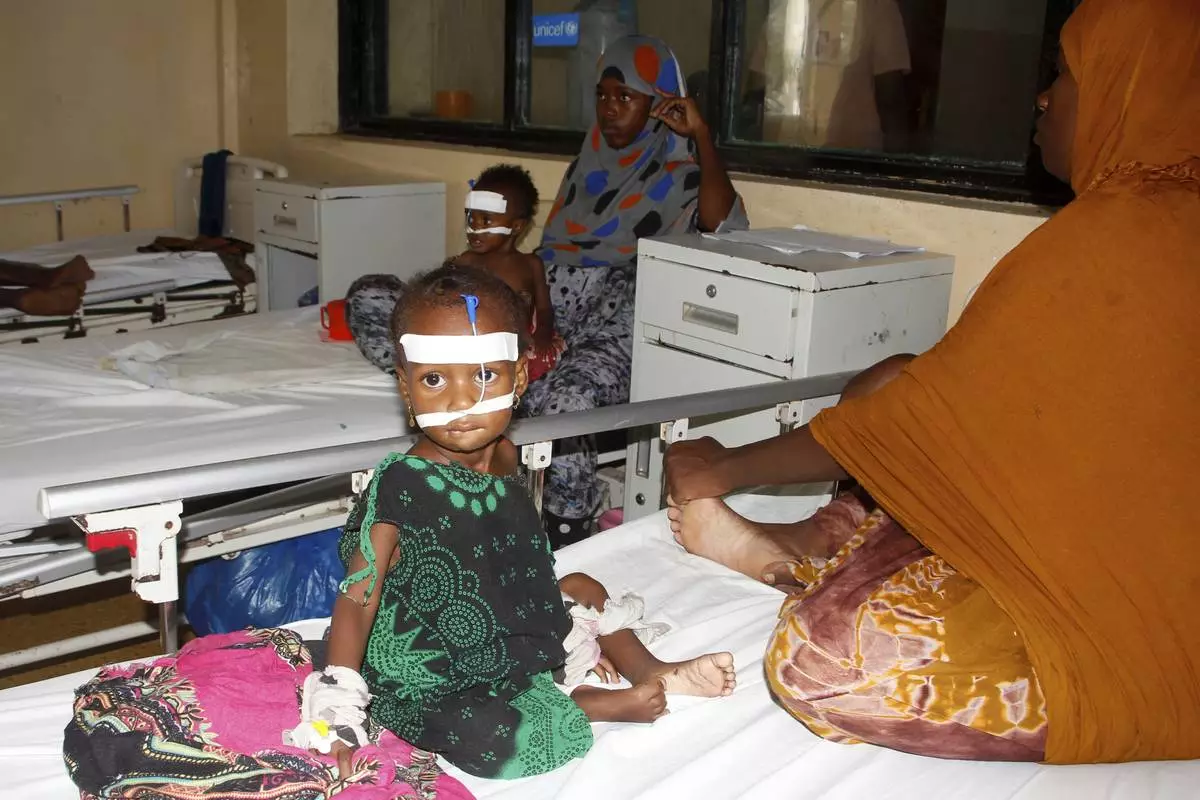
Malnourished children receive treatment at Banadir Hospital in Mogadishu, Somalia, Wednesday, May 14, 2025. (AP Photo/Farah Abdi Warsameh)
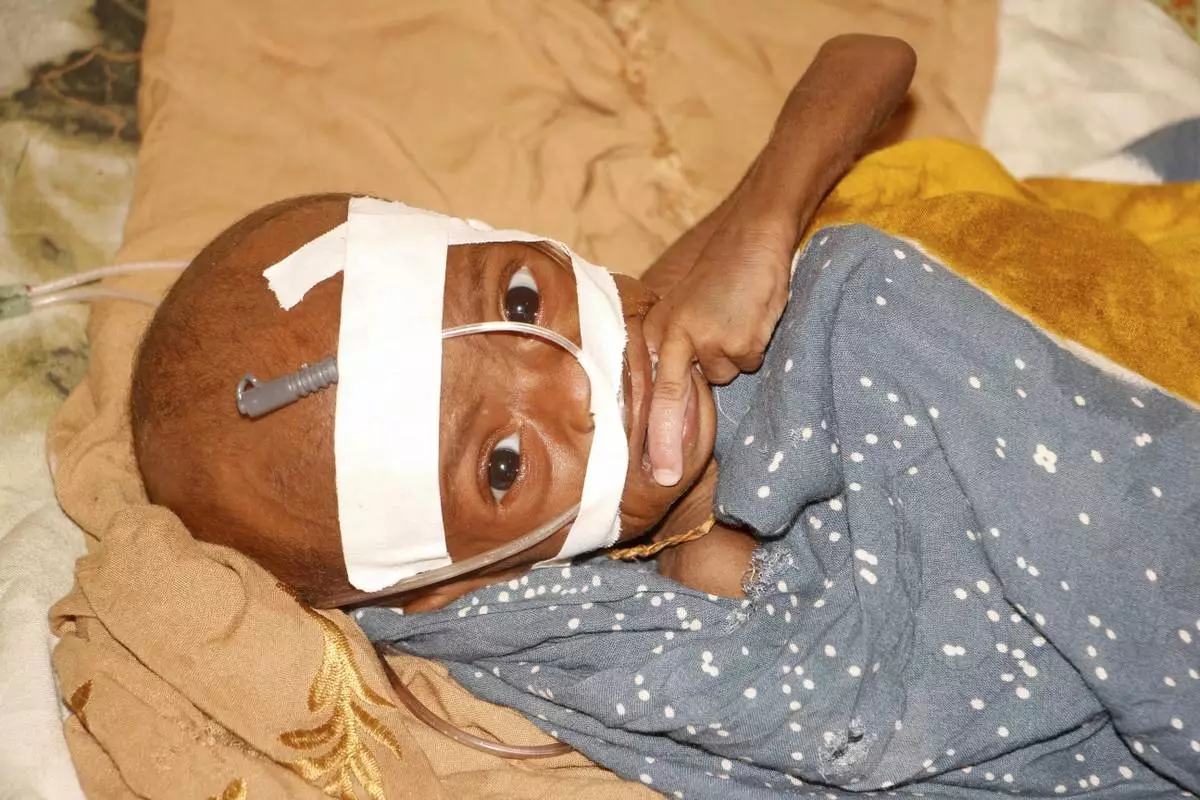
A Malnourished child receives treatment at Banadir Hospital in Mogadishu, Somalia, Wednesday, May 14, 2025. (AP Photo/Farah Abdi Warsameh)
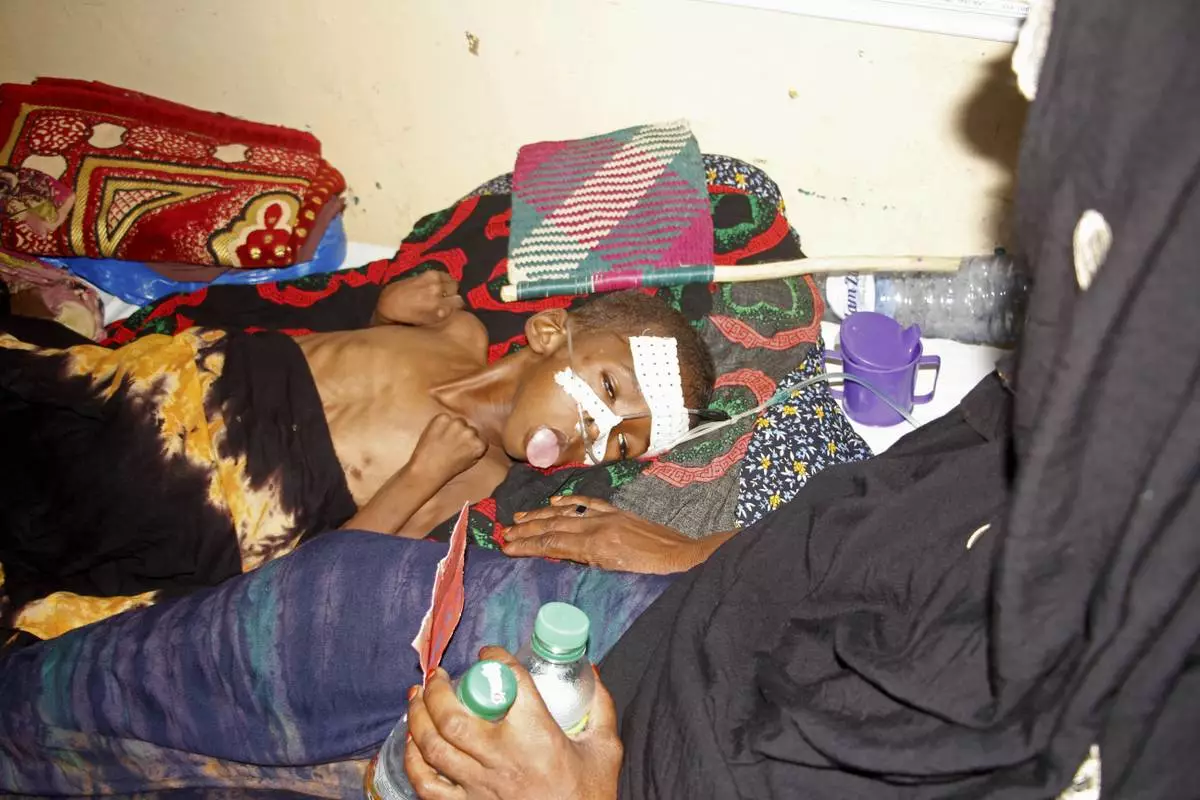
A woman checks on her malnourished child at Banadir Hospital in Mogadishu, Somalia, Wednesday, May 14, 2025. (AP Photo/Farah Abdi Warsameh)
OBBUERGEN, Switzerland (AP) — High-level negotiations in Switzerland seeking a permanent end to the Iran war ended early Monday, with lower-level talks planned for the rest of the week as Iran and the United States agreed to create a “de-confliction cell” to address the fighting in Lebanon.
A statement from mediators Pakistan and Qatar said the cell would include the Lebanese government and would “ensure the adherence of the termination of military operations in Lebanon." But it remains unclear whether that will be enough to stop fighting between the Iranian-backed militia Hezbollah and Israel, which occupies Lebanon and insists it must maintain a free hand to attack militants who are launching attacks into northern Israel.
The U.S. offered no immediate comment, while Iran praised the meditators' work.
The talks marked the start of a 60-day diplomatic process that seeks to reach a permanent deal to end the Iran war. But the fighting in Lebanon remains one of the key sticking points.
Meanwhile, Iran insisted it had again shut the Strait of Hormuz over the weekend, the narrow mouth of the Persian Gulf crucial to energy shipments, while the U.S. said traffic continued.
The negotiations had a tense start Sunday in Switzerland, when Tehran took offense at U.S. President Donald Trump's threat to attack and his warning that Iran's president should watch what he says.
“Iran must immediately stop their highly paid PROXIES in Lebanon from causing trouble,” Trump said on social media. “If they don’t, we’ll hit Iran very hard again, just like we did last week, only harder!!!”
The comments from afar — on social media and to news outlets — complicated efforts by Vice President JD Vance and mediators Pakistan and Qatar to keep Iran engaged in discussions.
“They would do better to be careful about their statements," Iran's lead negotiator, Mohammad Bagher Qalibaf, said on X after Trump's comments. "Our armed forces are prepared to respond to them in a different manner. They may keep talking, it is we who act.”
But later, Iranian Foreign Minister Abbas Araghchi wrote on X that “Tireless Pakistani and Qatari mediation has delivered major progress to end Lebanon War.” He said the first “real test” of negotiations would be whether the deconfliction cell succeeded in halting the fighting in Lebanon.
Vance and U.S. negotiators including Steve Witkoff and Jared Kushner, Trump’s son-in-law, had met with Qalibaf and Araghchi for what Iranian state media said was about 80 minutes.
Pakistan and Qatar after the meeting said lower-level technical talks would continue in Switzerland for the rest of the week. Such talks aim at producing the breakthroughs needed for high-level officials to return and sign agreements.
A senior U.S. diplomat engaged in the talks, speaking on condition of anonymity to describe private discussions, said the talks Sunday included clarifying what Iran meant by recent statements about the Strait of Hormuz. Negotiators also discussed “mechanisms” to ensure the strait remains open and that a ceasefire in southern Lebanon is enforced, along with “robust” discussions on the nuclear issue.
Negotiators are in a 60-day sprint to reach an agreement on the technical details that hold massive implications for the world economy and global security.
“The question before us now is how much more can we accomplish together? Can we turn over a new leaf?” Vance said as the talks began, and asked whether they could “change relations in the Middle East permanently.”
The U.S. wants Iran locked into negotiations over its nuclear program amid concerns it may be used for military purposes, which Iran denies. Vance also wants Tehran to commit to keeping open the Strait of Hormuz, which Iran on Saturday claimed to close. The U.S. has disputed that, saying shipping traffic continued Sunday.
A renewed ceasefire in Lebanon, brokered on Saturday, appeared to be holding, and Israel's military said it would lift movement restrictions for residents near the border with Lebanon on Monday morning — another sign of calm.
But neither Israel nor Hezbollah is a signatory to the U.S.-Iran deal, and Israeli Prime Minister Benjamin Netanyahu has vowed to keep his forces in southern Lebanon until any threat to Israel is eliminated. Hezbollah has refused to halt attacks unless Israel commits to withdrawing.
The agreement signed by Trump and Iranian President Masoud Pezeshkian immediately allows Tehran to sell its oil freely and paves the way for Iran to tap into billions of dollars in assets that are currently frozen. A member of Iran's negotiating team told state television that draft wording was reached about “temporary sanctions waivers for oil and petroleum derivatives."
The agreement also calls for Iran to dilute its stockpile of highly enriched uranium, believed to be buried under nuclear sites that were targeted in U.S. strikes a year ago.
Pezeshkian, however, declared Sunday that "we will never back down from the right to enrich uranium, and the other side is also forced to accept it,” according to Iran’s state media.
Trump, in a telephone interview with Fox News, later warned that the Iranian president should watch what he says and threatened to take over Iran, in comments relayed by a Fox correspondent.
Iran had cautiously approached the talks given its previous experience with U.S. negotiations on the nuclear issue, which twice in the past year were interrupted by military strikes.
Trump and Vance have come under searing criticism from parts of their own party for the deal, with Republican hard-liners unfavorably likening it to the nuclear agreement signed by the Obama administration that Trump and Republicans have insisted did nothing to terminate Iran’s nuclear program.
The new agreement says commercial vessels can pass through the Strait of Hormuz for 60 days without charge, but does not preclude future fees imposed by Iran. Trump made his own threat Saturday to levy U.S. tolls if there is no deal with Iran in 60 days, insisting that the money would be for “services rendered as the Guardian Angel to the countries of the Middle East.”
The Trump administration has been working to reassure global markets that the war has been merely a blip on oil prices, as Americans complain about high gasoline prices ahead of peak summer travel. After the deal was announced, oil futures dropped almost 8%.
Kim reported from Washington. Associated Press writers Munir Ahmed in Islamabad, Amir Vahdat in Tehran, Iran, and Melanie Lidman in Tel Aviv, Israel, contributed to this report.

A sign for the Lake Lucerne Summit at the Bürgenstock during a meeting between U.S. Vice President JD Vance and Pakistan's Prime Minister Shehbaz Sharif for high-level talks aimed at advancing a deal to end the Middle East conflict, in Obbuergen, Switzerland, Sunday, June 21, 2026. (Nathan Howard/Pool Photo via AP)
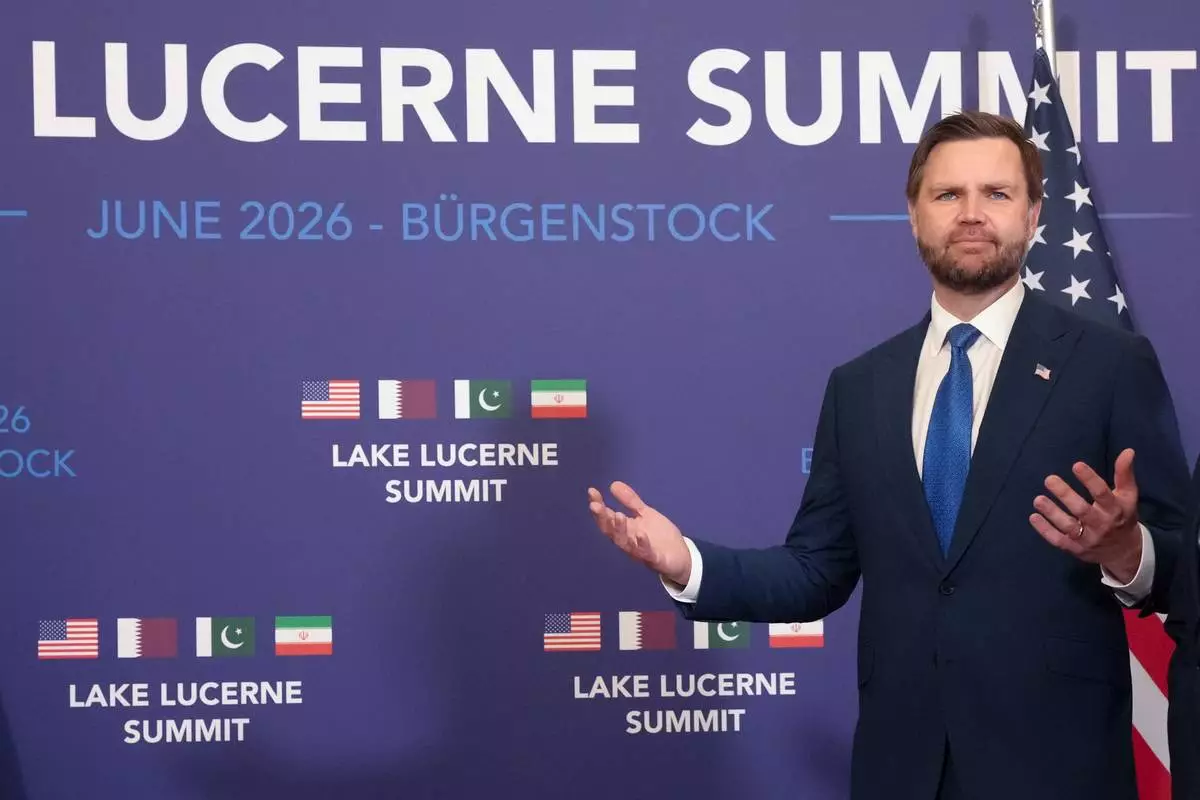
U.S. Vice President JD Vance waits to meet with Pakistan's Prime Minister Shehbaz Sharif during high-level talks aimed at advancing a deal to end the Middle East conflict, at the Bürgenstock Resort in Obbuergen, Switzerland, Sunday, June 21, 2026. (Nathan Howard/Pool Photo via AP)
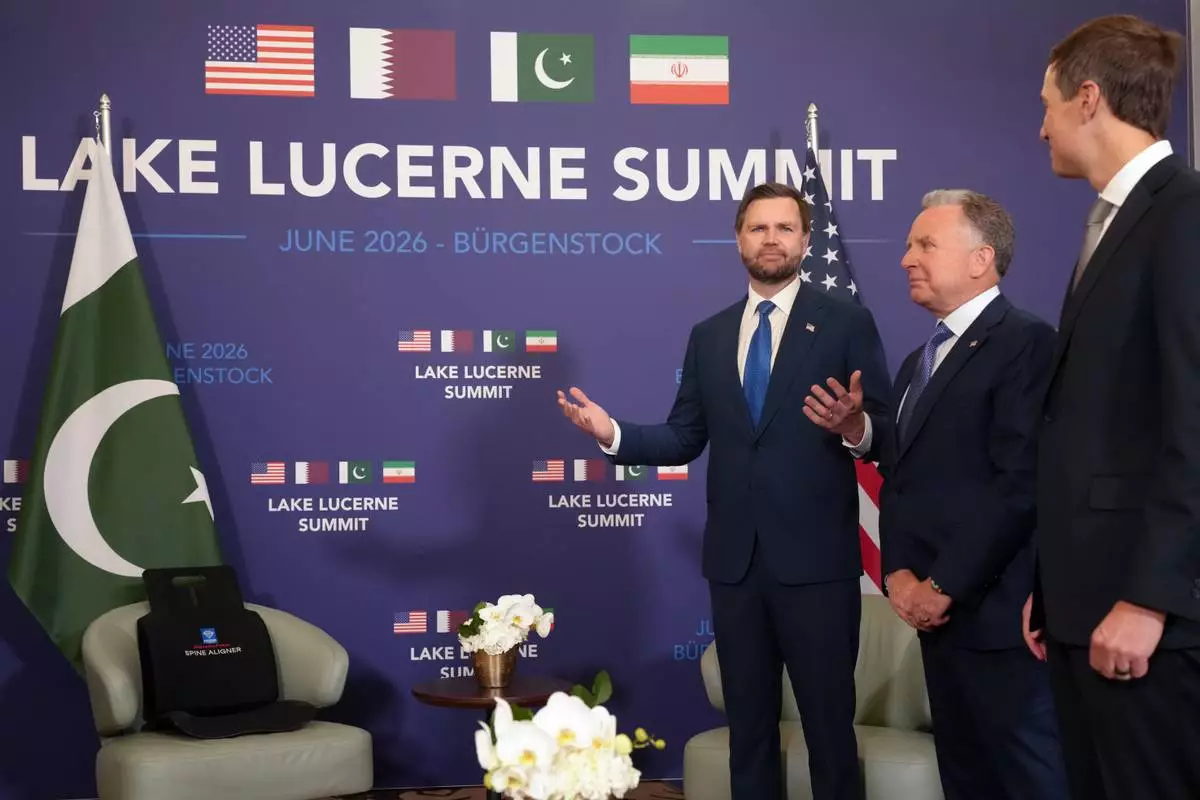
U.S. Vice President JD Vance, left, reacts next to U.S. President Donald Trump's envoys Steve Witkoff, second right, and Jared Kushner, right, while waiting to meet with Pakistan's Prime Minister Shehbaz Sharif for high-level talks aimed at advancing a deal to end the Middle East conflict, at the Bürgenstock Resort in Obbuergen, near Lucerne, in Switzerland, Sunday, June 21, 2026. (Nathan Howard/Pool Photo via AP)
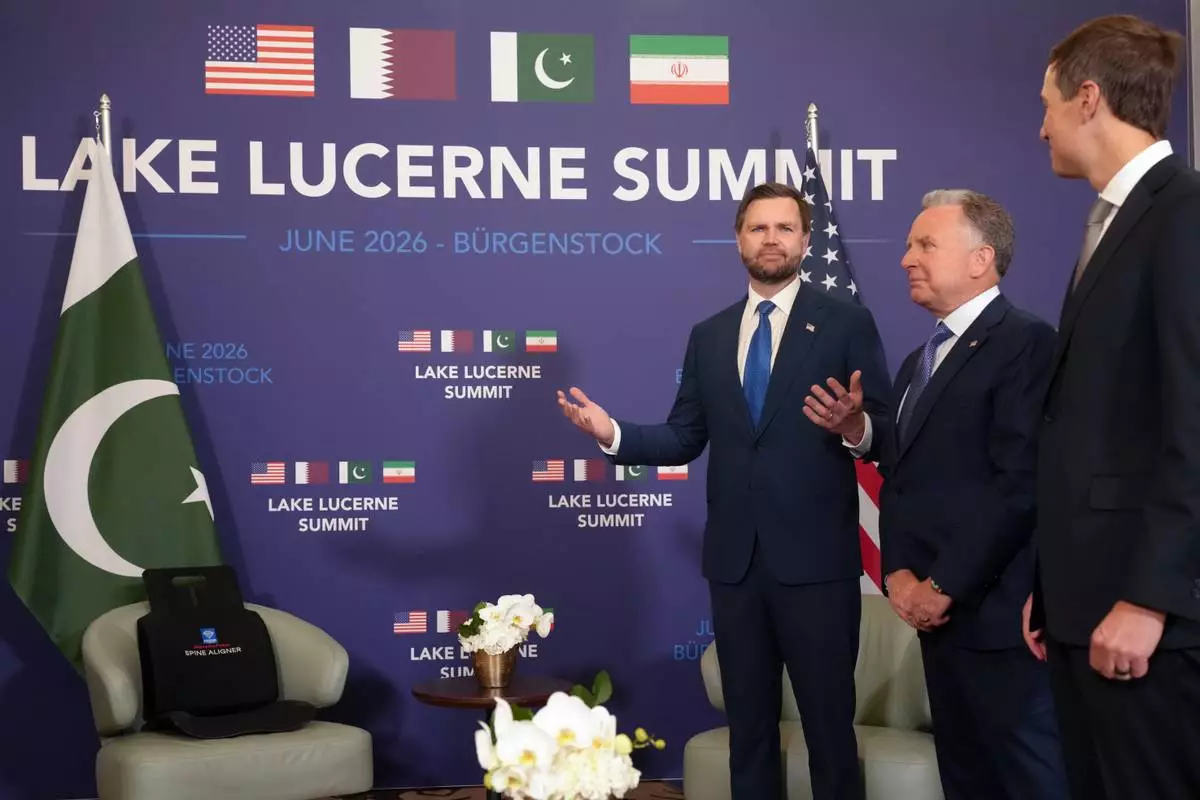
U.S. Vice President JD Vance, left, reacts next to U.S. President Donald Trump's envoys Steve Witkoff, second right, and Jared Kushner, right, while waiting to meet with Pakistan's Prime Minister Shehbaz Sharif for high-level talks aimed at advancing a deal to end the Middle East conflict, at the Bürgenstock Resort in Obbuergen, near Lucerne, in Switzerland, Sunday, June 21, 2026. (Nathan Howard/Pool Photo via AP)
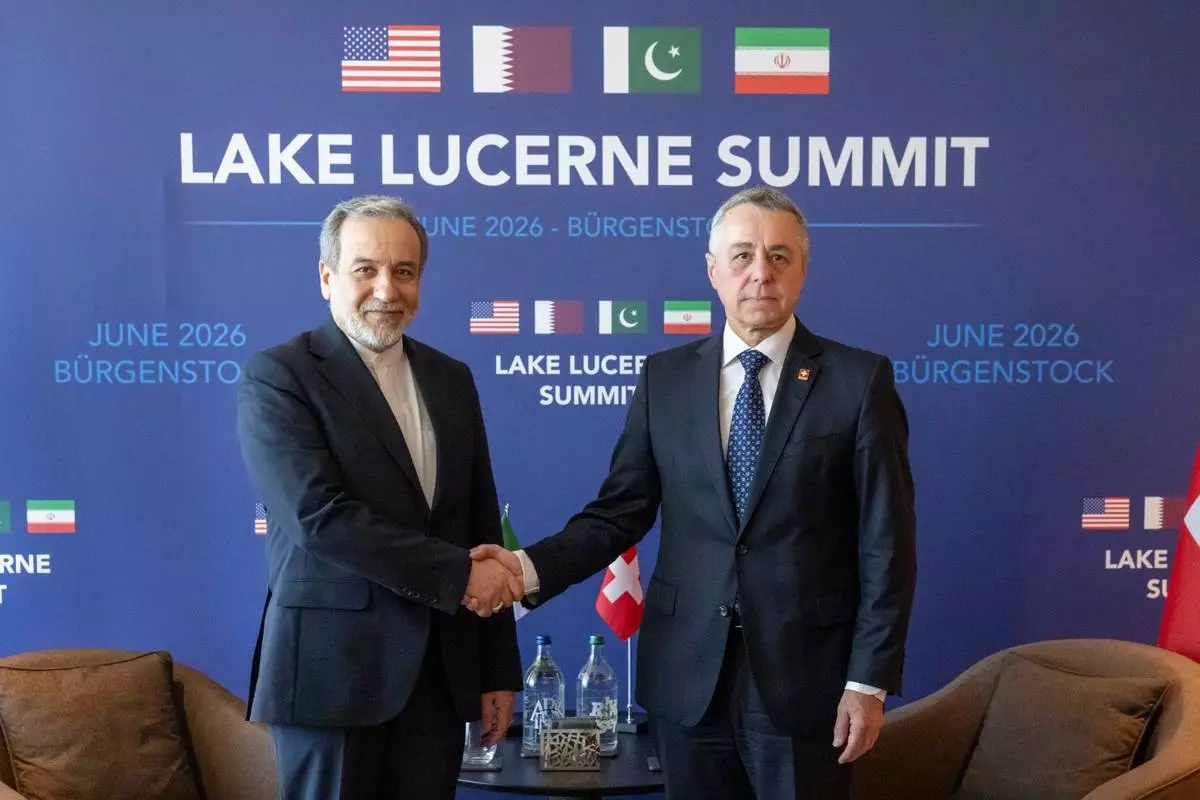
Iran’s Foreign Minister Abbas Araghchi, left, and Switzerland's Foreign Minister Federal councillor Ignazio Cassis, right, shake hands at bilateral discussions at the Buergenstock resort in Obbuergen, near Lucerne, Switzerland, Sunday, June 21, 2026. (Urs Flueeler/Keystone via AP)
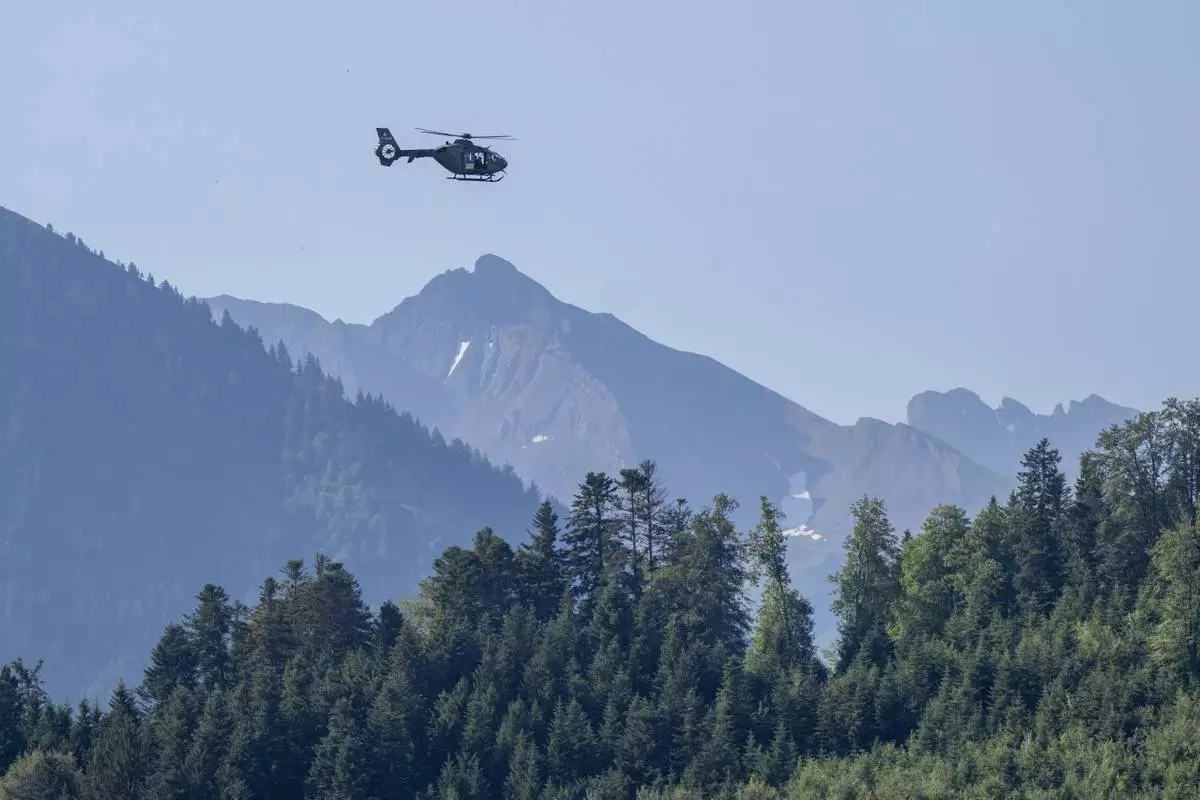
A Swiss Army Helicopter flies around the Buergenstock resort in Obbuergen, near Lucerne, Switzerland, Sunday, June 21, 2026. (Urs Flueeler/Keystone Pool via AP)
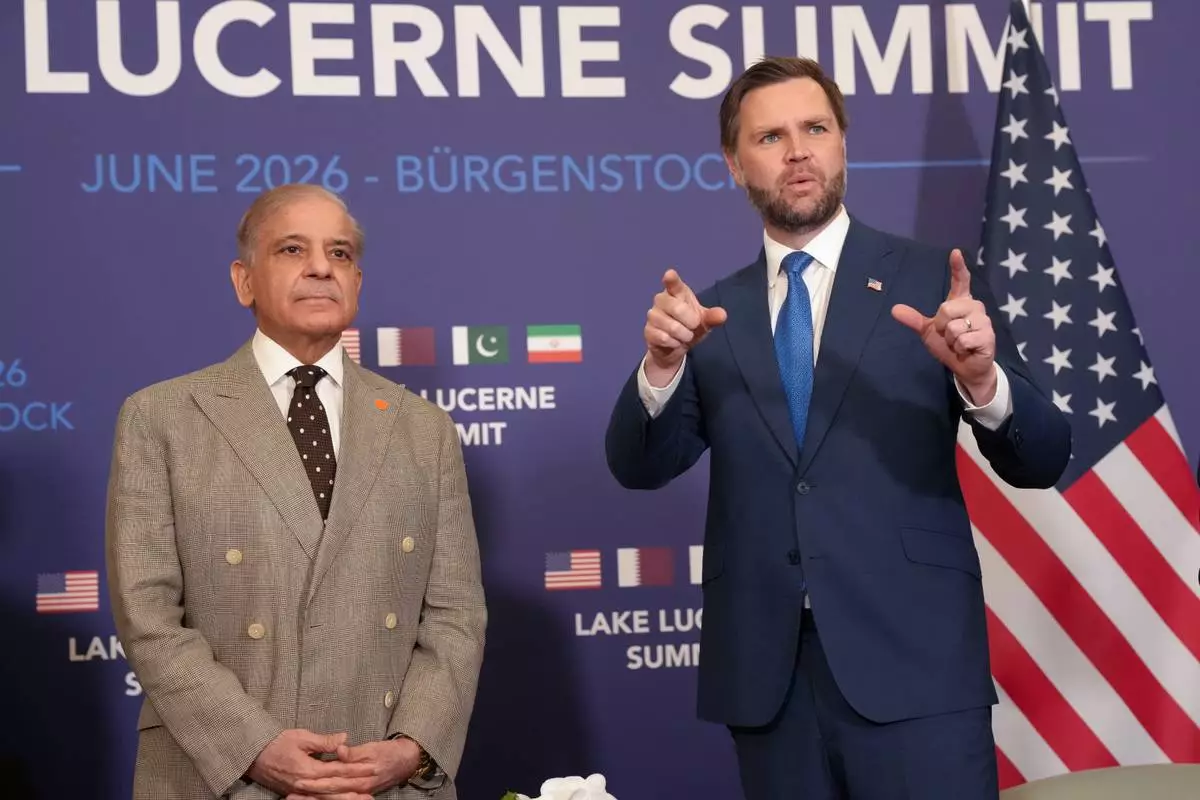
U.S. Vice President JD Vance, right, meets with Pakistan's Prime Minister Shehbaz Sharif, during high-level talks aimed at advancing a deal to end the Middle East conflict, at the Bürgenstock Resort in Obbuergen, near Lucerne, in Switzerland, Sunday, June 21, 2026. (Nathan Howard/Pool Photo via AP)

A convoy with U.S. Vice President JD Vance arrives at the Bürgenstock Resort in Obbuergen, near Lucerne, in Switzerland Sunday, June 21, 2026. (Urs Flueeler/Keystone, Pool Photo via AP)
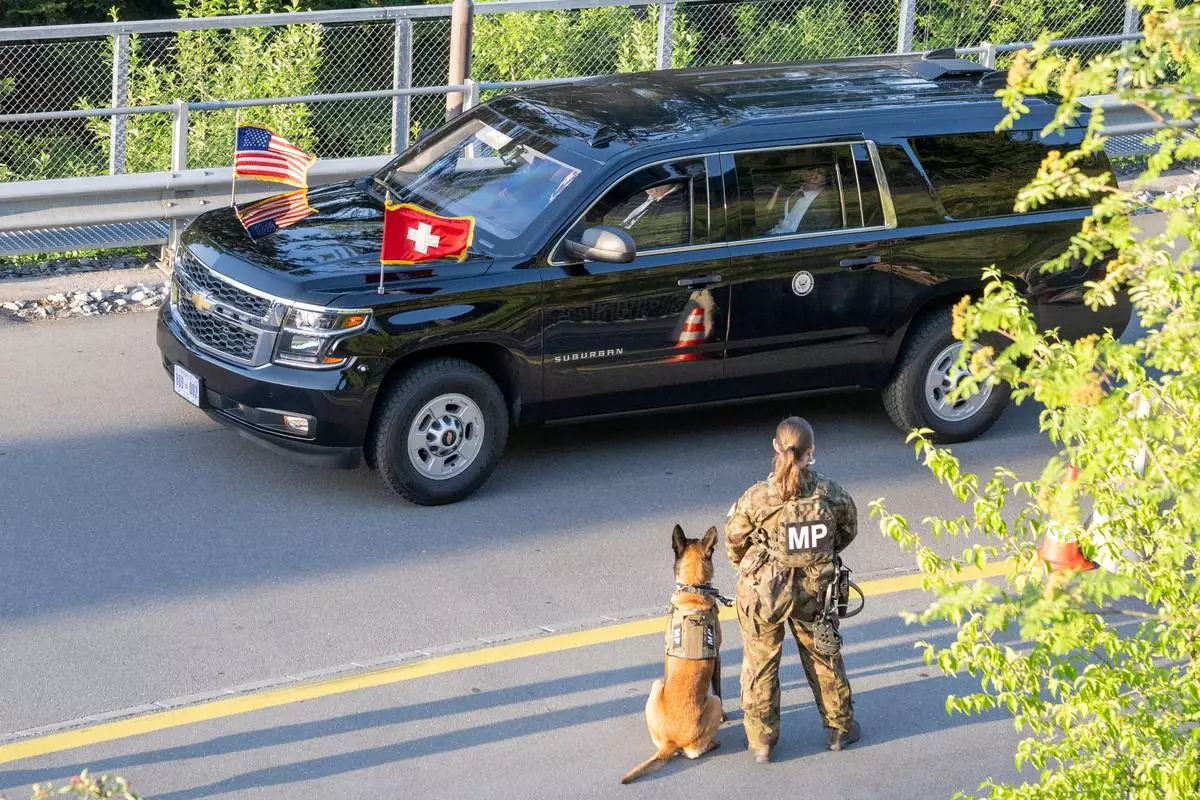
A convoy with U.S. Vice President JD Vance arrives at the Bürgenstock Resort in Obbuergen, near Lucerne, in Switzerland Sunday, June 21, 2026. (Urs Flueeler/Keystone, Pool Photo via AP)

A convoy with U.S. Vice President JD Vance arrives at the Bürgenstock Resort in Obbuergen, near Lucerne, in Switzerland Sunday, June 21, 2026. (Urs Flueeler/Keystone, Pool Photo via AP)
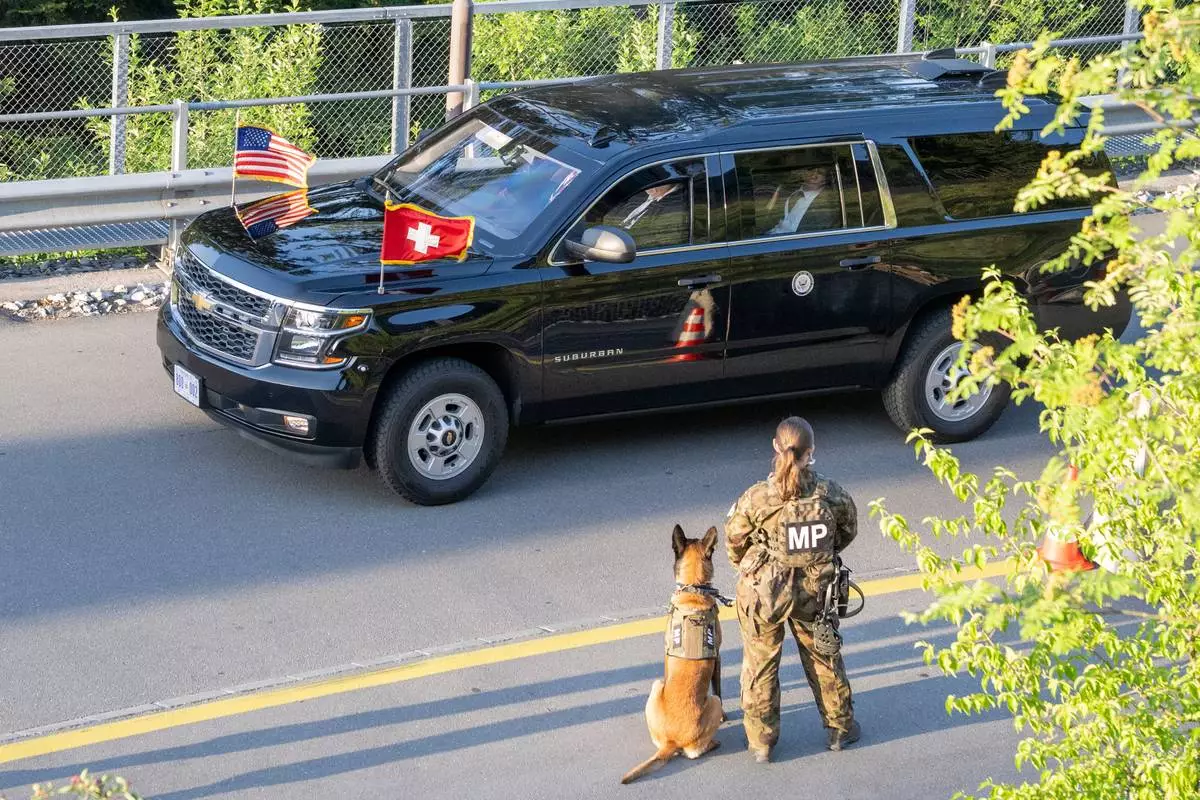
A convoy with U.S. Vice President JD Vance arrives at the Bürgenstock Resort in Obbuergen, near Lucerne, in Switzerland Sunday, June 21, 2026. (Urs Flueeler/Keystone, Pool Photo via AP)
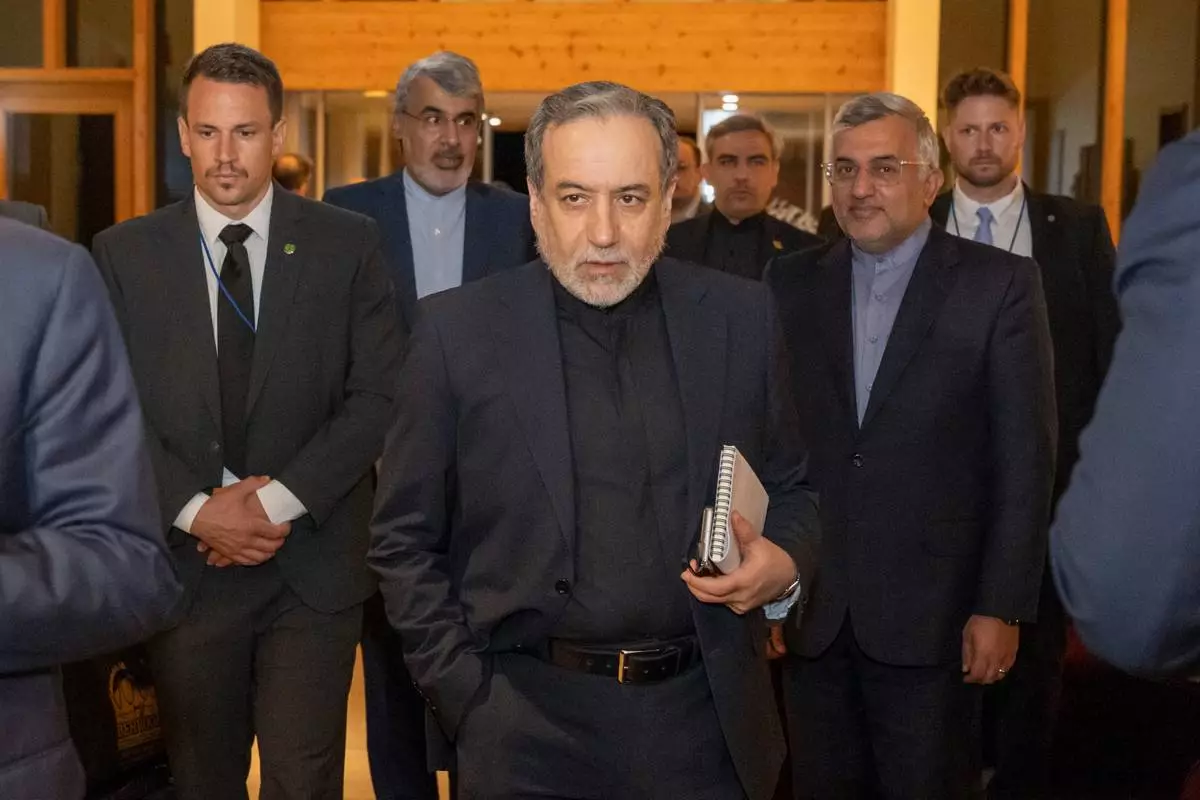
Iranian Foreign Minister Seyyed Abbas Araghchi, center, arrives at the Buergenstock resort in Obbuergen, near Lucerne, Switzerland, early Sunday, June 21, 2026. (Urs Flueeler/Keystone, Pool via AP)

Air Force Two, with Vice President JD Vance and second lady Usha Vance on board, departs Joint Base Andrews, Md., Saturday, June 20, 2026, en route to Switzerland. (Elizabeth Frantz/Pool Photo via AP)
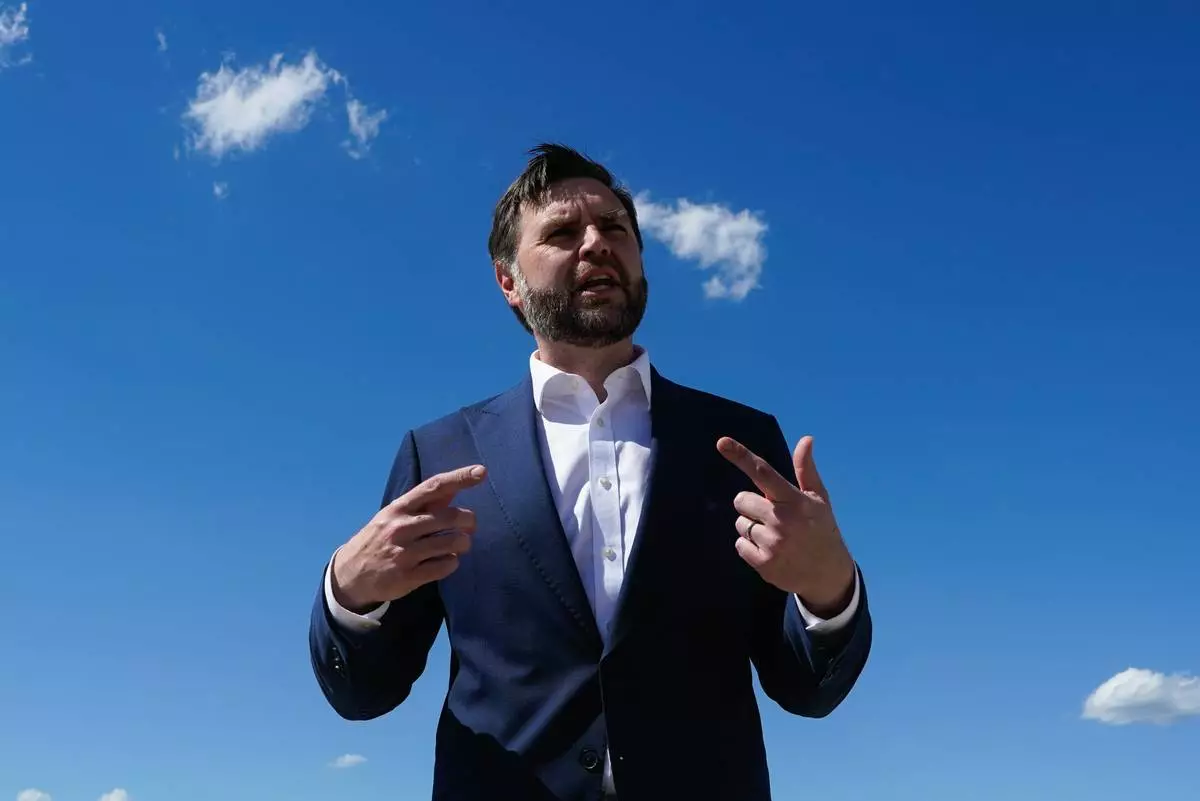
Vice President JD Vance speaks to reporters at Joint Base Andrews, Md., Saturday, June 20, 2026, en route to Switzerland. (Elizabeth Frantz/Pool Photo via AP)