WASHINGTON (AP) — Get ready for several years of even more record-breaking heat that pushes Earth to more deadly, fiery and uncomfortable extremes, two of the world's top weather agencies forecast.
There's an 80% chance the world will break another annual temperature record in the next five years, and it's even more probable that the world will again exceed the international temperature threshold set 10 years ago, according to a five-year forecast released Wednesday by the World Meteorological Organization and the U.K. Meteorological Office.
Click to Gallery

FILE - A vendor sleeps near a fan on a hot afternoon at his shop at Market 4 in Asuncion, Paraguay, Jan. 17, 2025. (AP Photo/Jorge Saenz, File)
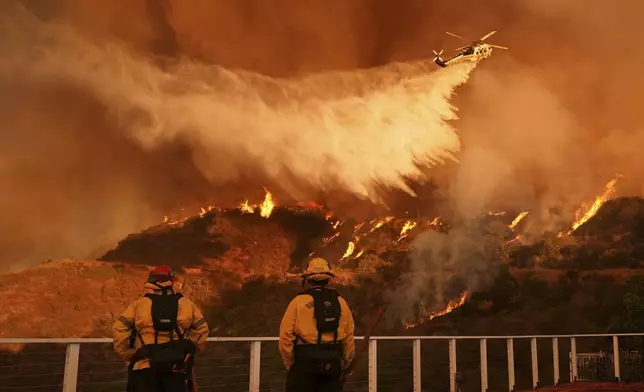
FILE - Firefighters watch a helicopter drop water on the Palisades Fire in Mandeville Canyon in Los Angeles, Jan. 11, 2025. (AP Photo/Jae C. Hong, File)
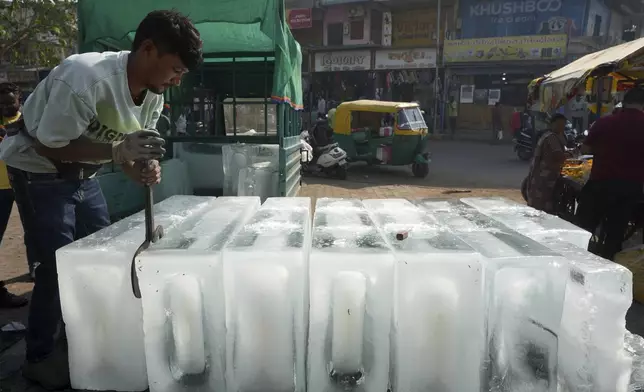
FILE - A man arranges ice blocks to sell at his stall in Ahmedabad, India, April 2, 2025. (AP Photo/Ajit Solanki, File)

FILE - Ricky Leath, an outreach specialist with the City of Miami, talks with Bei Zhao, right, as he works with the Miami-Dade County Homeless Trust to distribute bottles of water and other supplies to the homeless population, helping them manage high temperatures, May 15, 2024, in Miami. (AP Photo/Lynne Sladky, File)
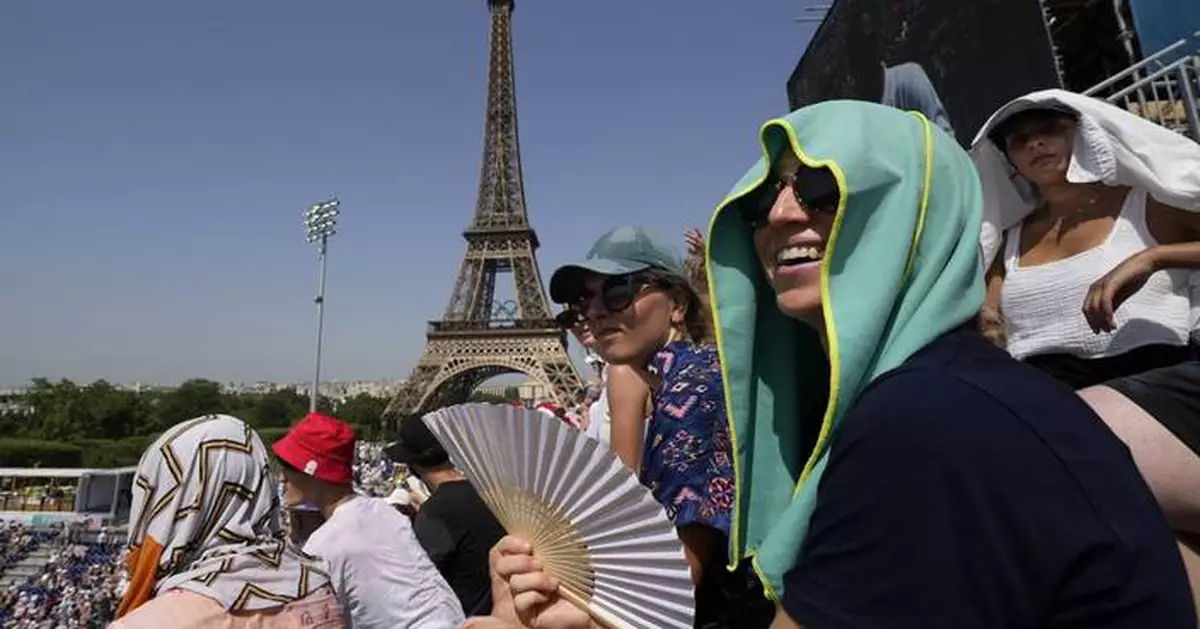
FILE - Stephanie Touissaint, foreground, uses a fan to keep cool in the sweltering heat at Eiffel Tower Stadium during a beach volleyball match between Cuba and Brazil at the 2024 Summer Olympics, July 30, 2024, in Paris, France. (AP Photo/Robert F. Bukaty, File)
“Higher global mean temperatures may sound abstract, but it translates in real life to a higher chance of extreme weather: stronger hurricanes, stronger precipitation, droughts,” said Cornell University climate scientist Natalie Mahowald, who wasn't part of the calculations but said they made sense. “So higher global mean temperatures translates to more lives lost.”
With every tenth of a degree the world warms from human-caused climate change “we will experience higher frequency and more extreme events (particularly heat waves but also droughts, floods, fires and human-reinforced hurricanes/typhoons),” emailed Johan Rockstrom, director of the Potsdam Institute for Climate Impact Research in Germany. He was not part of the research.
And for the first time there’s a chance — albeit slight — that before the end of the decade, the world's annual temperature will shoot past the Paris climate accord goal of limiting warming to 1.5 degrees Celsius (2.7 degrees Fahrenheit) and hit a more alarming 2 degrees Celsius (3.6 degrees Fahrenheit) of heating since the mid-1800s, the two agencies said.
There's an 86% chance that one of the next five years will pass 1.5 degrees and a 70% chance that the five years as a whole will average more than that global milestone, they figured.
The projections come from more than 200 forecasts using computer simulations run by 10 global centers of scientists.
Ten years ago, the same teams figured there was a similar remote chance — about 1% — that one of the upcoming years would exceed that critical 1.5 degree threshold and then it happened last year. This year, a 2-degree Celsius above pre-industrial year enters the equation in a similar manner, something UK Met Office longer term predictions chief Adam Scaife and science scientist Leon Hermanson called “shocking.”
“It's not something anyone wants to see, but that's what the science is telling us,” Hermanson said. Two degrees of warming is the secondary threshold, the one considered less likely to break, set by the 2015 Paris agreement.
Technically, even though 2024 was 1.5 degrees Celsius warmer than pre-industrial times, the Paris climate agreement’s threshold is for a 20-year time period, so it has not been exceeded. Factoring in the past 10 years and forecasting the next 10 years, the world is now probably about 1.4 degrees Celsius (2.5 degrees Fahrenheit) hotter since the mid 1800s, World Meteorological Organization climate services director Chris Hewitt estimated.
“With the next five years forecast to be more than 1.5C warmer than preindustrial levels on average, this will put more people than ever at risk of severe heat waves, bringing more deaths and severe health impacts unless people can be better protected from the effects of heat. Also we can expect more severe wildfires as the hotter atmosphere dries out the landscape,” said Richard Betts, head of climate impacts research at the UK Met Office and a professor at the University of Exeter.
Ice in the Arctic — which will continue to warm 3.5 times faster than the rest of the world — will melt and seas will rise faster, Hewitt said.
What tends to happen is that global temperatures rise like riding on an escalator, with temporary and natural El Nino weather cycles acting like jumps up or down on that escalator, scientists said. But lately, after each jump from an El Nino, which adds warming to the globe, the planet doesn't go back down much, if at all.
“Record temperatures immediately become the new normal,” said Stanford University climate scientist Rob Jackson.
Follow Seth Borenstein on X at @borenbears
The Associated Press’ climate and environmental coverage receives financial support from multiple private foundations. AP is solely responsible for all content. Find AP’s standards for working with philanthropies, a list of supporters and funded coverage areas at AP.org.
Read more of AP’s climate coverage at http://www.apnews.com/climate-and-environment

FILE - A vendor sleeps near a fan on a hot afternoon at his shop at Market 4 in Asuncion, Paraguay, Jan. 17, 2025. (AP Photo/Jorge Saenz, File)
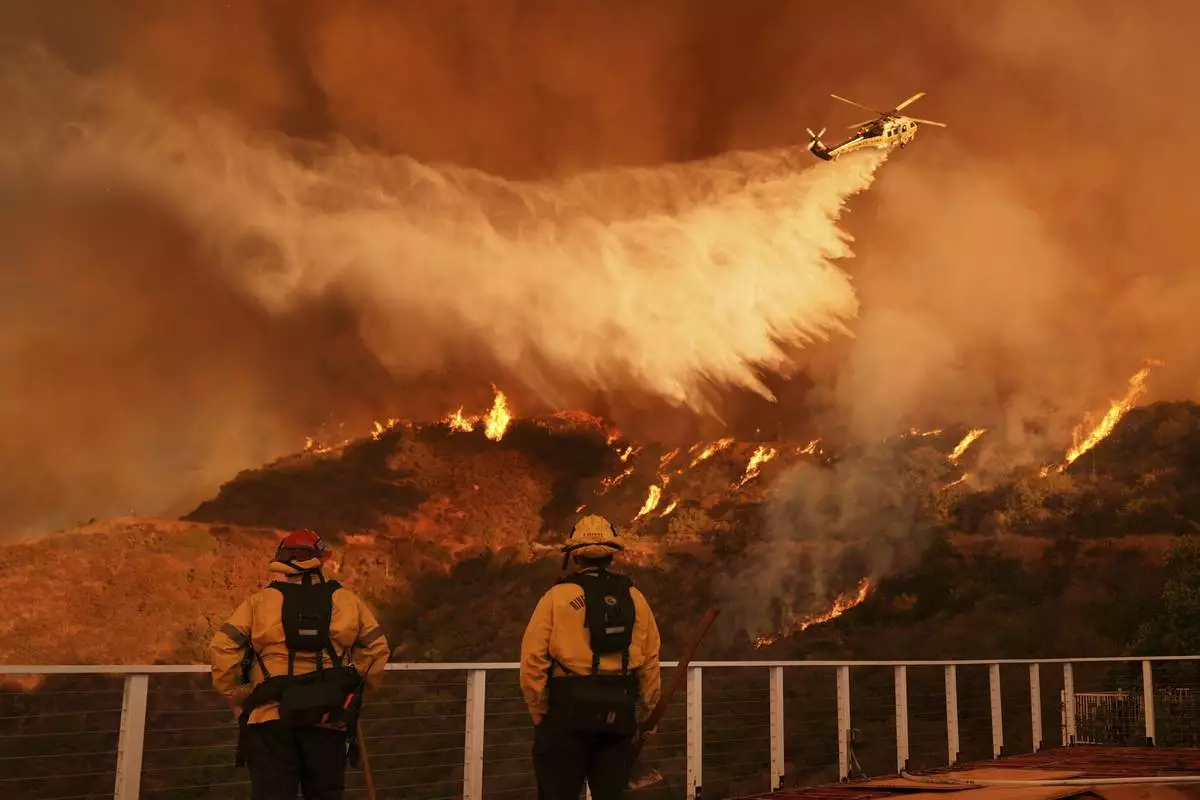
FILE - Firefighters watch a helicopter drop water on the Palisades Fire in Mandeville Canyon in Los Angeles, Jan. 11, 2025. (AP Photo/Jae C. Hong, File)
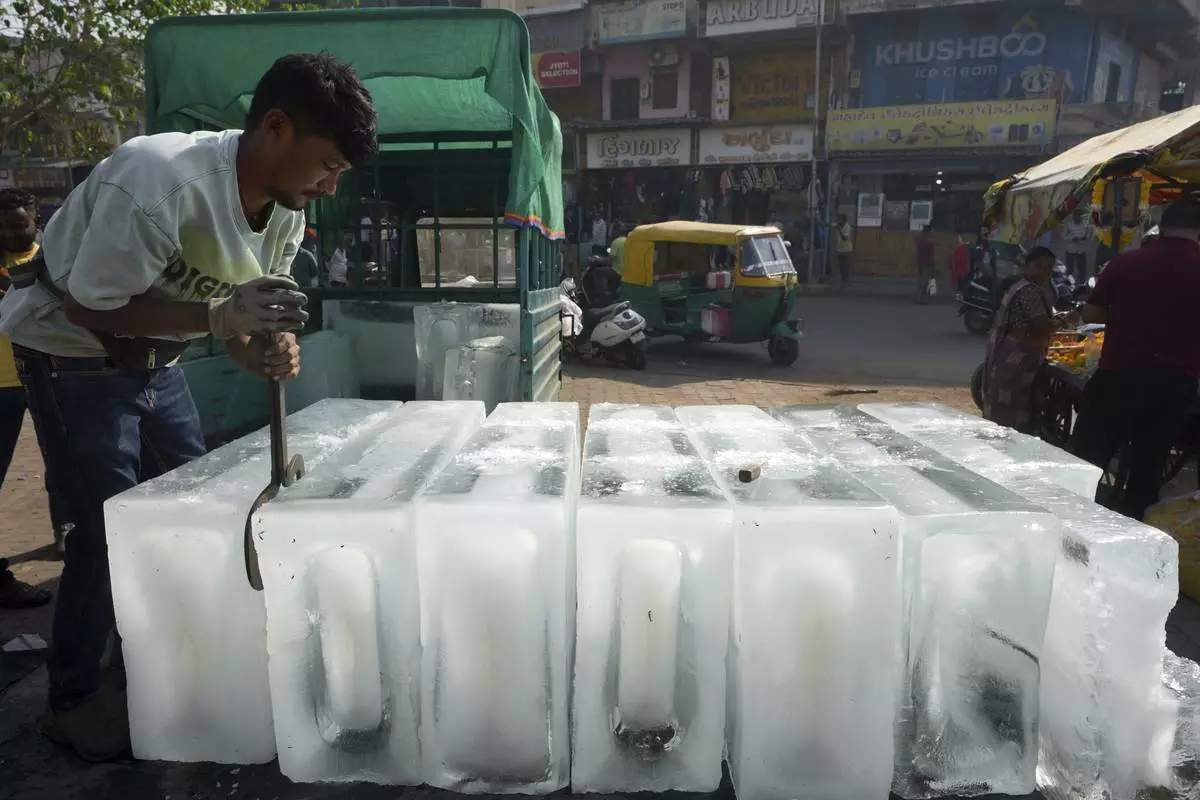
FILE - A man arranges ice blocks to sell at his stall in Ahmedabad, India, April 2, 2025. (AP Photo/Ajit Solanki, File)

FILE - Ricky Leath, an outreach specialist with the City of Miami, talks with Bei Zhao, right, as he works with the Miami-Dade County Homeless Trust to distribute bottles of water and other supplies to the homeless population, helping them manage high temperatures, May 15, 2024, in Miami. (AP Photo/Lynne Sladky, File)
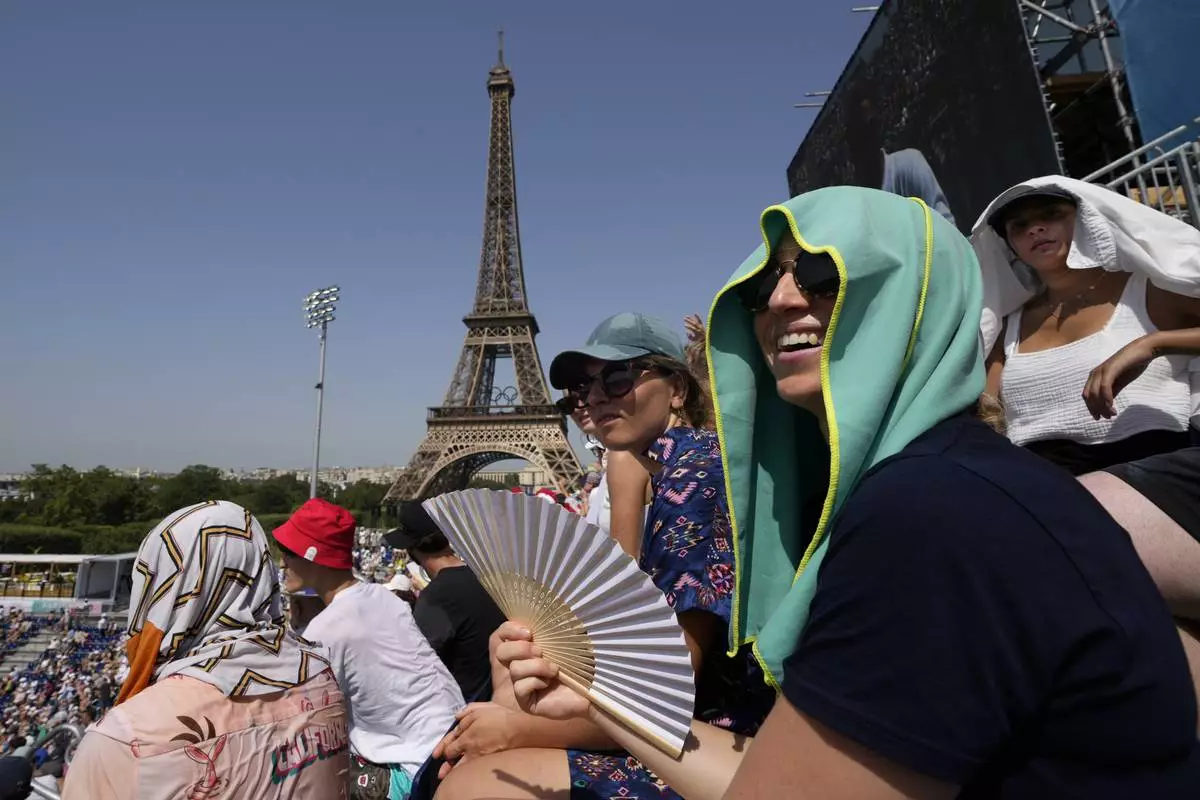
FILE - Stephanie Touissaint, foreground, uses a fan to keep cool in the sweltering heat at Eiffel Tower Stadium during a beach volleyball match between Cuba and Brazil at the 2024 Summer Olympics, July 30, 2024, in Paris, France. (AP Photo/Robert F. Bukaty, File)