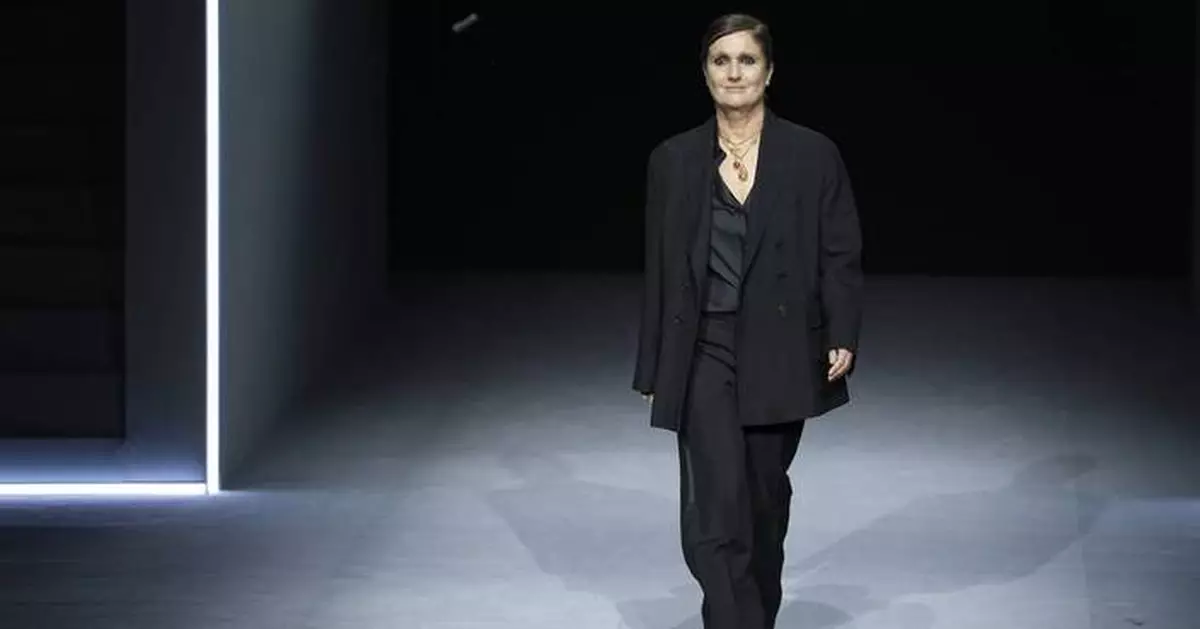
PARIS (AP) — Maria Grazia Chiuri, the first woman to lead Dior’s women’s collections, announced Thursday she is stepping down as creative director after nine years at the storied French fashion house — the latest sign of mounting pressure and ongoing creative turnover at the top of the fashion industry.
The Italian designer confirmed her long-rumored departure in an Instagram post, capping a transformative era defined by bold feminist messaging, record sales and industry-defining collections.
“I am particularly grateful for the work accomplished by my teams and the ateliers. Their talent and expertise allowed me to realize my vision of committed women’s fashion, in close dialogue with several generations of female artists,″ Chiuri wrote. “Together, we have written a remarkable and impactful chapter, of which I am immensely proud.”
Chiuri, 60, leaves behind a legacy that reshaped Dior’s creative direction and broadened its global appeal. Since her arrival in 2016, she steered Dior through a golden era of commercial and cultural success. Revenue reportedly rose by nearly $8 billion from 2017 to 2023 as Chiuri’s vision of empowered femininity resonated with a new generation of clients.
The house itself credited Chiuri with nothing less than redefining "the identity and femininity of the Dior woman, celebrated and reimagined the iconic heritage and savoir-faire.”
Delphine Arnault, the LVMH executive who oversees Dior, paid tribute to Chiuri’s “tremendous work with an inspiring feminist perspective and exceptional creativity, all imbued with the spirit of Monsieur Dior.” Chiuri, Arnault added, not only designed “highly desirable collections” but “has written a key chapter in the history of Christian Dior” — a chapter that will forever be marked by the milestone of her being the first woman to lead the women’s collections.
Chiuri’s debut for Spring 2017 made headlines with “We Should All Be Feminists” T-shirts, declaring a new era for Dior. She brought activism to the runway, collaborating with artists like Judy Chicago and Faith Ringgold. She revived icons such as the Saddle Bag and made space for women’s voices, drawing on Dior’s past while rewriting its aesthetic.
Chiuri departs as the first woman to lead Dior since its founding in 1947, having redefined the house’s codes and opened the door to a new chapter at one of fashion’s most influential brands. Her exit comes amid a broader wave of creative upheaval across the industry. Pierpaolo Piccioli, her former co-creative director at Valentino, was recently named artistic director of Balenciaga — after Alessandro Michele, known for his maximalist, gender-fluid reinvention of Gucci, was appointed to succeed Piccioli at Valentino in 2024.
Meanwhile, Matthieu Blazy, who stepped down from Bottega Veneta last year, will debut at Chanel this fall, succeeding Virginie Viard — whose unceremonious departure shocked the industry.
The recent round of high-profile exits and appointments has amounted to fashion’s most dramatic game of musical chairs in years — and it’s giving the industry whiplash.
The moves reflect a period of transition for major fashion houses as they adapt to shifting consumer expectations, slower luxury growth, and the demands of a digital-first market. At least half a dozen top houses have changed creative leadership in the past year alone — a sign of the mounting pressure on designers to deliver both artistic vision and commercial results in an increasingly unstable landscape.
Chiuri's shows spanned continents, from Mumbai to Kyoto, each celebrating craft and community. But for her final collection, Resort 2026, Chiuri returned home to Rome — staging the show at Villa Torlonia, enveloping her guests in ritual white, and invoking the spirit of Italian cinema with a film by Matteo Garrone. The choice of her native city, paired with the all-white dress code, signaled a deliberate full-circle moment; an intimate farewell and a subtle hint that Chiuri was preparing to close her chapter at Dior.
Dior has not yet named a successor, but speculation centers on Jonathan Anderson, who recently took over Dior’s men’s collections.
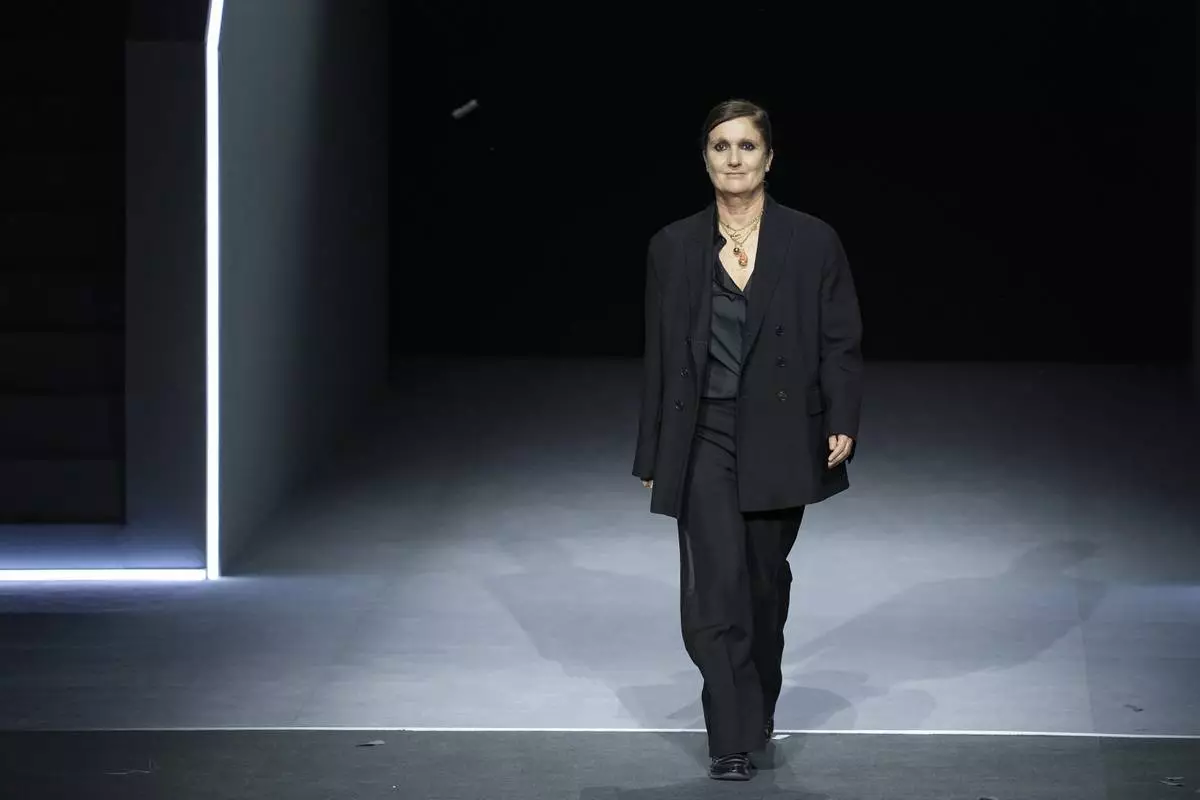
FILE - Italian fashion designer Maria Grazia Chiuri is photographed at the Dior Fall/Winter 2025-2026 Womenswear collection presented, March 4, 2025. in Paris. (Photo by Scott A Garfitt/Invision/AP, file)
MINNEAPOLIS (AP) — President Donald Trump on Thursday threatened to invoke an 1807 law and deploy troops to quell persistent protests against the federal officers sent to Minneapolis to enforce his administration's massive immigration crackdown.
The threat comes a day after a man was shot and wounded by an immigration officer who had been attacked with a shovel and broom handle. That shooting further heightened the fear and anger that has radiated across the city since an Immigration and Customs Enforcement agent fatally shot Renee Good in the head.
Trump has repeatedly threatened to invoke the Insurrection Act, a rarely used federal law, to deploy the U.S. military or federalize the National Guard for domestic law enforcement, over the objections of state governors.
“If the corrupt politicians of Minnesota don’t obey the law and stop the professional agitators and insurrectionists from attacking the Patriots of I.C.E., who are only trying to do their job, I will institute the INSURRECTION ACT, which many Presidents have done before me, and quickly put an end to the travesty that is taking place in that once great State,” Trump said in social media post.
Presidents have invoked the law more than two dozen times, most recently in 1992 by President George H.W. Bush to end unrest in Los Angeles. In that instance, local authorities had asked for the assistance.
Trump has repeatedly toyed with the idea of invoking the Insurrection Act, starting in his first term, but hasn't followed through. In 2020, for example, he threatened to use the act to quell protests after George Floyd was killed by Minneapolis police.
“I’m making a direct appeal to the President: Let’s turn the temperature down. Stop this campaign of retribution. This is not who we are,” Gov. Tim Walz, a Democrat, said on X.
Minnesota Attorney General Keith Ellison said he would challenge any such action in court. He's already suing to try to stop the surge by the Department of Homeland Security, which says officers have arrested more than 2,500 people since Nov. 29 as part of an immigration operation in the Twin Cities called Metro Surge.
The operation grew when ICE sent 2,000 officers and agents to the area early in January. ICE is a DHS agency.
In Minneapolis, smoke filled the streets Wednesday night near the site of the latest shooting as federal officers wearing gas masks and helmets fired tear gas into a small crowd. Protesters responded by throwing rocks and shooting fireworks.
Demonstrations have become common in Minneapolis since Good was fatally shot on Jan. 7. Agents who have yanked people from their cars and homes have been confronted by angry bystanders demanding they leave.
“This is an impossible situation that our city is presently being put in and at the same time we are trying to find a way forward to keep people safe,” Minneapolis Mayor Jacob Frey said.
The American Civil Liberties Union of Minnesota filed a class-action lawsuit on behalf of three people who said they were questioned or detained in recent days. The lawsuit says two are Somali and one is Hispanic; all three are U.S. citizens. The lawsuit seeks an end to what the ACLU describes as a practice of racial profiling and warrantless arrests. The government did not immediately comment.
Similar lawsuits have been filed in Los Angeles and Chicago and despite seeing initial success, have tended to fizzle in the face of appeal. In Chicago, for example, last year a judge ordered a senior U.S. Border Patrol official to brief her nightly following a lawsuit by news outlets and protesters who said agents used too much force during demonstrations. But three days later, an appeals court stopped the updates.
Homeland Security said in a statement that federal law enforcement officers on Wednesday stopped a driver from Venezuela who is in the U.S. illegally. The person drove off then crashed into a parked car before fleeing on foot, DHS said.
Officers caught up, then two other people arrived and the three started attacking the officer, according to DHS.
“Fearing for his life and safety as he was being ambushed by three individuals, the officer fired a defensive shot to defend his life,” DHS said. The confrontation took place about 4.5 miles (7.2 kilometers) from where Good was killed.
Police chief Brian O’Hara said the man who was shot did not have a life-threatening injury. O’Hara's account of what happened largely echoed that of Homeland Security, which later said the other two men were also in the U.S. illegally from Venezuela.
The FBI said several government vehicles were damaged and property inside was stolen when agents responded to the shooting. Photos show broken windows and insults made with paint. A reward of up to $100,000 is being offered for information. The FBI’s Minneapolis office did not immediately reply to messages seeking more details.
St. Paul Public Schools, with more than 30,000 students, said it would begin offering an online learning option for students who do not feel comfortable coming to school. Schools will be closed next week until Thursday to prepare for those accommodations.
Minneapolis Public Schools, which has a similar enrollment, is also offering temporary remote learning. The University of Minnesota will start a new term next week with different options depending on the class.
Madhani reported from Washington, D.C. and Golden reported from Seattle. Associated Press reporters Sophia Tareen in Chicago; Bill Barrow in Atlanta; Rebecca Santana in Washington; and Ed White in Detroit contributed.
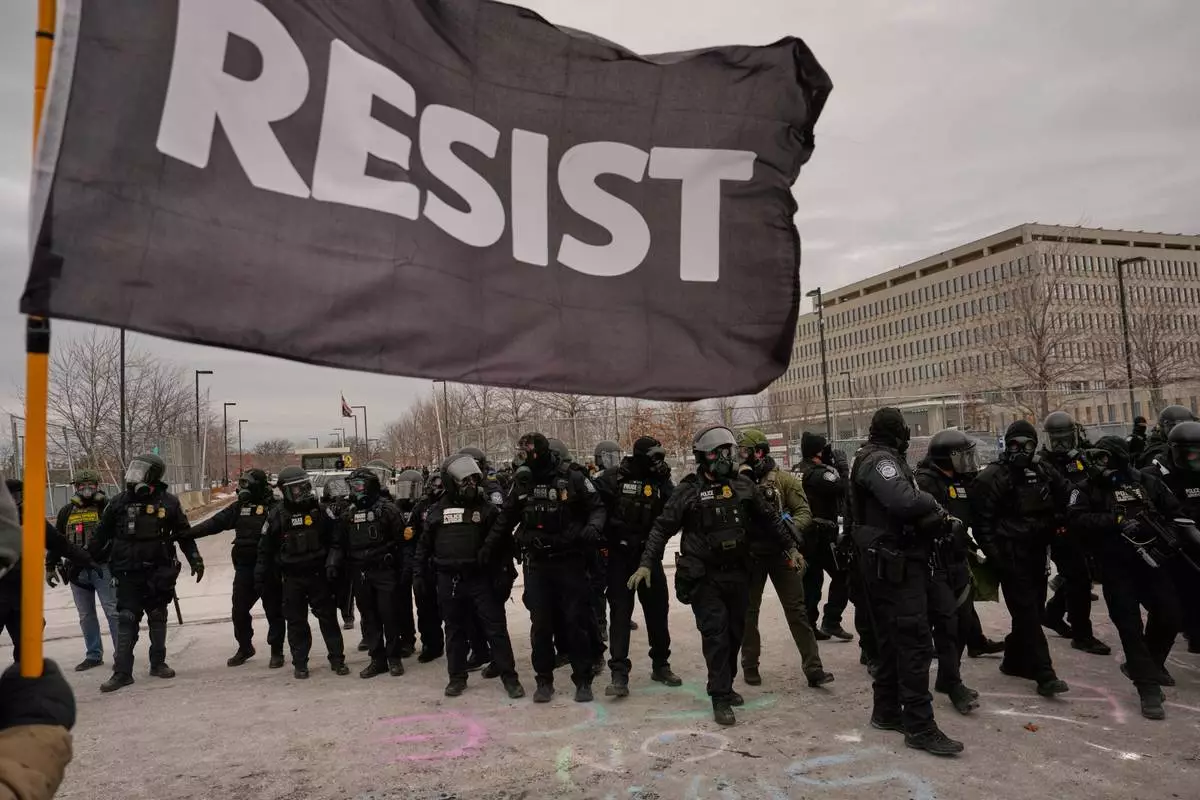
Federal immigration officers confront protesters outside Bishop Henry Whipple Federal Building, Thursday, Jan. 15, 2026, in Minneapolis. (AP Photo/John Locher)
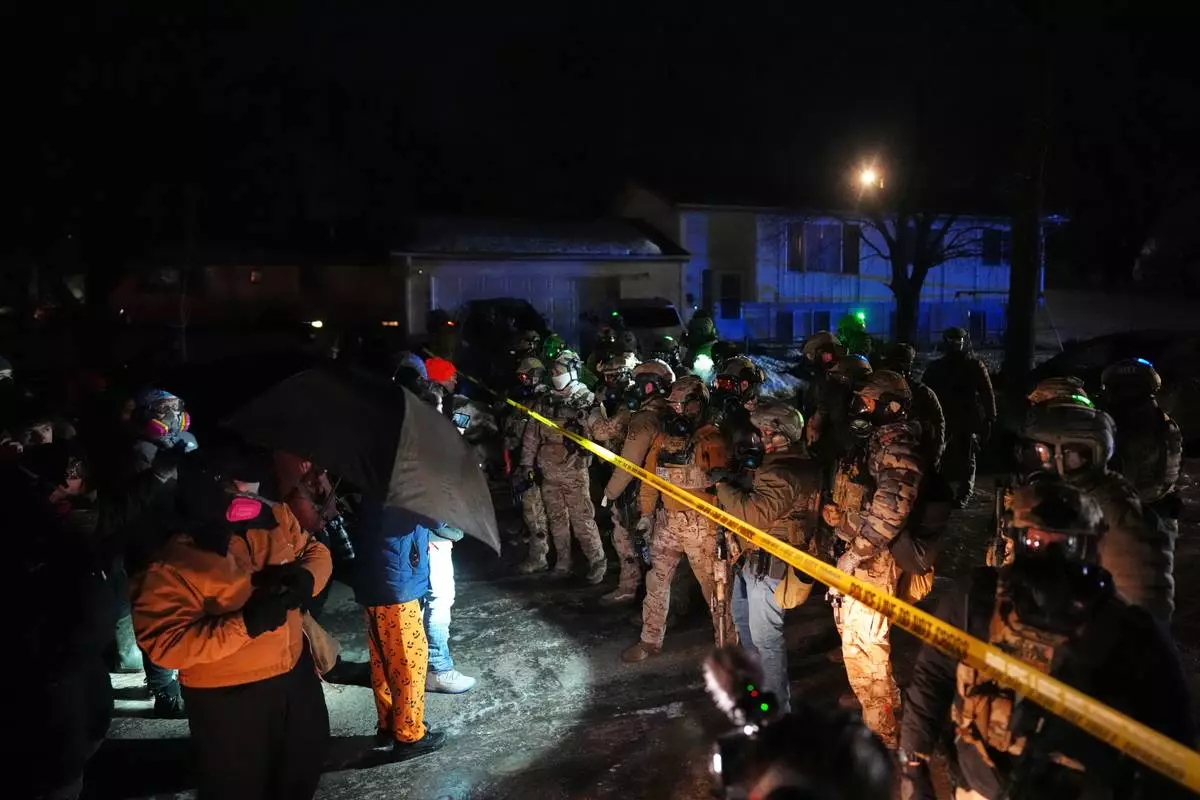
Law enforcement officers at the scene of a reported shooting Wednesday, Jan. 14, 2026, in Minneapolis. (AP Photo/Adam Gray)
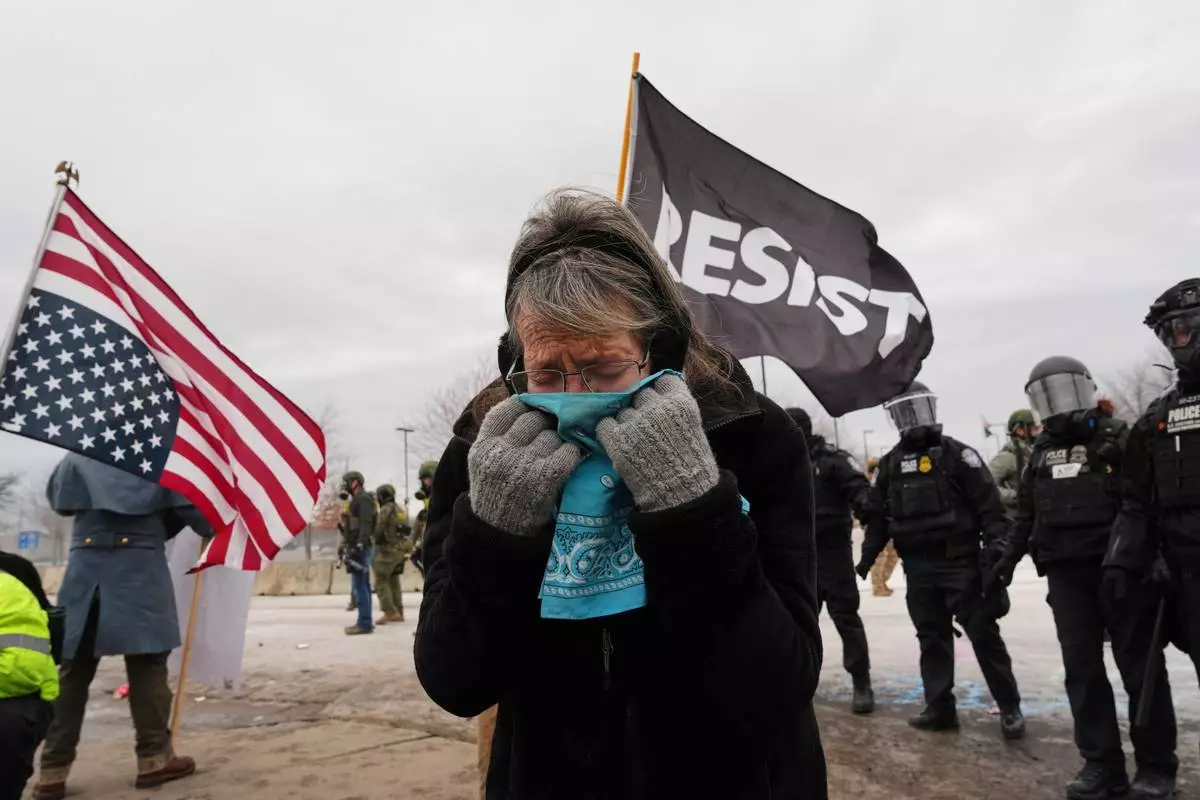
A woman covers her face from tear gas as federal immigration officers confront protesters outside Bishop Henry Whipple Federal Building, Thursday, Jan. 15, 2026, in Minneapolis. (AP Photo/Adam Gray)
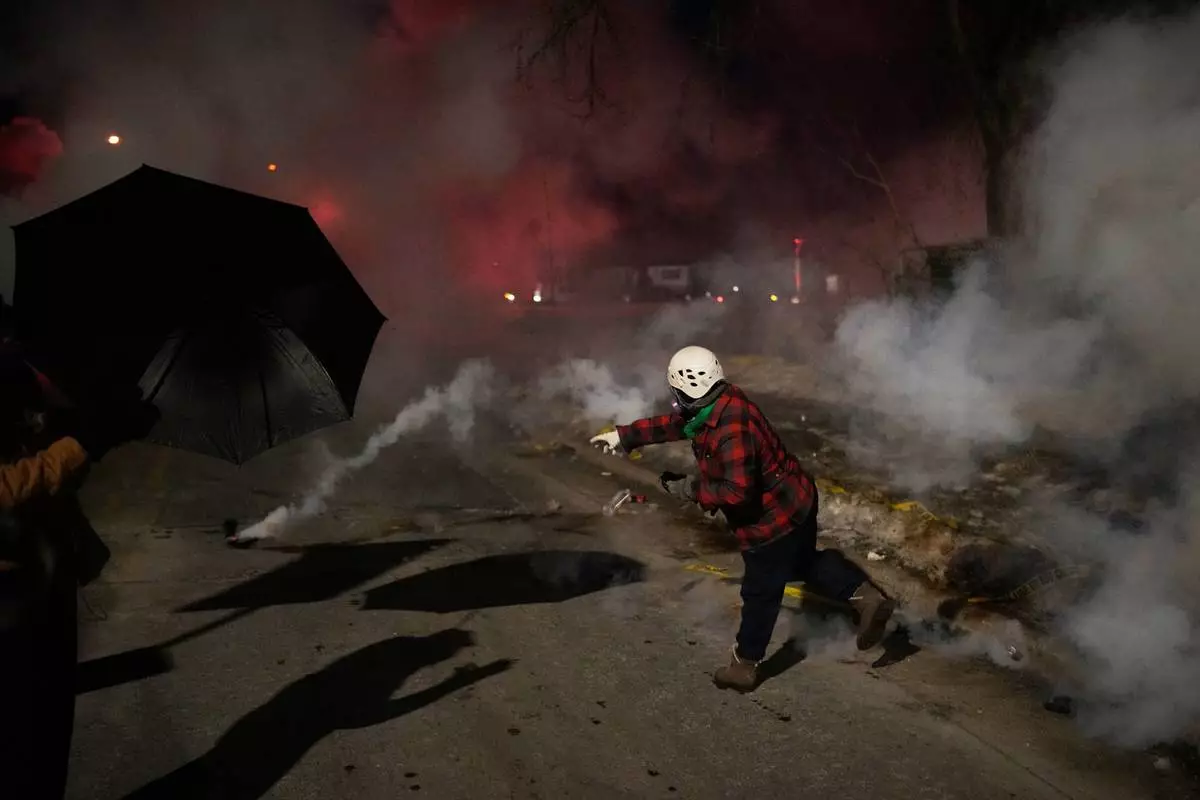
A protester throws back a tear gas canister during a protest after a shooting on Wednesday, Jan. 14, 2026, in Minneapolis. (AP Photo/John Locher)
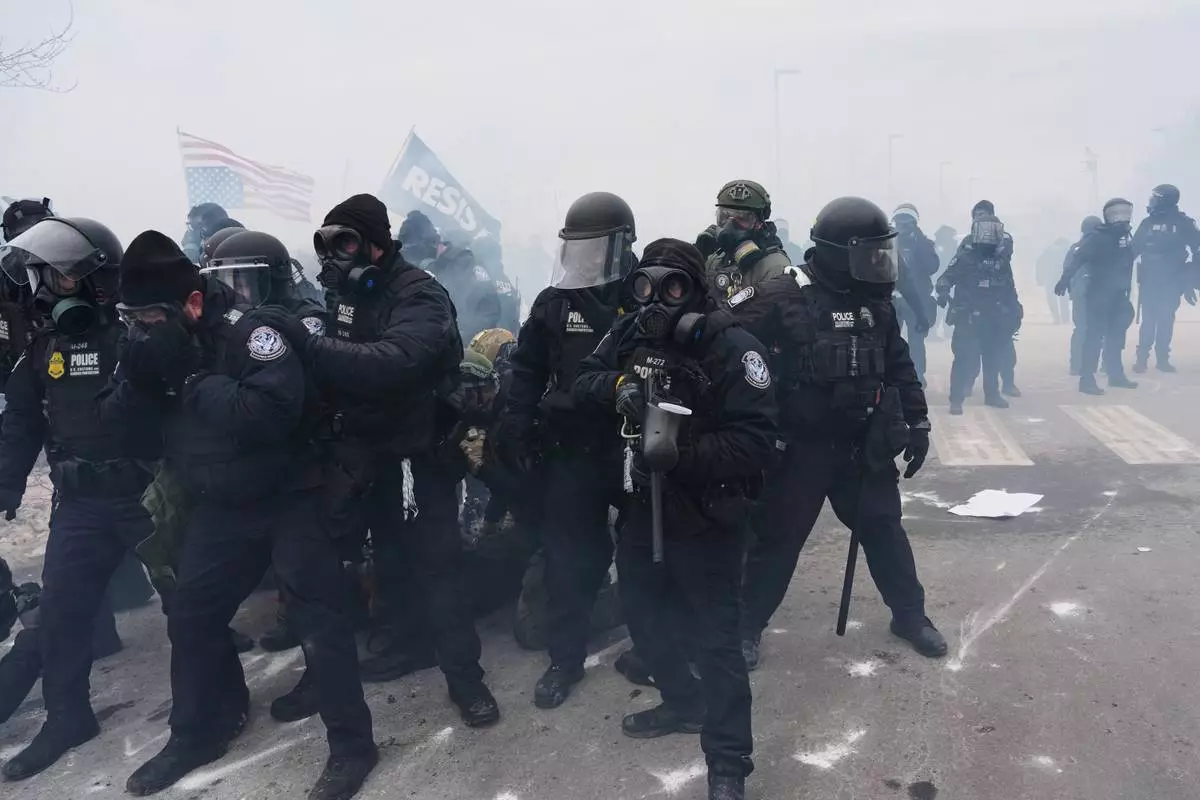
Federal immigration officers confront protesters outside Bishop Henry Whipple Federal Building, Thursday, Jan. 15, 2026, in Minneapolis. (AP Photo/Adam Gray)
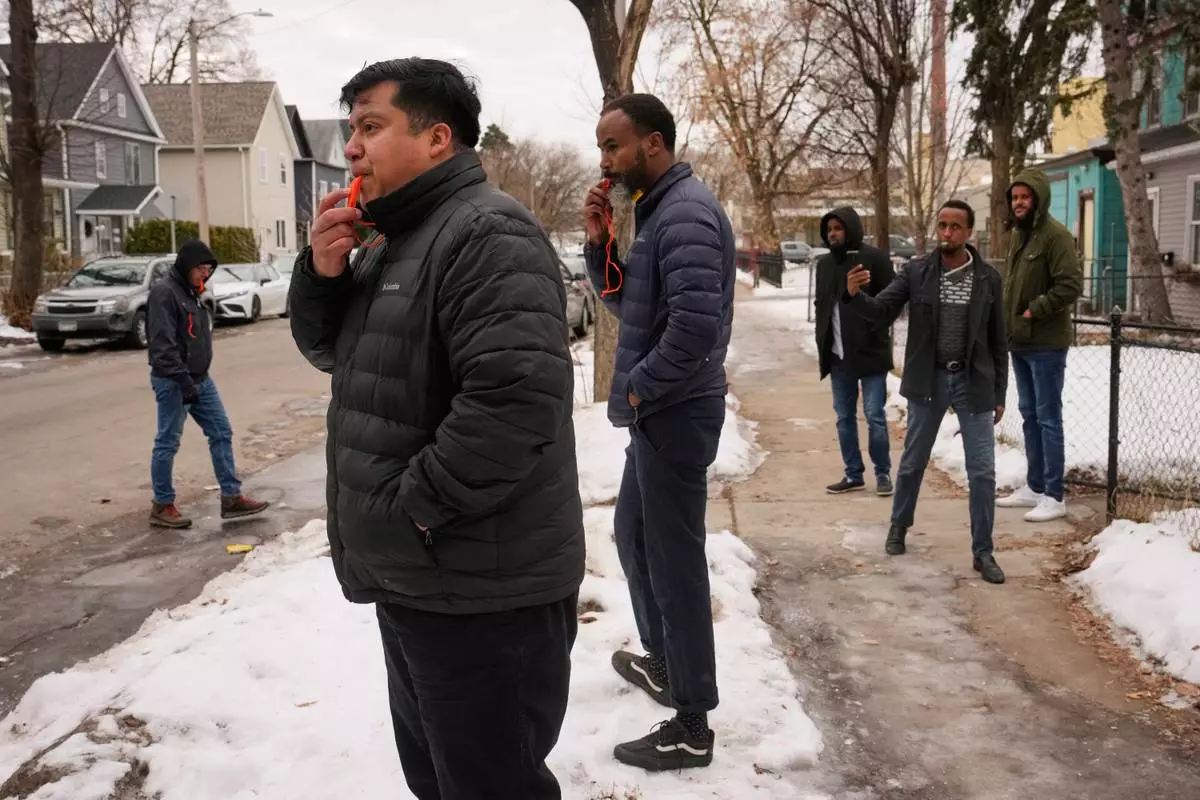
Minneapolis City Council Member Jason Chavez, second from left, blows a whistle with other activists to warn people of federal immigration officers Thursday, Jan. 15, 2026, in Minneapolis. (AP Photo/John Locher)
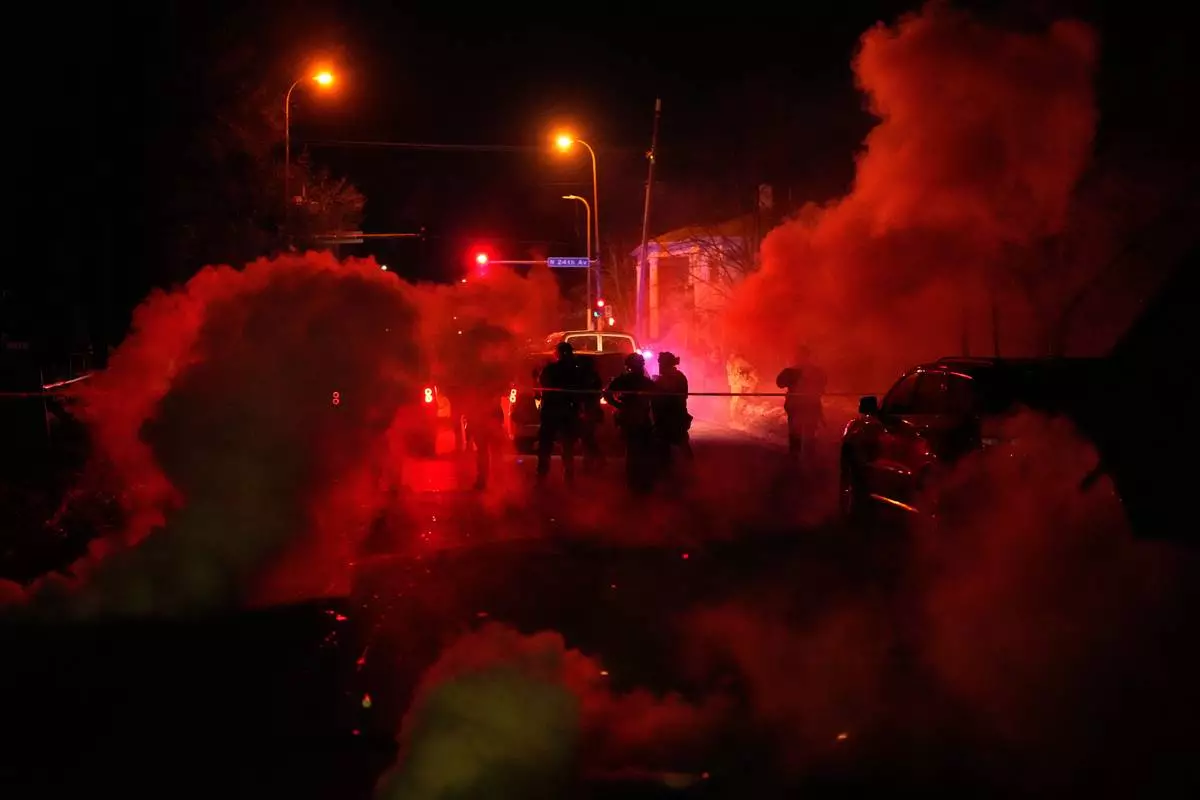
Tear gas surrounds federal law enforcement officers as they leave a scene after a shooting on Wednesday, Jan. 14, 2026, in Minneapolis. (AP Photo/John Locher)
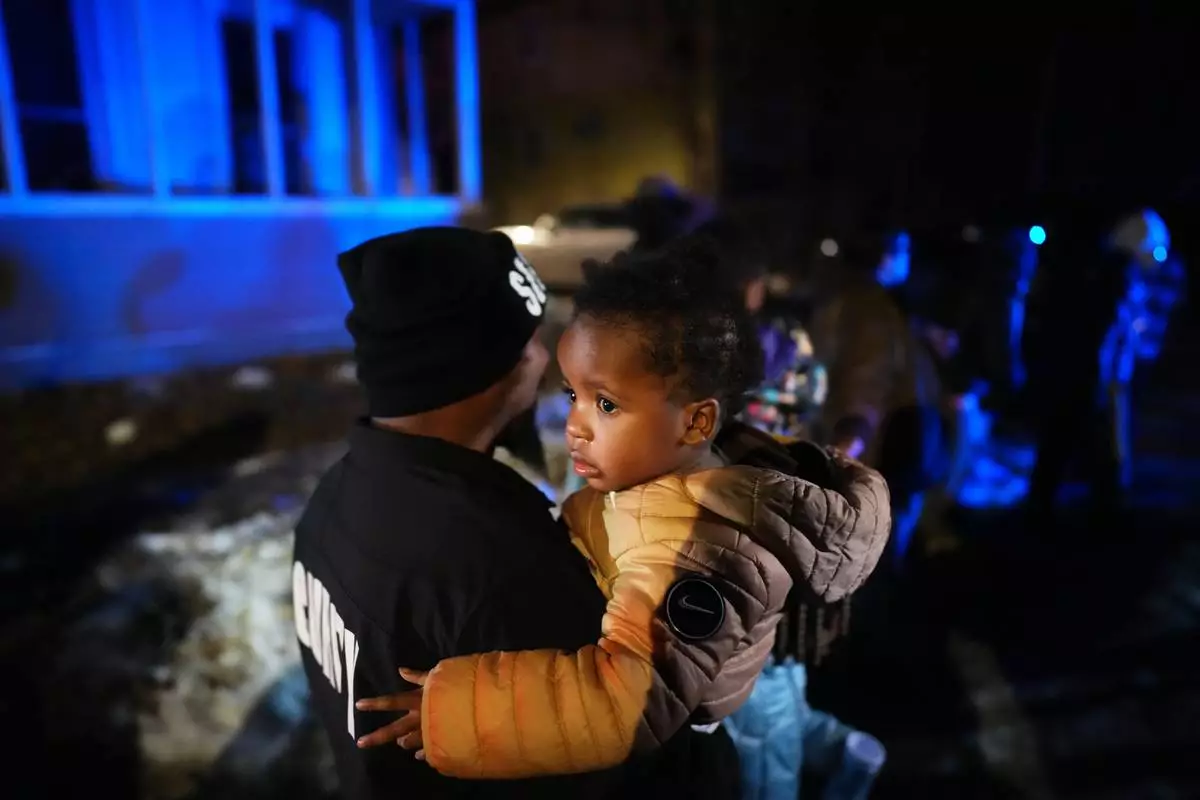
A child and family are escorted away after federal law enforcement deployed tear gas in a neighborhood during protests on Wednesday, Jan. 14, 2026, in Minneapolis. (AP Photo/Adam Gray)
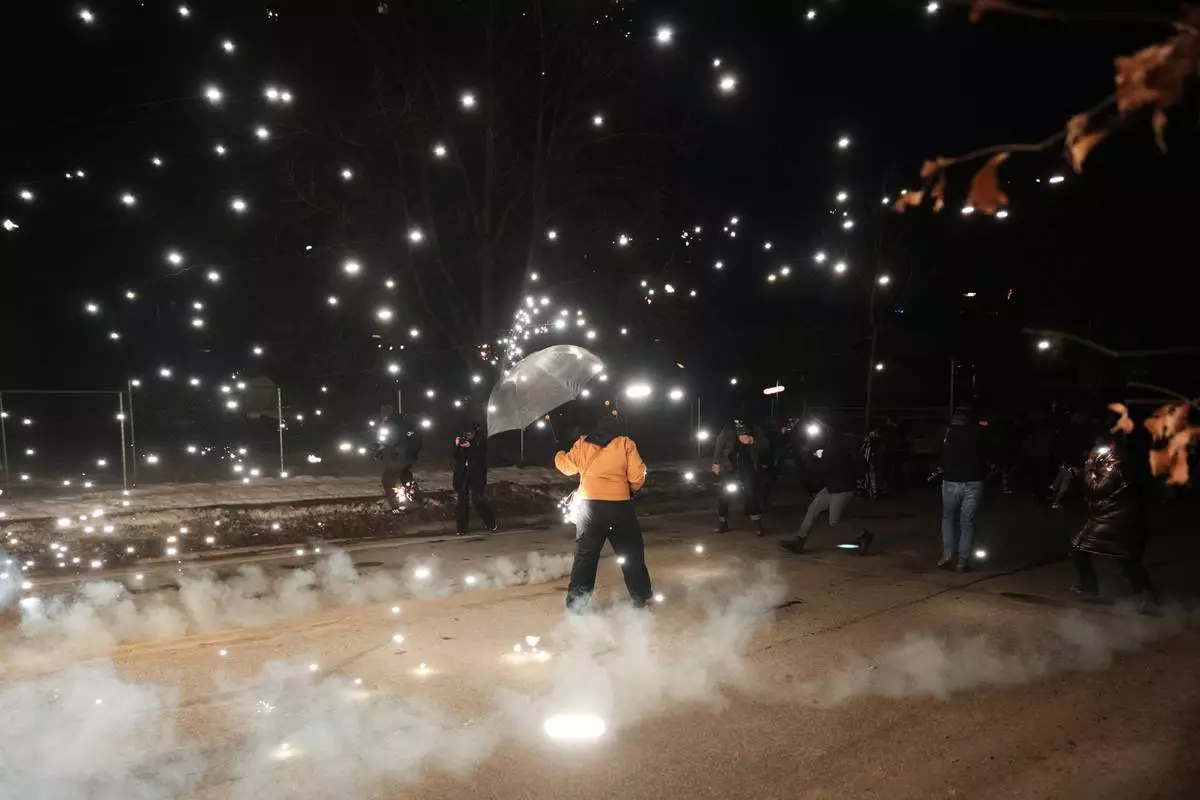
A protester holds an umbrella as sparks fly from a flash bang deployed by law enforcement on Wednesday, Jan. 14, 2026, in Minneapolis. (AP Photo/Adam Gray)
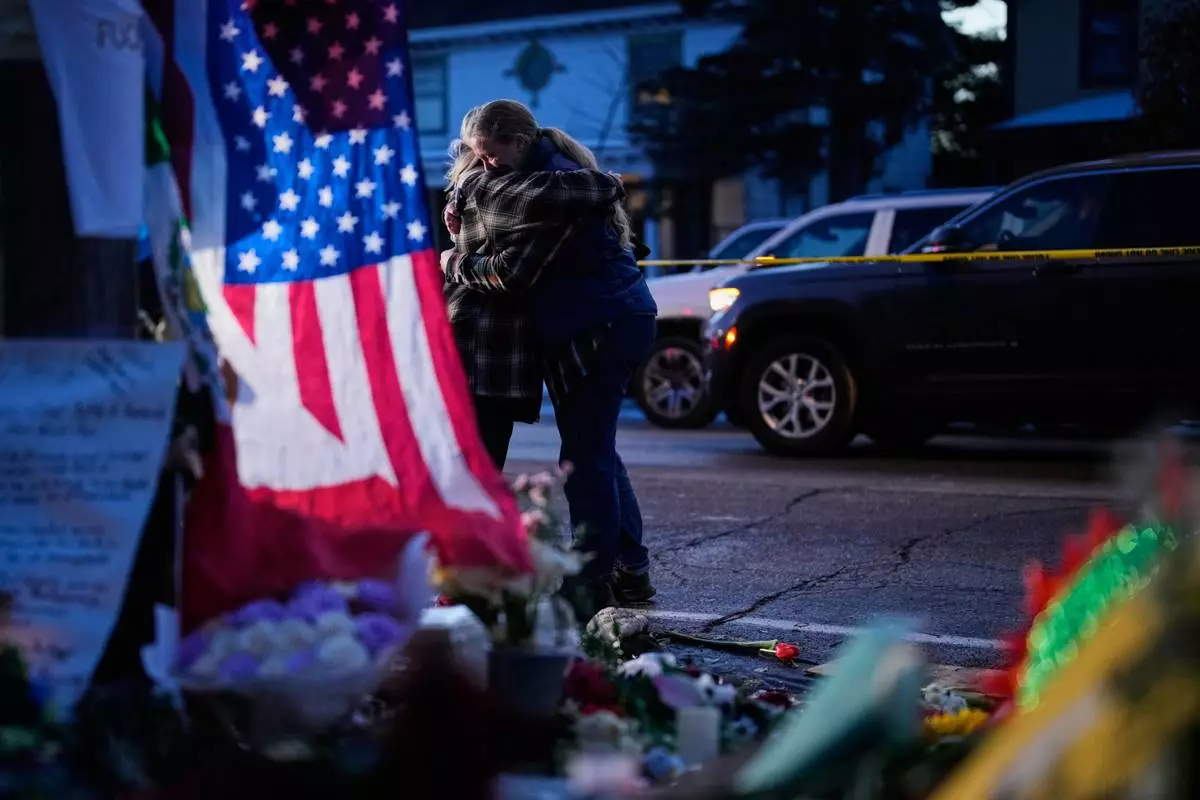
Monica Travis shares an embrace while visiting a makeshift memorial for Renee Good, who was fatally shot by an ICE officer last week, Monday, Jan. 12, 2026, in Minneapolis. (AP Photo/John Locher)
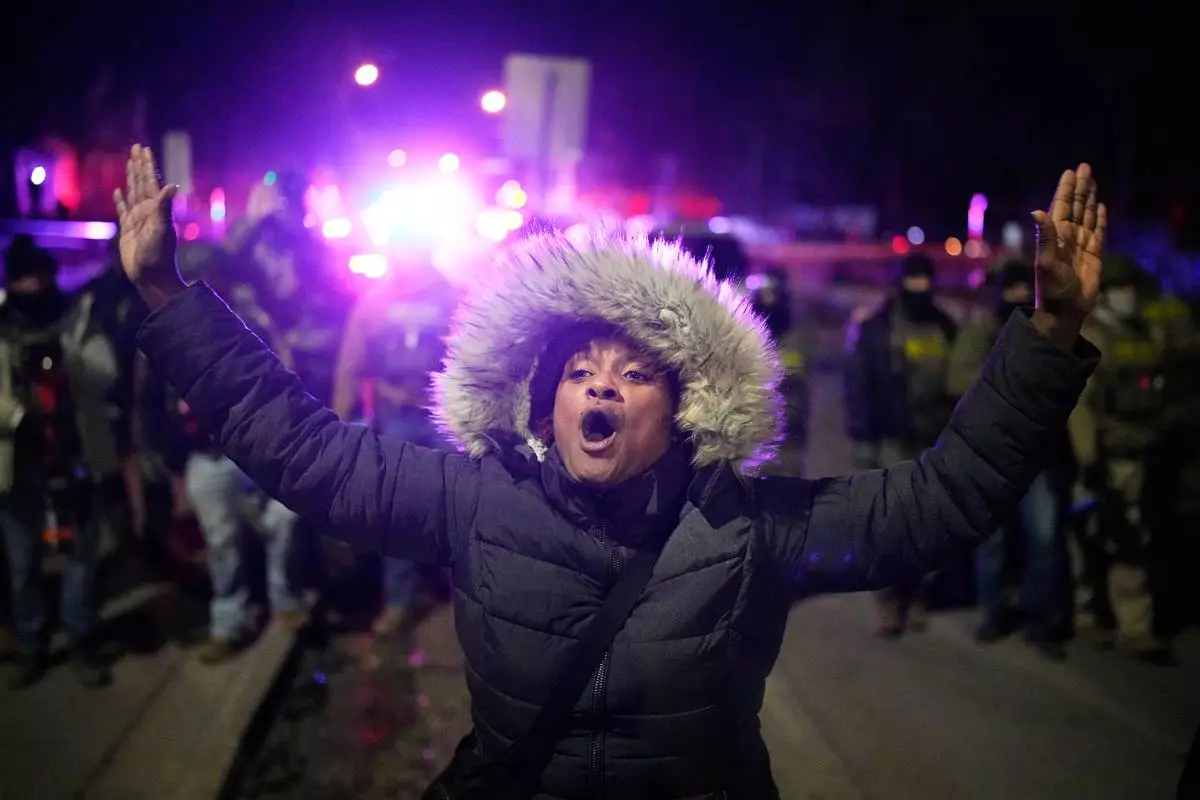
A protester yells in front of law enforcement after a shooting on Wednesday, Jan. 14, 2026, in Minneapolis. (AP Photo/John Locher)
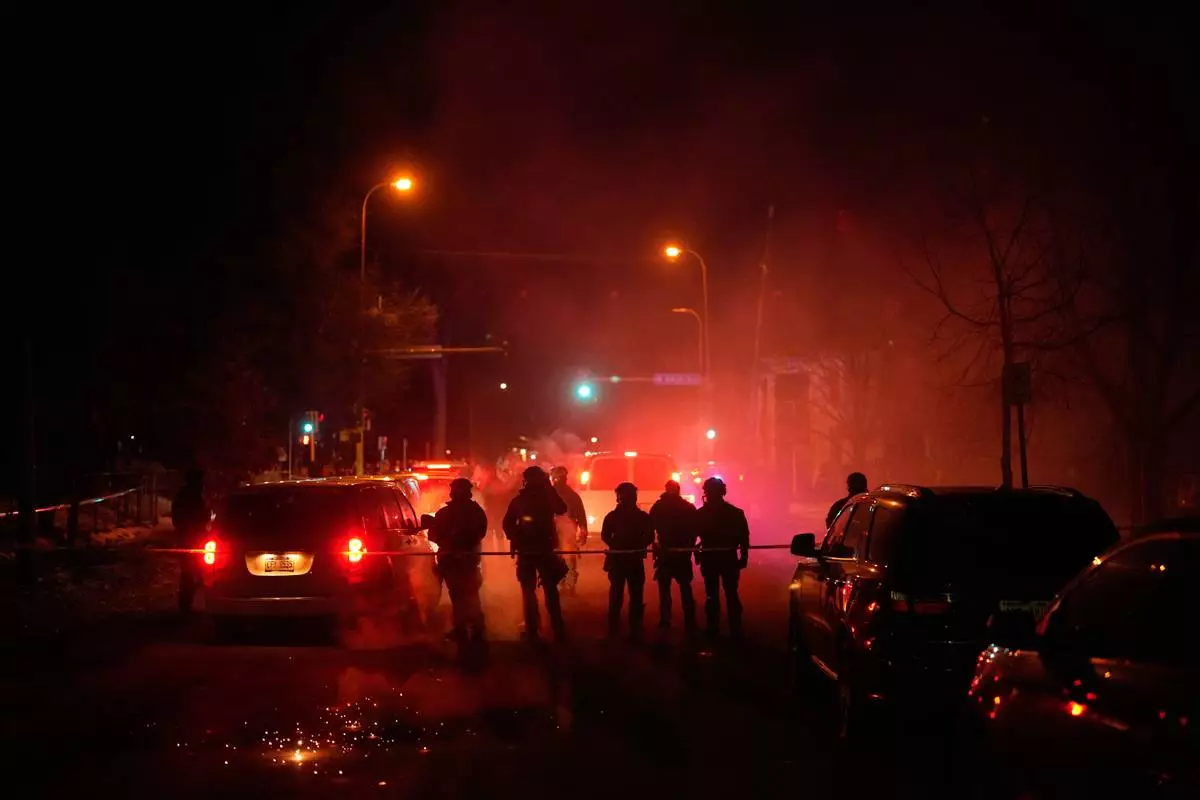
Tear gas surrounds federal law enforcement officers as they leave a scene after a shooting on Wednesday, Jan. 14, 2026, in Minneapolis. (AP Photo/John Locher)
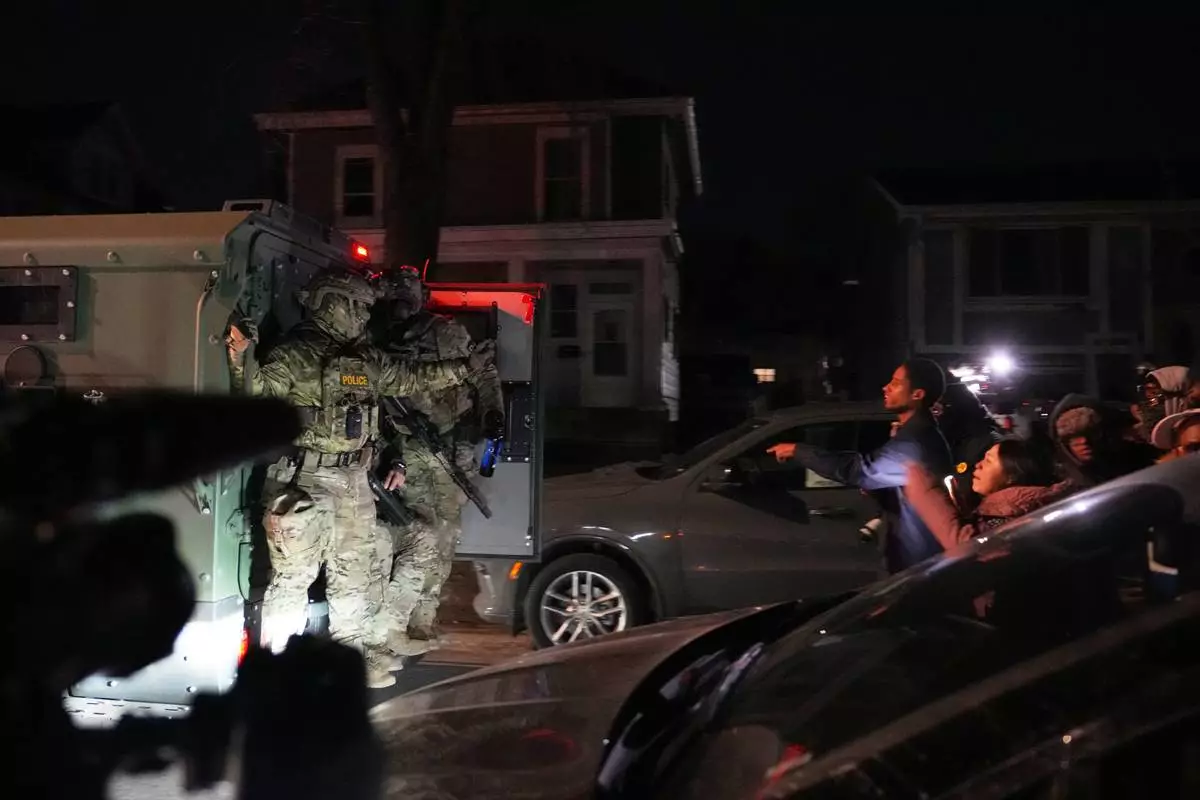
Protesters shout at law enforcement officers after a shooting on Wednesday, Jan. 14, 2026, in Minneapolis. (AP Photo/Abbie Parr)
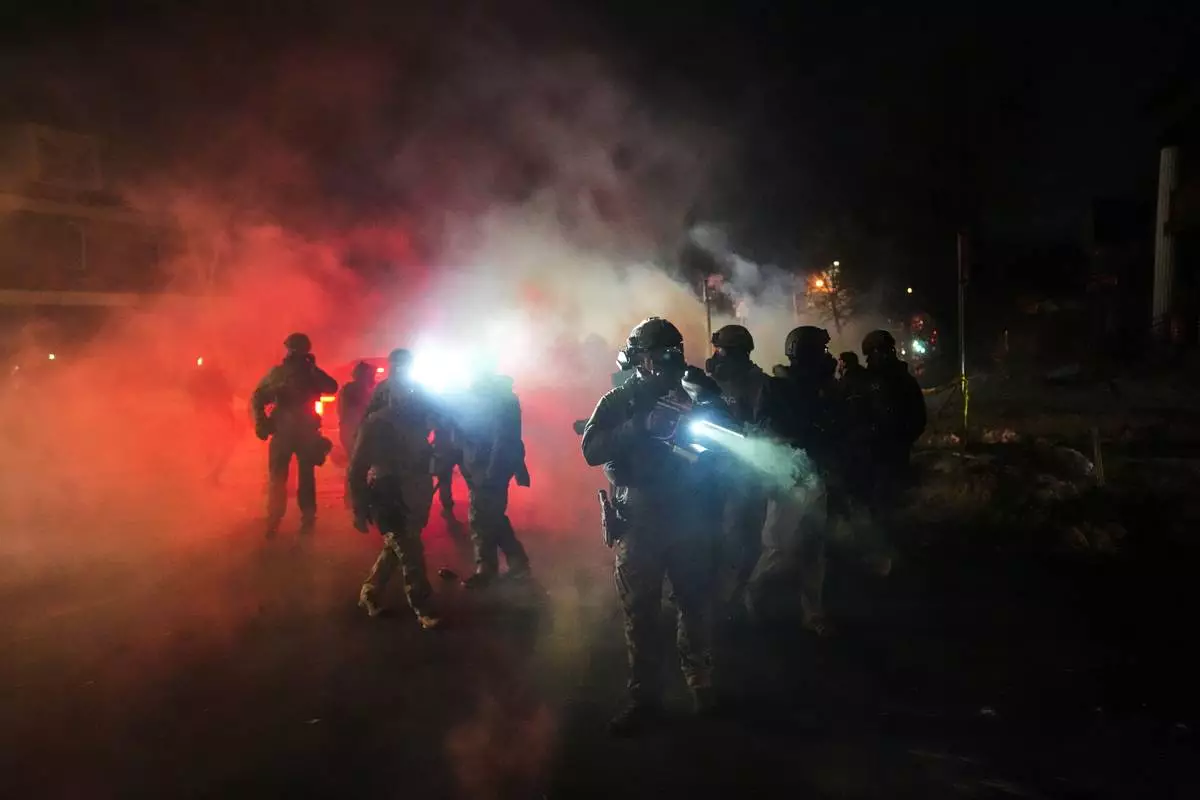
Law enforcement officers stand amid tear gas at the scene of a reported shooting Wednesday, Jan. 14, 2026, in Minneapolis. (AP Photo/Adam Gray)