NEW YORK (AP) — Businesses rattled by President Donald Trump's on again, off again tariffs absorbed more jolts on Thursday after a U.S. appeals court temporarily blocked a federal court order that would have halted most of his taxes on foreign imports.
A three-judge panel of the U.S. Court of International Trade ruled late Wednesday that Trump overstepped his authority when he invoked the 1977 International Emergency Economic Powers Act to declare a national emergency as justification for his wide-ranging tariffs.
But a federal appeals court on Thursday afternoon granted a motion allowing the government to continue collecting tariffs under the emergency powers law while the Trump administration challenges the trade court's decision.
Even before the Court of Appeals for the Federal Circuit stepped in, business owners and the National Retail Federation had said that without a definitive word in the case, the Wednesday ruling only created more uncertainty and made it harder to budget and plan.
“The ruling by the U.S. Court of International Trade blocking most of President Trump’s tariffs is just another chapter in this difficult journey toward a clear, consistent and strategic trade policy," Jonathan Gold, the trade group's vice president of supply chain and customs policy, said in an emailed statement. "We urge rapid resolution as this process continues in the courts.”
The president invoked the emergency powers law in early April when he imposed varying import tax rates on products from dozens of countries, including the biggest trading partners of the U.S. After financial markets showed signs of panic, Trump lowered the rate to 10% for every country except China, whose goods were taxed at 145%.
Jonathan Silva, the owner of WS Game Company, said he did not intend to change his plans based on the ruling. He has the board games his company sells made in China,
“We know that this will take time for the appeals process to take place and a final ruling to be instituted,” Silva said. “But we are hopeful that this will be the beginning of a more academic use of tariffs in the coming months and years. All we want to do is have certainty in the environment that we are operating in, as the day-to-day retaliations and pauses are not conducive to business operations.”
The CEO of electronics retailer Best Buy, Corie Barry, told reporters on Thursday that the legal news did not make her more or less optimistic but rather underscored the importance of continuing to remain agile while not changing course in response to near-daily tariff developments.
“I don’t think there’s anything we would do differently based on the news overnight,” Barry said. “What I really tried to work with the team on is to not actually overreact to any given moment in time, but instead to stay maniacally focused on our customers and ensure we are bringing the right assortment, price, and (promotions) to them, whatever the backdrop.”
Barry told analysts that Best Buy has taken a variety of steps to offset higher tariff costs, including pushing vendors to spread out where they do manufacturing. The company is increasing some prices to absorb tariff-related costs, she said, calling the move “a last resort.” She declined to be specific given the fluid situation.
Jim Umlauf, whose business, 4Knines, based in Oklahoma City, makes vehicle seat covers and cargo liners for dog owners and others, said the court ruling did not offer reassurance but only further complicated his decision-making.
“At this point, we don’t know whether the decision will hold, whether it applies to (Trump's) original 2018 tariffs, or how it will be enforced,” he said. “Without clarity, we’re left planning around a moving target. Like many others, we’ve already locked in quotes and made purchasing decisions assuming tariffs would remain in place. This development, rather than offering relief, introduces new logistical complications at the worst possible time.”
Kelsey O’Callaghan, the founder of a Salt Lake City kitchen and bathroom accessories company called Dorai Home, said she expected the trade war to continue. The constant flux since Trump's return to office has made her “numb,” but O'Callaghan said she has tried to make educated decisions.
The company already postponed the launch of several new products, laid off the CEO and some other key employees. It paused order shipments from China in early April but resumed some on a staggered basis when the president Trump lowered the rate for Chinese goods to 30% for 90 days.
Now, Dorai Home plans to test price increases to see if shoppers will still buy its products.
“In a business sense, you have to try to create as much certainty and stability as you can with the variables you can control," O’Callaghan said.
But some businesses were more optimistic. Burlington Coat Factory CEO Michael B. O’Sullivan said Thursday that the tariff pause might help discount retailers like his that buy excess inventory from other retail companies.
The court ruling and continued uncertainty may further fuel a production race that started when the tariff rate for Chinese products were substantially reduced, O'Sullivan said.
“There’s now a huge rush on production and shipping across the industry. Now, the court decision last night could add to that rush,” he said. “Instead of shortages, this topsy-turvy stop/start surge has the potential to create attractive buying opportunities.”
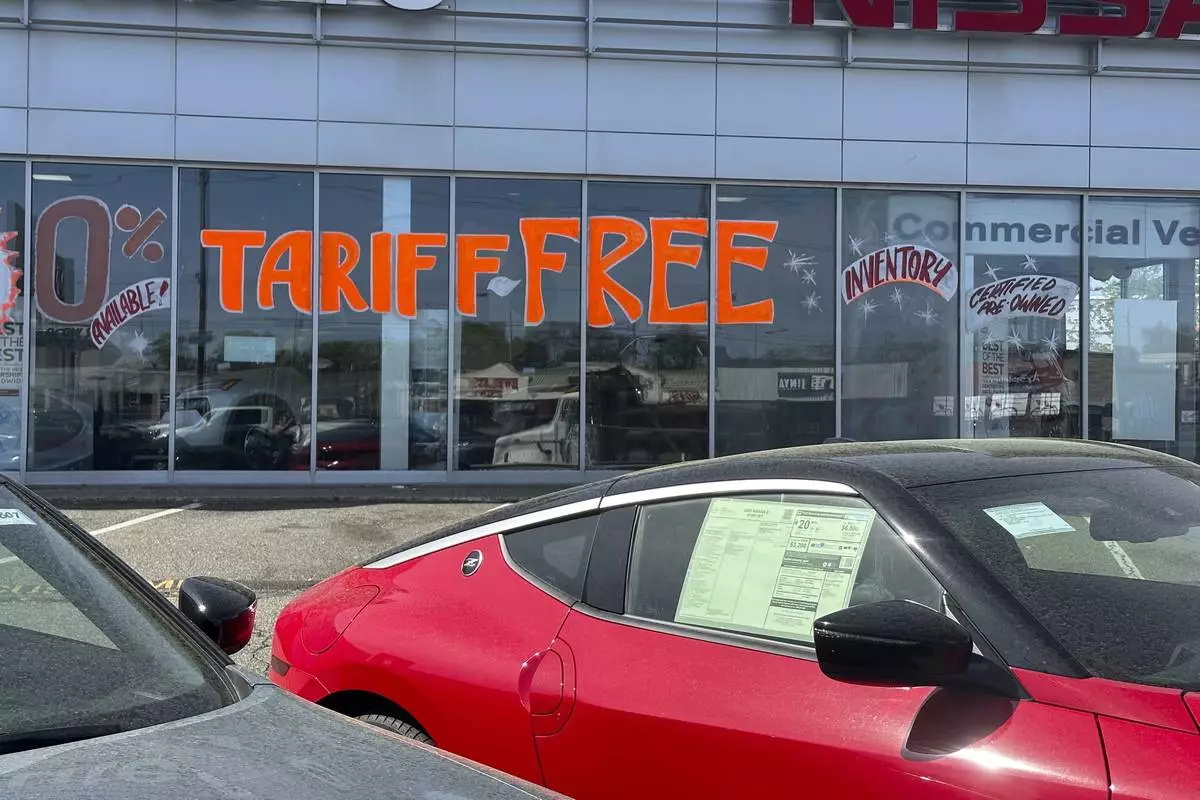
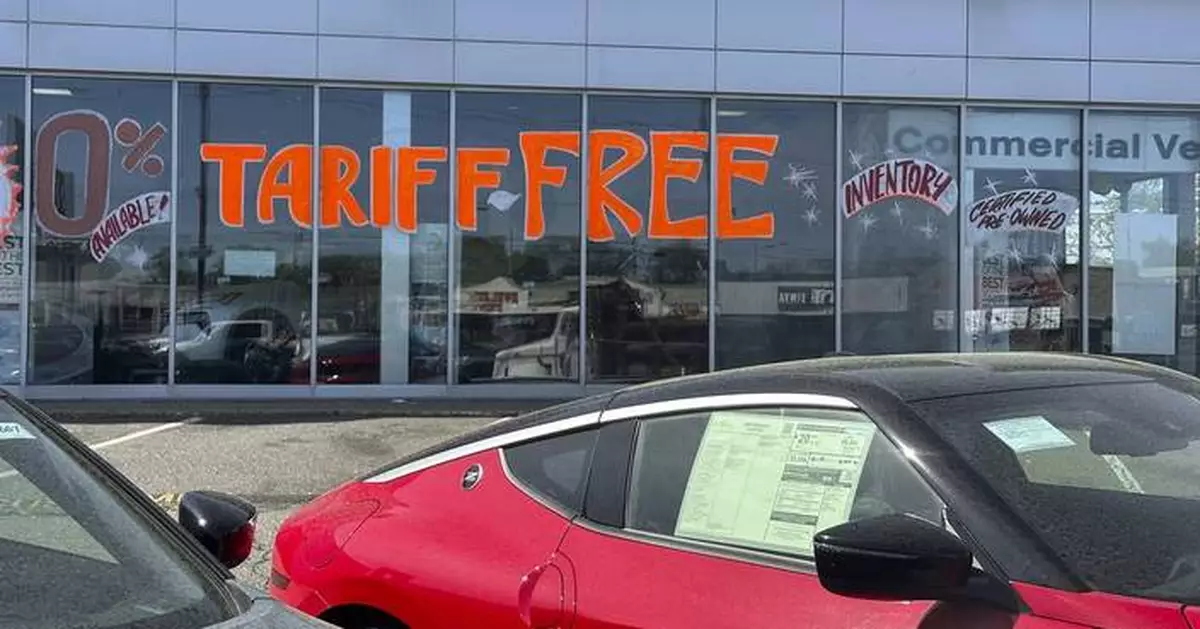
FILE - A Tariff Free sign to attract vehicle shoppers is at an automobile dealership in Totowa, N.J., on April 30, 2025. (AP Photo/Ted Shaffrey)
DUBAI, United Arab Emirates (AP) — Iranians could call abroad on mobile phones Tuesday for the first time since communications were halted during a crackdown on nationwide protests in which activists said at least 646 people have been killed.
Several people in Tehran were able to call The Associated Press and speak to a journalist there. The AP bureau in Dubai, United Arab Emirates, was unable to call those numbers back. The witnesses said SMS text messaging still was down and that internet users in Iran could connect to government-approved websites locally but nothing abroad.
The witnesses gave a brief glimpse into life on the streets of the Iranian capital over the four and a half days of being cut off from the world. They described seeing a heavy security presence in central Tehran.
Anti-riot police officers, wearing helmets and body armor, carried batons, shields, shotguns and tear gas launchers. They stood watch at major intersections. Nearby, the witnesses saw members of the Revolutionary Guard's all-volunteer Basij force, who similarly carried firearms and batons. Security officials in plainclothes were visible in public spaces as well.
Several banks and government offices were burned during the unrest, they said. ATMs had been smashed and banks struggled to complete transactions without the internet, the witnesses added.
However, shops were open, though there was little foot traffic in the capital. Tehran's Grand Bazaar, where the demonstrations began Dec. 28, was to open Tuesday. However, a witness described speaking to multiple shopkeepers who said the security forces ordered them to reopen no matter what. Iranian state media had not acknowledged that order.
The witnesses spoke on condition of anonymity for fear of reprisal.
Many remain concerned about a possible military strike by the U.S., even as President Donald Trump has said Iran wants to negotiate with Washington.
“My customers talk about Trump’s reaction while wondering if he plans a military strike against the Islamic Republic,” said shopkeeper Mahmoud, who gave just his first name out of concerns for his safety. “I don’t expect Trump or any other foreign country cares about the interests of Iranians.”
Reza, a taxi driver who also gave just his first name, said protests also remain front of mind for many.
“People — particularly young ones — are hopeless but they talk about continuing the protests," he said.
Meanwhile, it appeared that security service personnel were searching for Starlink terminals as people in northern Tehran reported authorities raiding apartment buildings with satellite dishes. While satellite television dishes are illegal, many in the capital have them in their homes and officials broadly had given up on enforcing the law in recent years.
On the streets, people also could be seen challenging plainclothes security officials, who were stopping passersby at random.
State television also read a statement about mortuary and morgue services being free — a signal some likely charged high fees for the release of bodies amid the crackdown.
Iranian Foreign Minister Abbas Araghchi, speaking to the Qatar-funded satellite news network Al Jazeera in an interview aired Monday night, said he continued to communicate with U.S. envoy Steve Witkoff.
The communication “continued before and after the protests and are still ongoing," Araghchi said. However, “Washington’s proposed ideas and threats against our country are incompatible.”
White House press secretary Karoline Leavitt said Iran’s public rhetoric diverges from the private messaging the administration has received from Tehran in recent days.
“I think the president has an interest in exploring those messages,” Leavitt said. “However, with that said, the president has shown he’s unafraid to use military options if and when he deems necessary, and nobody knows that better than Iran.”
Meanwhile, pro-government demonstrators flooded the streets Monday in support of the theocracy, a show of force after days of protests directly challenging the rule of 86-year-old Supreme Leader Ayatollah Ali Khamenei. Iranian state television aired chants from the crowd, which appeared to number in the tens of thousands, who shouted “Death to America!” and “Death to Israel!”
Others cried out, “Death to the enemies of God!” Iran’s attorney general has warned that anyone taking part in protests will be considered an “enemy of God,” a death-penalty charge.
Trump announced Monday that countries doing business with Iran will face 25% tariffs from the United States. Trump announced the tariffs in a social media posting, saying they would be “effective immediately.”
It was action against Iran for the protest crackdown from Trump, who believes exacting tariffs can be a useful tool in prodding friends and foes on the global stage to bend to his will.
Brazil, China, Russia, Turkey and the United Arab Emirates are among economies that do business with Tehran.
Trump said Sunday that his administration was in talks to set up a meeting with Tehran, but cautioned that he may have to act first as reports of the death toll in Iran mount and the government continues to arrest protesters.
“I think they’re tired of being beat up by the United States,” Trump said. “Iran wants to negotiate.”
Iran, through the country’s parliamentary speaker, warned Sunday that the U.S. military and Israel would be “legitimate targets” if Washington uses force to protect demonstrators.
More than 10,700 people also have been detained over the two weeks of protests, said the U.S.-based Human Rights Activists News Agency, which has been accurate in previous unrest in recent years and gave the latest death toll early Tuesday. It relies on supporters in Iran crosschecking information. It said 512 of the dead were protesters and 134 were security force members.
With the internet down in Iran, gauging the demonstrations from abroad has grown more difficult. The Associated Press has been unable to independently assess the toll. Iran’s government hasn’t offered overall casualty figures.
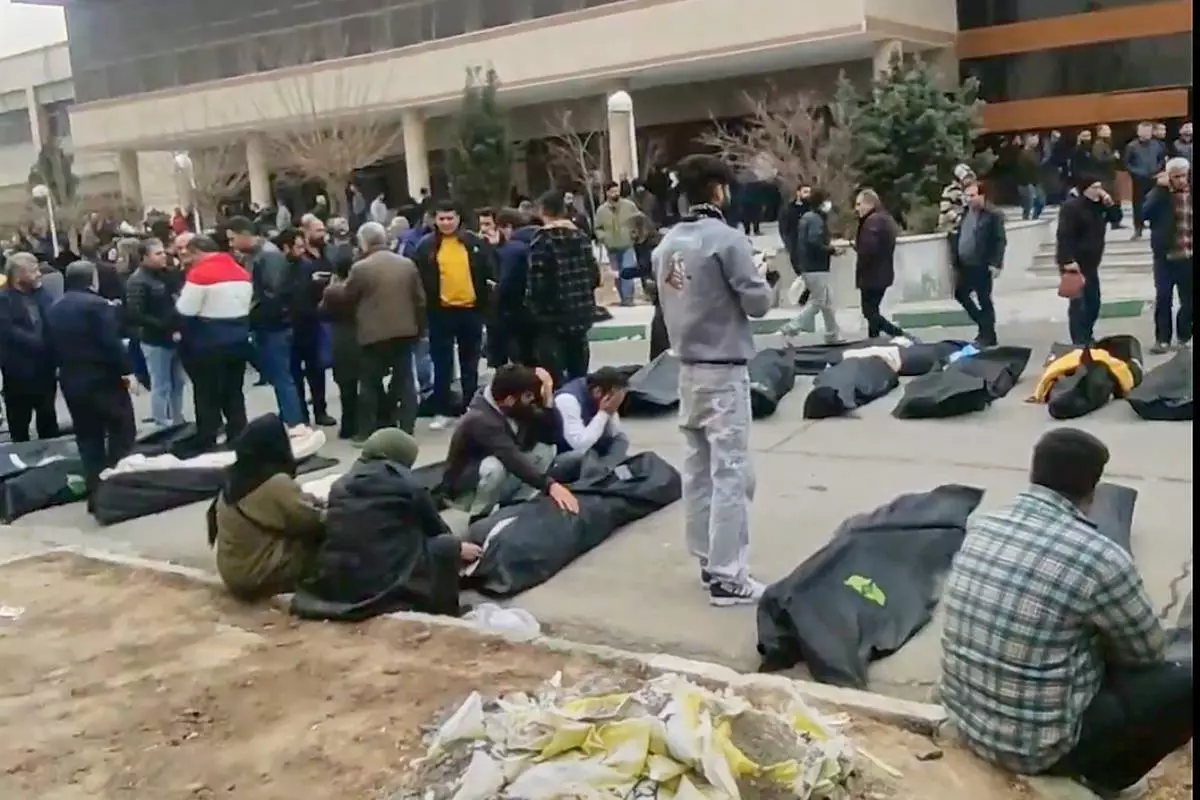
This frame grab from videos taken between Jan. 9 and Jan. 11, 2026, and circulating on social media purportedly shows images from a morgue with dozens of bodies and mourners after crackdown on the outskirts of Iran's capital, in Kahrizak, Tehran Province. (UGC via AP)
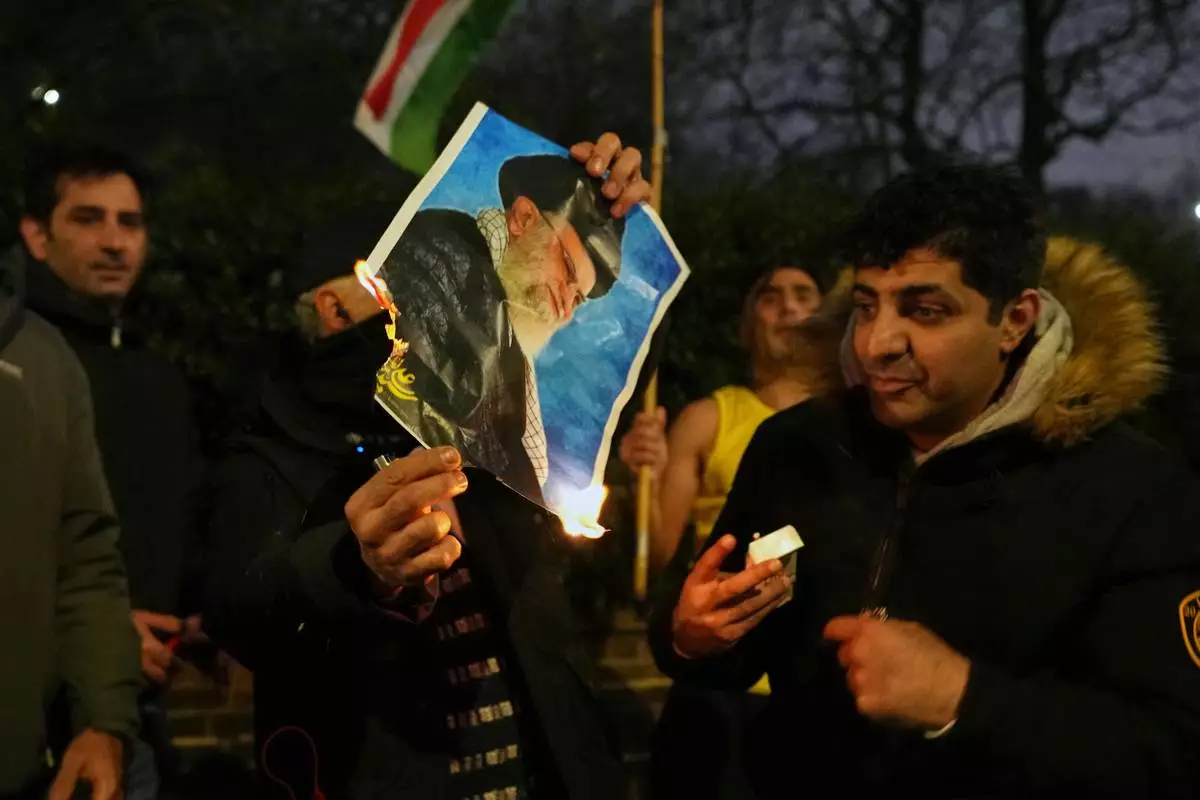
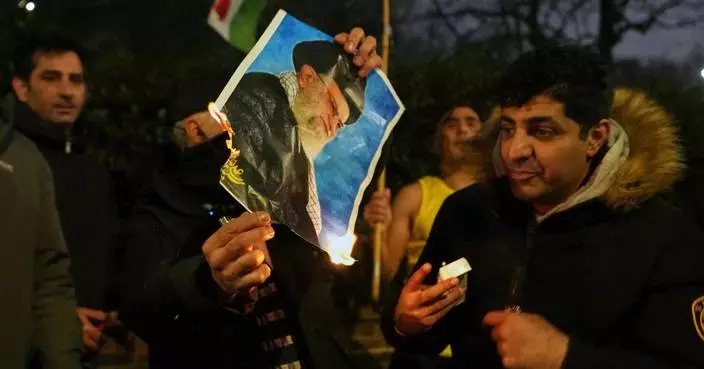
A picture of Ayatollah Ali Khamenei is set alight by protesters outside the Iranian Embassy in London, Monday, Jan. 12, 2026. (AP Photo/Alastair Grant)
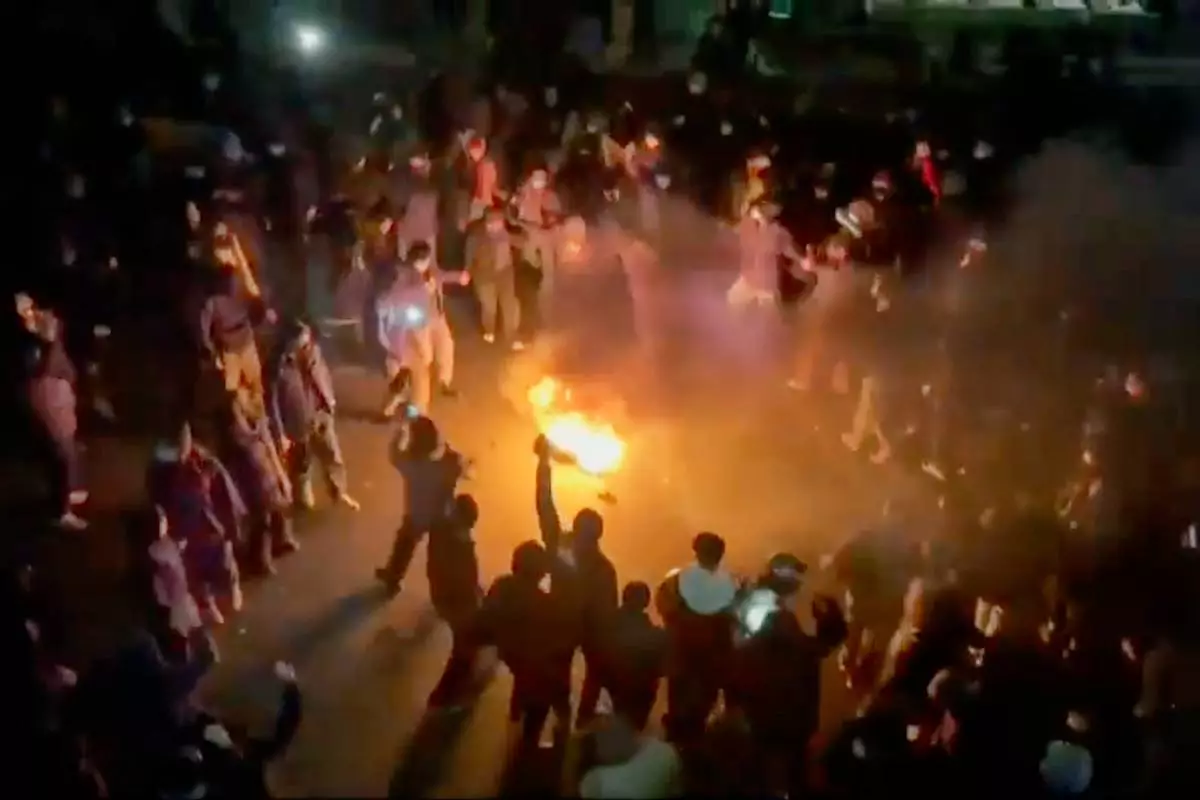
In this frame grab from footage circulating on social media shows protesters dancing and cheering around a bonfire as they take to the streets despite an intensifying crackdown as the Islamic Republic remains cut off from the rest of the world, in Tehran, Iran, Friday, Jan. 9, 2026.(UGC via AP)
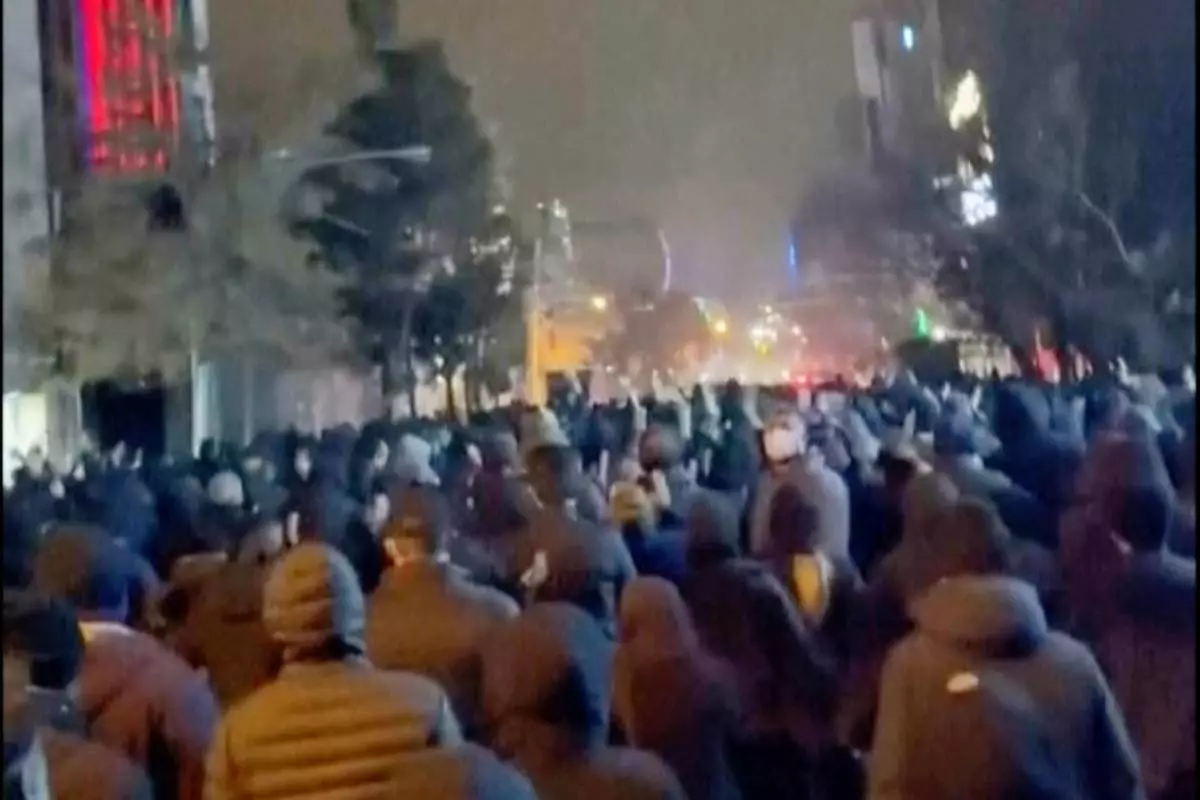
In this frame grab from footage circulating on social media from Iran showed protesters once again taking to the streets of Tehran despite an intensifying crackdown as the Islamic Republic remains cut off from the rest of the world in Tehran, Iran, Saturday Jan. 10, 2026. (UGC via AP)
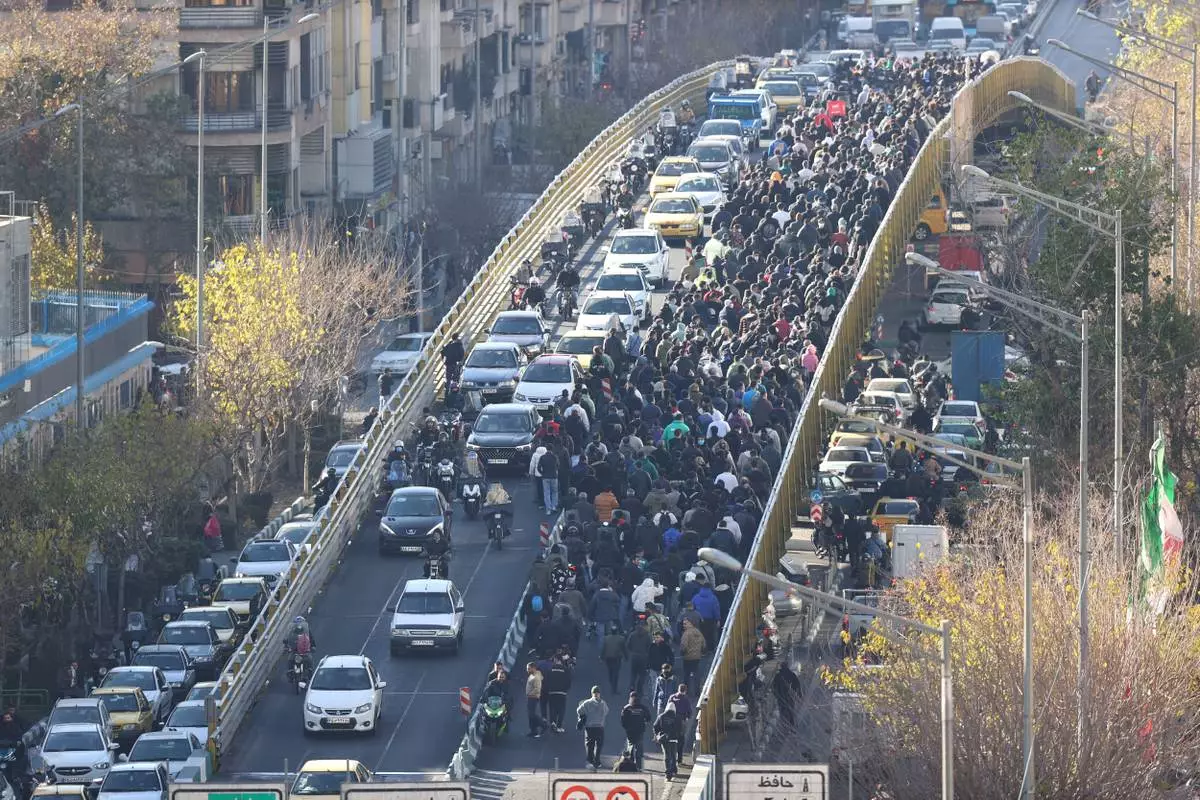
FILE - Protesters march on a bridge in Tehran, Iran, on Dec. 29, 2025. (Fars News Agency via AP, File)