The 22nd edition of the Shangri-La Dialogue, Asia's premier defense and security summit, opened in Singapore on Friday amid geopolitical tensions.
This year's dialogue drew representatives from more than 40 countries, including 40 ministerial-level delegates, 20 chief of defense forces-level delegates, over 20 senior defense officials, and prominent academics, according to the Singapore Ministry of Defense.
A Chinese delegation from the National Defense University of the Chinese People's Liberation Army is attending the event.
French President Emmanuel Macron is set to deliver a keynote speech late Friday, where he's expected to position France -- and Europe -- as champions of international cooperation and rules-based trade.
U.S. Defense Secretary Pete Hegseth is set to speak on Saturday about America's "new ambitions for Indo-Pacific security". Observers say he faces a tough task in convincing Asian allies, many of whom remain uneasy about President Donald Trump's disruptive policies, not least those related to trade.
Malaysian Prime Minister Anwar Ibrahim will also give a speech on Saturday and make clear how, amid global geopolitical uncertainties and sharpened geo-economic fault lines, Malaysia as ASEAN's current chair, provides strategic leadership for the region and beyond, according to the International Institute for Strategic Studies, the organizer.
EU High Representative for Foreign Affairs and Security Policy Kaja Kallas is also scheduled to speak on Saturday.
Analysts say key topics will likely include regional cooperation, the U.S. security policies and the ongoing Russia-Ukraine conflict. The implications of sweeping U.S. tariffs are also likely to attract attention, as officials will use the platform to reassure partners and navigate an increasingly multipolar security landscape.
The Dialogue runs from Friday through Sunday.
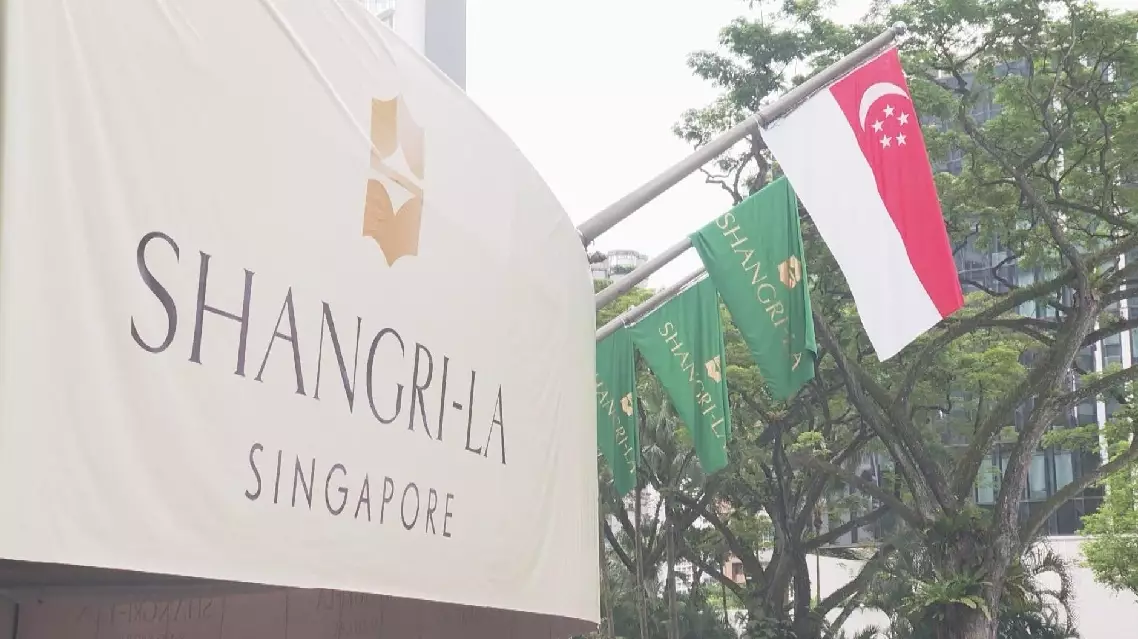
Shangri-La Dialogue 2025 opens in Singapore amid geopolitical tensions
Based on preliminary results released recently, four ancient sites in the Yangtze River Basin have been shortlisted for the final evaluation of China's top 10 archaeological discoveries of 2025.
The four sites span from prehistoric times to the Han Dynasty (202 BC-AD 220) and the Six Dynasties period (222-589). Together, they offer evidence of early human activity as well as remnants of ancient capitals at their peak.
The Chuandong Site is located in Puding County, southwest China's Guizhou Province. Last year, large quantities of artifacts made of stone, bone, and horn were unearthed there, indicating prehistoric human activity dating back more than 55,000 years.
The Shenduntou Site, a typical Zhou Dynasty (1046BC-256BC) copper smelting site in the lower Yangtze River region in east China's Anhui Province, was part of the early Wu Kingdom's official industrial system. It holds great significance for the study of the development of bronze civilization in the Yangtze River basin.
Another shortlisted site, the Jinan City Site, lies in the northern suburbs of Jingzhou City, central China's Hubei Province. Covering an area of approximately 16 square kilometers, it is the largest capital city site from the pre-Qin period (before 221 B.C.) in southern China.
Outside the ancient city, multiple other sites and tombs have been discovered, spanning a total area of over 1,000 square kilometers. The sheer scale of the city ruins and surrounding burial grounds reflect the social landscape of the ancient Chu State at the height of its power.
The final shortlisted site comprises the remains of the capital of the ancient Yue State and the Kuaiji Commandery from the Han to the Six Dynasties period, located in the city of Shaoxing in east China's Zhejiang Province.
This site provides important clues for understanding the layout of the Yue capital and its ritual system. It also offers key evidence for studying the continuity of Chinese civilization and the development of construction techniques in southern China's wetland area.
The unique humid climate and extensive river systems of the Yangtze River Basin have shaped the distinctive cultural character of these sites, reinforcing the view that the Yangtze River Basin is a vital part of the diverse yet unified pattern of Chinese civilization.
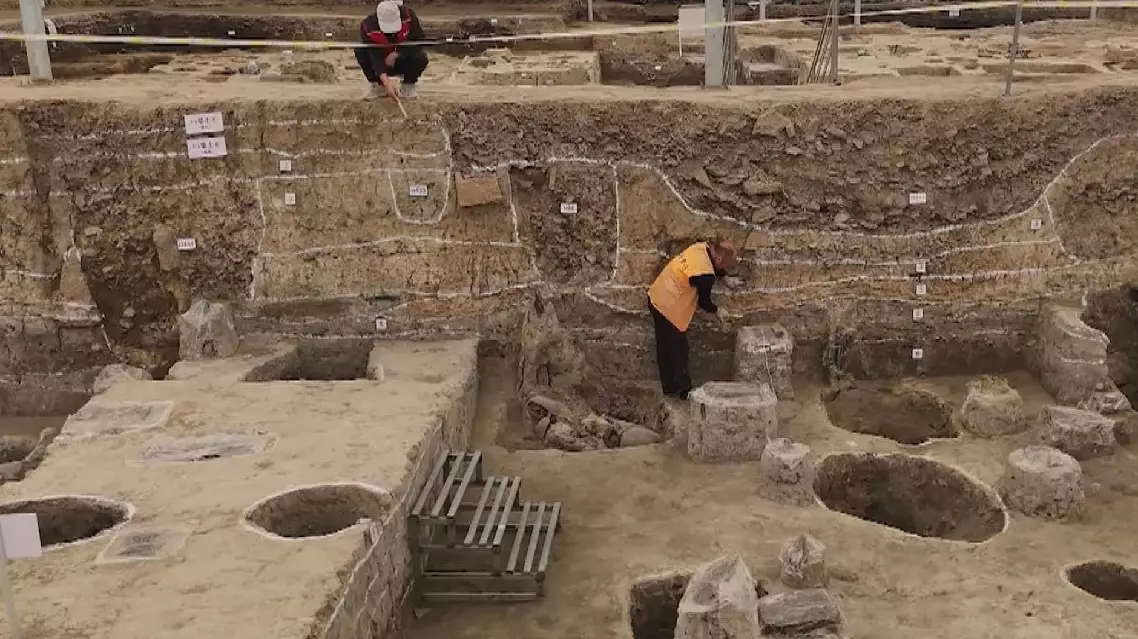
Four sites in Yangtze River Basin shortlisted for final evaluation of China's top 10 archaeological discoveries of 2025