Officials and experts from China and Central Asian countries gathered Friday in Astana, Kazakhstan to discuss governance, cultural exchanges and humanitarian cooperation.
More than 260 participants from China and five Central Asian countries -- Kazakhstan, Uzbekistan, Tajikistan, Kyrgyzstan, and Turkmenistan -- exchanged views on the common approaches to progressing modernization and deepening regional cooperation.
The senior officials and experts explored how to enhance cooperation under the Belt and Road Initiative, support each other in following development paths in line with their national conditions, promote the establishment of a fairer and more reasonable international order, and strengthen international cultural and people-to-people exchanges.
Experts highlighted the importance of promoting humanitarian integration to facilitate cooperation in various other fields.
"We must remember that all economic, technical, and transport projects are done by people. Therefore, when we talk about humanitarian cooperation, nothing will grow without this field. Behind any technology, calculations, or investment there are people," said Adil Kaukenov, director of the Kazakhstan Center for Chinese Studies.
The participants said that this event further strengthened the exchange of governance experience between China and Central Asian countries and injected new impetus into deepening practical cooperation in various fields, allowing for the joint promotion of modernization and the building of a closer China-Central Asia community with a shared future.
"We have very close contact with our Chinese colleagues. Four laboratories and international centers have been created based on the National Academy of Sciences with the help of our Chinese partners. I would say our work in this direction is very active," said Mamurdzhon Mirvaisov, head of the Department of International Scientific Relations of Tajikistan
"Party cooperation is now at a new level and also contributes to economic, humanitarian and cultural development. Within the framework of the memorandum signed with the Communist Party of China, young politicians can exchange views on technology, business, and education," said Daulet Karibek, executive secretary of Kazakhstan's AMANAT Party.
The event came ahead of the Central Asia-China Summit, scheduled for June in Astana.
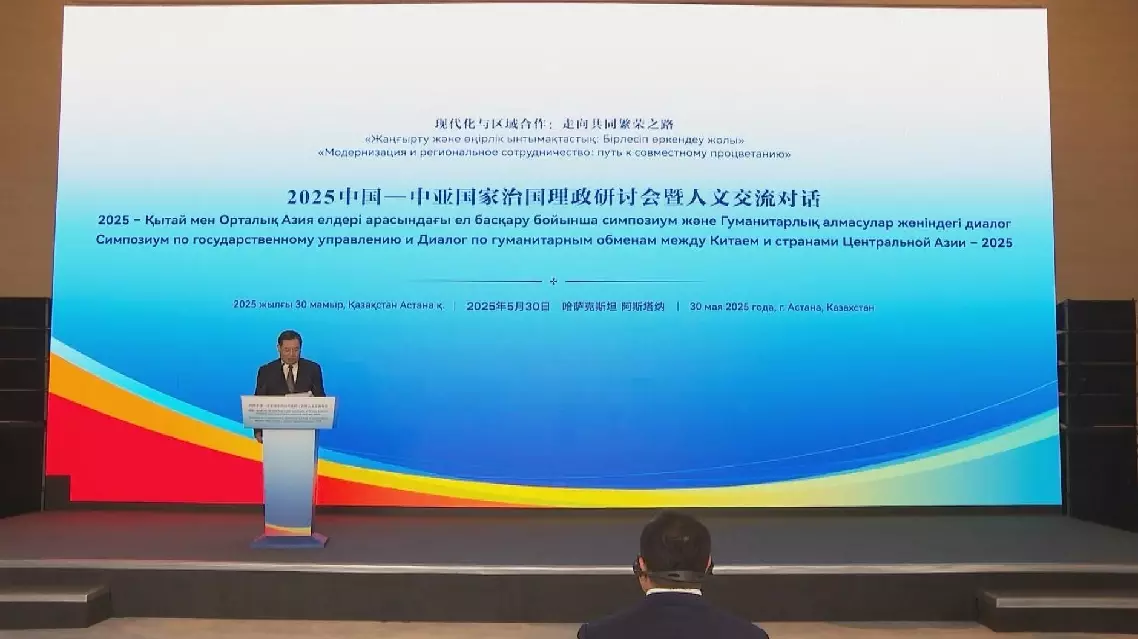
Officials from China, Central Asia discuss governance, cultural exchanges
Buyers and exhibitors began making valuable new connections on opening day of the 140th Canton Fair, where international attendees discovered the latest products ranging from AI glasses to air conditioners.
About 86,000 overseas buyers from 208 countries and regions traveled to south China’s Guangzhou to attend the first day of the event, also known as the China Import and Export Fair.
Throughout the full multi-phase event, more than 30,000 exhibiting companies and about 340,000 overseas buyers are expected to attend.
Serving as a barometer of China's foreign trade, this year's fair, marking its 70th anniversary, features innovation, intelligence, greater specialization and higher quality. The Canton Fair is one of the world's few one-stop trade platforms offering a complete range of products and technologies.
Among the exhibitors, over 11,000 are niche-market leaders or specialized enterprises known for sophisticated technologies and novel products. Technology adoption runs high, with roughly 64 percent embracing innovations such as the industrial internet and AI. New and green products also set records, appearing at 23 percent and 26 percent of exhibits respectively, with more than 700 launch events planned.
At the "home appliances" exhibition area, a Chinese foreign trade company brought its newly launched solar-powered air conditioner. Against the backdrop of continuously rising energy prices, this category of products is increasingly popular among overseas customers.
"We buy air conditioning split units. We've been having very good feedback from our customers when we were coming here. Everyone is coming to Canton Fair, everyone is buying some goods and it's a very good business. And also there are many opportunities, and anything you bring from Canton Fair, there are very good profits," said Mohannad Waia, a buyer from Dubai.
In order to further expand the market, Chinese foreign trade enterprises are adapting to the needs of different regional markets through product innovation, and their overseas markets are continuously expanding.
"Based on the special needs of many countries, for example, this year we focused on launching this split air conditioner that requires no professional installation and no drilling for the European market. In fact, the industry as a whole has seen quite rapid growth this year. As for our company, we achieved an overall growth rate of 26 percent," said Liu Rongqiang, an exhibitor.
Since the beginning of this year, the import and export of AI products have maintained a momentum of rapid growth. Many Chinese companies in this sector have substantially enhanced their capacity for international operations by developing new products and improving production quality and efficiency.
"Our products mainly focus on AI and wearables. We have carried out product development spanning from hardware to software to the cloud. Through the Canton Fair, we have developed business contacts with clients from Brazil, Russia, and the Middle East over the past few years," said Zeng Zhitao, another exhibitor.
The 140th Canton Fair runs in three phases in Guangzhou from Oct. 15 to Nov. 4.
Over the past 70 years, the Canton Fair has grown into China's largest and longest-running international trade event, with the most complete product range, the largest number of buyers and the highest transaction volume.
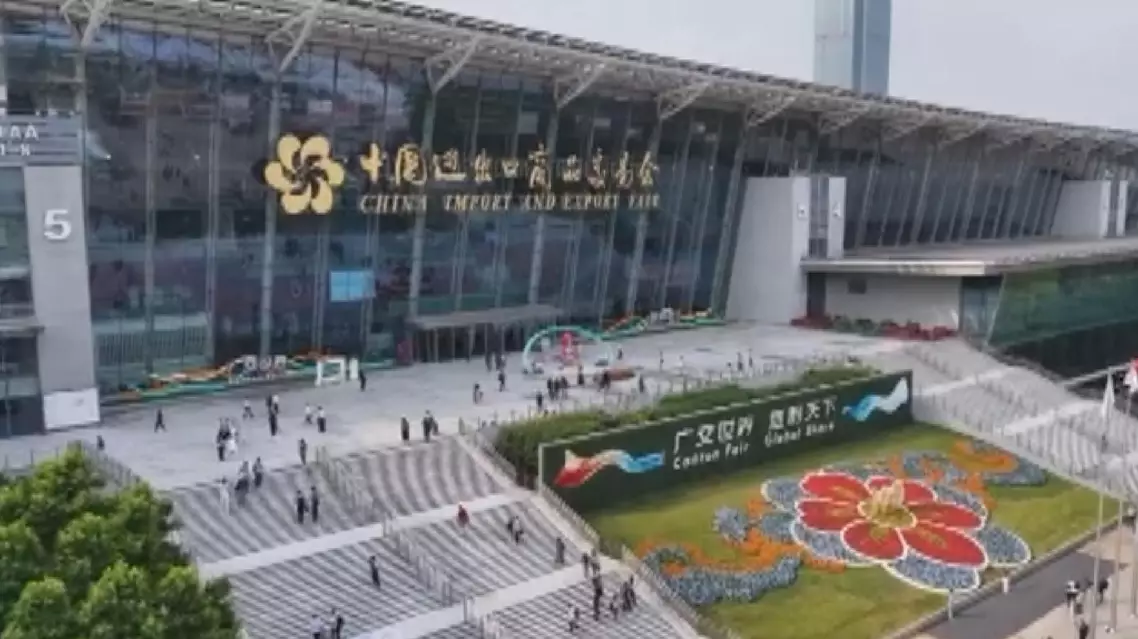
Over 80,000 overseas buyers seek new partnerships on Canton Fair's opening day
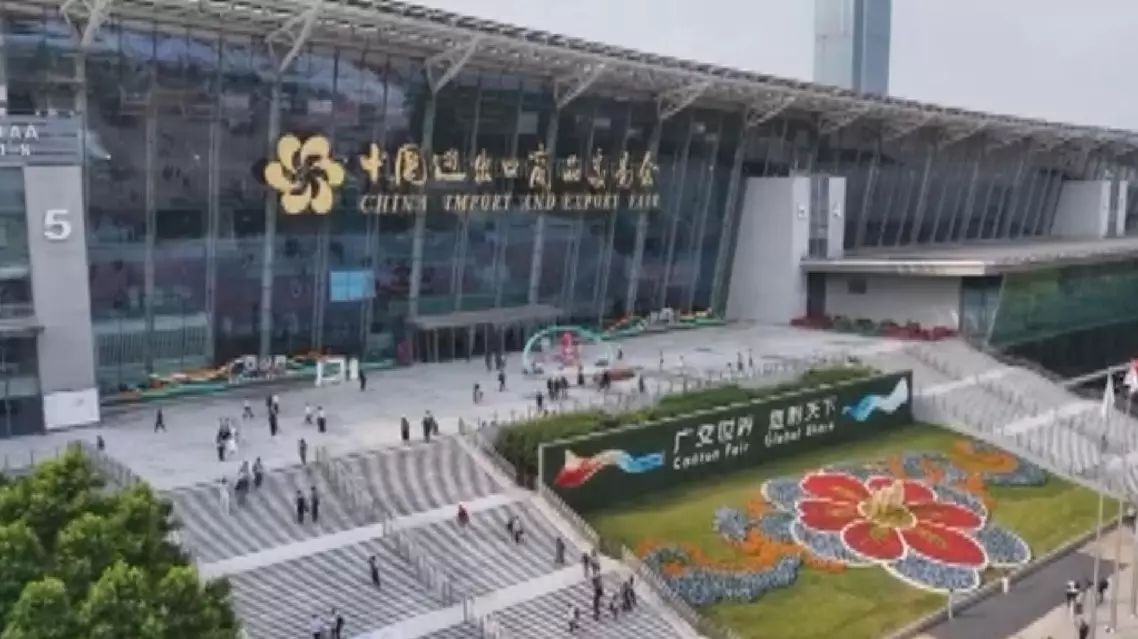
Over 80,000 overseas buyers seek new partnerships on Canton Fair's opening day