Former Greek President Prokopis Pavlopoulos has called for stable, respectful relations between China and the United States, saying that cooperation between the world's two largest economies is vital for global development and world peace.
In an exclusive interview with the China Global Television Network (CGTN), Pavlopoulos offered a cautiously optimistic assessment of the current state of China-U.S. relations.
"Taking into account (U.S.) President (Donald) Trump's statements, I believe that his remarks regarding China and (Chinese) President Xi are moving in the right direction. They demonstrate the respect of the U.S. towards China. President Xi's statements similarly show China's respect toward the U.S. It is, as I emphasized earlier, a relationship that is on the right track. And this relationship should not be disrupted, because as one understands, when China and the U.S., the two strongest economic players on a global level, cooperate internationally as has happened many times in the past, it is good both for global development and for world peace," he said.
In the interview, Pavlopoulos was also asked about the so-called "Thucydides trap" -- the theory that a rising power causes fear in an established power which escalates towards conflicts or wars, a concept drawn from the ancient Greek historian's account of the Peloponnesian War between Athens and Sparta.
In response, Pavlopoulos said that the trap is avoidable.
"What we call the 'Thucydides trap' is not accurate. Thucydides very accurately described what happened then, when Sparta believed that Athens was born to undermine it. So, not falling into this trap means not considering that one is undermining the other, but, you know, we must also make this a way of life. That is, China should not appear to desire global economic dominance over the United States, nor, of course, should the United States believe that it is inevitable for them to achieve dominance. They will develop. Of course, along the way there will be competition, but this competition should be based on cultural foundations, a dialogue of civilizations here as well, and above all, respect for international law. This is very important. Respect for the rules of international law is the foundation upon which this cooperation can be consolidated, and in this way benefit both peoples and peace," he said.
Pavlopoulos was a member of Greek parliament from 1996 to 2014 and served as the interior minister from 2004 to 2009. He served as the seventh president of Greece from 2015 to 2020 and was elected as a member of the Academy of Athens in 2022.

China-US cooperation crucial for global peace, development: former Greek president
Farmers across the U.S. Midwest, a major agricultural hub with over 200 million acres of cropland, are facing unprecedented challenges as the cost of essential agricultural inputs, particularly diesel and fertilizer, has surged in recent weeks.
This sharp increase is largely attributed to the ongoing U.S.-Israeli war with Iran, which began in late February, and its ripple effects on global markets. The rising expenses are casting a shadow over the upcoming planting season, threatening to erode profitability for many.
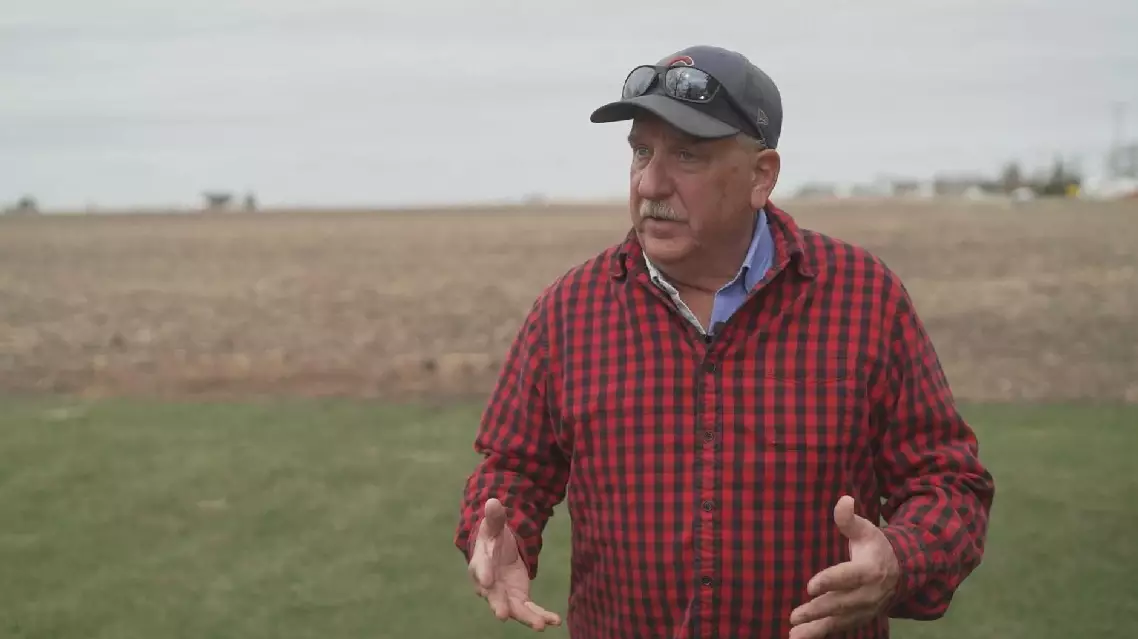
At a farm in southern Illinois, preparations for planting season are underway, a process that critically relies on the application of fertilizer. However, the cost of this vital resource has escalated dramatically.
Brian Duncan, a farmer in Illinois, highlighted the global nature of the impact.
"The Strait of Hormuz is very important for transit of fuel and fertilizer, and it's a global market. So even if the shipments that were coming here are not impacted, what we will see is a global rise in price because of that insecurity, and it will impact us here," he said.
With many U.S. farmers locking in fertilizer prices last year, the full impact on farmers is only likely to be felt later in the year, if the conflict continues and fertilizer prices remain high.
Robb Ewoldt, a farmer in the neighboring state of Iowa, echoed these concerns. He noted that while farmers have faced high costs before, the current situation is compounded by depressed commodity prices for crops like soybeans and corn, meaning farmers face the prospect of producing at a loss this year.
"We have higher cost, and that's the biggest thing. We have had our costs be higher in the past, but right now, our commodity prices are a little bit depressed, and so it's making it very challenging to be profitable and make a positive cash flow for the year," said Ewoldt.
As fertilizer prices skyrocket, concerns are growing for many farmers. In the longer term, if input costs including fertilizer remain high, the consequences for farmers could be dire.
"The sentiment is, you know, when I go to meetings, we think, well, there's going to be, some of us aren't going to be here next year because we're not going to be in business," said Ewoldt.
"I'd say it's a time of concern, perhaps a time of survival mode, where we're looking to cut costs, not make any new expenditures, and try to hang on for either a better marketplace dynamic or a significant lowering of our input costs," said Duncan.
As the planting season commences, the inherent optimism of farmers will be put to the test against a backdrop of economic uncertainty and geopolitical volatility.
Soaring diesel, fertilizer costs hit US farmers
Soaring diesel, fertilizer costs hit US farmers
Soaring diesel, fertilizer costs hit US farmers