ABUJA, Nigeria (AP) — The death toll from devastating flooding in a market town in Nigeria’s north-central state of Niger rose to at least 151 on Saturday, the local emergency service said, amid efforts to find more victims.
Torrents of predawn rainfall early Thursday unleashed the devastating flood on Mokwa, nearly 380 kilometers (236 miles) west of Abuja and a major trading and transportation hub where northern Nigerian farmers sell beans, onions and other food to traders from the south.
Click to Gallery
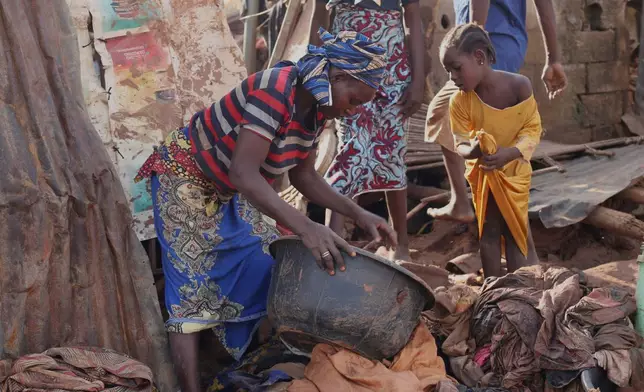
People salvage their belongings in a flooded area after heavy rainfall in the market town of Mokwa, north-central Nigeria, Saturday May 31, 2025. (AP Photo/Usman Salihu Mokwa)
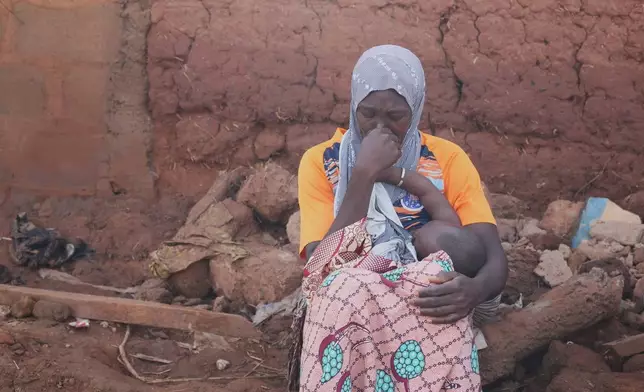
A woman sits in a flooded area after heavy rainfall in the market town of Mokwa, north-central Nigeria, Saturday May 31, 2025. (AP Photo/Usman Salihu Mokwa)
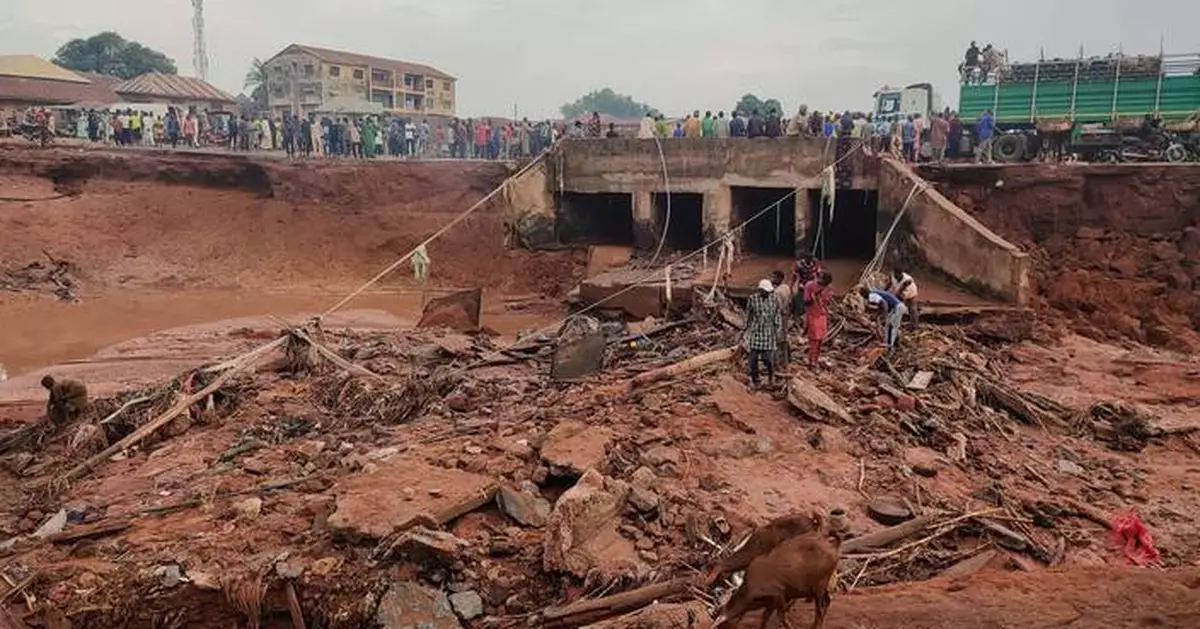
People search in flooded area following a downpour in Mokwa, Nigeria, Friday, May 30, 2025. (AP Photo/Chenemi Bamaiyi)
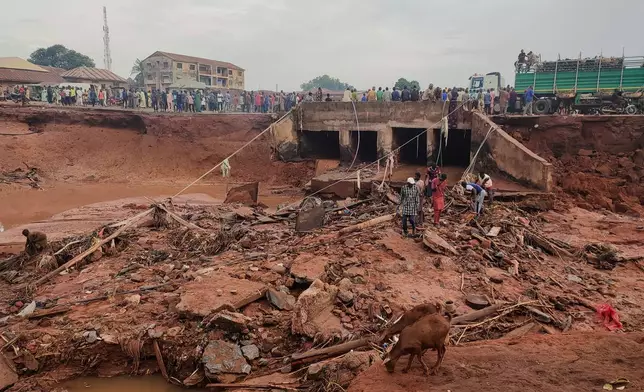
People search in flooded area following a downpour in Mokwa, Nigeria, Friday, May 30, 2025. (AP Photo/Chenemi Bamaiyi)
The spokesperson for the Niger State emergency service, Ibrahim Audu Husseini, confirmed the updated fatality count to The Associated Press on Saturday. In addition to the rising death toll, 11 people were injured and more than 3,000 people were displaced, the official added.
At least 500 households across three communities were affected by the sudden and intense flood that built rapidly in about five hours, leaving roofs barely visible and surviving residents waist-deep in water, trying to salvage what they could and rescue others.
Husseini added that two roads were washed away and two bridges collapsed.
In a statement on Friday night, President Bola Tinubu expressed condolences and said he had directed the activation of an emergency response to support victims and “accelerate” recovery.
He said that security agencies have also been asked to assist in emergency operations, which remain underway amid concerns that more bodies could be recovered in remote areas.
“Relief materials and temporary shelter assistance are being deployed without delay,” the president said, promising “no Nigerian affected will be left behind or unheard of.”
Flooding is common during Nigeria’s wet season. Communities in northern Nigeria have been experiencing prolonged dry spells worsened by climate change and excessive rainfall that leads to severe flooding during the brief wet season. But this flood has been particularly deadly in Mokwa, a farming region near the banks of the River Niger.
Mokwa community leader Aliki Musa told the AP the villagers are not used to such flooding.
The chairman of the Mokwa local government area, Jibril Muregi, told local news website Premium Times that construction of flood-control works was long overdue.
This story has been corrected to say that the flooding happened early Thursday, not early Friday.
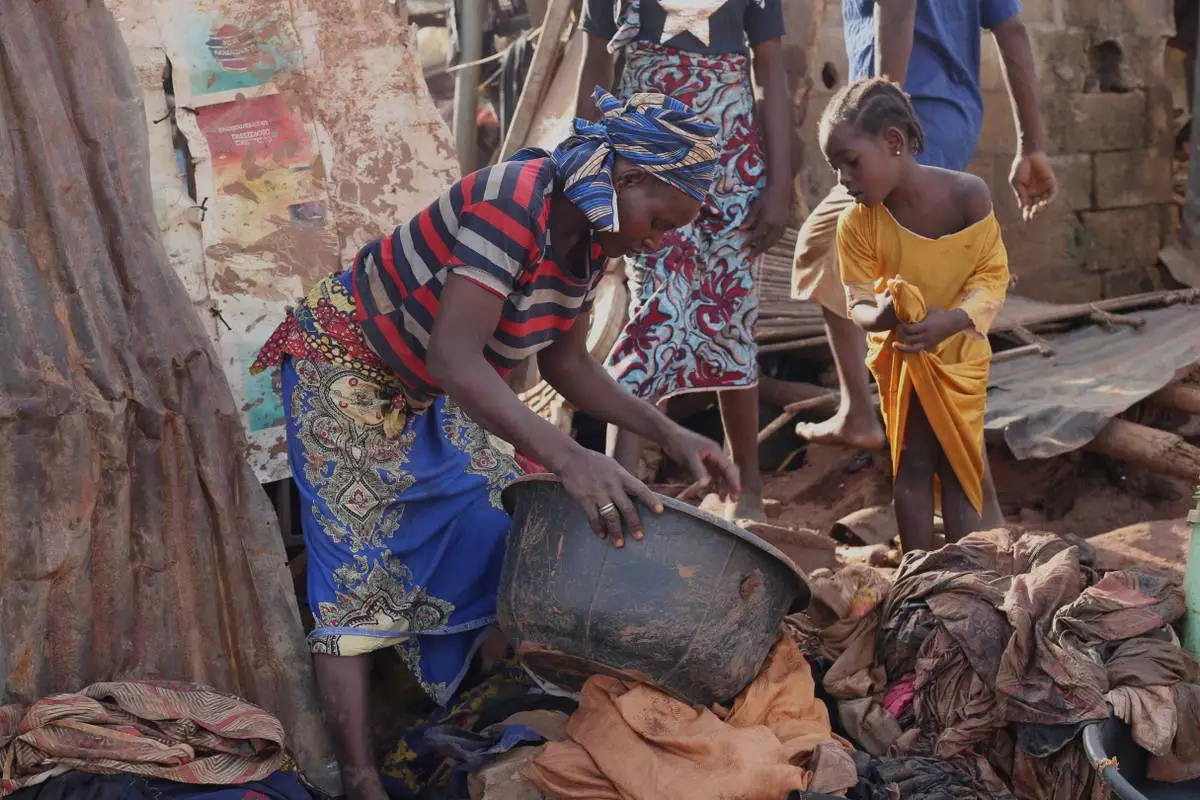
People salvage their belongings in a flooded area after heavy rainfall in the market town of Mokwa, north-central Nigeria, Saturday May 31, 2025. (AP Photo/Usman Salihu Mokwa)
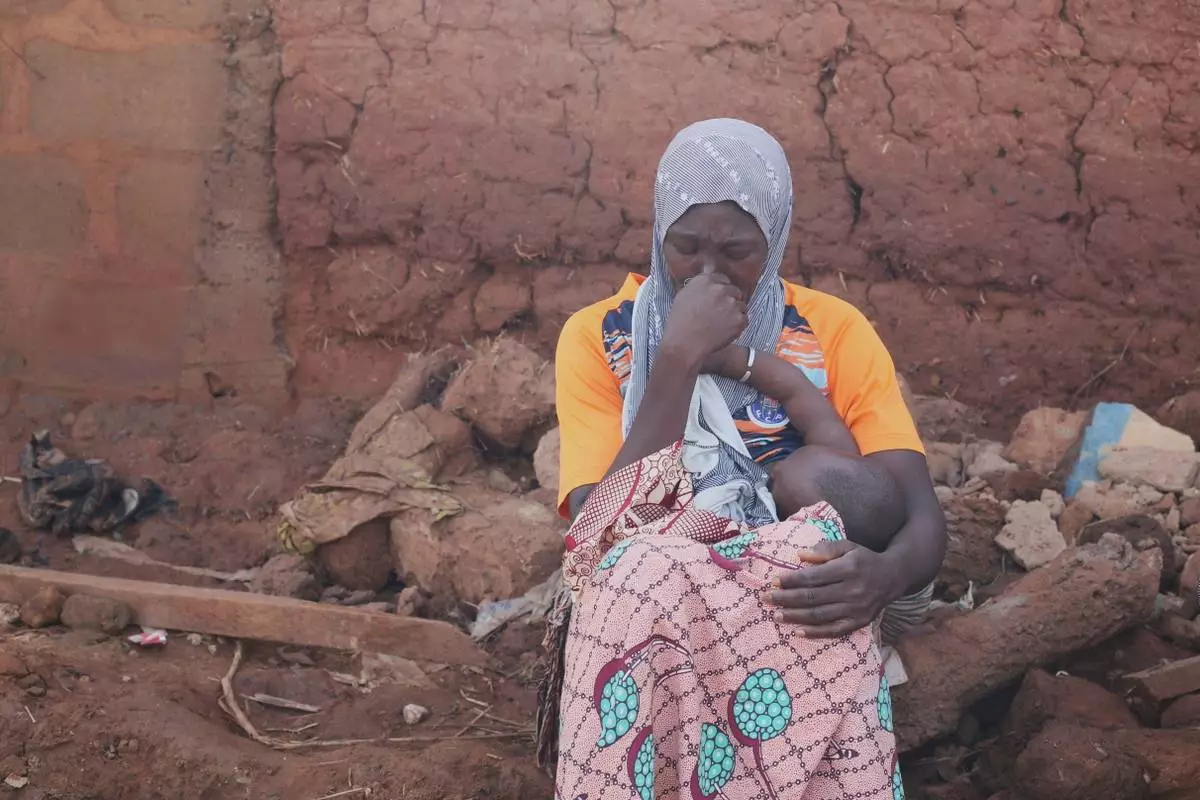
A woman sits in a flooded area after heavy rainfall in the market town of Mokwa, north-central Nigeria, Saturday May 31, 2025. (AP Photo/Usman Salihu Mokwa)

People search in flooded area following a downpour in Mokwa, Nigeria, Friday, May 30, 2025. (AP Photo/Chenemi Bamaiyi)
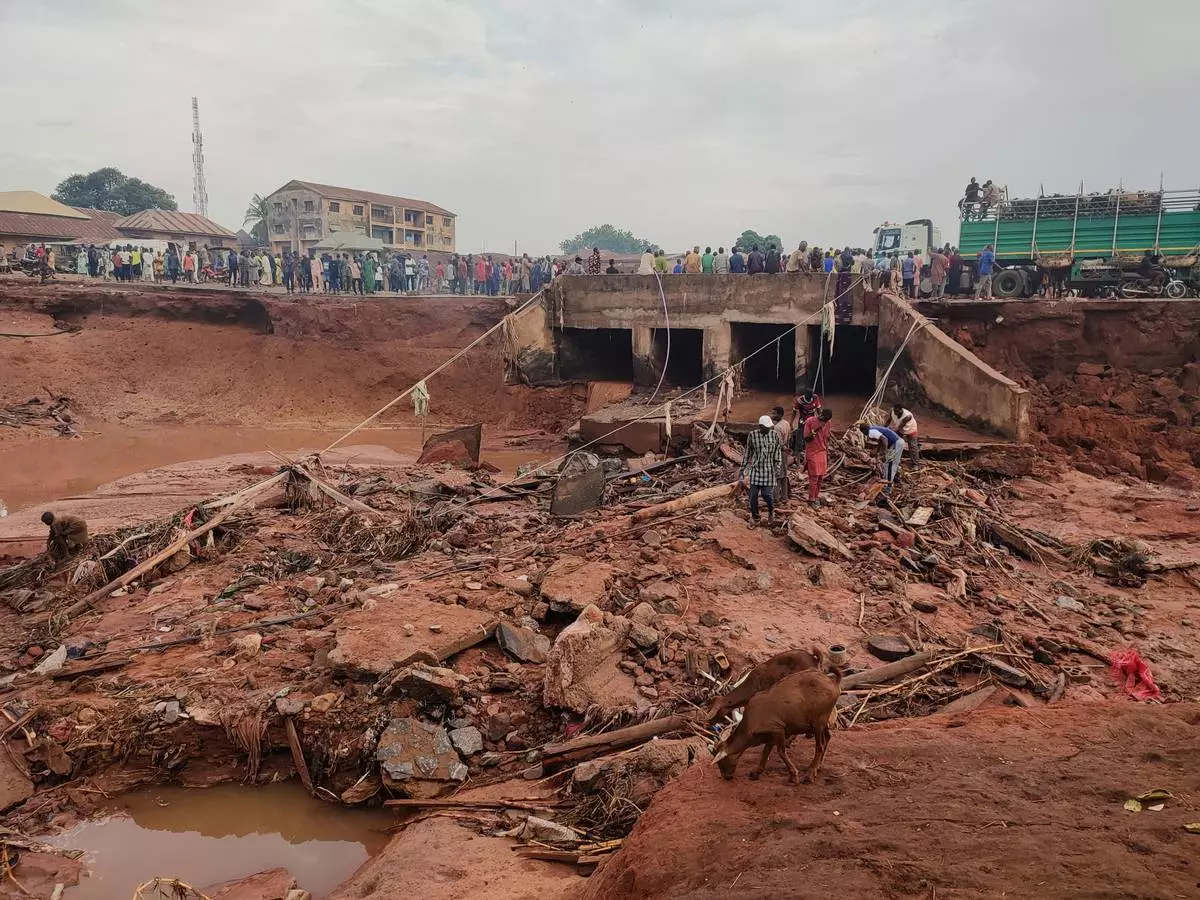
People search in flooded area following a downpour in Mokwa, Nigeria, Friday, May 30, 2025. (AP Photo/Chenemi Bamaiyi)
PARIS (AP) — Novak Djokovic placed ice packs around his neck and on top of his head during changeovers to keep cool amid the Paris heat wave at the French Open on Wednesday.
The 39-year-old Djokovic was pushed by 74th-ranked French player Valentin Royer — who is 15 years younger than him — for more than 3½ hours before he reached the third round with a 6-3, 6-2, 6-7 (7), 6-3 victory.
For the fourth straight day of this year’s tournament, the temperature rose beyond 32 degrees Celsius (90 Fahrenheit).
When Djokovic won a key point early in the fourth set with a forehand that he whipped around the net post from far off the court, the 24-time Grand Slam champion waved his arms toward the crowd inside Court Philippe-Chatrier.
Djokovic wasted a chance to close the match out earlier when he missed a backhand long in the third-set tiebreaker then required four more match points in his final service game before a forehand from Royer finally landed in the net to conclude a long rally.
Before arriving in Paris, Royer had earned only one tour-level win across 11 tournaments he played this season.
Djokovic came to Roland Garros with questions over his form after getting beat in his only clay-court match before the tournament. He lost to Croatian qualifier Dino Prizmic at the Italian Open after two months out due to a right shoulder injury.
But Djokovic is playing himself back into form after coming back from a set down to beat Giovanni Mpetshi Perricard, another Frenchman, in a first-round match that lasted nearly three hours.
Djokovic improved to 14-0 in his career against Frenchmen at Roland Garros and reached the third round in Paris for a 21st straight year. He raised the Coupe des Mousquetaires trophy in 2016, 2021 and 2023.
One duo of Djokovic fans inside the main stadium held up a sign with a goat on it — for “Greatest of All Time” — that read “39 is the new 29.”
Up next for Djokovic is potentially a bigger test against either 19-year-old Brazilian Joao Fonseca or the 20-year-old Prizmic, who were playing later. Fonseca has been touted as a future Grand Slam contender, while Djokovic himself pointed to big things ahead for Prizmic after their meeting in Rome.
Later, second-seeded Alexander Zverev was playing Tomas Machac in the night session.
Elena Rybakina, this year’s Australian Open winner, was beaten by Ukrainian opponent Yuliia Starodubtseva 3-6, 6-1, 7-6 (4).
Also advancing were in-form Ukrainians Elina Svitolina and Marta Kostyuk, who are coming off trophies at the Madrid Open and Italian Open, respectively.
The seventh-seeded Svitolina beat Kaitlin Quevedo 6-0, 6-4 to extend her winning streak to eight matches. The 15th-seeded Kostyuk beat Katie Volynets 6-7 (4), 6-3, 6-3 to extend her winning streak to 13 matches.
Four-time champion Iga Swiatek improved her career record at Roland Garros to 42-3 by eliminating 35th-ranked Sara Bejlek 6-2, 6-3.
Swiatek won Roland Garros in 2020, 2022, 2023 and 2024.
Swiatek next faces Magda Linette in the first all-Polish meeting at Roland Garros in the professional era (since 1968). Linette eliminated 2017 champion Jelena Ostapenko 6-2, 2-6, 6-2.
Also, 11th-seeded Belinda Bencic beat American opponent Caty McNally 6-4, 6-0.
AP tennis: https://apnews.com/hub/tennis
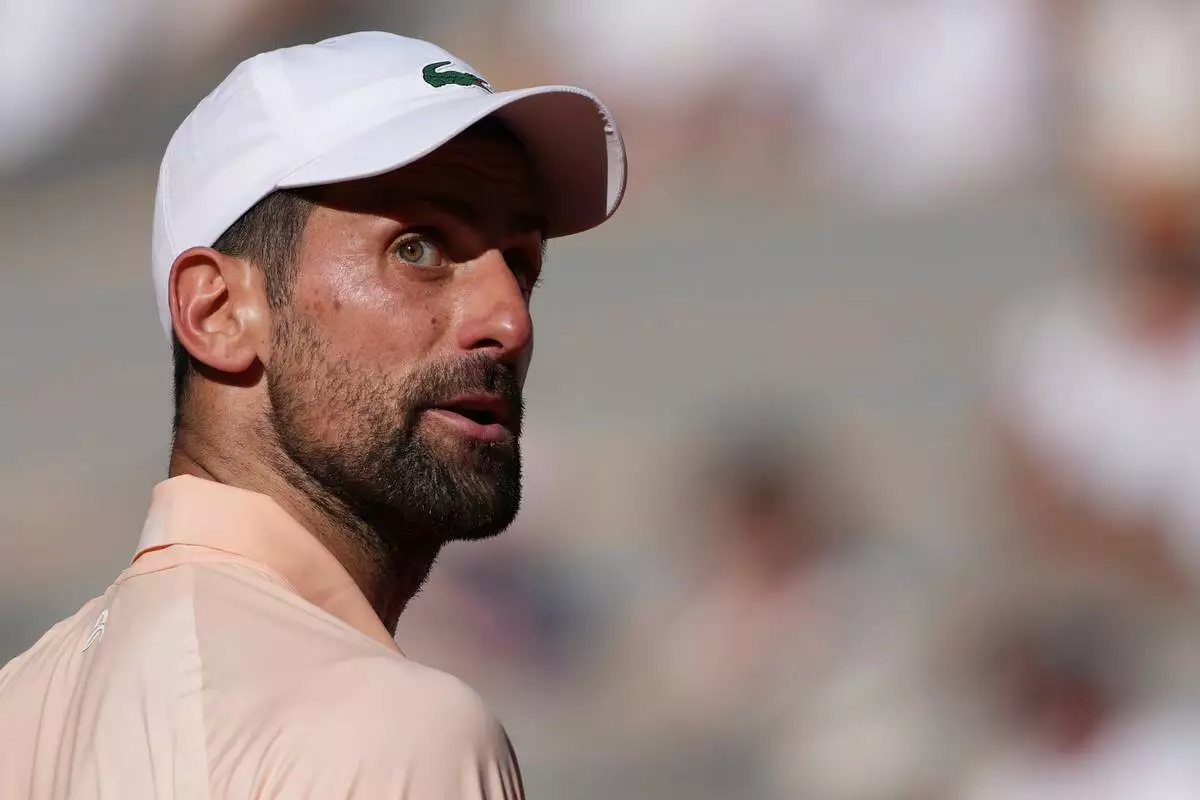
Novak Djokovic of Serbia reacts as he plays against Valentin Royer of France during their second round men's singles tennis match at the French Open tennis tournament in Paris, Wednesday, May 27, 2026. (AP Photo/Thibault Camus)
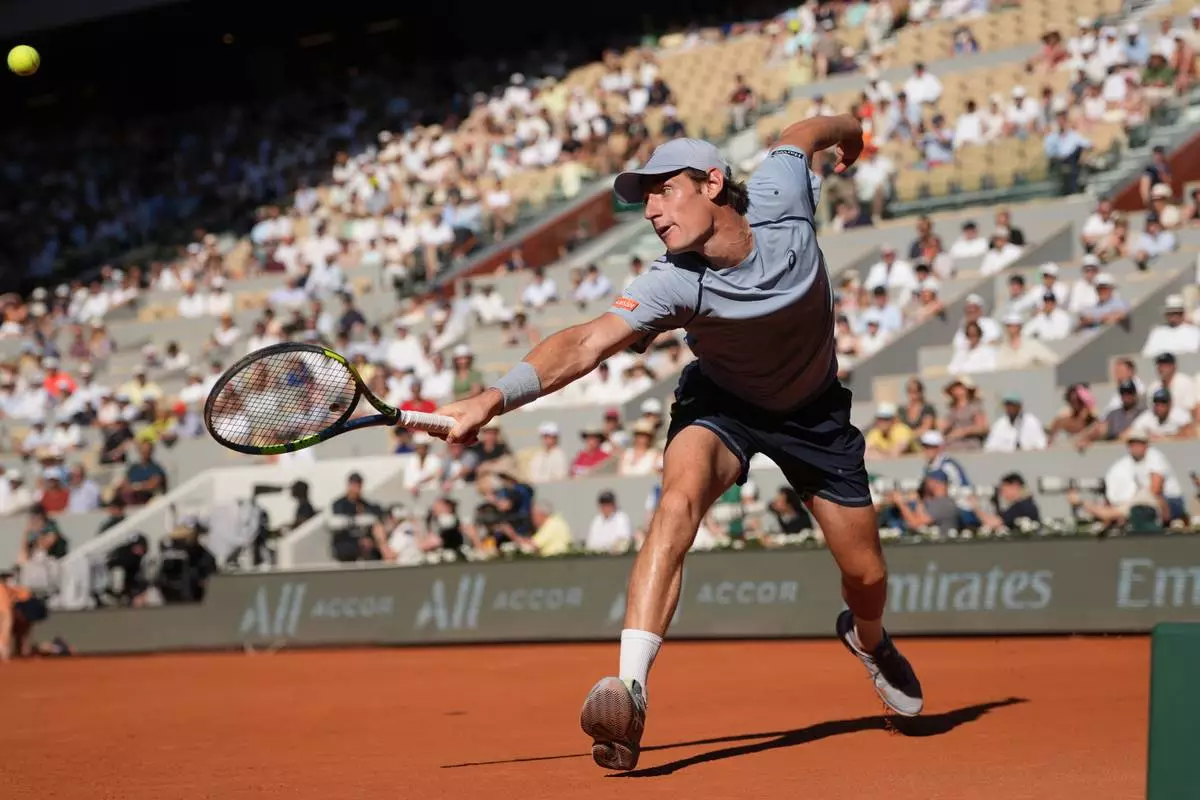
Valentin Royer of France returns to Novak Djokovic of Serbia during their second round men's singles tennis match at the French Open tennis tournament in Paris, Wednesday, May 27, 2026. (AP Photo/Thibault Camus)
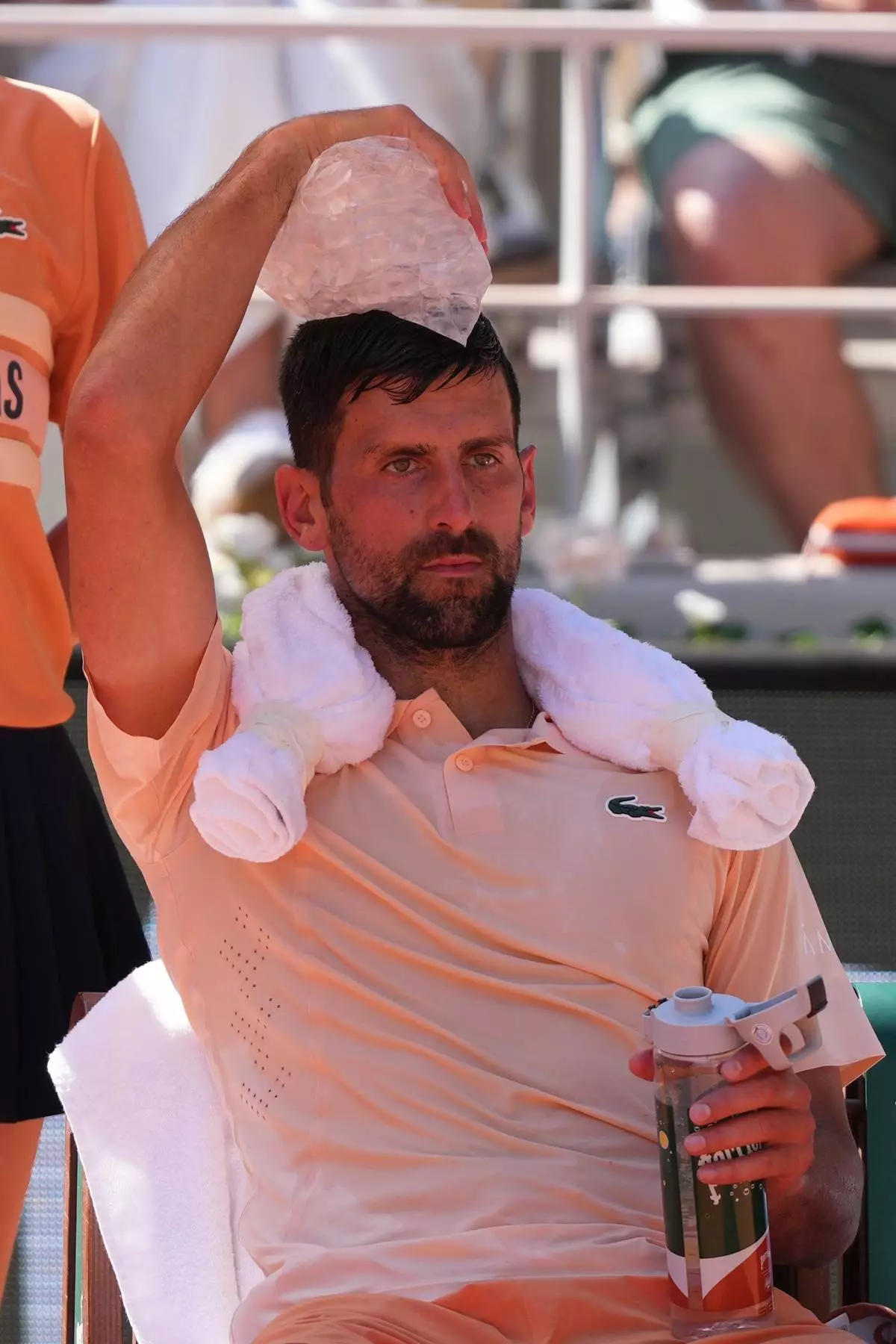
Novak Djokovic of Serbia cools himself with the ice during a break of the second round men's singles tennis match against Valentin Royer of France at the French Open tennis tournament in Paris, Wednesday, May 27, 2026. (AP Photo/Thibault Camus)
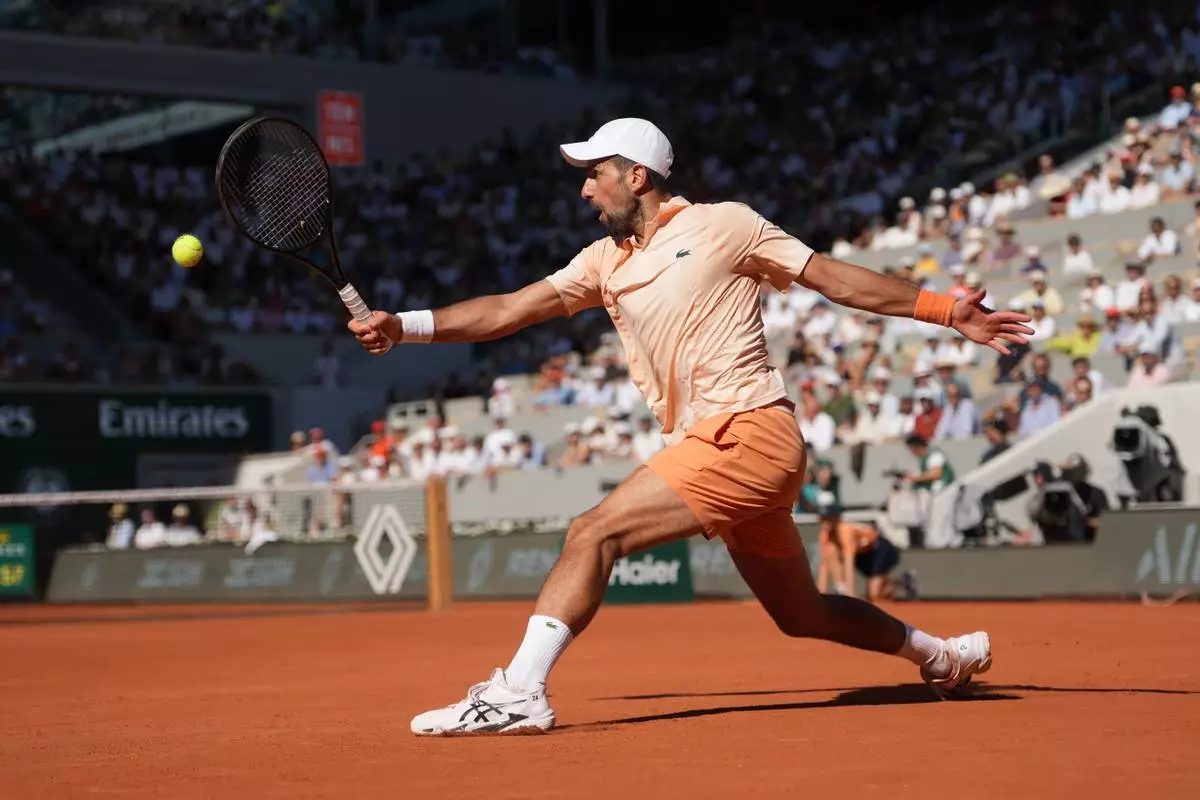
Novak Djokovic of Serbia returns to Valentin Royer of France during their second round men's singles tennis match at the French Open tennis tournament in Paris, Wednesday, May 27, 2026. (AP Photo/Thibault Camus)
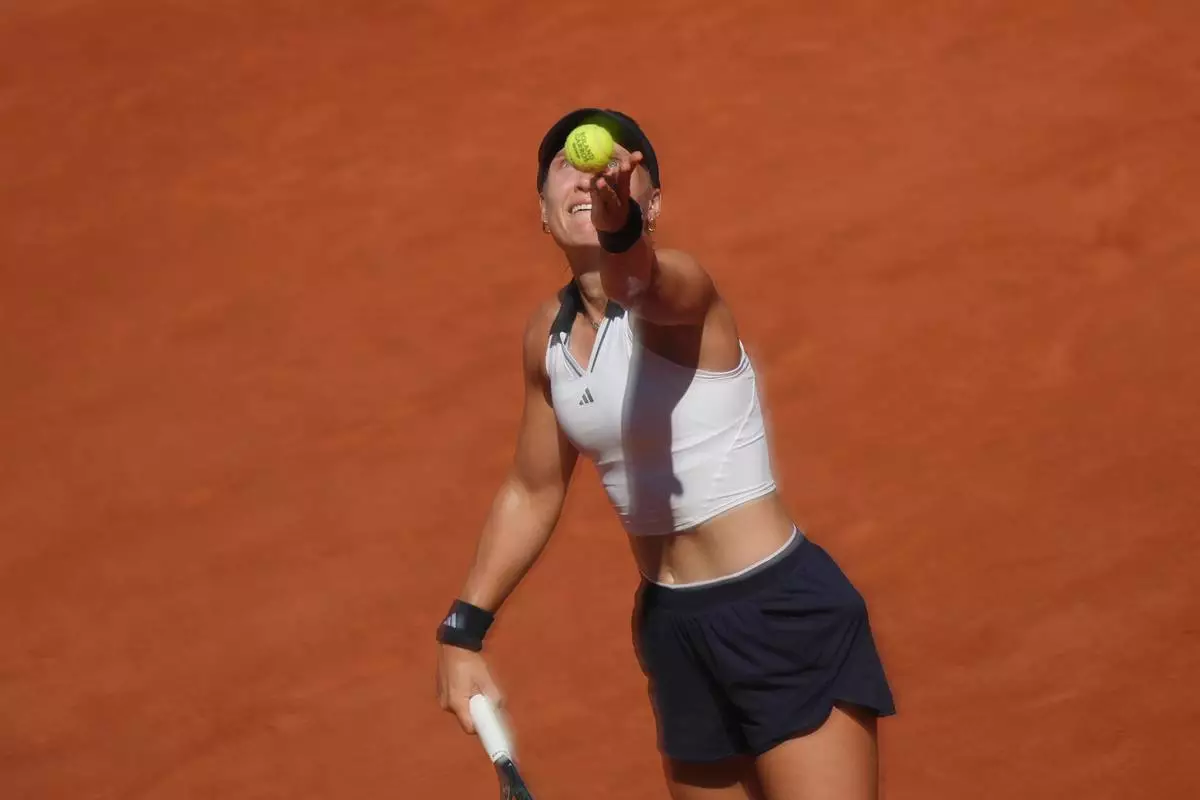
Yuliia Starodubtseva of Ukraine serves to Elena Rybakina of Kazakhstan during their second round women's singles tennis match at the French Open tennis tournament in Paris, Wednesday, May 27, 2026. (AP Photo/Aurelien Morissard)
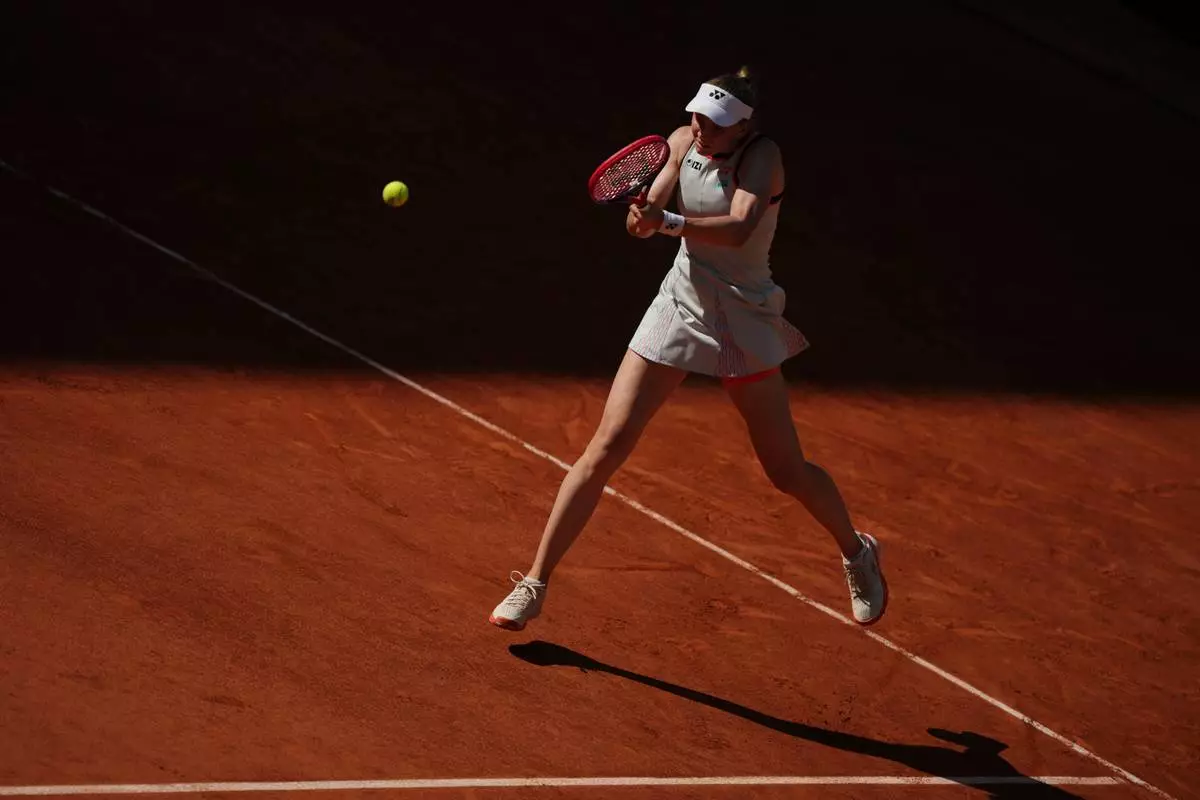
Elena Rybakina of Kazakhstan returns to Yuliia Starodubtseva of Ukraine during their second round women's singles tennis match at the French Open tennis tournament in Paris, Wednesday, May 27, 2026. (AP Photo/Aurelien Morissard)
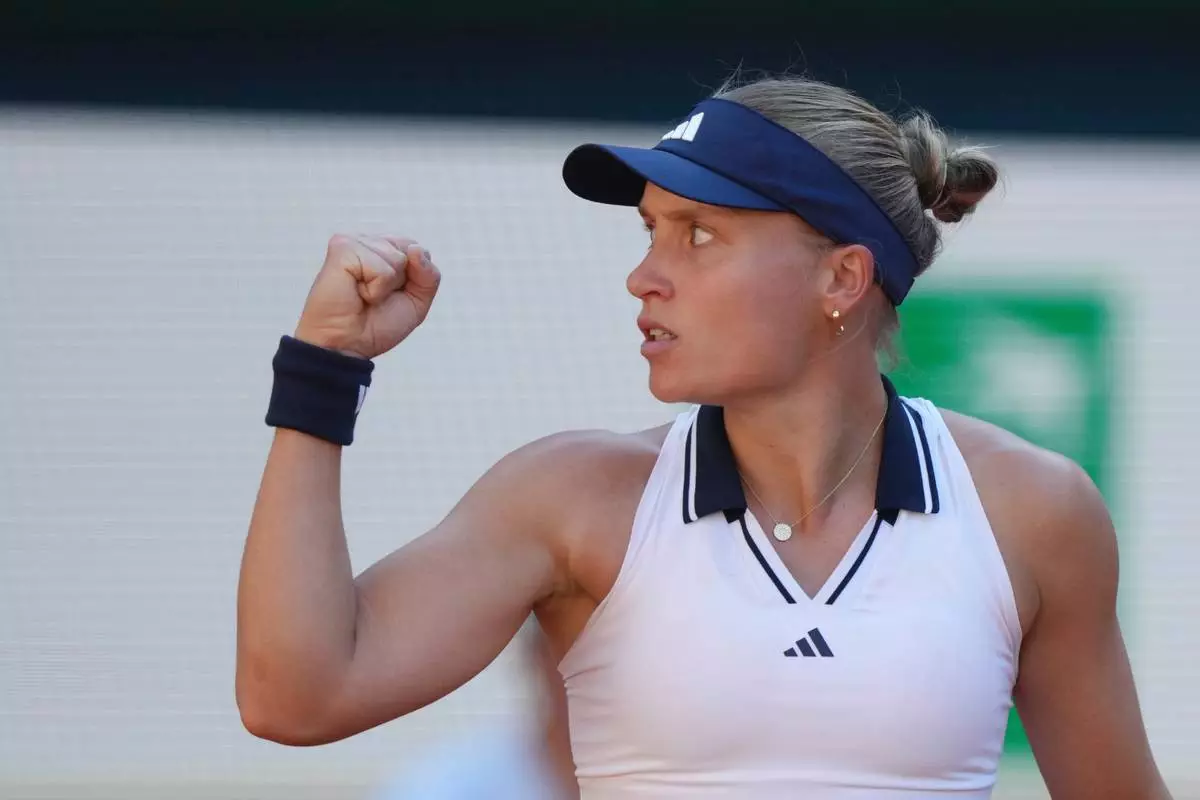
Yuliia Starodubtseva of Ukraine reacts as she plays against Elena Rybakina of Kazakhstan during their second round women's singles tennis match at the French Open tennis tournament in Paris, Wednesday, May 27, 2026. (AP Photo/Aurelien Morissard)
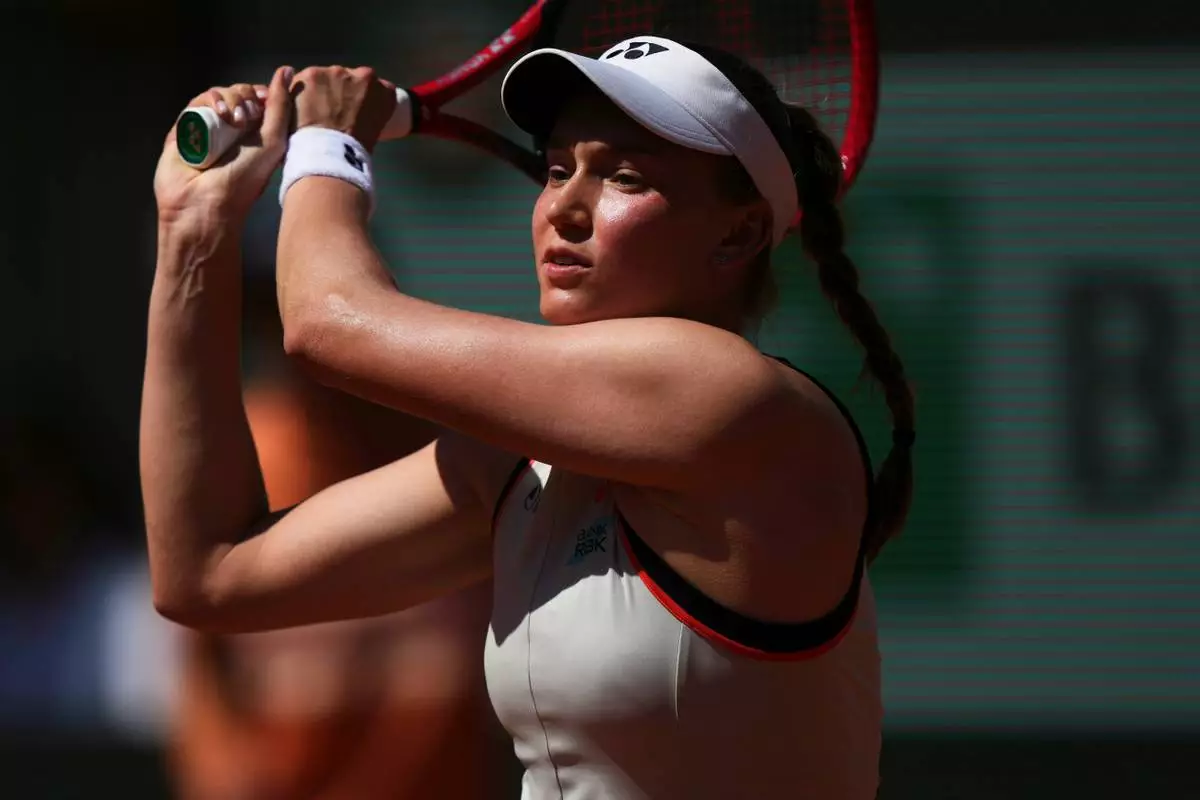
Elena Rybakina of Kazakhstan returns to Yuliia Starodubtseva of Ukraine during their second round women's singles tennis match at the French Open tennis tournament in Paris, Wednesday, May 27, 2026. (AP Photo/Aurelien Morissard)
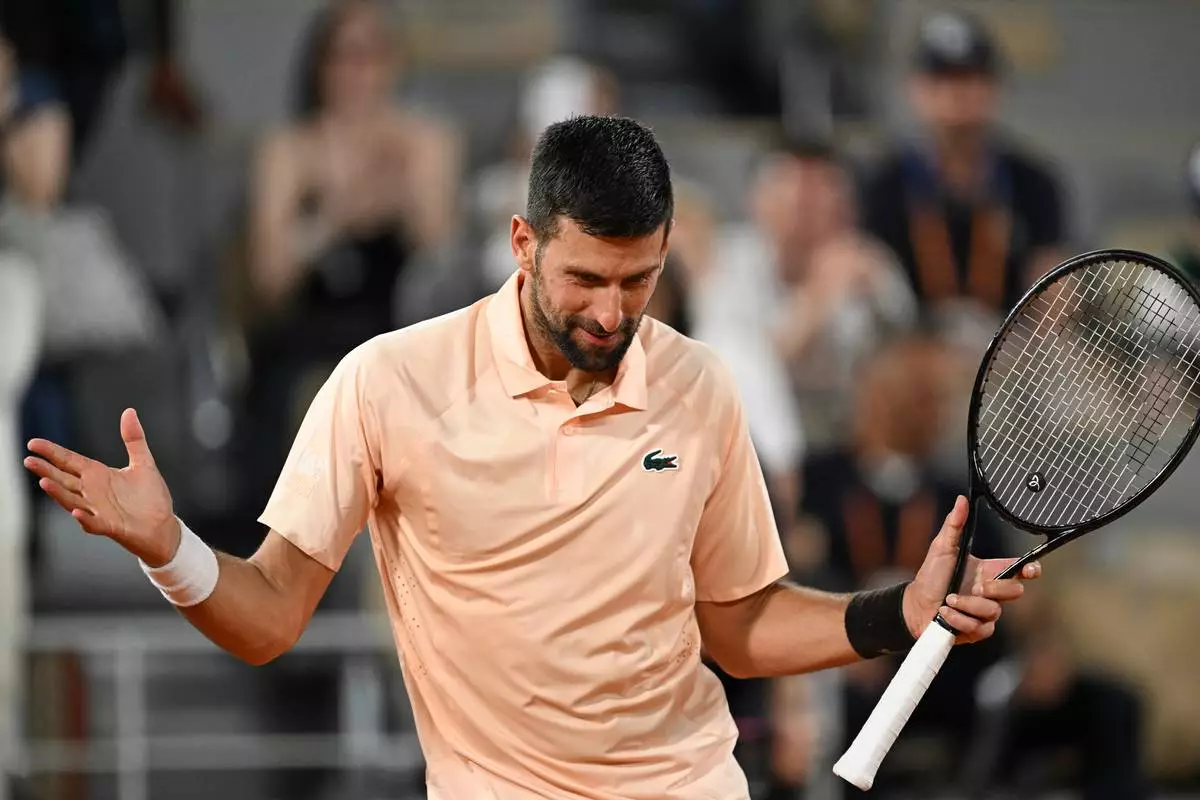
Novak Djokovic of Serbia celebrates after winning the first round men's singles tennis match against against Giovanni Mpetshi Perricard of France at the French Open tennis tournament in Paris, Sunday, May 24, 2026. (AP Photo/Emma Da Silva)
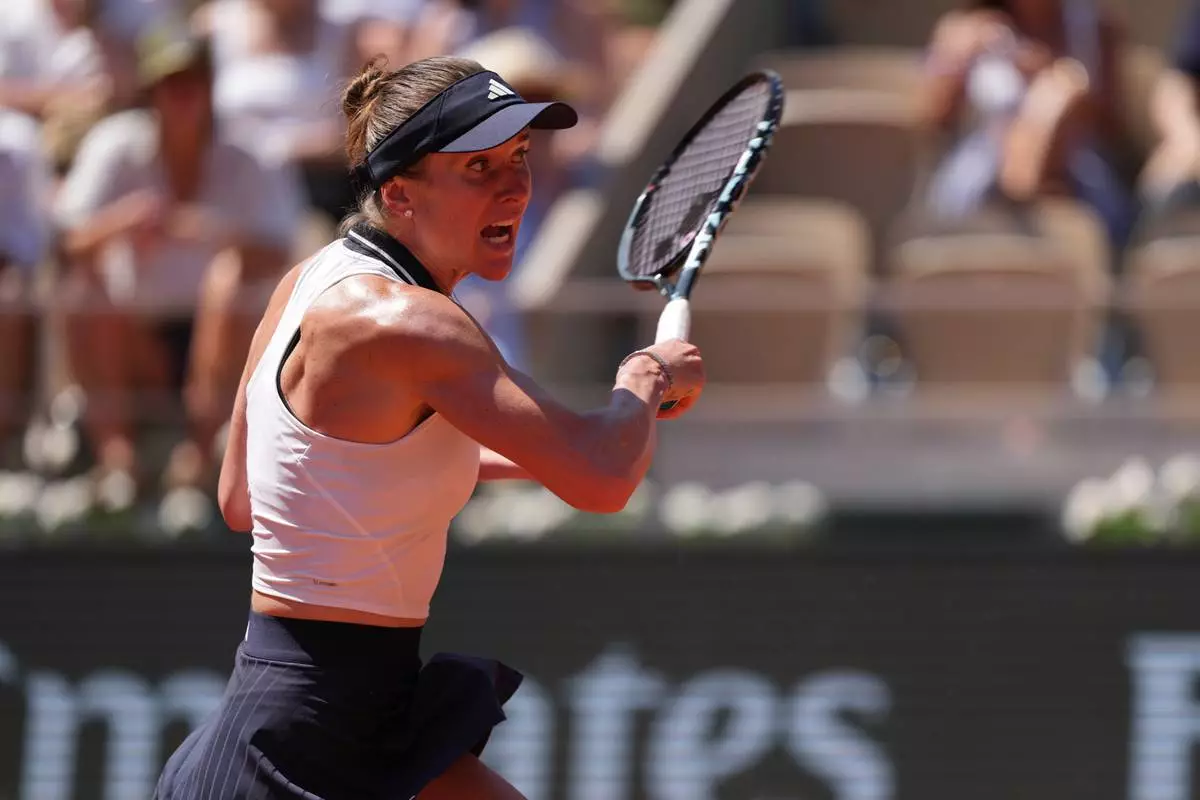
Elina Svitolina of Ukraine returns to Kaitlin Quevedo of Spain during their second round women's singles tennis match at the French Open tennis tournament in Paris, Wednesday, May 27, 2026. (AP Photo/Thibault Camus)
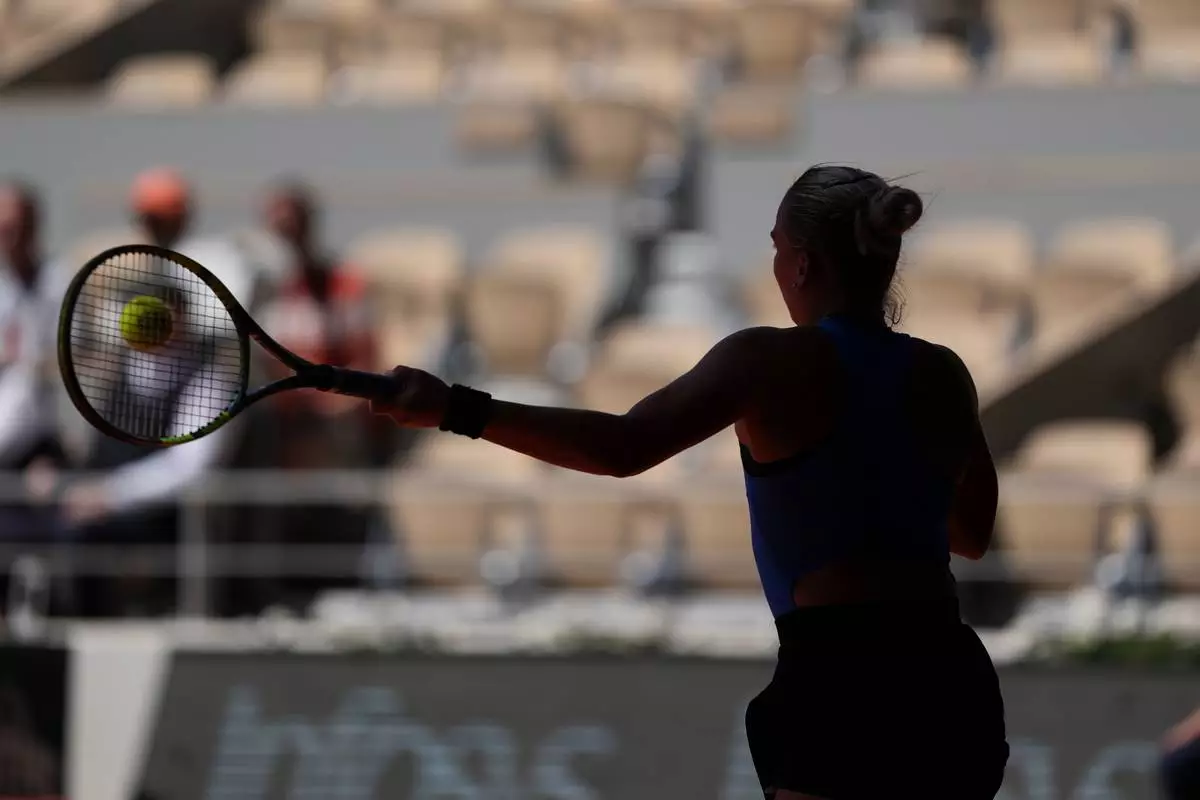
Sara Bejlek of the Czech Republic returns to Iga Swiatek of Poland during their second round women's singles tennis match at the French Open tennis tournament in Paris, Wednesday, May 27, 2026. (AP Photo/Thibault Camus)
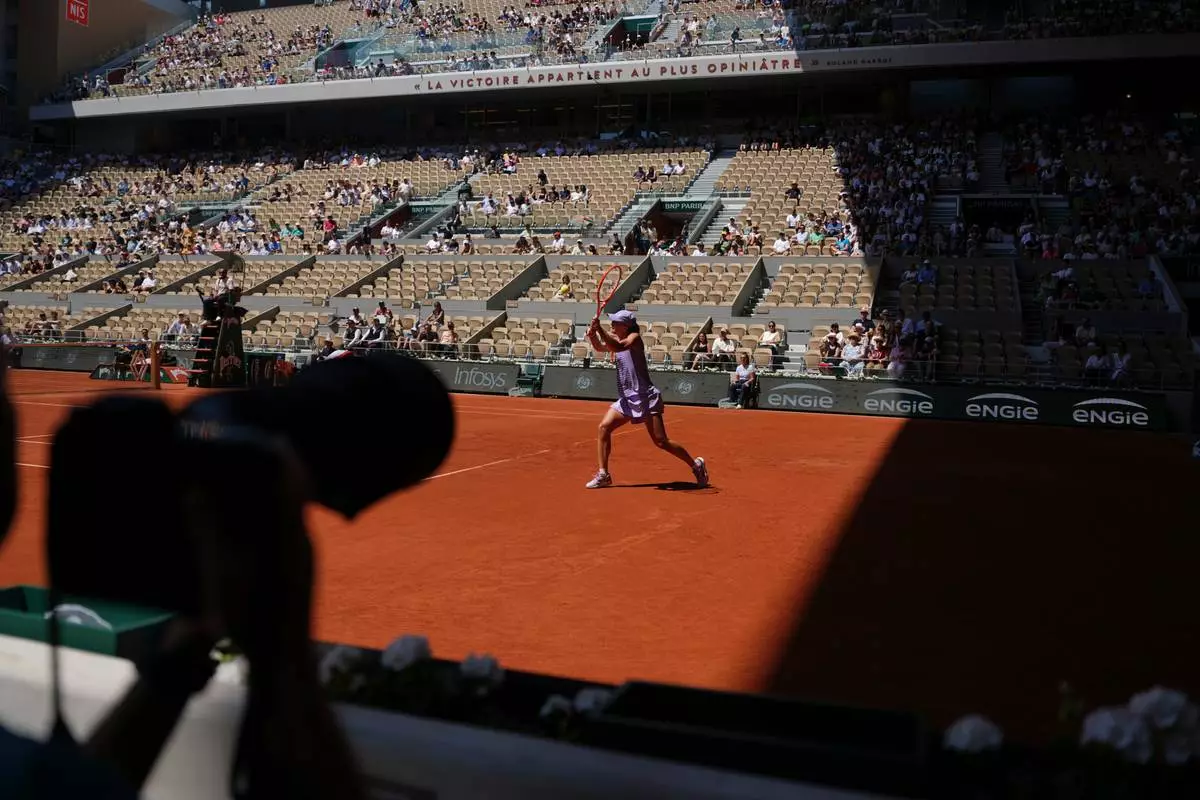
Iga Swiatek of Poland returns to Sara Bejlek of the Czech Republic during their second round women's singles tennis match at the French Open tennis tournament in Paris, Wednesday, May 27, 2026. (AP Photo/Thibault Camus)
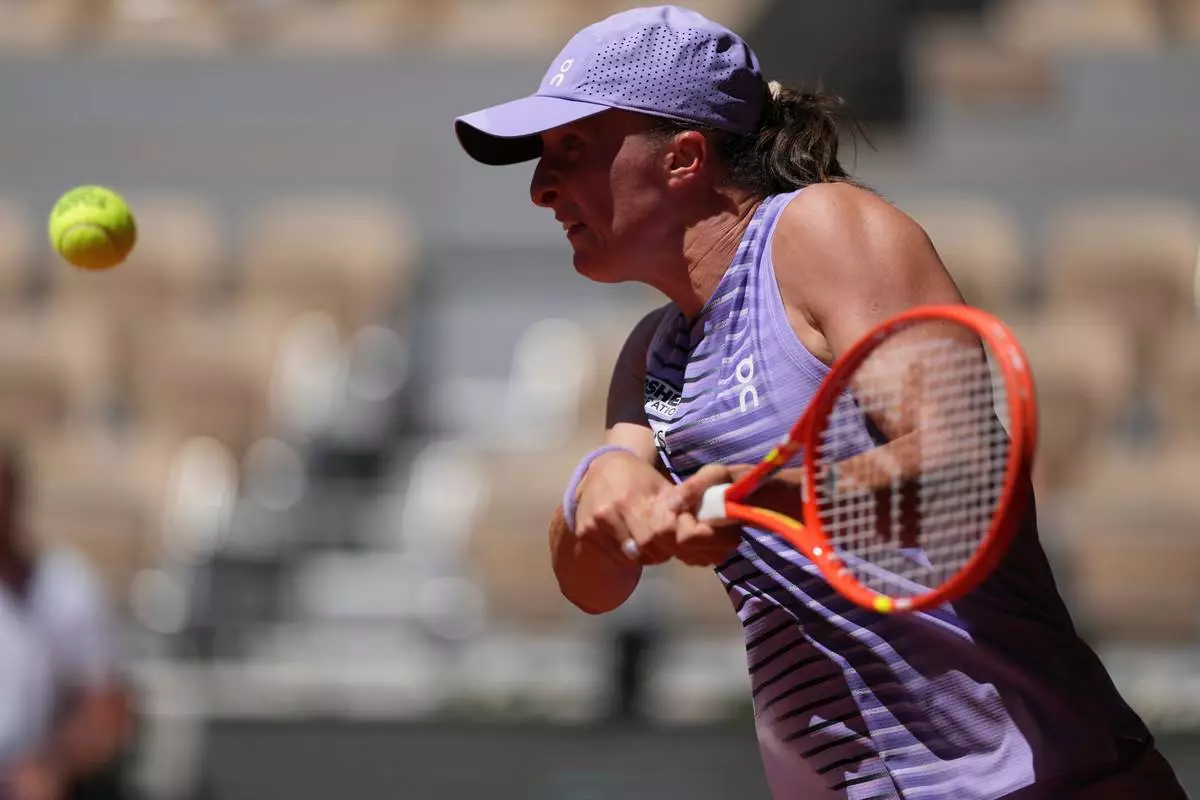
Iga Swiatek of Poland returns to Sara Bejlek of the Czech Republic during their second round women's singles tennis match at the French Open tennis tournament in Paris, Wednesday, May 27, 2026. (AP Photo/Thibault Camus)