Skip to Content Facebook Feature Image

Thai expert shares thoughts on regional security in South China Sea

China

China

China

Thai expert shares thoughts on regional security in South China Sea

2025-05-31 22:03 Last Updated At:22:57

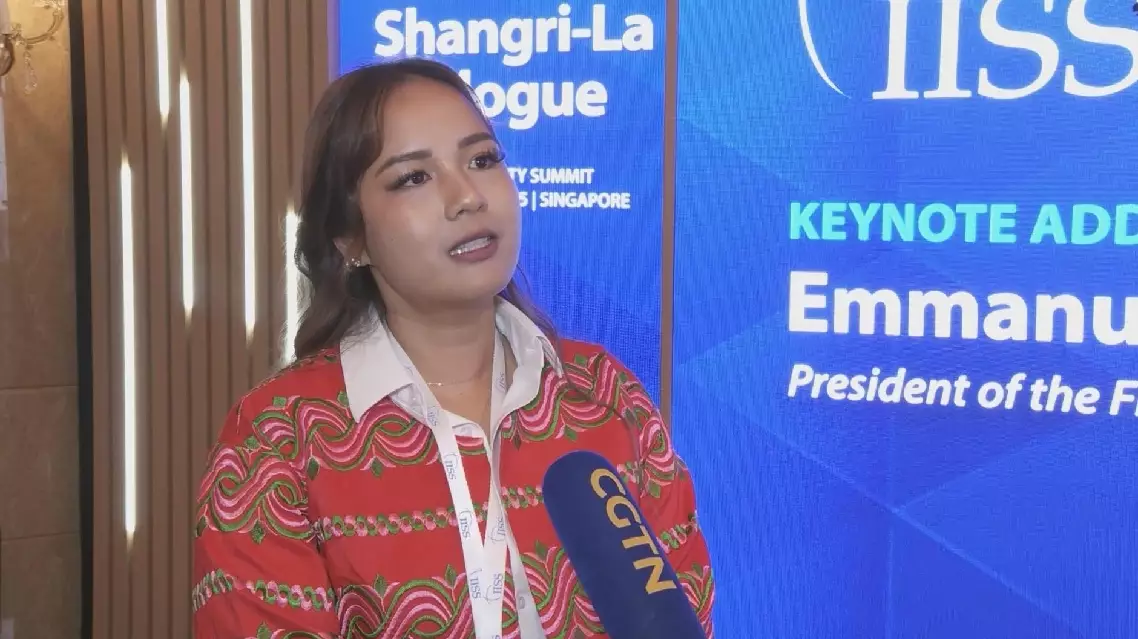
A Thai expert at the 22nd Shangri-La Dialogue shares her insights on the Code of Conduct (COC) in the South China Sea and stressed the importance of continuous dialogue in safeguarding regional security.

Running from May 30 to June 1, the Shangri-La Dialogue, Asia's premier annual security and defence summit, brings together more than 550 delegates from over 40 countries and regions, with discussions focusing on regional security cooperation and the global repercussions of the Russia-Ukraine conflict.

In an interview with China Global Television Network, Surachanee Sriyai, visiting fellow of the Institute of Southeast Asian Studies based in Singapore, said reaching the COC in the South China Sea would help mitigate or to defuse tension.

"I think it's about time actually, I think some sort of code of conduct would be a good measure to mitigate or to defuse the tension in the South China Sea," she said.

In 2002, China pushed for the signing of the Declaration on the Conduct of Parties in the South China Sea with the Association of Southeast Asian Nations (ASEAN) countries.

China is working with ASEAN countries to accelerate consultations on the COC and striving to reach an early agreement on regional rules which are effective, substantive and in line with international law, including the United Nations Convention on the Law of the Sea, which will be more conducive to managing differences, stabilizing the South China Sea and promoting cooperation.

The expert further highlighted the importance of continuous dialogue in ensuring regional security.

"When it comes down to security, it's all about repeat conversation, right? It's all about keep talking, keep engaging with different actors, relevant actors. So I think it will go a long way for regional security if everybody, you know, come and talk and be transparent," she said.
Thai expert shares thoughts on regional security in South China Sea

Thai expert shares thoughts on regional security in South China Sea
Some Iranians in Türkiye are crossing back over the border, driven by worry and desperation, as a nationwide communications blackout in Iran has left them cut off from their loved ones.

Protests have erupted in many Iranian cities since Dec. 28. They initially began with Tehran bazaar merchants demonstrating against the sharp devaluation of the national currency rial, and soaring inflation, before spreading to other cities. The unrest has led to casualties among both security forces and civilians.

At the Turkish-Iranian border, many are returning with no certainty about what awaits them, filled instead with questions and growing fear for those on the other side of the border.

"I went to Van yesterday for internet. I urgently needed to use the internet. I got it done. Now I'm heading straight back. There are protests everywhere. We can't get any news. We can't communicate with our families. And it's not just me, there are many Iranians outside the country who can't reach their families," said Feriste, an Iranian citizen.

With communications blacked out across Iran, those outside the country feel powerless to check on the situation back home. For some, this silence has prompted them to return across the border, even as tensions continue to rise.

"We can't get any news. There is no internet. Everything is shut down. I want to search. I want to find out. I want to see my brother. I'm going to see my family," said Husnu, an Iranian citizen.

"I work in Türkiye, and I have no news from Iran at all. I'm going back because I'm worried about my family. It's been days since I last heard from them, and because I'm worried, I'm returning to Iran now. Of course, we are concerned about our safety. We don't know what awaits us there," said another Iranian.

With protests escalating and government blackouts still in place, many Iranians are caught between staying in safety abroad and risking everything to reconnect with their families.

"We had to come to Türkiye because we couldn't reach our families. Schools were closed already. All official institutions were shut down. We have no information about other cities either, because there is no communication network there. There is no television, no internet. We can't even check Twitter," said Nazlican, another Iranian citizen.

Iranians in Türkiye return home, fearing for their families amid unrest in Iran

Iranians in Türkiye return home, fearing for their families amid unrest in Iran

Iranians in Türkiye return home, fearing for their families amid unrest in Iran

Iranians in Türkiye return home, fearing for their families amid unrest in Iran

Recommended Articles