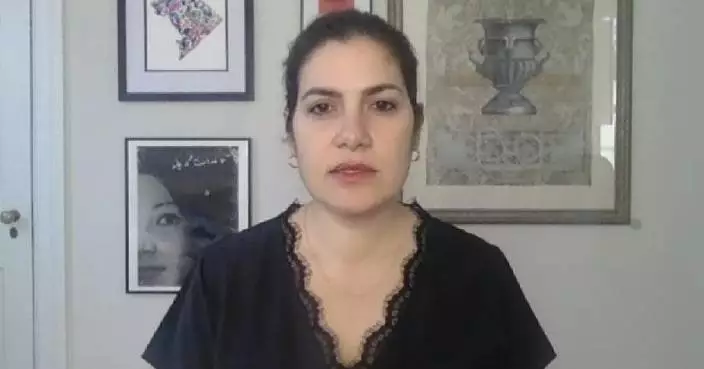
Jenny Shipley, former Prime Minister of New Zealand, praised the wisdom of the Chinese civilization, noting that the thoughts of Chinese philosophers and the proverbs of New Zealand's Maori people share similarities in advocating harmonious coexistence and promoting dialogue among civilizations, offering valuable insights for today's world.
Shipley has spoken on civilization on many occasions, citing Confucius' "Doctrine of the Mean" and discussing the ideas of another Chinese philosopher, Mencius, who advocated for "the world belongs to all." She has also expressed that, in today's context, these ideas still hold profound practical significance worldwide.
"China has succeeded in getting the UN to have a day of civilizations. And I think Mencius and Confucius, but Mencius is one that has always interested me because not only does he say, 'Think about your own development, make sure you are right first and then look after your family,' but he was also a global thinker, he said, 'Take your messages into other countries.' And I think in these moments, sharing civilization experiences. In my own country, we have our Maori people and they have long-standing, we call them 'Whakatauki,' very profound, thoughtful sayings that can help us reflect carefully, develop our benevolent and progressive nature, and then apply it to our current circumstances," Shipley said in an exclusive interview with China Media Group (CMG) aired on Friday.
Shipley highlighted the similarities between Chinese and Maori cultures. Maori culture emphasizes self-reliance and the pursuit of harmonious coexistence, while Chinese culture similarly upholds harmony and self-sufficiency as core principles.
"There are very interesting similarities. And as I said, I think that at a time where people are anxious and uncertain, looking to our strengths and many of those old scholars and philosophers that live at the heart of our respective countries. We can do very well by thinking about what they said and then even thinking about if they were confronted with AI, global dynamic relationships that seem stressed, what would they say," Shipley said.

Former New Zealand PM highlights shared wisdom between Chinese, Maori cultures
Some Iranians in Türkiye are crossing back over the border, driven by worry and desperation, as a nationwide communications blackout in Iran has left them cut off from their loved ones.
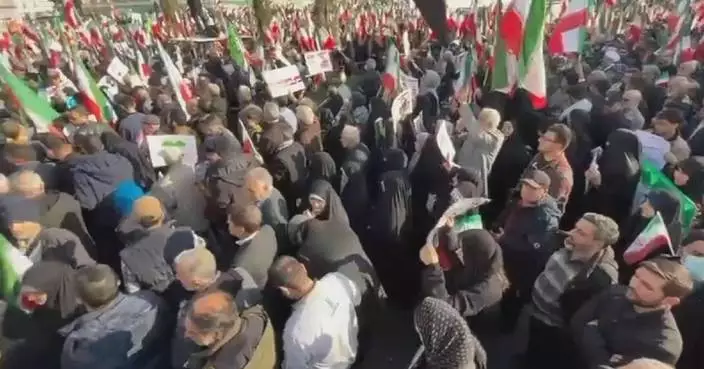
Protests have erupted in many Iranian cities since Dec. 28. They initially began with Tehran bazaar merchants demonstrating against the sharp devaluation of the national currency rial, and soaring inflation, before spreading to other cities. The unrest has led to casualties among both security forces and civilians.
At the Turkish-Iranian border, many are returning with no certainty about what awaits them, filled instead with questions and growing fear for those on the other side of the border.
"I went to Van yesterday for internet. I urgently needed to use the internet. I got it done. Now I'm heading straight back. There are protests everywhere. We can't get any news. We can't communicate with our families. And it's not just me, there are many Iranians outside the country who can't reach their families," said Feriste, an Iranian citizen.
With communications blacked out across Iran, those outside the country feel powerless to check on the situation back home. For some, this silence has prompted them to return across the border, even as tensions continue to rise.
"We can't get any news. There is no internet. Everything is shut down. I want to search. I want to find out. I want to see my brother. I'm going to see my family," said Husnu, an Iranian citizen.
"I work in Türkiye, and I have no news from Iran at all. I'm going back because I'm worried about my family. It's been days since I last heard from them, and because I'm worried, I'm returning to Iran now. Of course, we are concerned about our safety. We don't know what awaits us there," said another Iranian.
With protests escalating and government blackouts still in place, many Iranians are caught between staying in safety abroad and risking everything to reconnect with their families.
"We had to come to Türkiye because we couldn't reach our families. Schools were closed already. All official institutions were shut down. We have no information about other cities either, because there is no communication network there. There is no television, no internet. We can't even check Twitter," said Nazlican, another Iranian citizen.
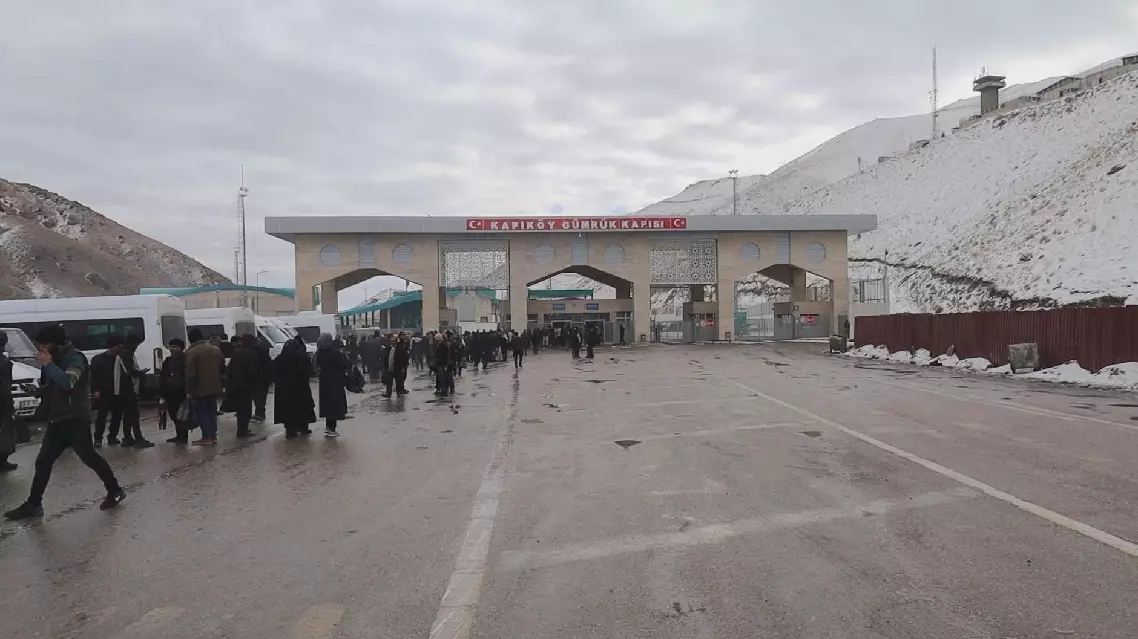
Iranians in Türkiye return home, fearing for their families amid unrest in Iran
Iranians in Türkiye return home, fearing for their families amid unrest in Iran