China has been vigorously promoting maritime security cooperation in the Asia-Pacific with concrete actions, said Hu Gangfeng, a senior officer of the People's Liberation Army (PLA), at a special forum of the 22nd Shangri-La Dialog in Singapore on Saturday.
Hu, vice president of the National Defense University of the PLA and head of its delegation, attended the Asia Pacific Regional Security Assessment 2025 and elaborated on China's perspectives.
Hu said that China started its development in the Asia-Pacific, benefits from it, and contributes to it. China has always upheld the concept of a maritime community with a shared future and has been actively advancing regional cooperative maritime security with concrete actions.
"China will uphold President Xi's three global initiatives, actively practice the concept of a maritime community with a shared future, and cooperatively endeavor to create a sea of peace, friendship, and cooperation in the Asia-Pacific. Our proposals are as follows: first, uphold true multilateralism to maintain maritime security order in the Asia-Pacific, second, pursue sincere dialog and consultation to promote lasting maritime peace in the region, and third, adhere to equal exchanges and mutual learning to build a shared maritime future for the Asia-Pacific," Hu said.
The 22nd edition of the Shangri-La Dialog, Asia's premier defense and security summit hosted by the International Institute for Strategic Studies (IISS), is held from Friday to Sunday and includes seven plenary sessions, two ministerial roundtables, and three special forums.
The discussions cover a range of topics, including maritime security cooperation in the Asia-Pacific, addressing nuclear proliferation risks in the region, and tackling challenges in cybersecurity, undersea defense, and outer space security.

China actively promotes Asia-Pacific maritime security cooperation: officer
Nicaragua's co-foreign minister Valdrack Jaentschke has warned that militarism must never be allowed to rise again, as Japan's recent moves to lift its arms export ban and revise the pacifist Constitution continue to draw international concern.
This year marks the 80th anniversary of the opening of the Tokyo Trials, where Japan's Class-A war criminals from World War II were brought to justice.
In an interview with China Global Television Network (CGTN), Valdrack Jaentschke voiced his concern that today's world order is being undermined by interventionism and other challenges.
"It is necessary for us to remember that after the end of World War II, countries worked hard to build a new international order based on international law. However, regrettably, more than 80 years later, we are seeing that this once explored and attempted order is being challenged by interventionism, a confrontational mindset, and tendencies like 'might makes right.' These are precisely the conditions that gave rise to fascism and militarism in the past, which ultimately led to the tragedy of World War II," he said.
He said the international community has a responsibility to pursue a new international order -- one fundamentally grounded in peace.
"Looking back at the history more than eight decades ago and comparing it with today's reality, it is our responsibility to recognize that the world should, and must, build a new international order that is more just, fairer, rooted in international law, based on a logic of mutual benefit and shared success, and fundamentally grounded in peace," said the minister.
"Today, as we revisit the Tokyo Trials, it is meant to remind the world that such a tragedy must never be repeated -- and that we must do everything in our power to prevent it from happening again. We must stop that dark world -- born from militarism, interventionism, and fascism -- from ever returning," he said.
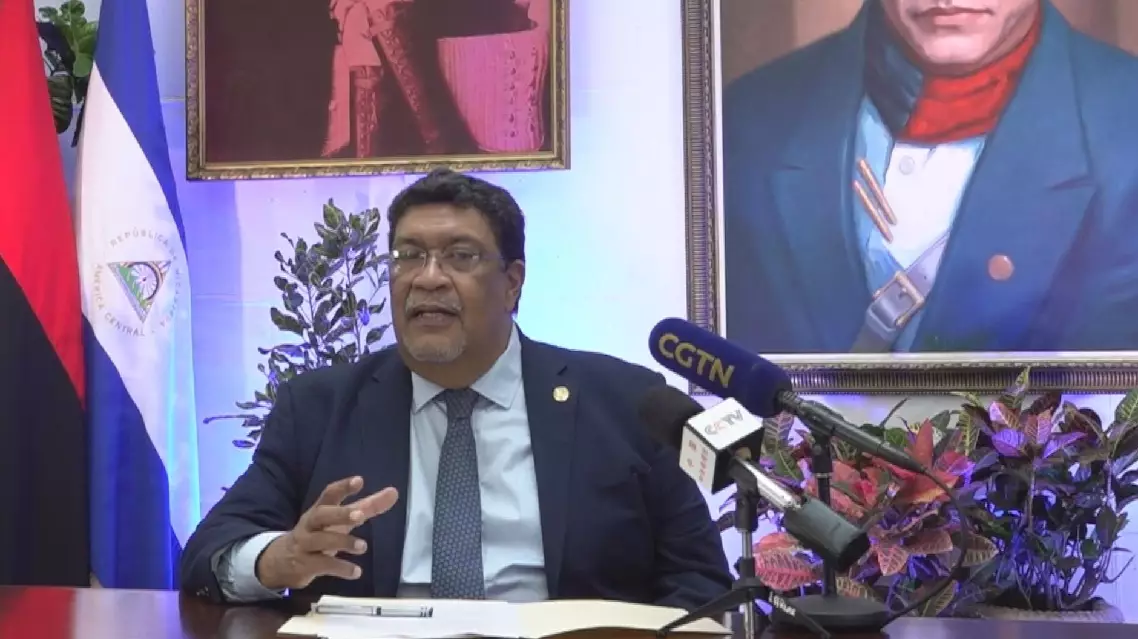
Nicaraguan FM warns of militarism revival