ATHENS, Greece (AP) — The Greek basketball league finals between Panathinaikos and Olympiakos were suspended by the government on Monday following on-court scuffles involving rival security teams.
The best-of-five series is at 1-1. The third game, scheduled for Wednesday, has been postponed.
The owners of both clubs were summoned to meet with the country’s sports minister.
“(They) will be asked to provide explicit guarantees that this situation will be brought to an end. If not, this year’s championship will be definitively canceled,” government spokesman Pavlos Marinakis said. “There can be no tolerance for such pathological phenomena of violence and delinquency.” In online posts, the owners of Panathinaikos and Olympiakos ruled out attending a joint meeting with the sports minister, leaving the fate of the government ultimatum in doubt. The clubs based in the Athens area have a long and often violent rivalry spanning basketball, soccer and other sports. The latest unrest comes despite recent government efforts to curb sports-related violence, including surveillance systems at stadiums and mandatory ticketing linked to state ID cards.
Olympiakos and Panathinaikos competed in the EuroLeague Final Four in Abu Dhabi last month, finishing third and fourth, respectively. Fenerbahce defeated Monaco in the championship game.
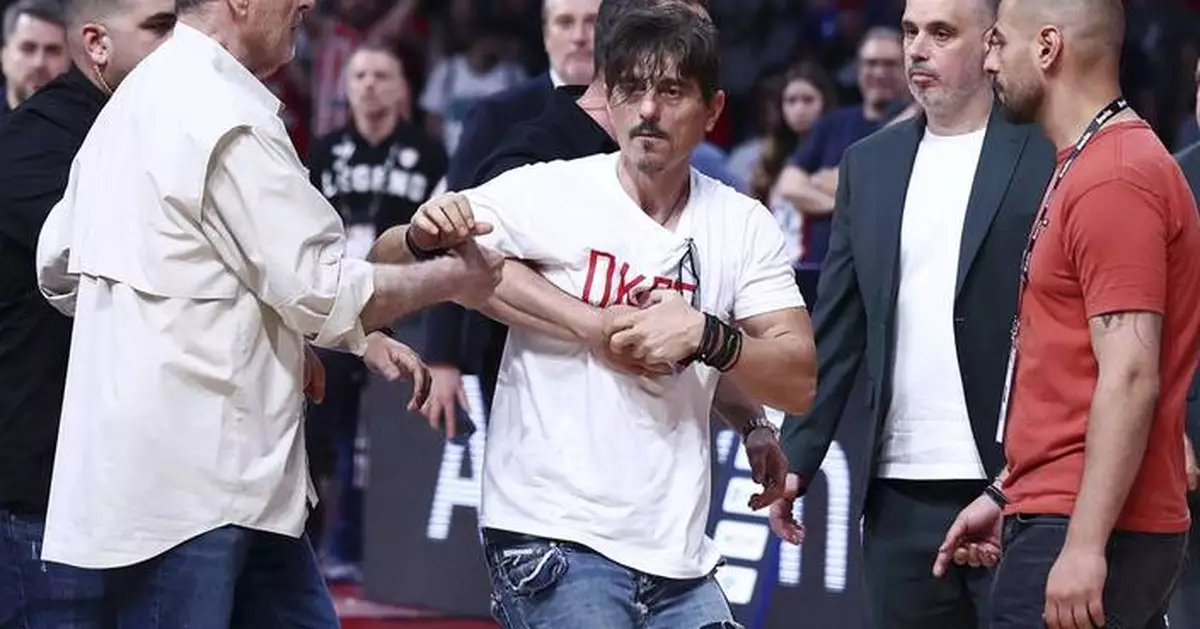
Sunday’s game at Peace and Friendship Stadium was won by Olympiakos and marred by multiple incidents. Panathinaikos owner Dimitris Giannakopoulos was escorted out at halftime following a heated exchange with referees. Coach Ergin Ataman was ejected in the fourth quarter after receiving a second technical foul. Television footage of the game showed security guards from both teams coming to blows as Giannakopoulos walked out in a heated atmosphere.
In a statement, Panathinaikos called the officiating “disgraceful” and biased.
Olympiakos co-chairman Giorgos Angelopoulos fired back, accusing Giannakopoulos of abusive behavior.
“The guy is toxic — he is the definition of violence,” Angelopoulos said. “He cannot continue to be present in Greek sports and act this way.
“No apology will be accepted,” he added. “Let Panathinaikos fans celebrate him as a tough guy. We don’t want people like that.”
AP sports: https://apnews.com/hub/sports
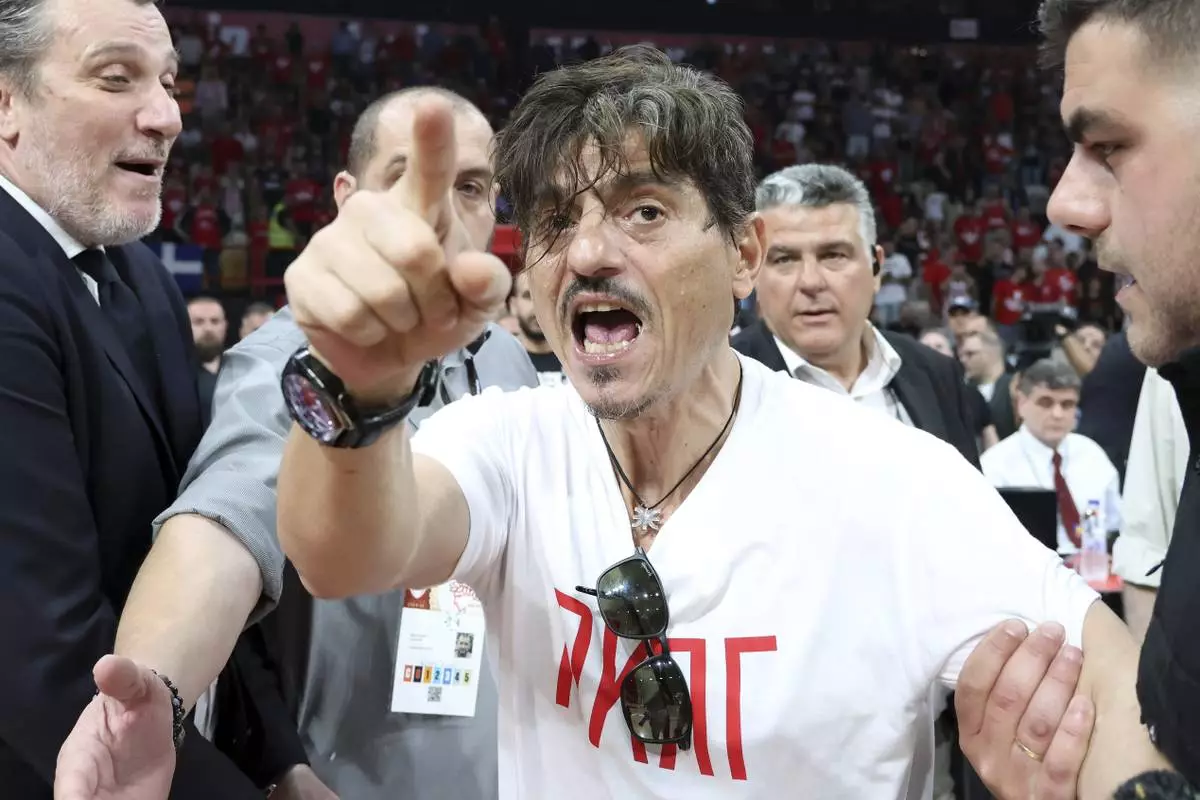
Panathinaikos owner Dimitris Giannakopoulos reacts before the basketball league finals Game 2 between Olympiacos and Panathinaikos at Peace and Friendship Stadium, in Piraeus port, near Athens, Sunday, June 1, 2025. (InTime Sports via AP)

FILE - Panathinaikos's Alexandros Samodurov, right, tries to go past Olympiacos' Luca Vildoza during a Euroleague basketball match for the third place in Abu Dhabi, United Arab Emirates, May 25, 2025. (AP Photo/Altaf Qadri, file)

Panathinaikos owner Dimitris Giannakopoulos reacts before the basketball league finals Game 2 between Olympiacos and Panathinaikos at Peace and Friendship Stadium, in Piraeus port, near Athens, Sunday, June 1, 2025. (InTime Sports via AP)
PRISTINA, Kosovo (AP) — Prime Minister Albin Kurti's party won the most votes in an early parliamentary election in Kosovo on Sunday, early results showed. But it remained unclear whether the outcome will bring an end to a political impasse in the small Balkan nation seeking to move closer to the European Union and NATO.
The vote was Kosovo's third in less than 18 months. It was scheduled after the main political parties failed to agree by a March deadline on who should replace former President Vjosa Osmani. The first inconclusive election in February 2025 left the country without a functioning government for much of last year, forcing a second election in December.
Kurti's ruling Vetevendosje party won around 43% of the votes followed by the Democratic Party of Kosovo with 21,7% and the Democratic League of Kosovo with 18%, the state election authorities said after counting nearly 90% of the ballots cast on Sunday. The final tally also will need to include some 100,000 votes of Kosovars living abroad.
Kurti and his party had a comfortable majority of more than 50% of the votes in a previous early election in December. Coupled with a lower turnout, the fall in support appears to reflect voter disappointment with mainstream politicians who have kept the small Balkan nation in a state of a prolonged crisis.
The political stalemate has negatively affected Kosovo’s economy, already hit hard by the global energy crisis and rising fuel prices. Kosovo, one of the youngest and poorest countries in Europe, declared independence from Serbia in 2008, after a 1998-99 war that ended in a NATO bombing that forced Serbia to withdraw.
Kosovo’s president is elected by at least 80 lawmakers in the 120-member assembly, requiring a broader political consensus. The newly elected lawmakers will face the same task once the new assembly is formed after Sunday's vote despite a reshuffle in the their numbers.
The main opposition parties have accused Kurti of seeking to impose full control over all political institutions in the country.
“Today is a sunny Sunday, a very important day for democracy in Kosovo,” Kurti said after voting. “I hope the people of Kosovo once again will show their maturity as always, with a very high turnout.”
Osmani joined the opposition LDK in the election, having turned against Kurti after he refused to back her for a second term. Osmani on Sunday expressed “great optimism” that the election will “take us out of the repeated crisis that has damaged our country, both domestically and beyond our borders.”
While the key players blamed each other for the crisis, their inability to reach a compromise has fueled frustration among Kosovo’s just under 2 million voters, who want the government to focus on the economy and living standards instead.
The turnout on Sunday was 36,3% while it was nearly 45% in December.
Arton Smajli, 42, a resident of the capital, Pristina, said that “we are tired, but the will for change is greater than that.”
Sejdi Shala, 73, is also optimistic that the election will bring “stability of the institutions and the society.”
The institutional vacuum, without a stable government, has delayed access to the EU and other international funds available to the country. European Council President António Costa, during a visit last week, urged Kosovo to end the political stalemate and unite over the goal of EU integration.
Kosovo has been recognized by the United States and most EU countries, but not by Serbia and its allies, Russia and China. Pristina and Belgrade have been told that they must mend relations to move forward with their EU membership bids.
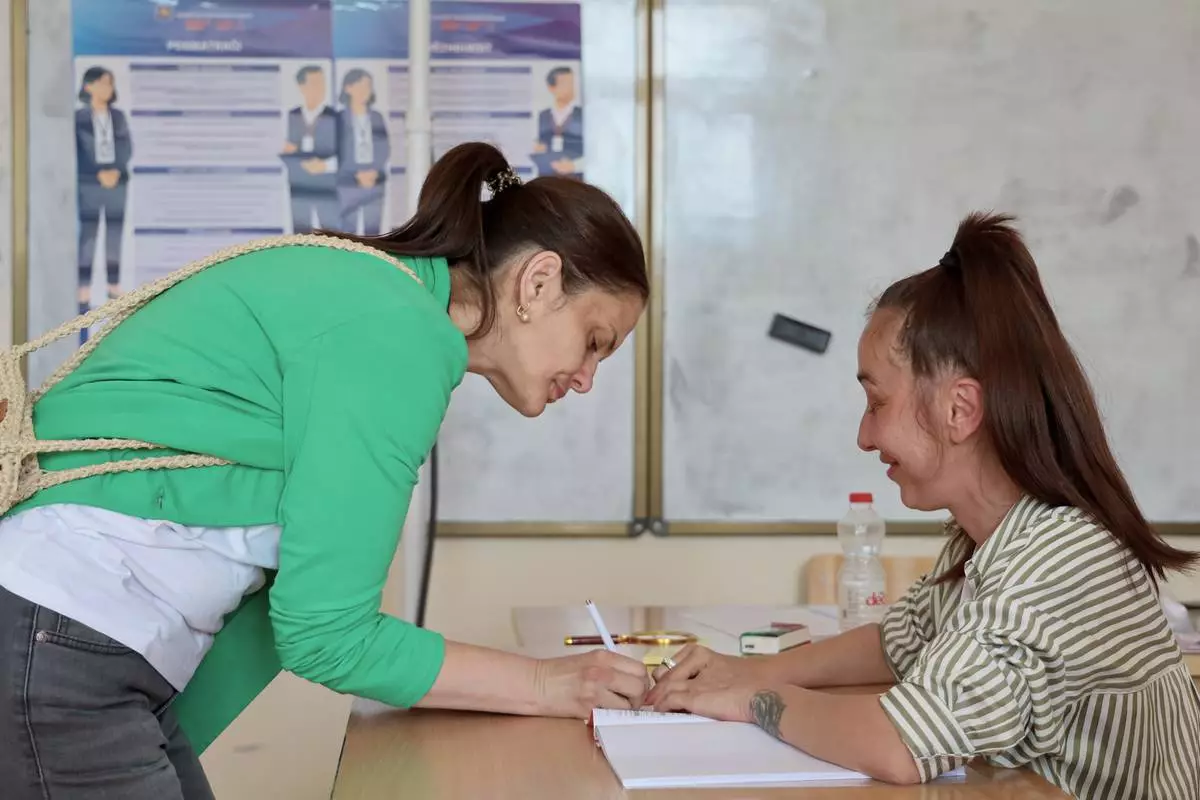
A voter signs an election document at a polling station for an early parliamentary election, the third in 18 months, in the northern Serb-dominated part of ethnically divided town of Mitrovica, Kosovo, Sunday, June 7, 2026. (AP Photo/Dejan Simicevic)
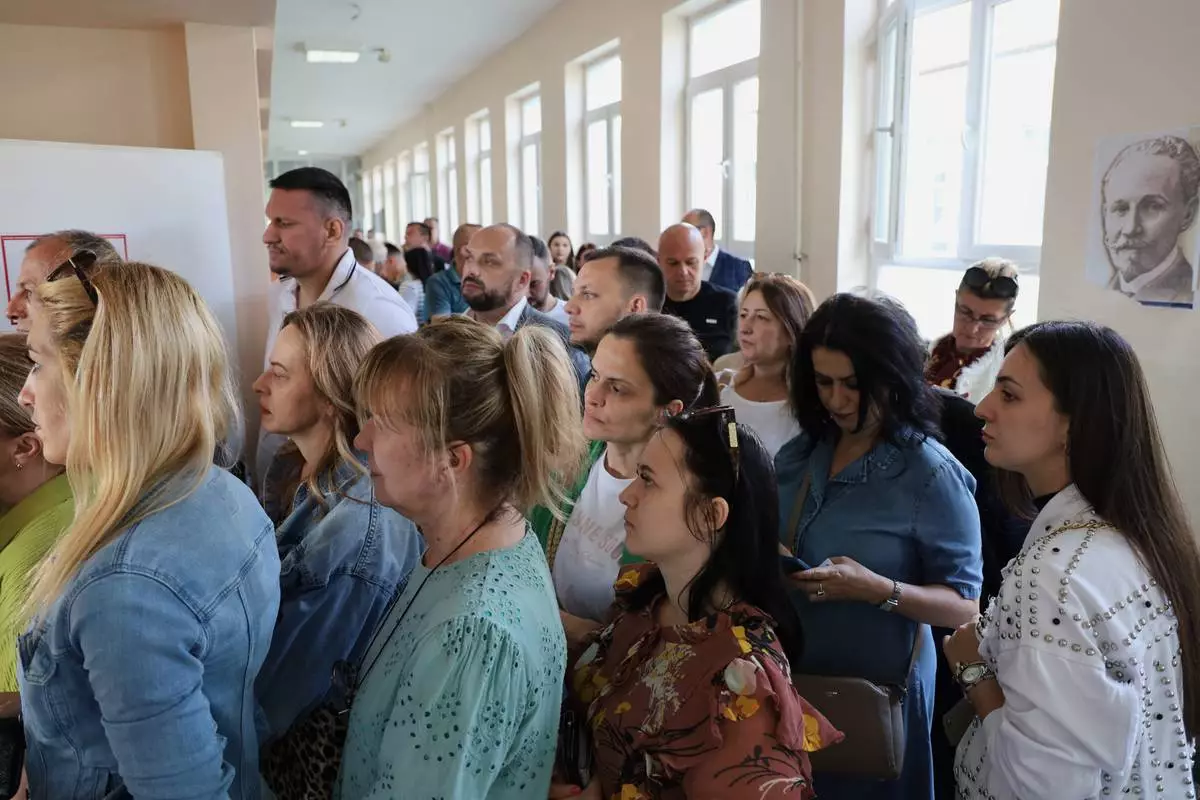
People wait in line at a polling station for an early parliamentary election, the third in 18 months, in the northern Serb-dominated part of ethnically divided town of Mitrovica, Kosovo, Sunday, June 7, 2026. (AP Photo/Dejan Simicevic)
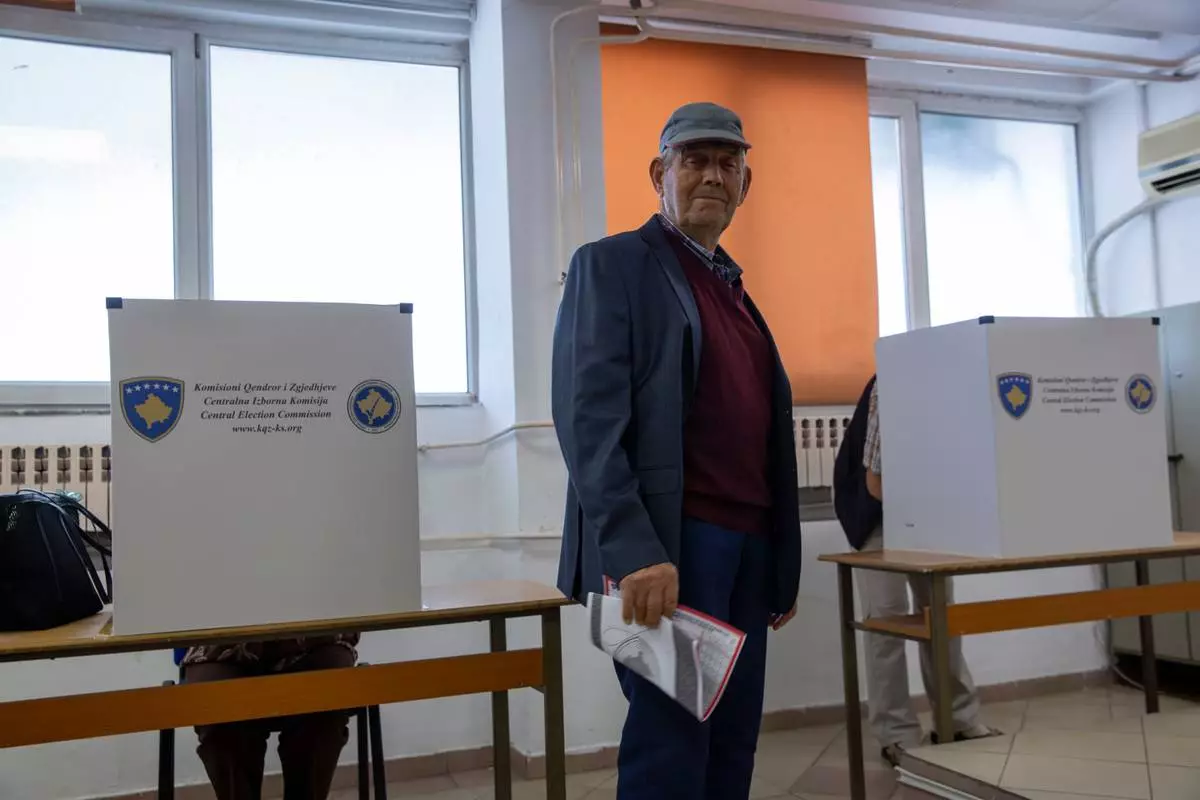
A man votes during parliamentary election in Kosovo capital Pristina, on Sunday, June 7, 2026. (AP Photo/Visar Kryeziu)
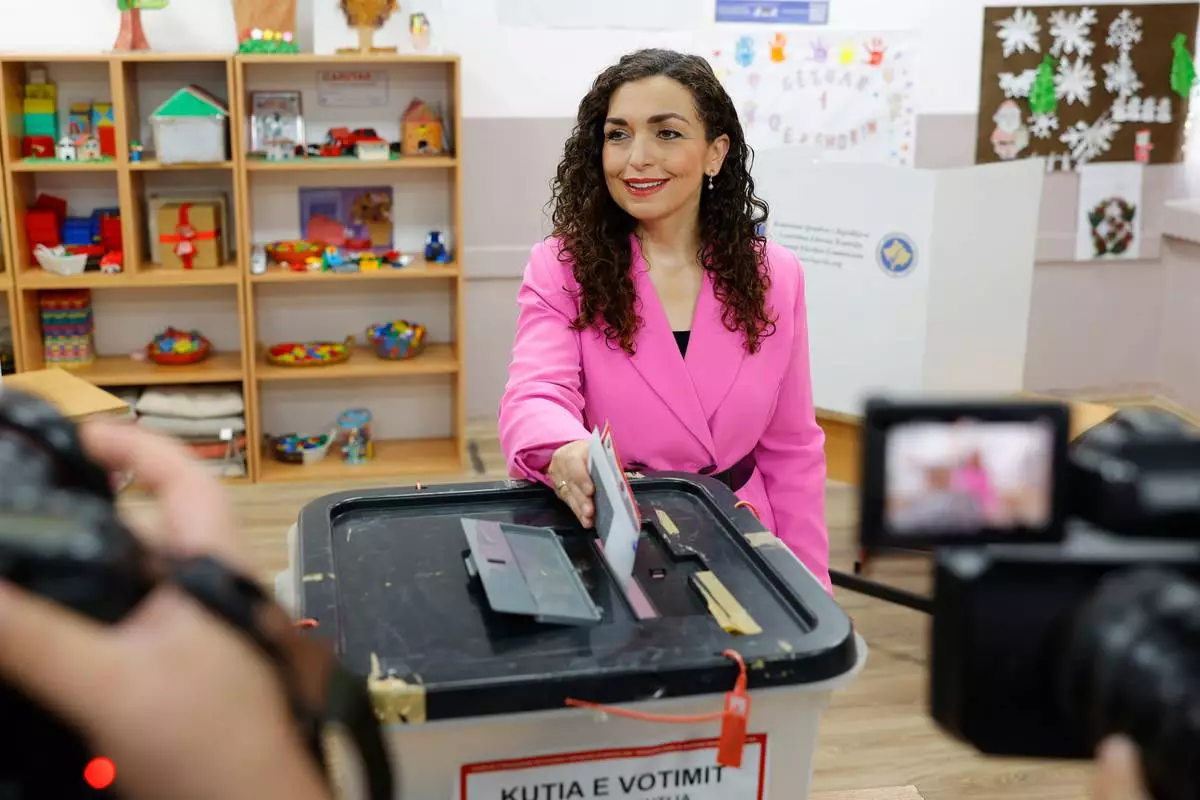
Kosovo's former president Vjosa Osmani votes during parliamentary election in Kosovo capital Pristina, on Sunday, June 7, 2026. (AP Photo/Blerim Berisha)
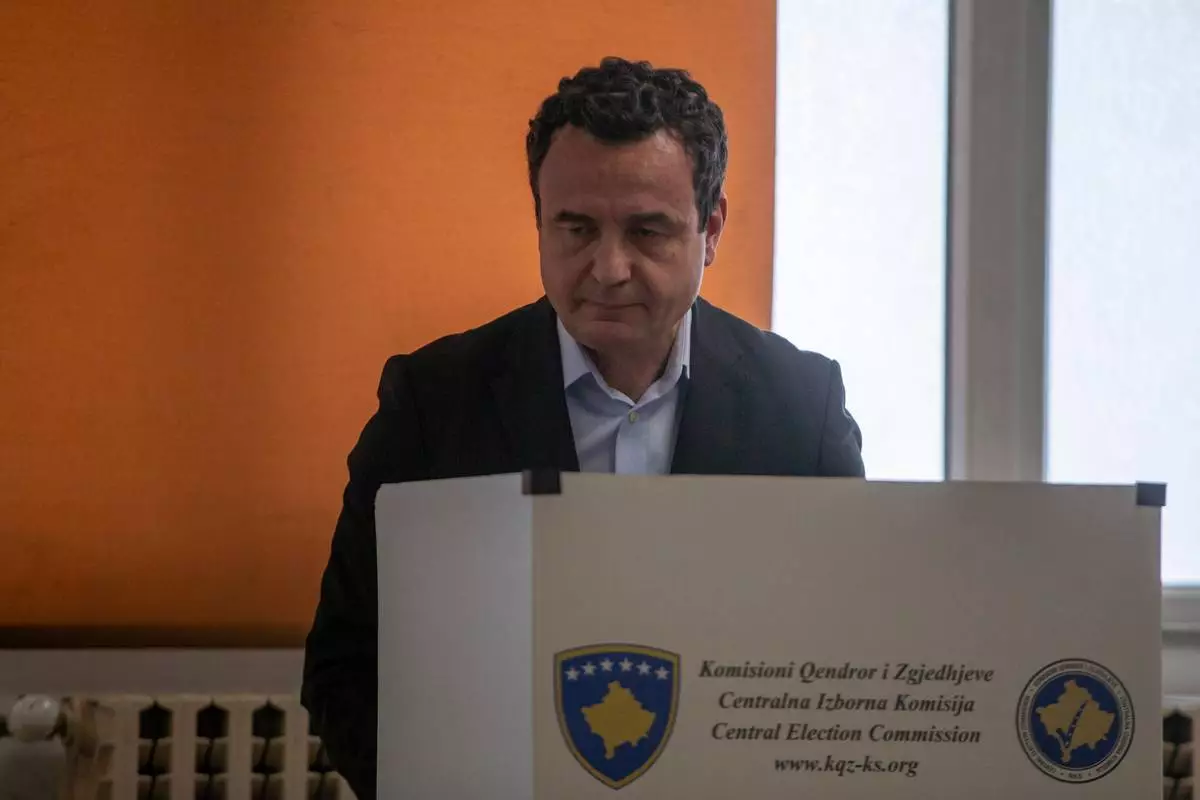
Kosovo's acting Prime Minister and Vetevendosje party leader Albin Kurti votes during parliamentary election in Kosovo capital Pristina, on Sunday, June 7, 2026. (AP Photo/Visar Kryeziu)
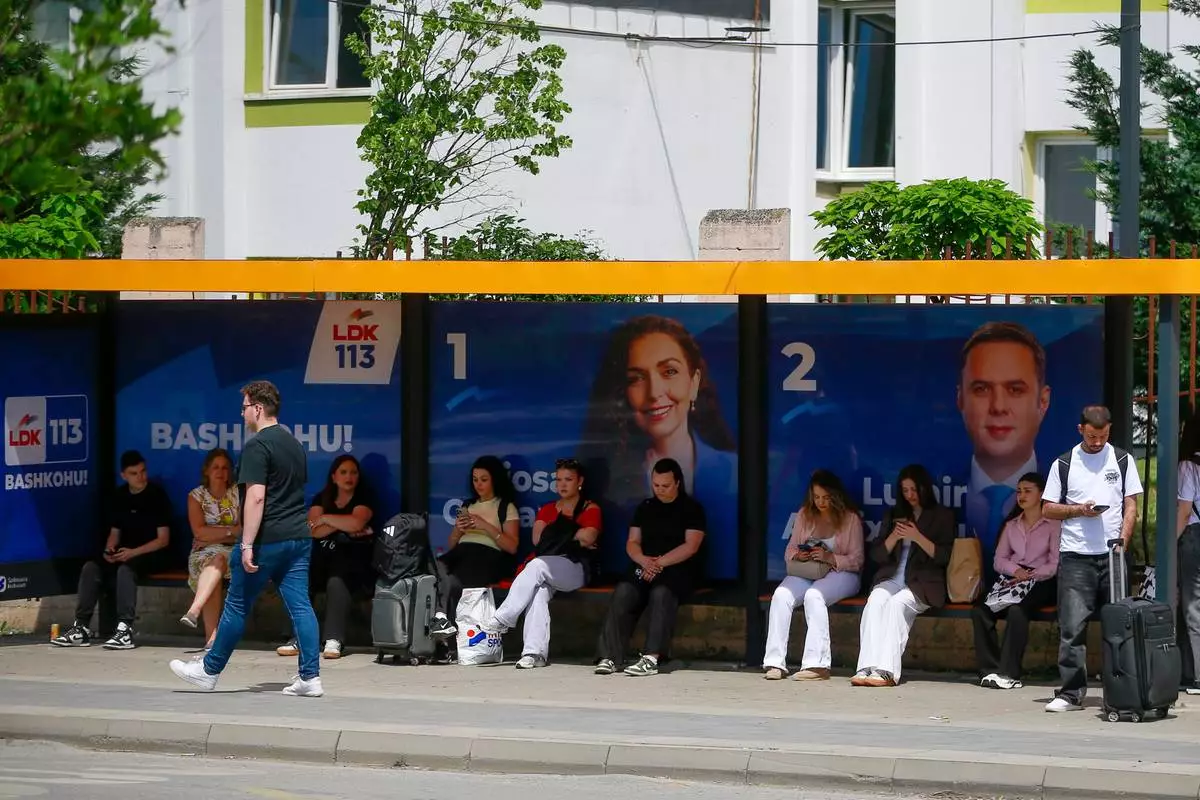
People wait at a bus station displaying election posters in capital Pristina, Kosovo, Friday, June 5, 2026, ahead of snap parliamentary elections on June 7. (AP Photo/Visar Kryeziu)
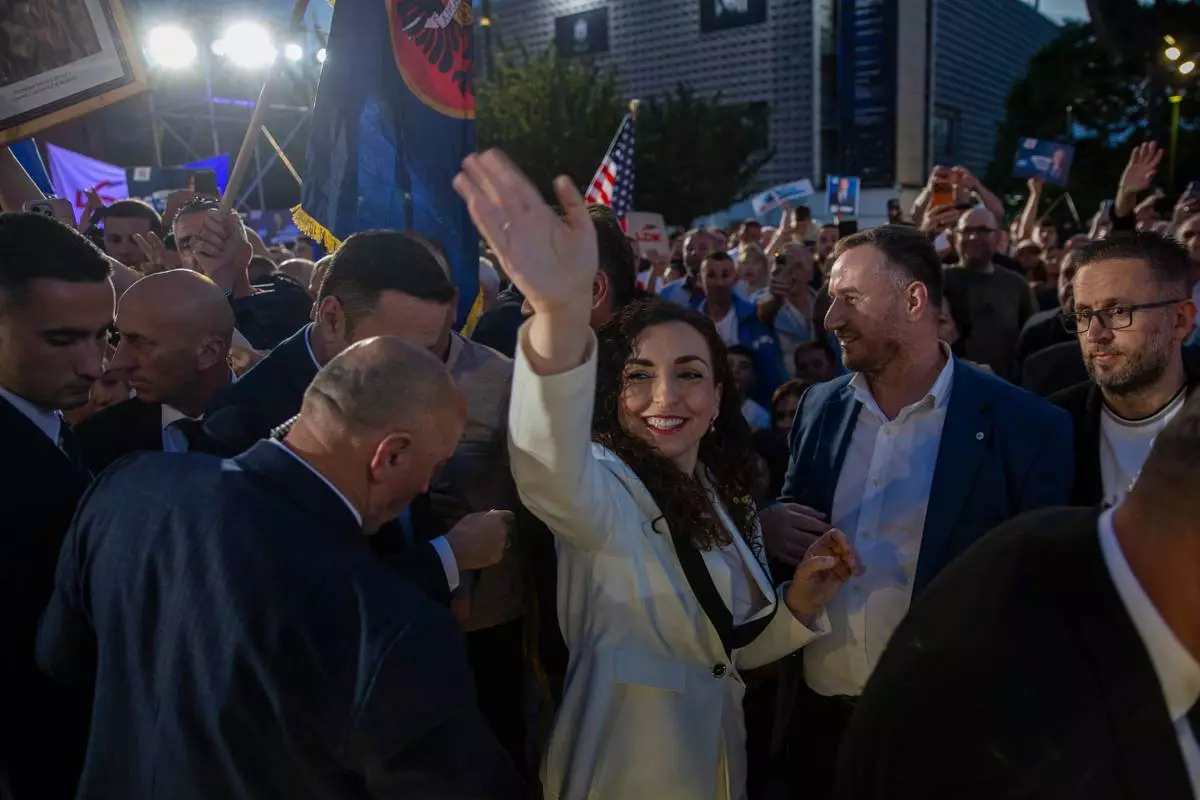
Vjosa Osmani, Kosovo former president, waves to supporter at the closing political rally of the Democratic League of Kosovo (LDK), in capital Pristina on Friday, June 5, 2026. (AP Photo/Visar Kryeziu)
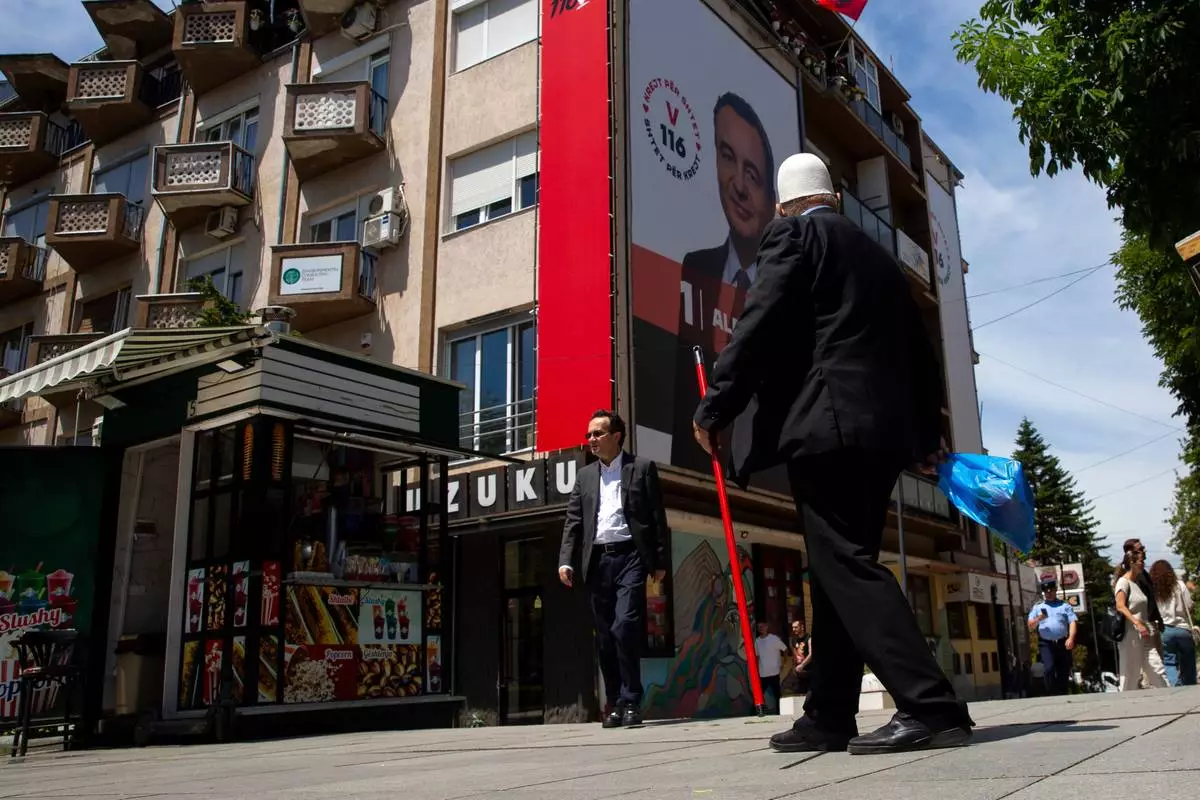
People pass by a giant election poster of acting prime minister Albin Kurti, in capital Pristina, Kosovo, Friday, June 5, 2026, ahead of snap parliamentary elections on June 7. (AP Photo/Visar Kryeziu)