Skip to Content Facebook Feature Image

China's trade-in policy boosts consumer spending, drives green transition

China

China

China

China's trade-in policy boosts consumer spending, drives green transition

2025-06-03 13:01 Last Updated At:13:37

Local governments in south China's Guangxi Zhuang Autonomous Region and central China's Henan Province are ramping up their efforts to promote the trade-in program to stimulate consumption and unlock the potential of the consumer market.

Since last year, Guangxi has hosted over 6,000 promotional events on trade-ins of consumer goods, attracting five million participants and distributing nearly 6.5 billion yuan (about 902 million U.S. dollars) in state subsidies.

Since last year, a series of trade-in related policies have significantly boosted sales of cars, home appliances, and electronics. Guangxi has reported 250,000 vehicle trade-ins in total, with 76.4 percent being new energy vehicles (NEVs) in 2025.

NEV sales rose 21.7 percent year on year in the first four months of this year.

"Our store's sales grew 30 percent in the January to April period, with eight out of 10 customers enjoying subsidies," said a car salesperson.

Since the implementation of the trade-in policies in 2024, Guangxi has sold nearly 3.23 million home appliances and over one million digital products.

Among them, , sales of home appliances in the first four months of this year increased by 35.9 percent year on year, while sales of communication equipment showed an increase of 47.3 percent year on year.

The trade-in program has also driven the sale of nearly 150,000 electric bicycles and the replacement of over 100,000 home decoration and kitchen products in Guangxi.

To date, more than five million consumers in Guangxi have participated in the subsidy program, meaning one in every 10 residents has taken part.

A total of nearly 6.5 billion yuan (about 902 million U.S. dollars) in subsidies has been distributed, with each participant receiving an average subsidy of about 1,200 yuan (more than 166 U.S. dollars). This has stimulated transactions worth 47 billion yuan (about 6.52 billion U.S. dollars) for more than 20,000 commercial entities.

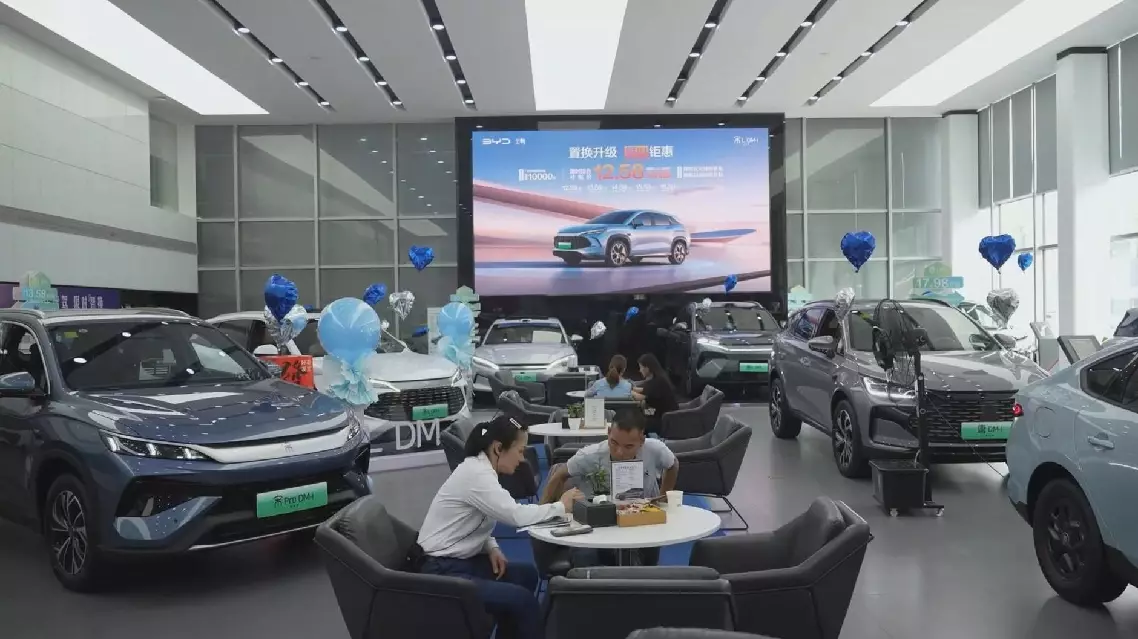
During the three-day Dragon Boat Festival holiday ending on Monday, in Hebi City, Henan, auto companies introduced various discounts on top of the trade-in policies, leading to a surge in sales.

At an auto sales center in Hebi's Qibin District, many consumers were seen inquiring about and purchasing vehicles .

"By participating in the trade-in program this time, I received a subsidy of over 20,000 yuan (more than 2,776 U.S. dollars). It's really a great deal," said Guo Fanglei, a consumer.

This holiday also saw a boom in electric bicycle sales in the city thanks to trade-in services and subsidies.
China's trade-in policy boosts consumer spending, drives green transition
China's trade-in policy boosts consumer spending, drives green transition
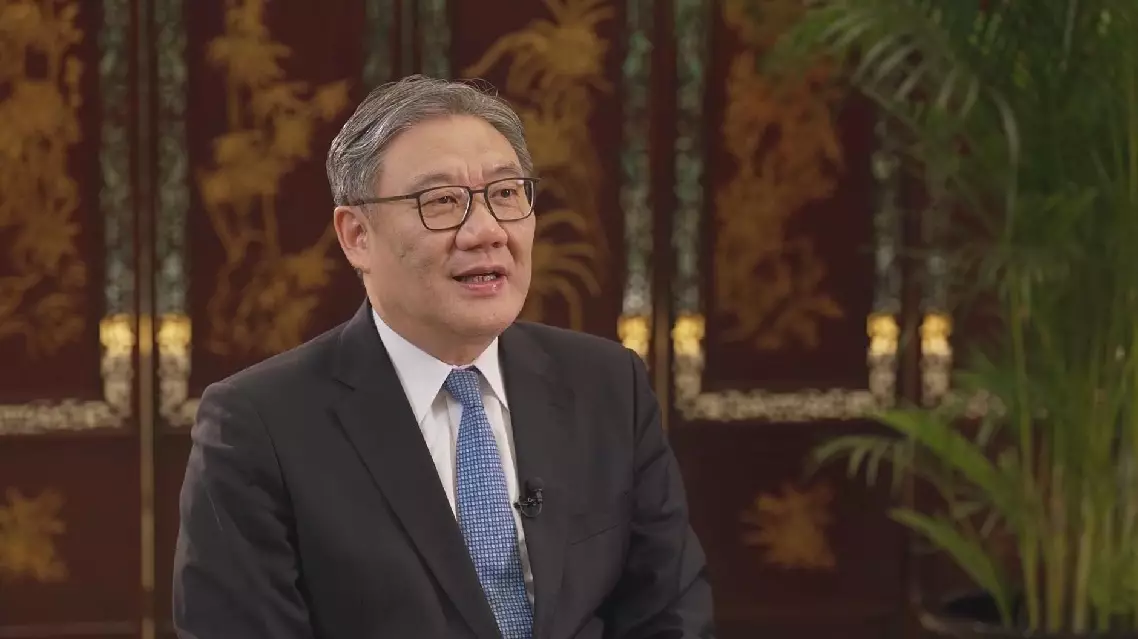
China's Minister of Commerce Wang Wentao outlined the key priorities of the 32nd Asia-Pacific Economic Cooperation (APEC) Ministers Responsible for Trade Meeting, which opened on Friday in Suzhou, East China's Jiangsu province.

In an interview with CGTN ahead of the two-day meeting, Wang said free trade, digital cooperation and green economy are high on the agenda of the meeting.

"The key areas include advancing regional economic integration and the Free Trade Area of the Asia-Pacific, supporting the World Trade Organization (WTO) in strengthening digital cooperation and developing green economy. At present, the international situation is marked by intertwined turbulence and chaos, with intensified geopolitical instability. The rise of unilateralism and protectionism poses serious challenges to the international economic and trade order, disrupting global and Asia-Pacific development. Against this backdrop, all parties have higher expectations for this trade ministers' meeting, hoping that it can build consensus and deliver outcomes," Wang said.

This year marks China's third time hosting the APEC meetings and the 35th anniversary of its membership.

By 2025, China had become the largest trading partner of 13 APEC economies. Trade between China and APEC economies reached 3.7 trillion U.S. dollars, accounting for 57.8 percent of China's total foreign trade.

China has signed 24 free trade agreements or economic and trade arrangements with 31 countries and regions, including 15 APEC economies. In recent years, China has also completed upgrades of free trade agreements with APEC economies such as Singapore and Peru.

The minister said that China has always been a firm supporter and an important contributor to APEC.

"We have actively shared our vast market and development opportunities with all parties. China's door to the world will only open wider and wider. Facing the common challenges, China will continue to fulfill its responsibilities as a major country, further deepen reform, expand high-standard opening-up, and continue to provide new opportunities for the Asia-Pacific region and the world with its new achievements in Chinese modernization," the minister said.

China's Commerce Minister outlines priorities for 32nd APEC trade ministers' meeting

China's Commerce Minister outlines priorities for 32nd APEC trade ministers' meeting

Recommended Articles