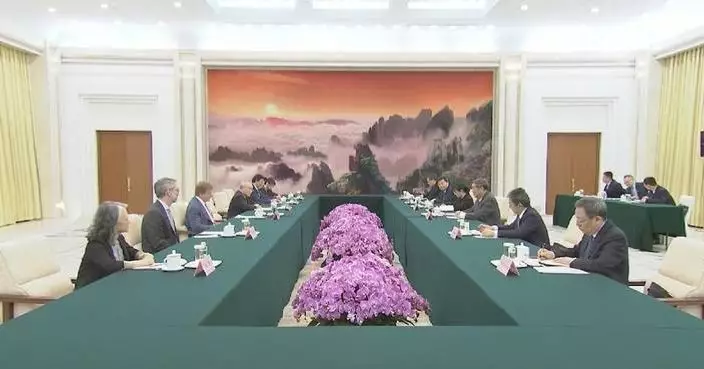
Sci-tech cooperation between China and partner countries of the Belt and Road Initiative (BRI) has led to a wide array of achievements over the past eight years since the launch of the Belt and Road Science, Technology and Innovation Cooperation Action Plan, said Chen Jiachang, China's Vice Minister of Science and Technology, in Beijing on Tuesday.
The Belt and Road Science, Technology and Innovation Cooperation Action Plan, launched in 2017, consists of the Science and Technology People-to-People Exchange Initiative, the Joint Laboratory Initiative, the Science Park Cooperation Initiative and the Technology Transfer Initiative.
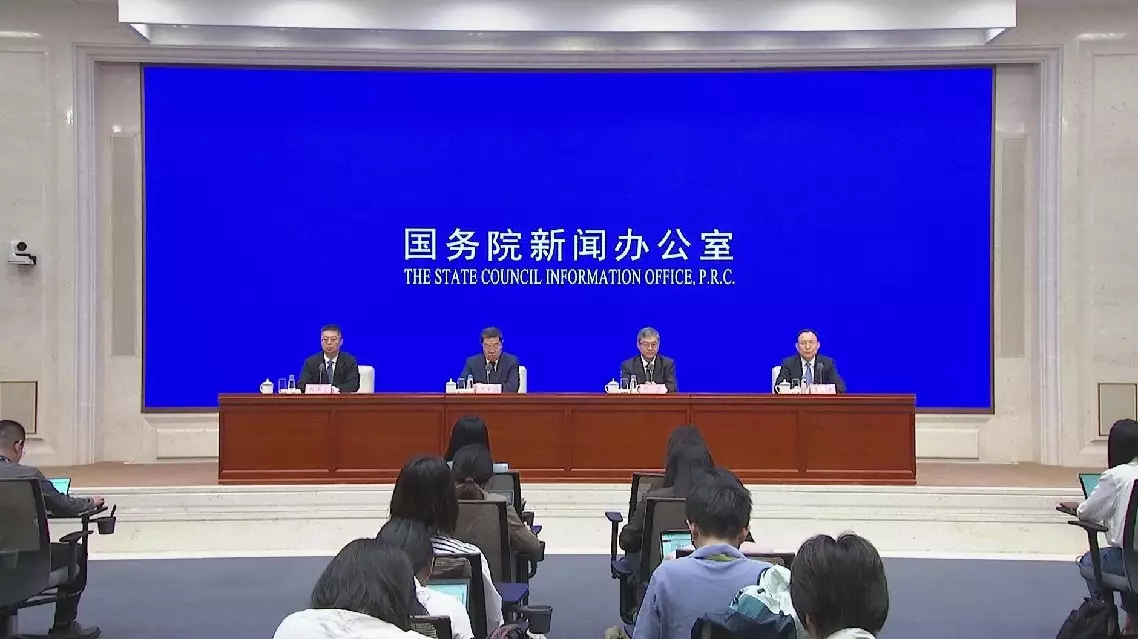
"As of now, China has signed intergovernmental sci-tech cooperation agreements with over 80 BRI partner countries, leveraging the leading role of bilateral and multilateral cooperation mechanisms to form a comprehensive and multi-level sci-tech innovation cooperation network. In fields such as agriculture, new energy, and public health, China and the relevant partner countries have established a total of more than 70 BRI joint laboratories, continuously expanding the scope of joint research and enhancing the scientific research capabilities of BRI partner countries," said Chen at a press conference on the upcoming second Belt and Road Conference on Science and Technology Exchange.
The conference will be held in Chengdu, capital of southwest China's Sichuan Province, from June 10 to 12.
It aims to strengthen communication, build consensus, and deepen cooperation, providing strong sci-tech support for the high-quality construction of the Belt and Road.
The vice-minister said China and BRI partner countries have formed a sci-tech cooperative network and enhanced exchanges in a trail of domains.
"In in-depth implementation of the Belt and Road Science, Technology and Innovation Cooperation Action Plan, and in efforts to promote coordinated development of industry, education, research and application, we have worked to foster a network with partner countries for cooperation in industry, education, research and application. Currently, 10 international technology transfer centers oriented toward BRI partner countries have been established in regions including Guangxi, Yunnan, Ningxia, Jiangsu, Shandong, Hubei, Guangdong, and the Chengdu-Chongqing area, in keeping deepening cooperation in technology transfer, innovation and entrepreneurship. We actively support young scientists from partner countries in conducting short-term research and exchanges in China. The program now covers over 80 percent of the BRI partner countries, spanning fields such as modern agriculture, life and health, ecological environment, and materials science," said the official.
China, BRI partner countries make remarkable sci-tech achivements: vice-minister

Visiting Chinese Foreign Minister Wang Yi said Saturday China is willing to work with Lesotho to strengthen exchanges on governance experience, enhance coordination in multilateral affairs, and advance the China-Lesotho strategic partnership.
Wang, also a member of the Political Bureau of the Communist Party of China Central Committee, made the remarks when meeting with Lesotho Prime Minister Sam Matekane in the capital of Lesotho.
During the meeting, Wang congratulated Lesotho on the 60th anniversary of its independence this year, and spoke highly of Lesotho government's efforts to prioritize economic development and steer the African country onto a path of sustainable growth. Since the Beijing Summit of the Forum on China-Africa Cooperation (FOCAC) in 2024, the two sides have advanced cooperation under the 10 partnership action plans unveiled at the summit, successfully implementing a number of key projects to effectively promote Lesotho's development and revitalization, Wang said.
China stands ready to work with Lesotho to strengthen exchanges on governance experience, enhance coordination in multilateral affairs, and push for greater development of the China-Lesotho strategic partnership, he added.
Calling on the two sides to firmly support each other, Wang said that China will accelerate the implementation of its zero-tariff policy for African countries, including Lesotho, expand bilateral trade, investment and industrial cooperation, facilitate broader access of Lesotho's specialty products to the Chinese market, and continue to support Lesotho's national development.
China will continue to stand firmly with African countries, uphold justice for the Global South, including Lesotho, oppose unilateralism and acts of bullying, and work together to build a community with a shared future for humanity, Wang said.
On his part, Matekane said during the meeting that Lesotho cherishes its friendship with China and the strategic partnership between the two countries, and expressed gratitude for China's valuable support for the development of African countries, including Lesotho.
Lesotho firmly adheres to the one-China principle and resolutely supports China in safeguarding its core interests, he said, noting that his country stands ready to strengthen strategic mutual trust with China, expand people-to-people exchanges, jointly implement the outcomes of the FOCAC Beijing Summit, and deepen cooperation in areas such as infrastructure, manufacturing and energy.
Matekane stressed that China's zero-tariff policy for African products will inject new impetus into Lesotho's development. He also expressed Lesotho's willingness to strengthen solidarity and cooperation with China on multilateral platforms such as BRICS to jointly address global challenges.
On the same day, Wang also held talks with Lejone Mpotjoana, minister of foreign affairs and international relations of Lesotho.
China, Lesotho to strengthen exchanges, advance cooperation