South Korean President Lee Jae-myung formally began his single five-year term after the National Election Commission confirmed his election victory on Wednesday.
Lee assumed the presidency at 06:21 local time with the election watchdog's approval during a plenary session.
He had no transition period as he was elected in a presidential by-election, caused by his predecessor's botched martial law bid last December.
Lee of the majority liberal Democratic Party won the snap election with 49.42 percent of the vote, beating his major rival Kim Moon-soo of the conservative People Power Party with 41.15 percent.
Lee delivered a speech before the National Assembly in Yeouido, western Seoul, on Wednesday morning, expressing his gratitude to the people. He emphasized that the most urgent task at present is to revitalize the economy and improve people's livelihoods. He also pledged to pursue a path of dialogue, coexistence, and shared prosperity between the Republic of Korea (ROK) and the Democratic People's Republic of Korea (DPRK).
"First of all, I hope that prices will stabilize and that the South Korean won, which kept depreciating against the U.S. dollar and has just started to pick up recently, will remain stable in the future," said a Seoul resident.
"Many individual industrial and commercial households facing business difficulties hope that the new government will introduce assistance measures. Household debt has also increased significantly. I hope interest rates will continue to fall to ease the burden of loan repayment," said another resident.

Lee Jae-myung formally begins S Korea's presidential term

Lee Jae-myung formally begins S Korea's presidential term
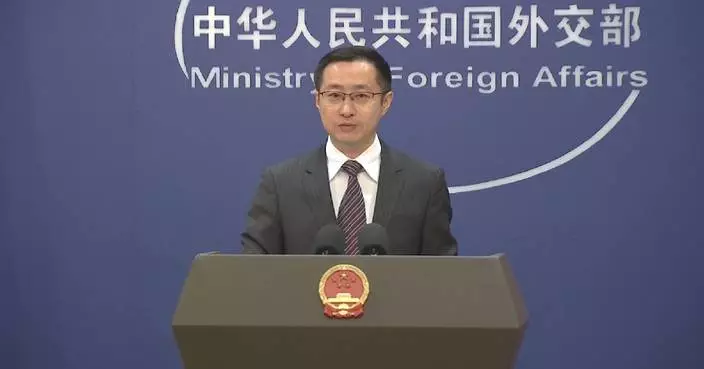
China's development has never been a "threat" to anyone but the source of growth advancing common development of all countries, Foreign Ministry spokesman Lin Jian said at a regular press conference in Beijing on Friday.
Some Western media and think tanks are peddling so-called "China Shock 2.0," saying that "China is achieving fast development in high-tech sectors such as renewable energy and AI and relies on foreign markets to absorb its overcapacity, thus reducing the market share of developed countries and sending more serious shock waves to the global economy compared with the era of traditional manufacture industry," while there are foreign commentators saying that the "China Shock 2.0" argument ignores the genuine innovation occurring within the Chinese industrial ecosystem and that Chinese export is the exact booster of the global economy that is needed in the turbulent period and more indispensable than ever.
Commenting on that, Lin said: "From the world's factory to the world's market and innovation powerhouse, China's development is achieved through strong performance driven by innovation and brings tangible cooperation opportunities and space to the world. High-quality Chinese products represented by the 'old three' of textiles, furniture and home appliances have stabilized the global industrial and supply chain, lowered the living cost of global consumers and eased the inflationary pressure worldwide. China's green production capacity represented by the 'new three' of electric vehicles, batteries and solar panels has bridged the gap between supply and demand in global green development and bolstered the global energy transition and low-carbon development. Moreover, China's high-tech products represented by the 'new new three' of robots, AI and innovative drugs have broken high-tech barriers and monopoly and enabled people in more countries to access affordable new technologies," said the spokesman.
"Openness and cooperation bring about progress and win-win result. China's development has never been a 'threat' to anyone but the source of growth advancing common development of all countries. What really creates 'shocks' to the world has never been the innovation of Chinese companies and efficiency of Chinese industrial capacity, but protectionist moves of setting up barriers, decoupling and severing industrial and supply chains. China will stay committed to high-standard opening up, defend the multilateral trading system and provide more certainty and new impetus to the world economy with its own steady development," said Lin.
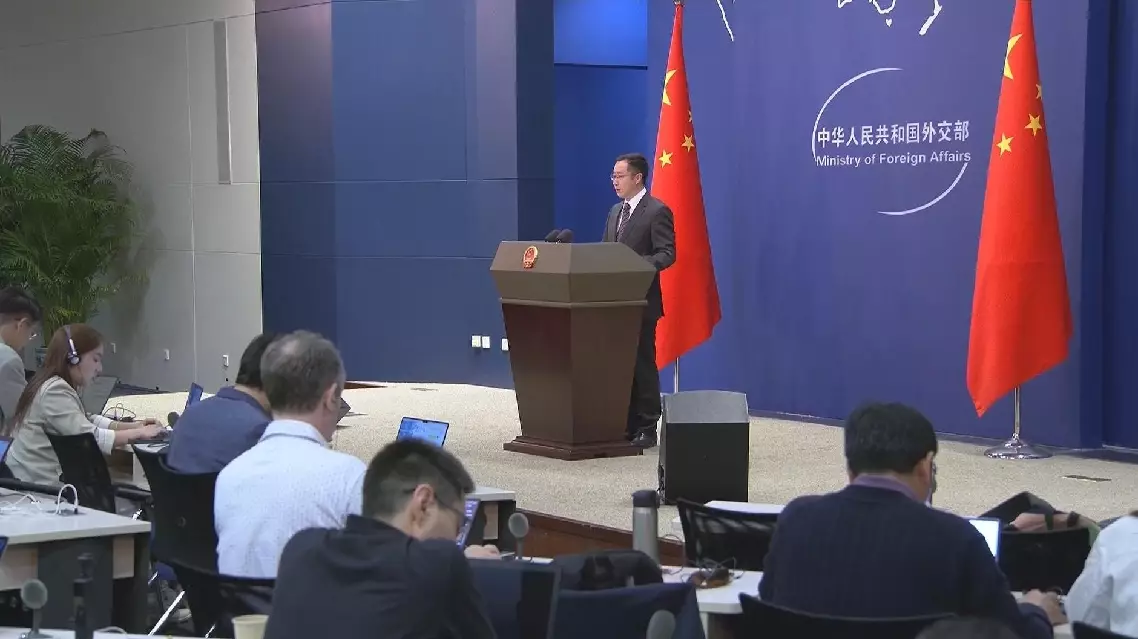
China's development never a threat: FM spokesman