The use of unmanned aerial vehicles (UAVs) is improving grazing efficiency for many herdsmen in northwest China's Xinjiang Uygur Autonomous Region.
By operating a UAV with a small remote control, a herdsman can monitor the position and travel directions of his herd and the nearby distribution of water and grass in real time.
In Xinjiang's Bayingol Mongol Autonomous Prefecture, camel herdsman Daoer Jiala and his brother have been using drones to in their daily grazing and grassland inspections.
By flying at high altitudes, the drones can help plan the optimal grazing route. The sound and light of the UAV can also help them drive stray animals back to the herd.
The technology will be especially useful as herdsmen transfer their camels to their summer pasture, which they do every June.
"We have about 200 camels that need to be moved to the summer pasture. It is about 30 kilometers away and takes us about one day to arrive there. When the weather gets cooler in late August or early September, we will move the herd to the winter pasture," said Daoer Jiala.
They used to turn to neighbors for help during the pasture transfer, but now things have become easier with the intelligent tool of drones.
"After I learned how to use drones, I started to use them to herd. When I'm transferring the camels to summer pastures this time, I use the drone to monitor the condition of the camels from up above. It makes the transfer much more efficient." said Tieli Mujun, Daoer Jiala's brother.
Tieli said drones are gaining popularity among herdsmen in Xinjiang. The new tool has saved manpower and greatly improved animal husbandry production efficiency in the region.
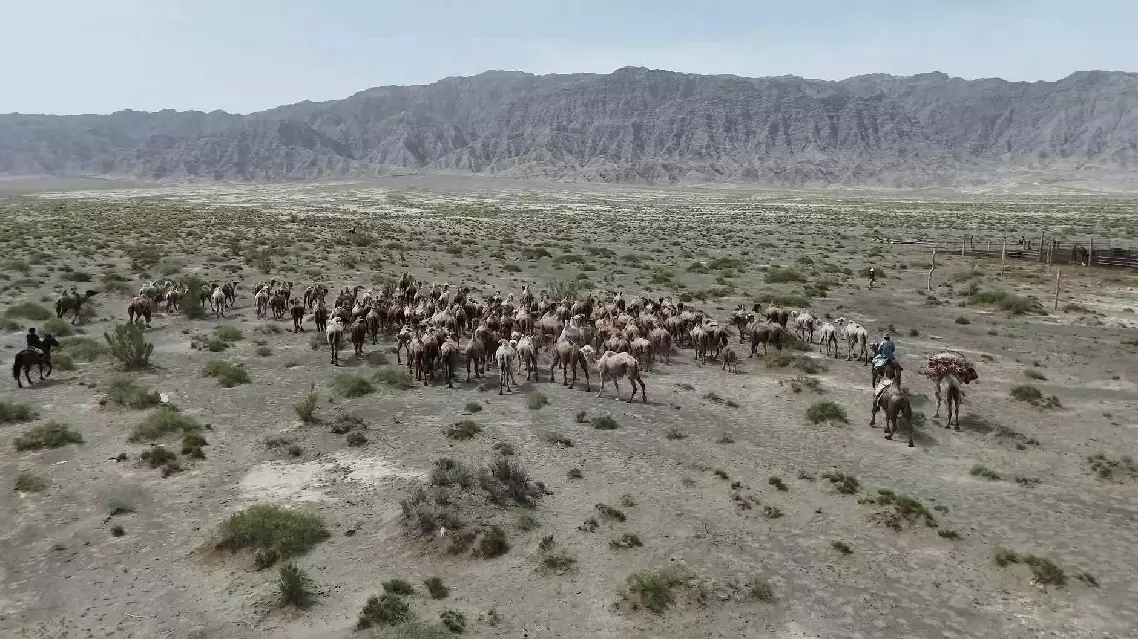
Drones help herdsmen in Xinjiang manage free-roaming livestock