Skip to Content Facebook Feature Image

Join scientists as they drive into hailstorms to study the costly weather extreme

News

Join scientists as they drive into hailstorms to study the costly weather extreme
News

News

Join scientists as they drive into hailstorms to study the costly weather extreme

2025-06-04 23:13 Last Updated At:23:21

SHAMROCK, Texas (AP) — As severe storms once again soak, twist and pelt the nation's midsection, a team of dozens of scientists is driving into them to study one of the nation's costliest but least-appreciated weather dangers: Hail.

Hail rarely kills, but it hammers roofs, cars and crops to the tune of $10 billion a year in damage in the U.S. So in one of the few federally funded science studies remaining after Trump administration cuts, teams from several universities are observing storms from the inside and seeing how the hail forms. Project ICECHIP has already collected and dissected hail the size of small cantaloupes, along with ice balls of all sizes and shapes.

More Images
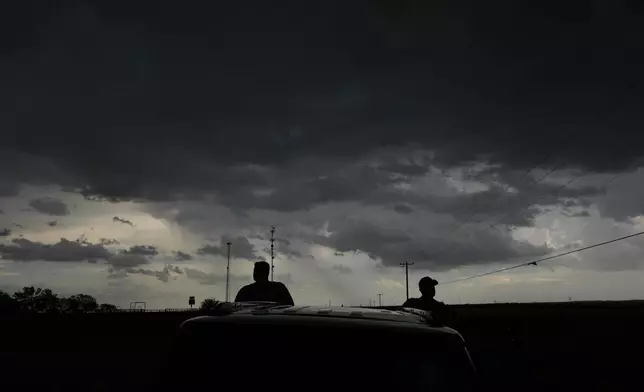
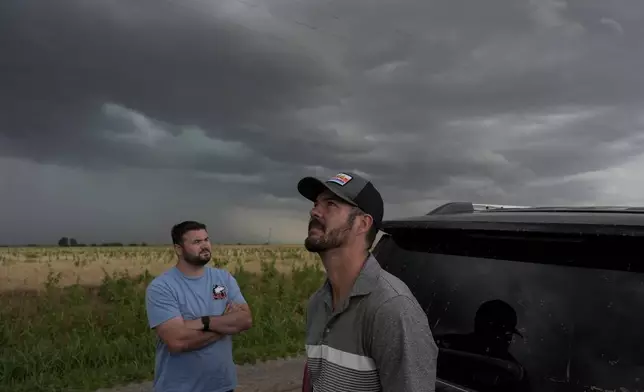
Victor Gensini, Northern Illinois University meteorology professor and a lead scientist of Project ICECHIP, right, and Logan Bundy, PhD Candidate at NIU and ICECHIP IOP assistant, left, stand at the command vehicle watching an approaching storm Tuesday, June 3, 2025, in Scotland, Texas. (AP Photo/Carolyn Kaster)
Victor Gensini, Northern Illinois University meteorology professor and a lead scientist of Project ICECHIP, right, and Logan Bundy, PhD Candidate at NIU and ICECHIP IOP assistant, left, stand at the command vehicle watching an approaching storm Tuesday, June 3, 2025, in Scotland, Texas. (AP Photo/Carolyn Kaster)

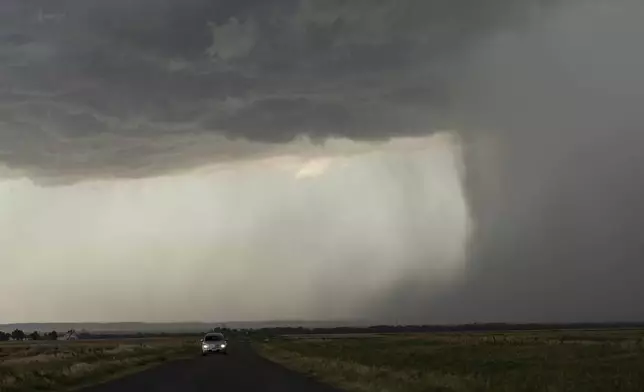
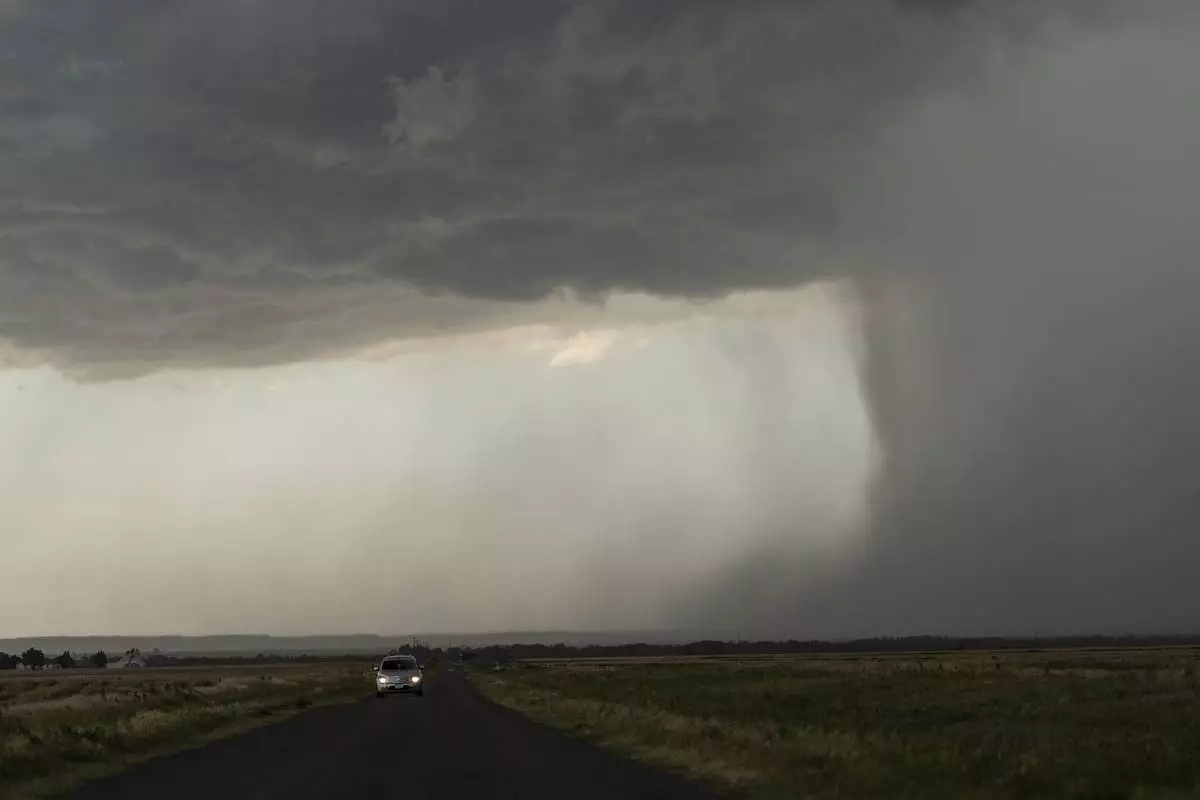
A car moves away from an approaching storm with a rain shaft during a Project ICECHIP operation on Tuesday, June 3, 2025, near Tipton, Okla. (AP Photo/Carolyn Kaster)
A car moves away from an approaching storm with a rain shaft during a Project ICECHIP operation on Tuesday, June 3, 2025, near Tipton, Okla. (AP Photo/Carolyn Kaster)

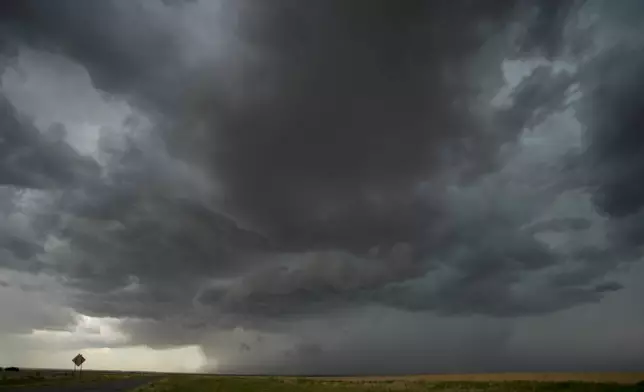
An approaching storm and rain shaft is visible during a Project ICECHIP operation Tuesday, June 3, 2025, near Tipton, Okla. (AP Photo/Carolyn Kaster)
An approaching storm and rain shaft is visible during a Project ICECHIP operation Tuesday, June 3, 2025, near Tipton, Okla. (AP Photo/Carolyn Kaster)

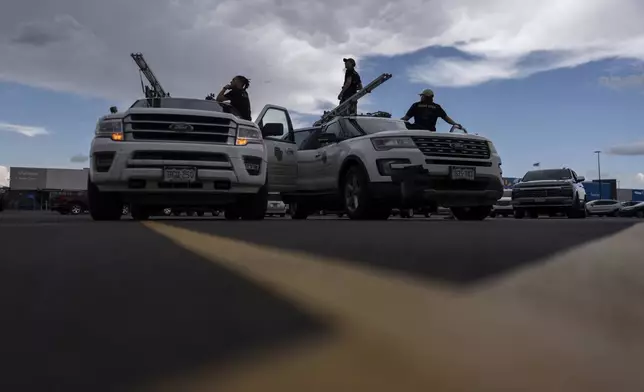
Members of the University of Colorado Boulder's Integrated Remote and In-Situ Sensing flight team stage in a Walmart parking lot before a Project ICECHIP operation Tuesday, June 3, 2025, in Atlus, Okla. (AP Photo/Carolyn Kaster)
Members of the University of Colorado Boulder's Integrated Remote and In-Situ Sensing flight team stage in a Walmart parking lot before a Project ICECHIP operation Tuesday, June 3, 2025, in Atlus, Okla. (AP Photo/Carolyn Kaster)

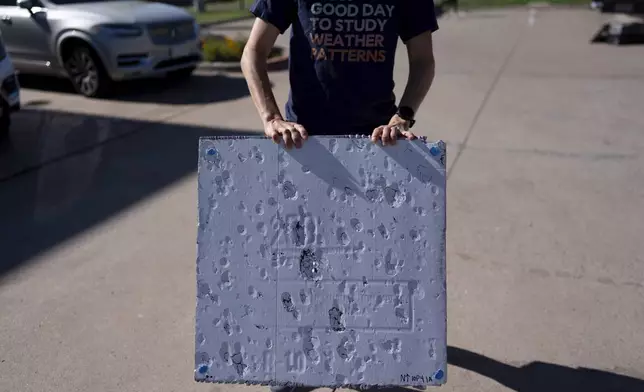
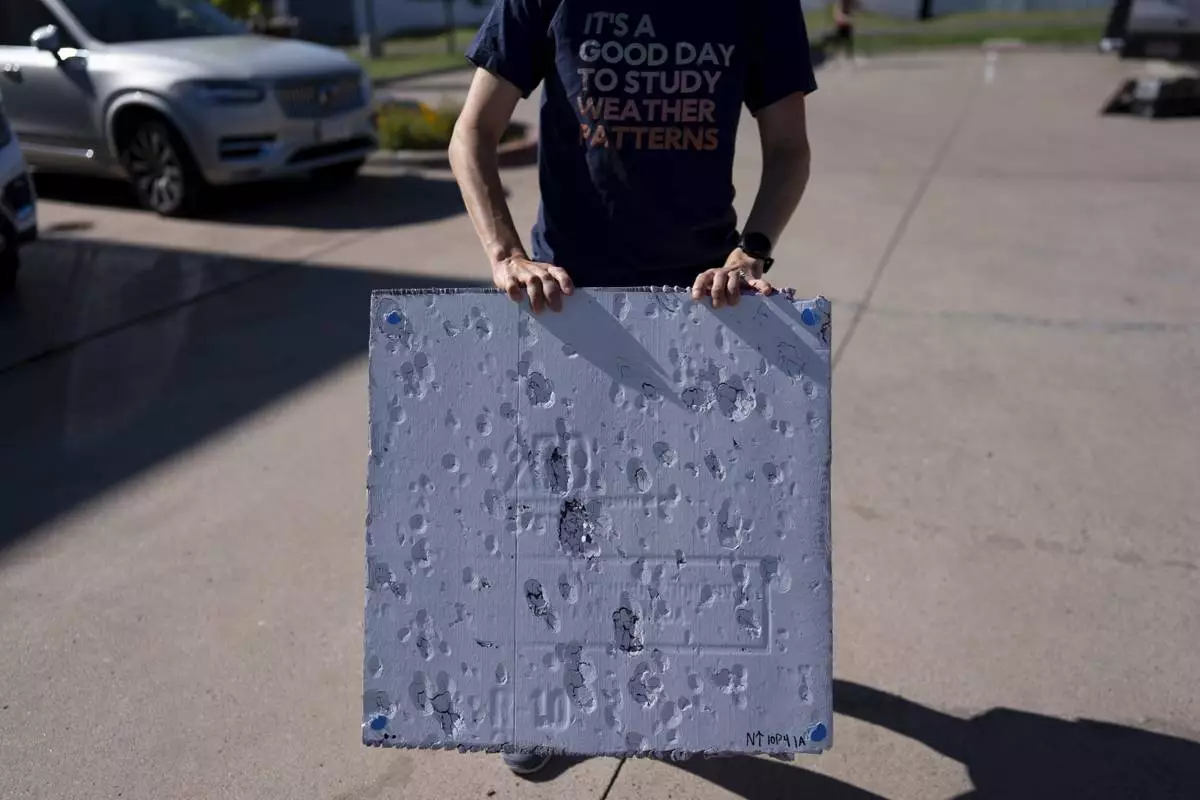
Hannah Vagasky holds a foam board hail pad covered with impact dents in a parking lot Tuesday, June 3, 2025, in Shamrock, Texas, as the team prepares for a day of hailstorm chasing. The hail pad is used to measure the size, angle of impact and intensity of hail. (AP Photo/Carolyn Kaster)
Hannah Vagasky holds a foam board hail pad covered with impact dents in a parking lot Tuesday, June 3, 2025, in Shamrock, Texas, as the team prepares for a day of hailstorm chasing. The hail pad is used to measure the size, angle of impact and intensity of hail. (AP Photo/Carolyn Kaster)

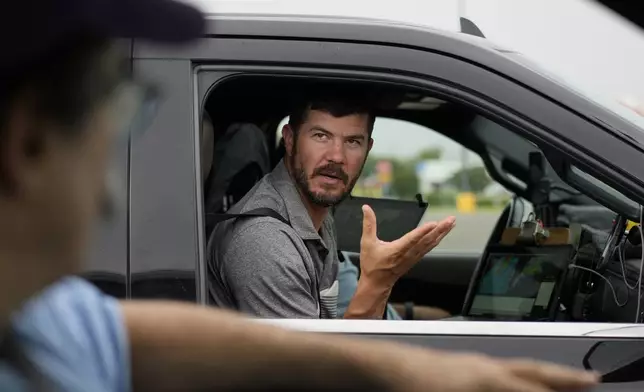
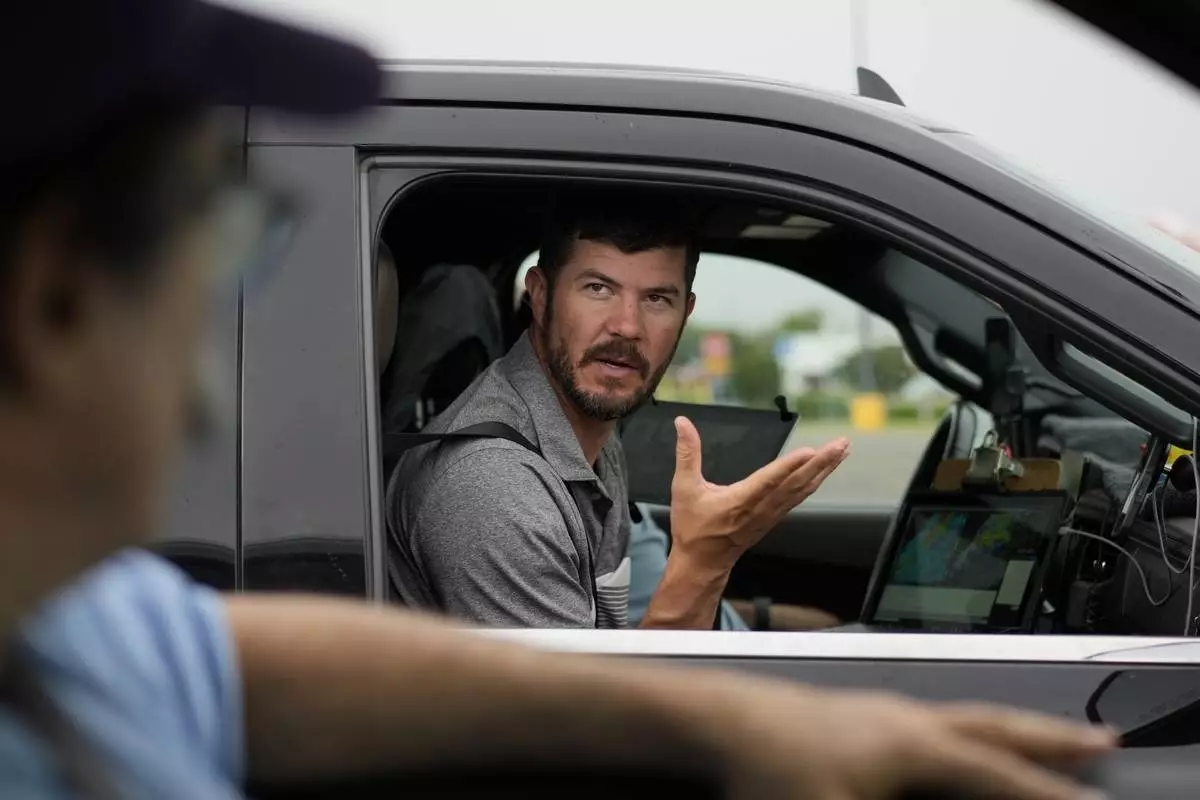
Victor Gensini, Northern Illinois University meteorology professor and a lead scientist of Project ICECHIP, speaks with Seth Borenstein, Associated Press science writer, as they stage in a Walmart parking lot before a Project ICECHIP operation Tuesday, June 3, 2025, in Atlus, Okla. (AP Photo/Carolyn Kaster)
Victor Gensini, Northern Illinois University meteorology professor and a lead scientist of Project ICECHIP, speaks with Seth Borenstein, Associated Press science writer, as they stage in a Walmart parking lot before a Project ICECHIP operation Tuesday, June 3, 2025, in Atlus, Okla. (AP Photo/Carolyn Kaster)

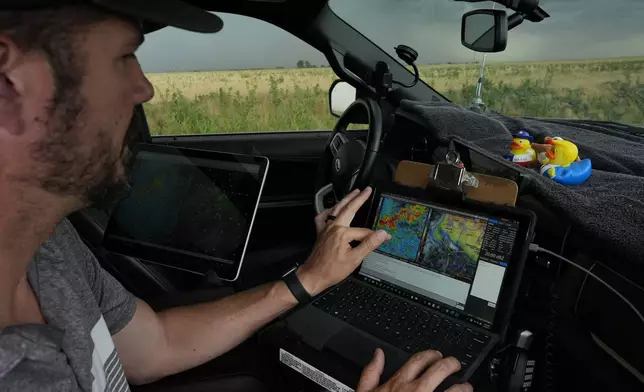
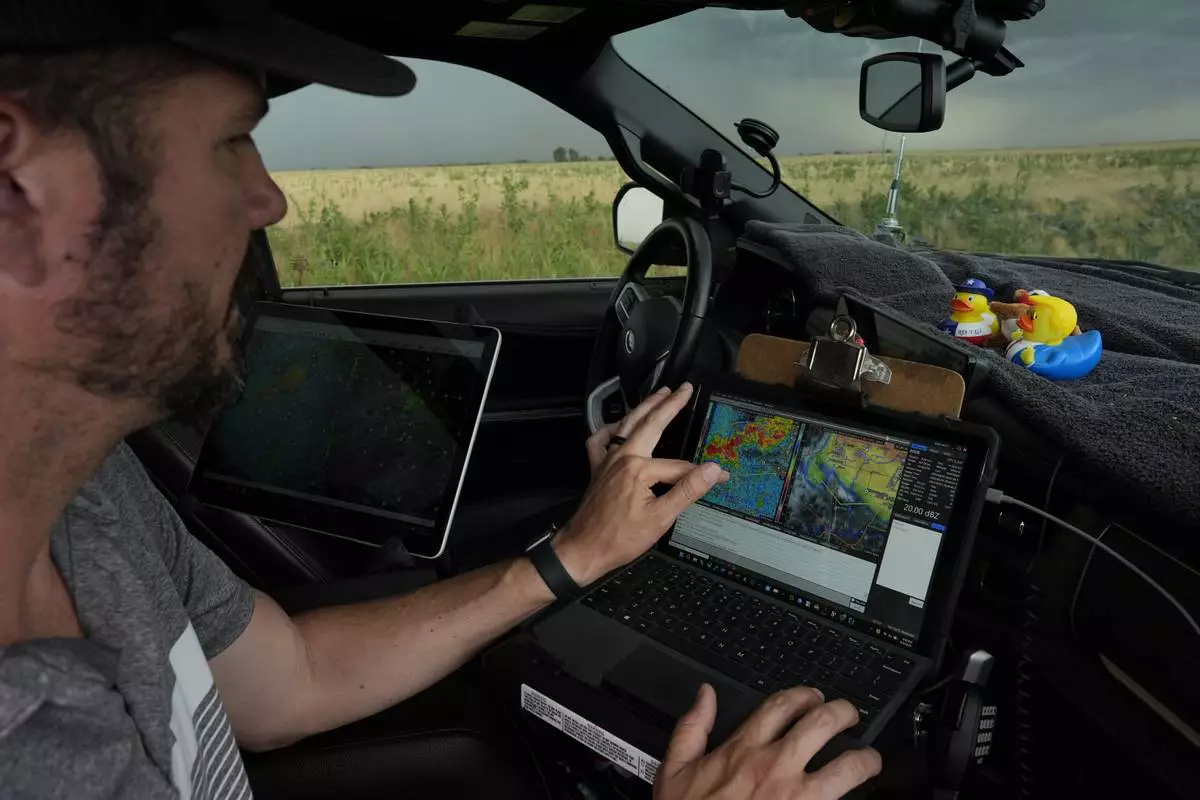
Victor Gensini, Northern Illinois University meteorology professor and a lead scientist of Project ICECHIP, checks storm data in the command vehicle during an operation Tuesday, June 3, 2025, south of Tipton, Okla.(AP Photo/Carolyn Kaster)
Victor Gensini, Northern Illinois University meteorology professor and a lead scientist of Project ICECHIP, checks storm data in the command vehicle during an operation Tuesday, June 3, 2025, south of Tipton, Okla.(AP Photo/Carolyn Kaster)

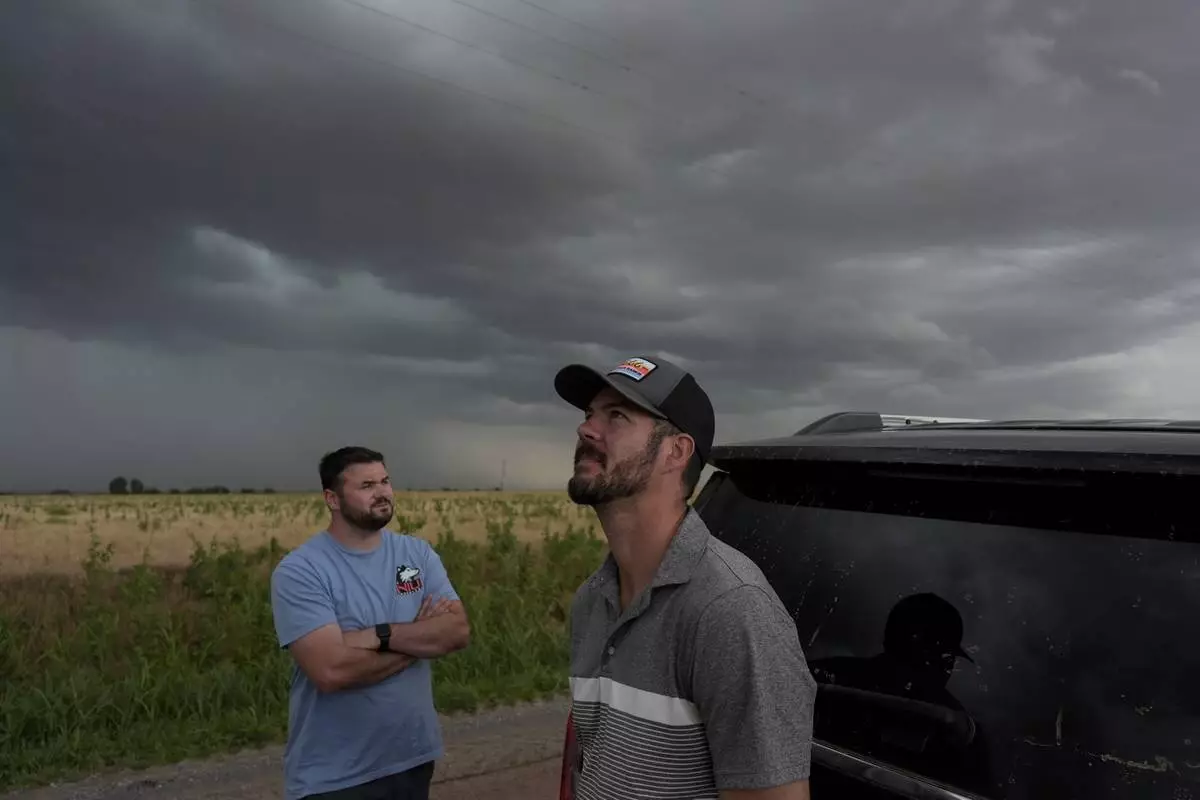
Victor Gensini, Northern Illinois University meteorology professor and a lead scientist of Project ICECHIP, right, and Logan Bundy, PhD Candidate at NIU and ICECHIP IOP assistant, look at cloud formations during a Project ICECHIP operation, Tuesday, June 3, 2025, south of Tipton, Okla. (AP Photo/Carolyn Kaster)
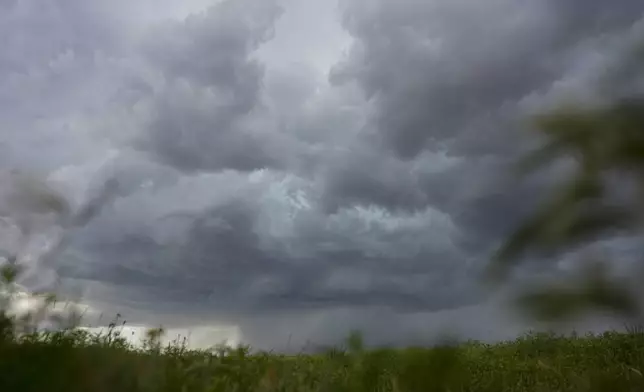
Victor Gensini, Northern Illinois University meteorology professor and a lead scientist of Project ICECHIP, right, and Logan Bundy, PhD Candidate at NIU and ICECHIP IOP assistant, look at cloud formations during a Project ICECHIP operation, Tuesday, June 3, 2025, south of Tipton, Okla. (AP Photo/Carolyn Kaster)

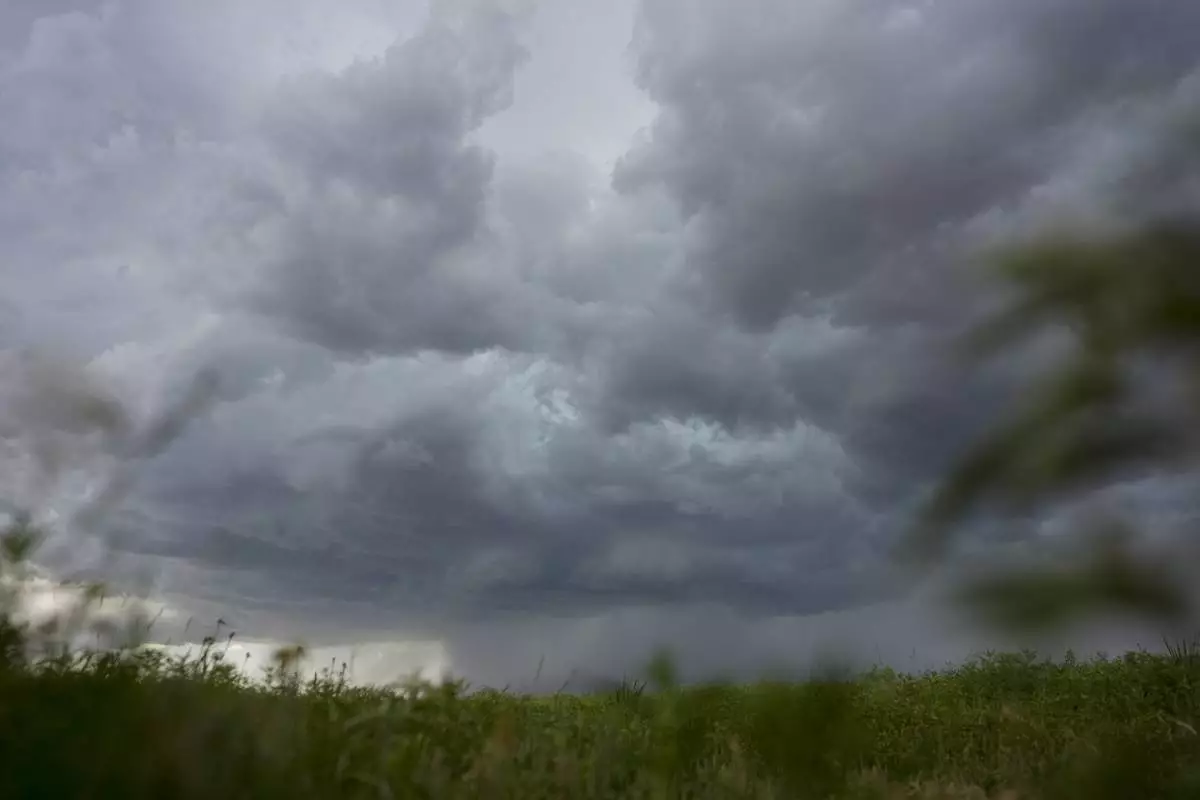
An approaching storm and rain shaft is visible during a Project ICECHIP operation Tuesday, June 3, 2025, near Tipton, Okla. (AP Photo/Carolyn Kaster)
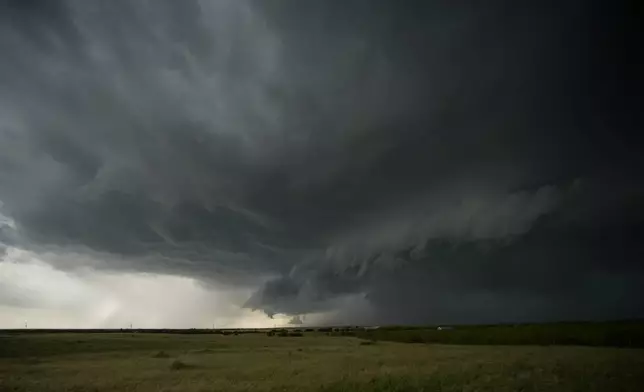
An approaching storm and rain shaft is visible during a Project ICECHIP operation Tuesday, June 3, 2025, near Tipton, Okla. (AP Photo/Carolyn Kaster)

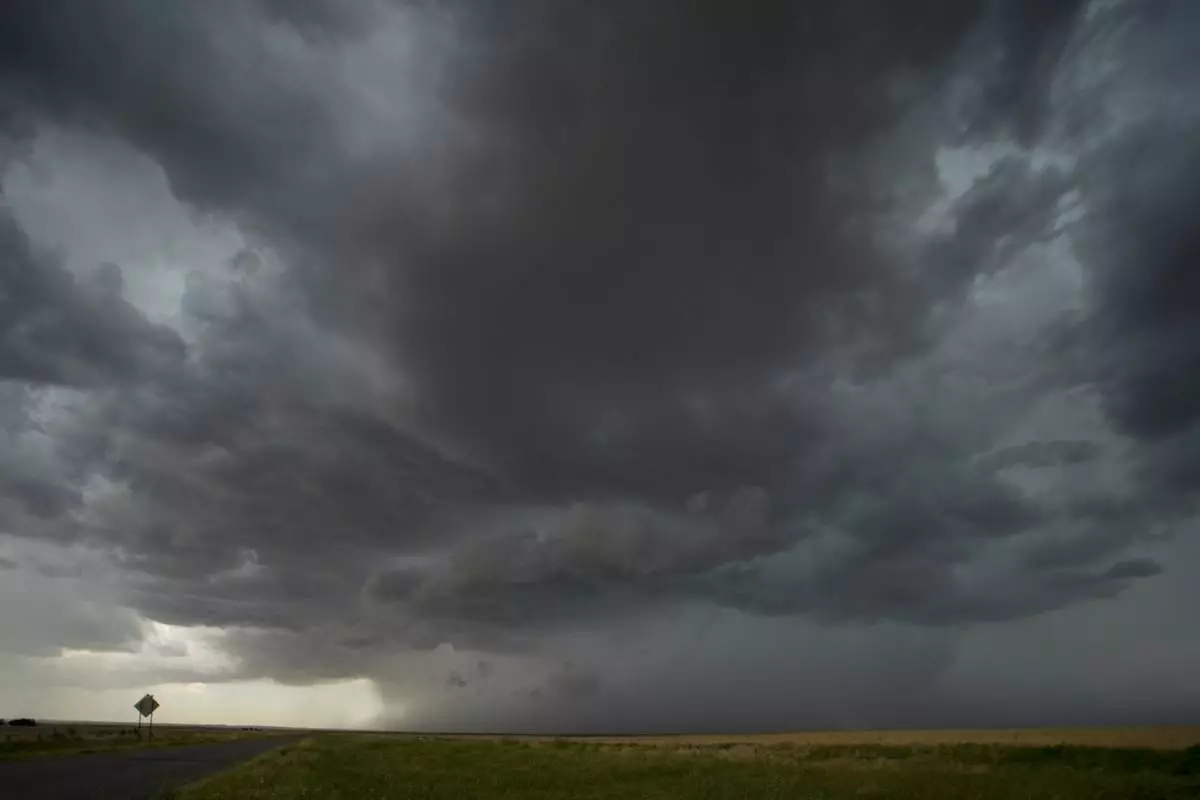
An approaching storm with a shelf cloud and rain shaft is visible during a Project ICECHIP operation on Tuesday, June 3, 2025, in Scotland, Texas. (AP Photo/Carolyn Kaster)
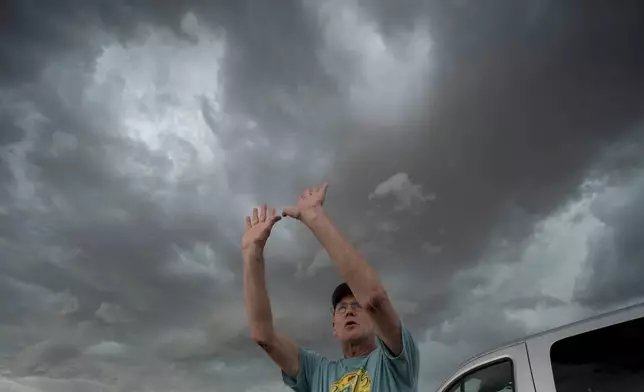
An approaching storm with a shelf cloud and rain shaft is visible during a Project ICECHIP operation on Tuesday, June 3, 2025, in Scotland, Texas. (AP Photo/Carolyn Kaster)

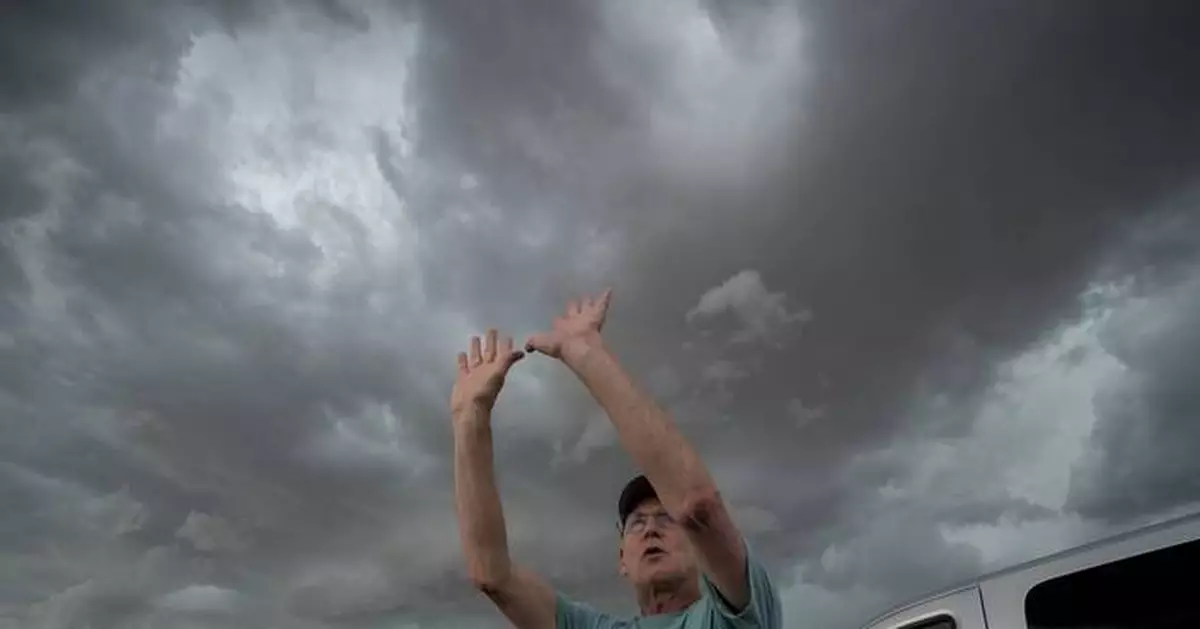
National Weather Service forecaster David Imy gestures to an approaching storm during a Project ICECHIP operation Tuesday, June 3, 2025, near Tipton, Okla. (AP Photo/Carolyn Kaster)

National Weather Service forecaster David Imy gestures to an approaching storm during a Project ICECHIP operation Tuesday, June 3, 2025, near Tipton, Okla. (AP Photo/Carolyn Kaster)

Scientists in two hail-dimpled vehicles with special mesh protecting the windshields are driving straight into the heart of the storms, an area known as the “shaft” where the hail pelting is the most intense. It's a first-of-its-kind icy twist on tornado chasing.

“It’s an interesting experience. It sounds like somebody on the outside of your vehicle is hitting you with a hammer,” said Northern Illinois University meteorology professor Victor Gensini, one of the lead researchers.

A team of journalists from The Associated Press joined them this week in a several-day trek across the Great Plains, starting Tuesday morning in northern Texas with a weather briefing before joining a caravan of scientists and students looking for ice.

The caravan features more than a dozen radar trucks and weather balloon launching vehicles. At each site, the scientists load and unload drones, lasers and cameras and other specialized equipment. There are foam pads to measure hail impact and experimental roofing material. There are even special person-sized funnels to collect pristine hail before it hits the ground and becomes tainted with dirt.

Already in treks across Kansas, Oklahoma and Texas, the team has found hail measuring more than 5 inches (13 centimeters) in diameter — bigger than a softball, but not quite a soccer ball. The team's equipment and vehicles already sport dings, dimples and dents that scientists show off like battle scars.

“We got a few good whacks,” said forensic engineer Tim Marshall, who was carrying roofing samples to see if there were ways shingles could better handle hail. “I look at broken, busted stuff all the time.”

At Tuesday's weather briefing, retired National Weather Service forecaster David Imy pointed to potential hot spots this week in Texas, Oklahoma and New Mexico. Computer models show the potential for a “monster storm down here near the Red River" later in the week, he said. Acting on the latest forecasts, Gensini and other leaders told the team to head to Altus, Oklahoma, but be ready to cross the Red River back into Texas at a moment’s notice.

A few hours after his briefing, Imy had the opportunity to chase one of the bigger storms, packing what radar showed was large hail at 8,000 feet (2,438 meters) in the air. Because of the warm air closer to the surface, the hail was only pea sized by the time it hit the ground. But the outing still provided good data and beautiful views for Imy, who was with a group that stationed themselves about a half-mile from the center of the storm.

“Beautiful colors: turquoise, bluish green, teal,” Imy said, pointing to the mushroom shaped cloud dominating the sky. “This is beauty to me and also seeing the power of nature.”

This is not just a bunch of scientists looking for an adrenaline rush or another sequel to the movie “Twister.” It's serious science research into weather that damages a lot of crops in the Midwest, Gensini said. Hail damage is so costly that the insurance industry is helping to pay for the mission, which is primarily funded by the National Science Foundation.

“These are the stones that do the most damage to lives and property,” Gensini said. “We want the biggest hail possible.”

A 2024 study by Gensini found that as the world warms from human-caused climate change, small hailstones will become less likely while the larger ones become more common. The bigger, more damaging ones that the ICECHIP team is studying are projected to increase 15% to 75% this century depending on how much the world warms. That's because the stronger updrafts in storms would keep stones aloft longer to get bigger, but the heat would melt the tinier ones.

The experiment is unique because of the combination of driving into the hail and deploying numerous radars and weather balloons to get an overall picture of how the storms work, Gensini said, adding that hail is often overlooked because researchers have considered it a lower priority than other extreme weather events.

Outside scientists said the research mission looks promising because there are a lot of unanswered questions about hail. Hail is the No. 1 reason for soaring costs in billion-dollar weather disasters in the United States, said meteorologist Jeff Masters, who cofounded Weather Underground and is now at Yale Climate Connections.

“Now a large part of that reason is because we simply have more people with more stuff in harm’s way," said Masters, who wasn't part of the research. “Insurance has become unaffordable in a lot of places and hail has become a big reason."

In Colorado, hail is “actually our most costly natural disaster,” said Lori Peek, director of the Natural Hazards Center at the University of Colorado, adding that “hail does such incredible damage to property."

The Associated Press’ climate and environmental coverage receives financial support from multiple private foundations. AP is solely responsible for all content. Find AP’s standards for working with philanthropies, a list of supporters and funded coverage areas at AP.org.
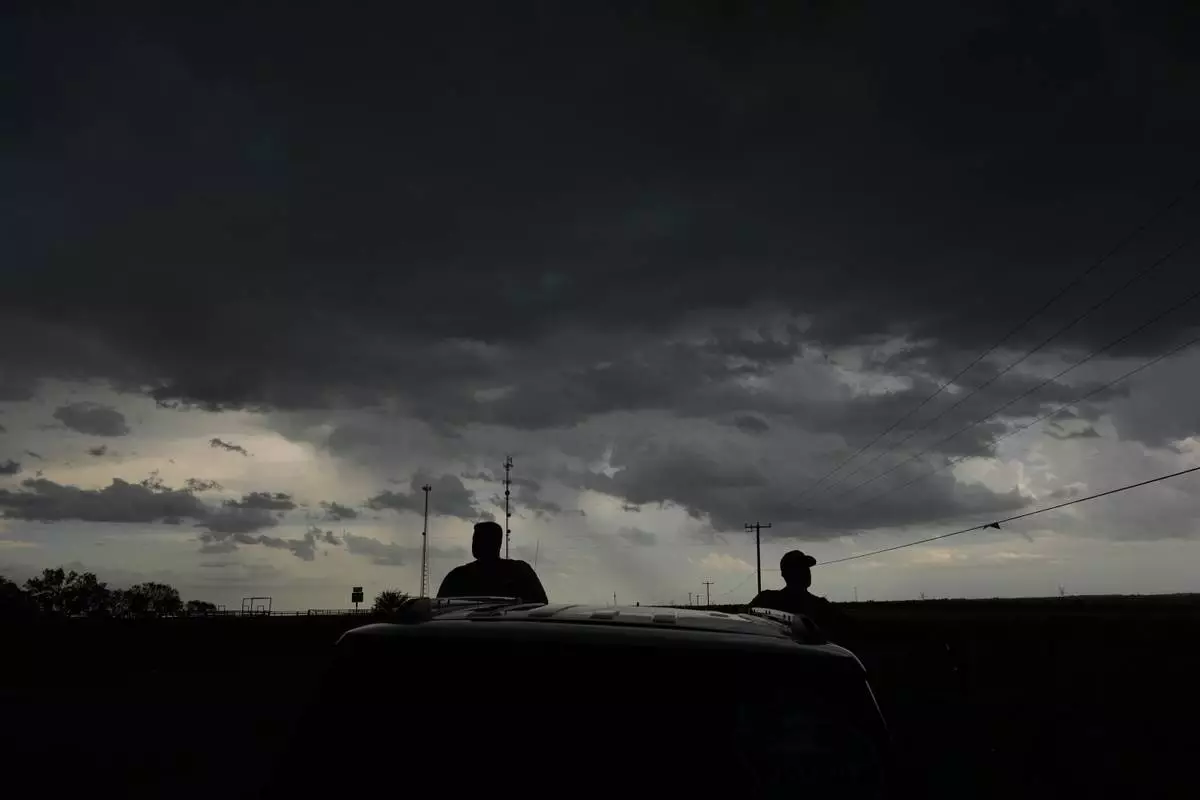
Victor Gensini, Northern Illinois University meteorology professor and a lead scientist of Project ICECHIP, right, and Logan Bundy, PhD Candidate at NIU and ICECHIP IOP assistant, left, stand at the command vehicle watching an approaching storm Tuesday, June 3, 2025, in Scotland, Texas. (AP Photo/Carolyn Kaster)
Victor Gensini, Northern Illinois University meteorology professor and a lead scientist of Project ICECHIP, right, and Logan Bundy, PhD Candidate at NIU and ICECHIP IOP assistant, left, stand at the command vehicle watching an approaching storm Tuesday, June 3, 2025, in Scotland, Texas. (AP Photo/Carolyn Kaster)

A car moves away from an approaching storm with a rain shaft during a Project ICECHIP operation on Tuesday, June 3, 2025, near Tipton, Okla. (AP Photo/Carolyn Kaster)
A car moves away from an approaching storm with a rain shaft during a Project ICECHIP operation on Tuesday, June 3, 2025, near Tipton, Okla. (AP Photo/Carolyn Kaster)

An approaching storm and rain shaft is visible during a Project ICECHIP operation Tuesday, June 3, 2025, near Tipton, Okla. (AP Photo/Carolyn Kaster)

An approaching storm and rain shaft is visible during a Project ICECHIP operation Tuesday, June 3, 2025, near Tipton, Okla. (AP Photo/Carolyn Kaster)

Members of the University of Colorado Boulder's Integrated Remote and In-Situ Sensing flight team stage in a Walmart parking lot before a Project ICECHIP operation Tuesday, June 3, 2025, in Atlus, Okla. (AP Photo/Carolyn Kaster)
Members of the University of Colorado Boulder's Integrated Remote and In-Situ Sensing flight team stage in a Walmart parking lot before a Project ICECHIP operation Tuesday, June 3, 2025, in Atlus, Okla. (AP Photo/Carolyn Kaster)

Hannah Vagasky holds a foam board hail pad covered with impact dents in a parking lot Tuesday, June 3, 2025, in Shamrock, Texas, as the team prepares for a day of hailstorm chasing. The hail pad is used to measure the size, angle of impact and intensity of hail. (AP Photo/Carolyn Kaster)
Hannah Vagasky holds a foam board hail pad covered with impact dents in a parking lot Tuesday, June 3, 2025, in Shamrock, Texas, as the team prepares for a day of hailstorm chasing. The hail pad is used to measure the size, angle of impact and intensity of hail. (AP Photo/Carolyn Kaster)

Victor Gensini, Northern Illinois University meteorology professor and a lead scientist of Project ICECHIP, speaks with Seth Borenstein, Associated Press science writer, as they stage in a Walmart parking lot before a Project ICECHIP operation Tuesday, June 3, 2025, in Atlus, Okla. (AP Photo/Carolyn Kaster)
Victor Gensini, Northern Illinois University meteorology professor and a lead scientist of Project ICECHIP, speaks with Seth Borenstein, Associated Press science writer, as they stage in a Walmart parking lot before a Project ICECHIP operation Tuesday, June 3, 2025, in Atlus, Okla. (AP Photo/Carolyn Kaster)

Victor Gensini, Northern Illinois University meteorology professor and a lead scientist of Project ICECHIP, checks storm data in the command vehicle during an operation Tuesday, June 3, 2025, south of Tipton, Okla.(AP Photo/Carolyn Kaster)
Victor Gensini, Northern Illinois University meteorology professor and a lead scientist of Project ICECHIP, checks storm data in the command vehicle during an operation Tuesday, June 3, 2025, south of Tipton, Okla.(AP Photo/Carolyn Kaster)

Victor Gensini, Northern Illinois University meteorology professor and a lead scientist of Project ICECHIP, right, and Logan Bundy, PhD Candidate at NIU and ICECHIP IOP assistant, look at cloud formations during a Project ICECHIP operation, Tuesday, June 3, 2025, south of Tipton, Okla. (AP Photo/Carolyn Kaster)
Victor Gensini, Northern Illinois University meteorology professor and a lead scientist of Project ICECHIP, right, and Logan Bundy, PhD Candidate at NIU and ICECHIP IOP assistant, look at cloud formations during a Project ICECHIP operation, Tuesday, June 3, 2025, south of Tipton, Okla. (AP Photo/Carolyn Kaster)

An approaching storm and rain shaft is visible during a Project ICECHIP operation Tuesday, June 3, 2025, near Tipton, Okla. (AP Photo/Carolyn Kaster)
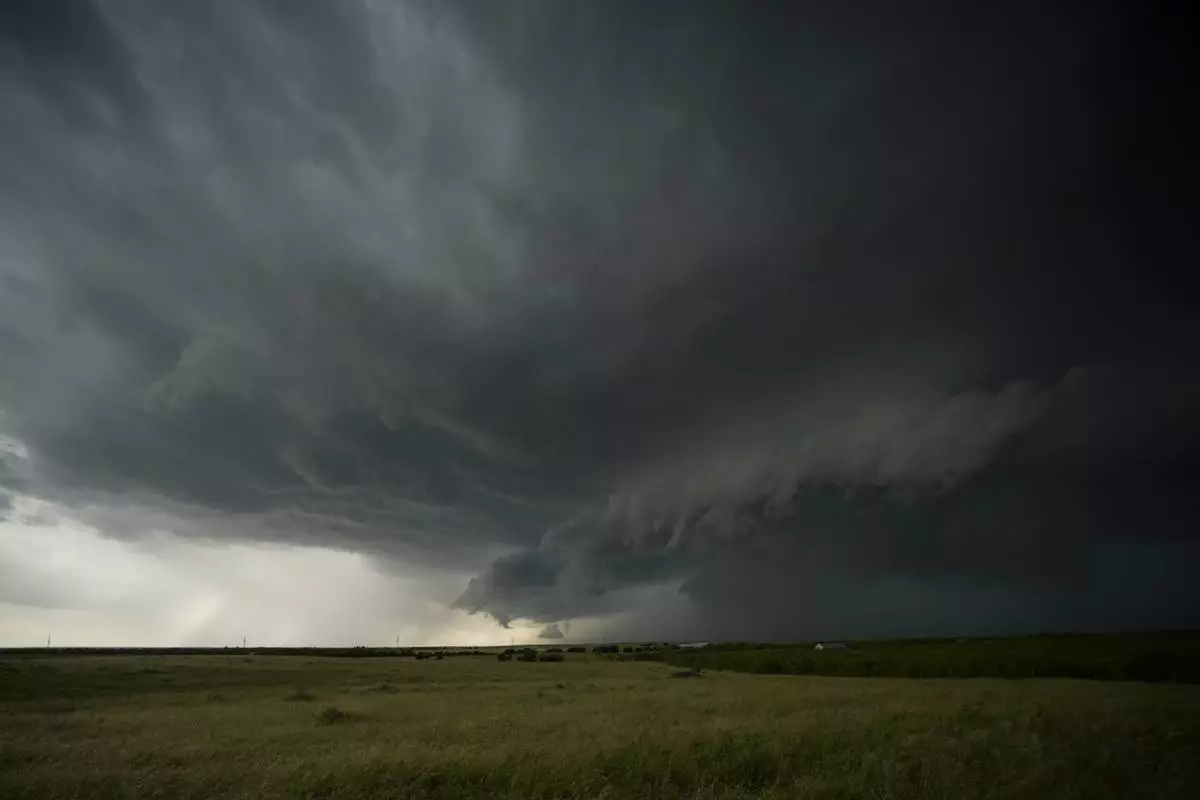
An approaching storm and rain shaft is visible during a Project ICECHIP operation Tuesday, June 3, 2025, near Tipton, Okla. (AP Photo/Carolyn Kaster)

An approaching storm with a shelf cloud and rain shaft is visible during a Project ICECHIP operation on Tuesday, June 3, 2025, in Scotland, Texas. (AP Photo/Carolyn Kaster)
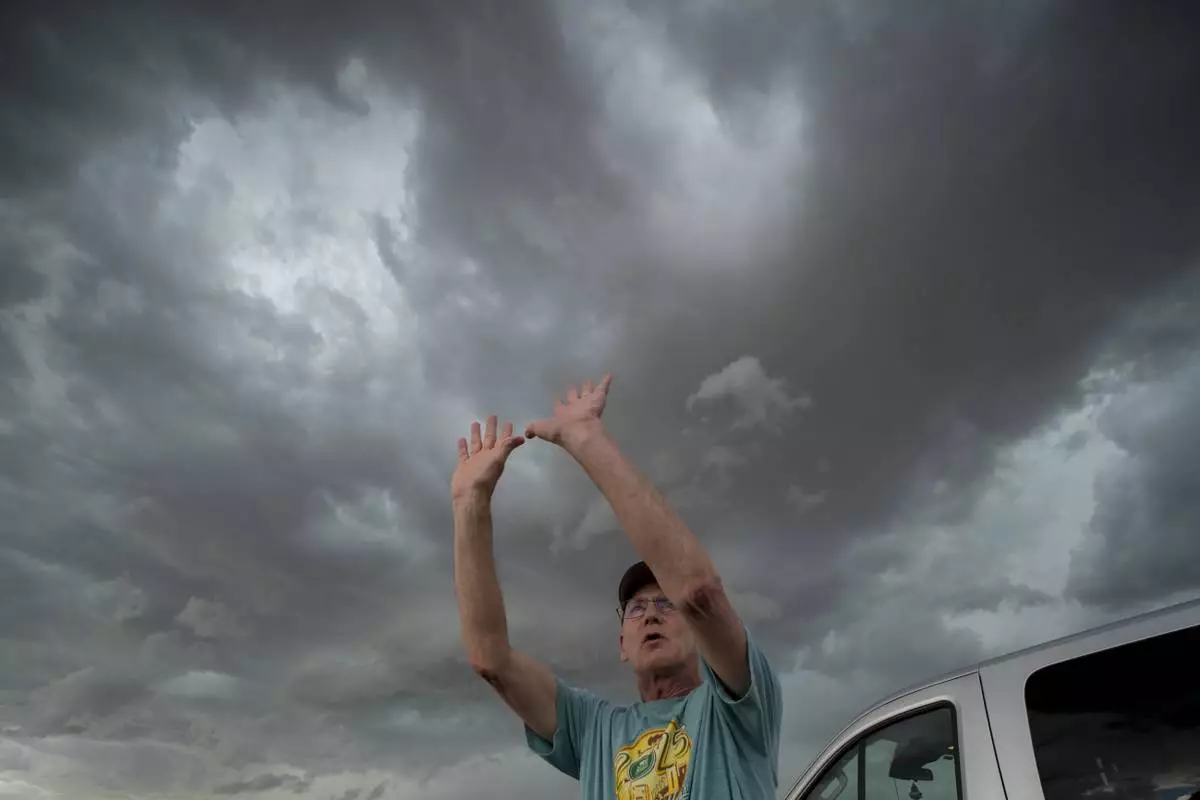
An approaching storm with a shelf cloud and rain shaft is visible during a Project ICECHIP operation on Tuesday, June 3, 2025, in Scotland, Texas. (AP Photo/Carolyn Kaster)

National Weather Service forecaster David Imy gestures to an approaching storm during a Project ICECHIP operation Tuesday, June 3, 2025, near Tipton, Okla. (AP Photo/Carolyn Kaster)
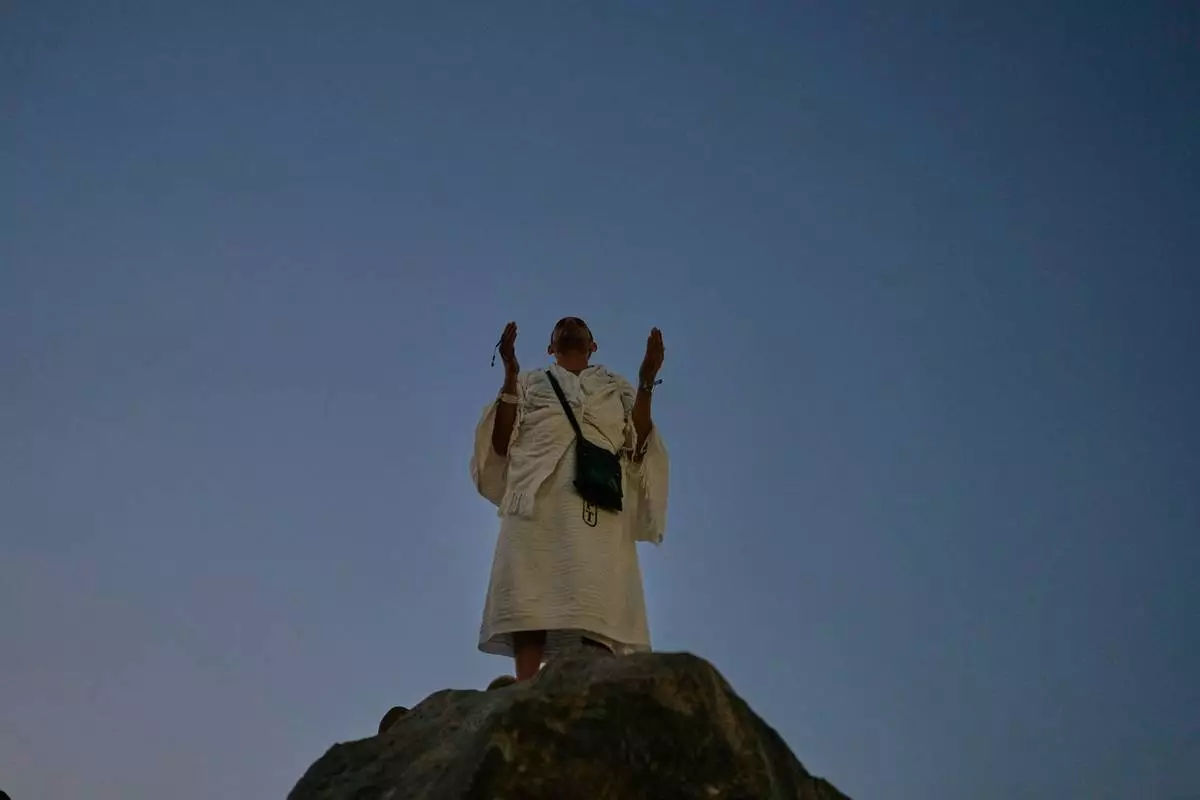

National Weather Service forecaster David Imy gestures to an approaching storm during a Project ICECHIP operation Tuesday, June 3, 2025, near Tipton, Okla. (AP Photo/Carolyn Kaster)
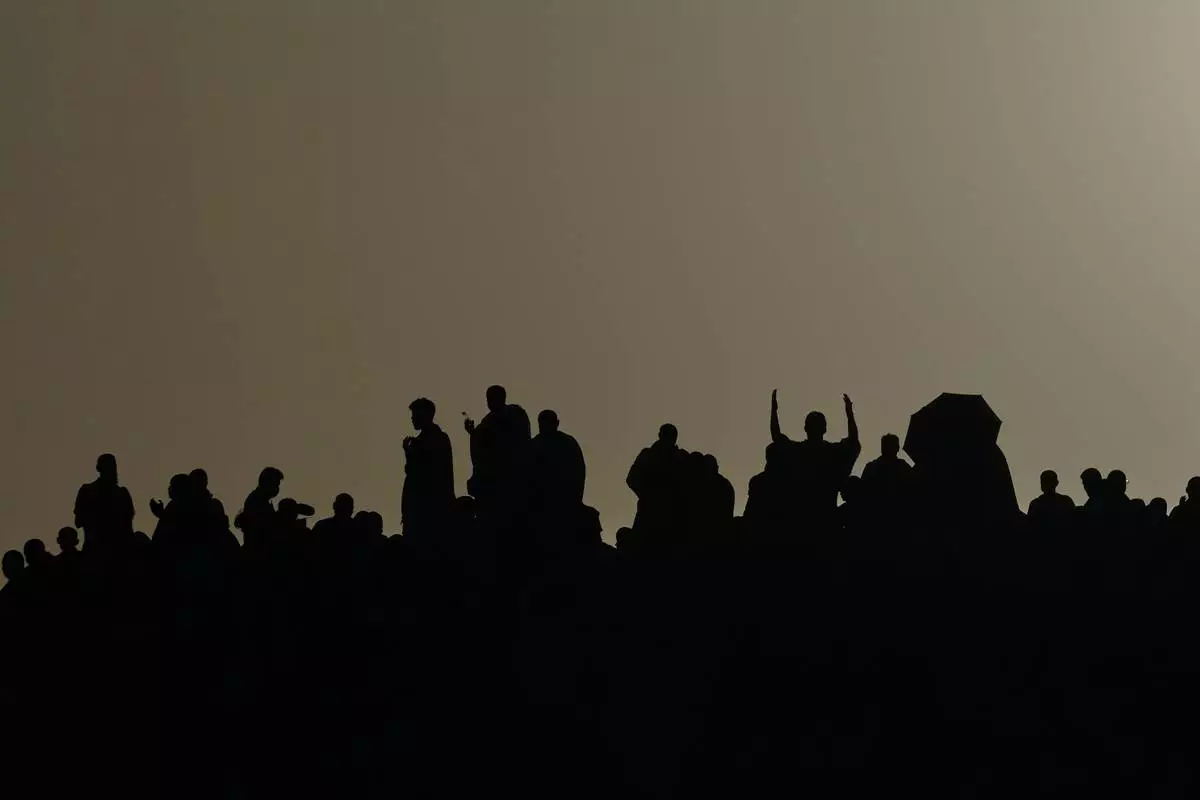
ARAFAT, Saudi Arabia (AP) — Muslim pilgrims from around the world congregated on Mount Arafat in Saudi Arabia on Tuesday, the second official day of the annual Islamic pilgrimage, considered the pinnacle of the Hajj.

Despite the sweltering heat, the pilgrims gathered on the rocky hill and surrounding plain for intense prayers and worship that often mark a spiritual peak for them. They fervently murmured prayers and poured their hearts out in supplications. Many raised their hands in worship. It is common for pilgrims on that day, some with tears streaming down their faces, to ask God for forgiveness, mercy, blessings and good health.

The Hajj, one of the Five Pillars of Islam, is required once in a lifetime for every Muslim who can afford it and is physically able to perform it.

For pilgrims, the Hajj, performed over several days, can be a deeply moving spiritual experience and a chance to seek God’s forgiveness and the erasure of past sins. As they brave the intense heat to perform religious rituals, many pilgrims have been using umbrellas for shade.

A Saudi official said on Friday that more than 1.5 million pilgrims have arrived in the country from abroad.

This year, Muslims have been pouring into Saudi Arabia for the Hajj against the backdrop of a tenuous ceasefire in the Iran war and related uncertainty in the region.

The U.S. military said Monday that it carried out “self-defense” strikes in southern Iran, including on missile launch sites and boats used to lay mines, even as President Donald Trump said on social media that negotiations with Tehran were “proceeding nicely." Iran on Tuesday denounced the most recent U.S. strikes as a sign of “bad faith and unreliability” as negotiations pressed on toward a possible deal to end the war.

For many, performing the Hajj can be a realization of a lifelong dream as they spend years hoping and praying to one day be able to undertake the pilgrimage or saving up money and waiting for a permit to embark on the trip.

“This happens once in a lifetime,” Mohammad Asal, an Egyptian pilgrim, said. “People here have prepared their prayers, hoping that God will respond to them, because we know that ... the most important ritual of the Hajj is being in Arafat.”

The Hajj brings together large numbers of Muslims of diverse races, ethnicities, languages and socioeconomic classes, creating a sense of unity for many. It’s a mass, communal experience, with Muslims performing rituals together. But it is also deeply personal, as every pilgrim brings their own yearnings and experiences.

“It was incredible,” Ahmed Sufyan, a pilgrim from the United States, said on Tuesday. “The unity and peace that we feel is something I’ve never experienced before,” he added via WhatsApp.

“Our wishes are many,” Mohammad Obaid, a Sudanese pilgrim, said, adding he was praying for Sudan and Muslims everywhere.

Fam reported from Winter Park, Florida.

Associated Press religion coverage receives support through the AP’s collaboration with The Conversation US, with funding from Lilly Endowment Inc. The AP is solely responsible for this content.

A Muslim pilgrim pray atop of the rocky hill known as the Mountain of Mercy, on the Plain of Arafat, during the annual Hajj pilgrimage near the holy city of Mecca, Saudi Arabia, Tuesday, May 26, 2026. (AP Photo/Altaf Qadri)

A Muslim pilgrim pray atop of the rocky hill known as the Mountain of Mercy, on the Plain of Arafat, during the annual Hajj pilgrimage near the holy city of Mecca, Saudi Arabia, Tuesday, May 26, 2026. (AP Photo/Altaf Qadri)

Muslim pilgrims walk towards the rocky hill known as the Mountain of Mercy, on the Plain of Arafat, during the annual Hajj pilgrimage near the holy city of Mecca, Saudi Arabia, Tuesday, May 26, 2026. (AP Photo/Altaf Qadri)

Muslim pilgrims walk towards the rocky hill known as the Mountain of Mercy, on the Plain of Arafat, during the annual Hajj pilgrimage near the holy city of Mecca, Saudi Arabia, Tuesday, May 26, 2026. (AP Photo/Altaf Qadri)

Muslim pilgrims are silhouetted as they pray at top of the rocky hill known as the Mountain of Mercy, on the Plain of Arafat, during the annual Hajj pilgrimage near the holy city of Mecca, Saudi Arabia, Tuesday, May 26, 2026. (AP Photo/Altaf Qadri)

Muslim pilgrims are silhouetted as they pray at top of the rocky hill known as the Mountain of Mercy, on the Plain of Arafat, during the annual Hajj pilgrimage near the holy city of Mecca, Saudi Arabia, Tuesday, May 26, 2026. (AP Photo/Altaf Qadri)

Muslim pilgrims pray at top of the rocky hill known as the Mountain of Mercy, on the Plain of Arafat, during the annual Hajj pilgrimage near the holy city of Mecca, Saudi Arabia, Tuesday, May 26, 2026. (AP Photo/Altaf Qadri)

Muslim pilgrims pray at top of the rocky hill known as the Mountain of Mercy, on the Plain of Arafat, during the annual Hajj pilgrimage near the holy city of Mecca, Saudi Arabia, Tuesday, May 26, 2026. (AP Photo/Altaf Qadri)

Muslim pilgrims read a copy of Islam's holy book Quran atop of the rocky hill known as the Mountain of Mercy, on the Plain of Arafat, during the annual Hajj pilgrimage near the holy city of Mecca, Saudi Arabia, Tuesday, May 26, 2026. (AP Photo/Altaf Qadri)

Muslim pilgrims read a copy of Islam's holy book Quran atop of the rocky hill known as the Mountain of Mercy, on the Plain of Arafat, during the annual Hajj pilgrimage near the holy city of Mecca, Saudi Arabia, Tuesday, May 26, 2026. (AP Photo/Altaf Qadri)

Recommended Articles