Skip to Content Facebook Feature Image

Preliminary Data from Two Clinical Trials with ADC Candidates were Presented Orally at the 2025 ASCO Annual Meeting

Business

Preliminary Data from Two Clinical Trials with ADC Candidates were Presented Orally at the 2025 ASCO Annual Meeting
Business

Business

Preliminary Data from Two Clinical Trials with ADC Candidates were Presented Orally at the 2025 ASCO Annual Meeting

2025-06-05 10:46 Last Updated At:11:05

SHANGHAI and CHICAGO, June 5, 2025 /PRNewswire/ -- The 2025 ASCO Annual Meeting is taking place in Chicago, US, from May 30 to June 3. Duality Bio (HKEX: 9606.HK) presented the preliminary data of two clinical trials, HER3 ADC candidate DB-1310 and B7H3 ADC candidate DB-1311/BNT324, which is being jointly developed with BioNTech, in Oral/Rapid Oral presentations.

B7H3 ADC candidate DB-1311/BNT324:

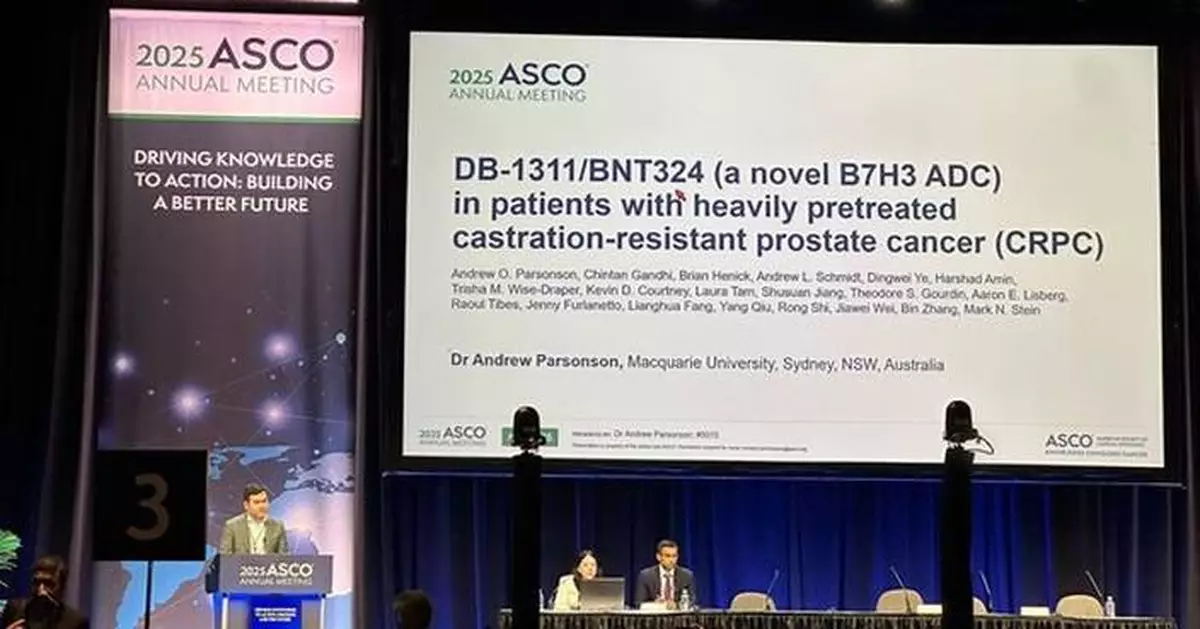
Data from the ongoing Phase 1/2 clinical trial (NCT05914116) in patients with heavily pre-treated castration-resistant prostate cancer (CRPC) were presented during an oral session on BNT324/DB-1311, an B7H3-targeted ADC candidate.

The data indicated early clinical activity and a manageable safety profile with low discontinuation rates. Most common adverse events were gastrointestinal and hematologic toxicities. In the 52 efficacy evaluable patients with heavily pretreated CRPC based on RCIST v1.1, the confirmed objective response rate (cORR) was 30.8%, DCR was 90.4%. Among 68 evaluable patients, the 6-month rPFS rate was 69.8%. Similar outcomes were observed across both dose levels (6 mg/kg or 9 mg/kg). Outcomes appeared better in earlier treatment lines and in patients who received one prior NHT, while antitumor activity was also observed in later lines and regardless of type of prior treatment or metastatic site.

The clinical trial is currently enrolling post Lu-177 CRPC (Cohort 11) and taxane-naïve CRPC (Cohort 12).

As the incidence rate of prostate cancer is increasing[1],1 there is a high unmet need for new effective therapies for patients with heavily pretreated CRPC[1]. The DB-1311/BNT324 program received Fast Track Designation by the U.S. Food & Drug Administration ("FDA") for the treatment of patients with advanced/unresectable or metastatic CRPC that has progressed on or after standard systemic regimens in 2024.

HER3 ADC DB-1310:

Data from the first-in-human Phase I/IIa study (NCT05785741) presented by Professor Aaron E. Lisberg of the University of California, Los Angeles (UCLA), demonstrated that DB-1310 showed encouraging efficacy and a manageable safety profile in patients with advanced solid tumors who had failed standard treatments.

Among 123 efficacy evaluable patients, the unconfirmed objective response rate (uORR) was 31%, and the disease control rate (DCR) reached 84%. Notably, efficacy was particularly striking in the key subgroup of patients with EGFR-mutated non-small cell lung cancer (NSCLC) (n=46) where uORR reached 44%, DCR was 91%, median progression-free survival (mPFS) was 7.0 months, and median overall survival (mOS) was 18.9 months. The uORR reached an impressive 66.7% at the 5.5 mg/kg Q3W dose level (n=12).

In addition, DB-1310 was well-tolerated with a manageable safety profile. The most common treatment-related adverse events (TRAEs) were Grade 1-2 hematological and gastrointestinal events with a low treatment-related discontinuation rate of 3.5%.

These positive results support the continued development of DB-1310 in advanced solid tumors, particularly in patients with EGFR-mutated NSCLC. The company is advancing its global development program, including exploring DB-1310 as a monotherapy in additional tumor types, as well as exploring DB-1310 in combination with EGFR TKIs and HER2-targeted therapies.

About DualityBio

Duality Biotherapeutics is a clinical-stage biotech company dedicated to the discovery and development of next-generation ADC to treat cancer and autoimmune diseases. DualityBio has successfully built several cutting-edge ADC technology platforms with global intellectual property rights. Leveraging a robust pipeline, DualityBio is conducting multiple global clinical trials across 17 countries, has enrolled over 2,000 patients for multiple clinical-stage ADC candidates.

Additionally, DualityBio have established strategic collaborations with global MNCs and leading biotech innovators. As a global ADC powerhouse, DualityBio is developing candidates including bispecific ADCs, novel-payload ADCs, and autoimmune ADCs. For more information, please visit www.dualitybiologics.com.

[1]. Sherman RL et al. Cancer 2025;131(9):e35833; 2. Narayan V et al. Clin Genitourin Cancer 2024;22(6):102188;


SHANGHAI and CHICAGO, June 5, 2025 /PRNewswire/ -- The 2025 ASCO Annual Meeting is taking place in Chicago, US, from May 30 to June 3. Duality Bio (HKEX: 9606.HK) presented the preliminary data of two clinical trials, HER3 ADC candidate DB-1310 and B7H3 ADC candidate DB-1311/BNT324, which is being jointly developed with BioNTech, in Oral/Rapid Oral presentations.

B7H3 ADC candidate DB-1311/BNT324:

Data from the ongoing Phase 1/2 clinical trial (NCT05914116) in patients with heavily pre-treated castration-resistant prostate cancer (CRPC) were presented during an oral session on BNT324/DB-1311, an B7H3-targeted ADC candidate.

The data indicated early clinical activity and a manageable safety profile with low discontinuation rates. Most common adverse events were gastrointestinal and hematologic toxicities. In the 52 efficacy evaluable patients with heavily pretreated CRPC based on RCIST v1.1, the confirmed objective response rate (cORR) was 30.8%, DCR was 90.4%. Among 68 evaluable patients, the 6-month rPFS rate was 69.8%. Similar outcomes were observed across both dose levels (6 mg/kg or 9 mg/kg). Outcomes appeared better in earlier treatment lines and in patients who received one prior NHT, while antitumor activity was also observed in later lines and regardless of type of prior treatment or metastatic site.

The clinical trial is currently enrolling post Lu-177 CRPC (Cohort 11) and taxane-naïve CRPC (Cohort 12).

As the incidence rate of prostate cancer is increasing[1],1 there is a high unmet need for new effective therapies for patients with heavily pretreated CRPC[1]. The DB-1311/BNT324 program received Fast Track Designation by the U.S. Food & Drug Administration ("FDA") for the treatment of patients with advanced/unresectable or metastatic CRPC that has progressed on or after standard systemic regimens in 2024.

HER3 ADC DB-1310:

Data from the first-in-human Phase I/IIa study (NCT05785741) presented by Professor Aaron E. Lisberg of the University of California, Los Angeles (UCLA), demonstrated that DB-1310 showed encouraging efficacy and a manageable safety profile in patients with advanced solid tumors who had failed standard treatments.

Among 123 efficacy evaluable patients, the unconfirmed objective response rate (uORR) was 31%, and the disease control rate (DCR) reached 84%. Notably, efficacy was particularly striking in the key subgroup of patients with EGFR-mutated non-small cell lung cancer (NSCLC) (n=46) where uORR reached 44%, DCR was 91%, median progression-free survival (mPFS) was 7.0 months, and median overall survival (mOS) was 18.9 months. The uORR reached an impressive 66.7% at the 5.5 mg/kg Q3W dose level (n=12).

In addition, DB-1310 was well-tolerated with a manageable safety profile. The most common treatment-related adverse events (TRAEs) were Grade 1-2 hematological and gastrointestinal events with a low treatment-related discontinuation rate of 3.5%.

These positive results support the continued development of DB-1310 in advanced solid tumors, particularly in patients with EGFR-mutated NSCLC. The company is advancing its global development program, including exploring DB-1310 as a monotherapy in additional tumor types, as well as exploring DB-1310 in combination with EGFR TKIs and HER2-targeted therapies.

About DualityBio

Duality Biotherapeutics is a clinical-stage biotech company dedicated to the discovery and development of next-generation ADC to treat cancer and autoimmune diseases. DualityBio has successfully built several cutting-edge ADC technology platforms with global intellectual property rights. Leveraging a robust pipeline, DualityBio is conducting multiple global clinical trials across 17 countries, has enrolled over 2,000 patients for multiple clinical-stage ADC candidates.

Additionally, DualityBio have established strategic collaborations with global MNCs and leading biotech innovators. As a global ADC powerhouse, DualityBio is developing candidates including bispecific ADCs, novel-payload ADCs, and autoimmune ADCs. For more information, please visit www.dualitybiologics.com.

[1]. Sherman RL et al. Cancer 2025;131(9):e35833; 2. Narayan V et al. Clin Genitourin Cancer 2024;22(6):102188;

** The press release content is from PR Newswire. Bastille Post is not involved in its creation. **

Preliminary Data from Two Clinical Trials with ADC Candidates were Presented Orally at the 2025 ASCO Annual Meeting
Preliminary Data from Two Clinical Trials with ADC Candidates were Presented Orally at the 2025 ASCO Annual Meeting


Preliminary Data from Two Clinical Trials with ADC Candidates were Presented Orally at the 2025 ASCO Annual Meeting

Preliminary Data from Two Clinical Trials with ADC Candidates were Presented Orally at the 2025 ASCO Annual Meeting

HIGHLIGHTS

  • Following an interim data review of the Cohort Expansion Phase (Phase II) of the SECuRE trial, the Safety Review Committee (SRC) confirms the trial will continue with no modifications to the protocol.

Patient population

  • With the SECuRE trial continuing to recruit, a total of nine participants who had evaluable data by the 25th of November 2025 were included in the interim assessment by the SRC, with the majority of participants receiving at least two cycles of 8 GBq of 67Cu-SAR-bisPSMA each by the data cut-off date.
  • Seven participants received 67Cu-SAR-bisPSMA and two participants were treated with a combination of 67Cu-SAR-bisPSMA with enzalutamide.
  • Most participants were heavily pre-treated (with 55.6% having received more than 5 previous anti-cancer regimens) and had bone metastasis (66.7%).

Safety

  • The safety profile of 67Cu-SAR-bisPSMA remains favourable with most related adverse events (AEs) in the Cohort Expansion to date being Grade 1 or 2. The most common AEs were nausea and lymphopenia (observed in 33.3% of participants, for each AE).

Efficacy

  • Six participants had at least two prostate specific antigen (PSA) results following 67Cu-SAR-bisPSMA administration, with all showing a decrease in PSA. Of those, four participants (66.7%) thus far had a reduction of more than 50% in PSA (PSA50) and two participants (33.3%) had a reduction of more than 80% (PSA80).
  • One participant who presented with bone metastasis at enrolment achieved undetectable PSA with no prostate cancer detected by computed tomography (CT) or bone scan following 67Cu-SAR-bisPSMA treatment. The participant reported having excellent quality of life following the treatment.

Next Steps

  • The SECuRE trial will continue enrolment into the Cohort Expansion Phase with planned completion of recruitment in 2026. Phase III registrational trial planning ongoing based on data generated to date.

SYDNEY, Jan. 15, 2026 /PRNewswire/ -- Clarity Pharmaceuticals (ASX: CU6) ("Clarity" or "Company"), a clinical-stage radiopharmaceutical company with a mission to develop next-generation products that improve treatment outcomes for patients with cancer, is pleased to share a number of updates on the SECuRE trial following an SRC meeting. The SRC has recommended that the trial continue with the Cohort Expansion Phase (Phase II) as planned with no modifications to the protocol. The interim results assessed by the SRC were collected from nine participants enrolled in the cohort that had evaluable data by the cut-off date of the 25th of November 2025 and continue to show promising efficacy and a favourable safety profile of 67Cu-SAR-bisPSMA.

The majority of the nine participants had bone metastasis at enrolment (66.7%) and received multiple lines of previous treatments (more than 5 previous anti-cancer regimens, 55.6%). Median PSA prior to 67Cu-SAR-bisPSMA treatment was 18.9 ng/mL (range 1.5-30.2 ng/mL). Six out of these nine participants received at least 2 cycles of 8 GBq of 67Cu-SAR-bisPSMA each, with two of them also receiving concomitant enzalutamide.

Of the nine participants included in this SRC analysis, six had at least two PSA results following their 67Cu-SAR-bisPSMA treatment by the data cut-off date. Of these six participants, thus far four (66.7%) showed reductions in PSA of 50% or more (PSA50) and two (33.3%) showed reductions of 80% or more (PSA80).

The safety profile of 67Cu-SAR-bisPSMA remains favourable in the Cohort Expansion, with the majority of related AEs being Grade 1 or 2. The most common related AEs were nausea and lymphopenia (observed in three out of nine participants [33.3%], for each AE). The only AE that was Grade 3 or above was lymphopenia observed in three participants, some of whom had bone metastasis at baseline and/or had received multiple lines of therapy, including taxane and an investigational agent, prior to enrolment in the SECuRE study. There have been no overall renal toxicity or electrocardiogram (ECG) changes observed in these participants. In the combination enzalutamide arm, no new AEs (or worsening of AEs) related to 67Cu-SAR-bisPSMA have been observed to date.

Trial participant with no detectable disease after 3 cycles of 67Cu-SAR-bisPSMA

One of the participants in the Cohort Expansion was a 64-year-old man with bone metastases and baseline PSA of 5.4 ng/mL prior to entering the SECuRE study. Following his first cycle of 67Cu-SAR-bisPSMA, this participant showed a dramatic 95.2% reduction in PSA. He went on to receive 2 more cycles of 67Cu-SAR-bisPSMA and achieved undetectable PSA levels. In a follow-up bone scan and CT no metastatic disease was observed. This participant only exhibited mild (Grade 1) related AEs, most of which were gastrointestinal events, with no haematological or renal AEs observed. The participant reported having excellent quality of life following the treatment.

The interim data from this Phase II continues to confirm the favourable safety profile and promising efficacy seen in previous cohorts of the SECuRE trial[1] and supports the continuation of the trial with the aim to progress to a registrational Phase III study.

Clarity's Executive Chairperson, Dr Alan Taylor, commented, "SAR-bisPSMA continues generating world-class data in both theranostic and diagnostic trials. The combination of the optimised dimer 'bis' structure with the benefits of copper isotopes, enabled by the proprietary sarcophagine technology, is proving to have created a product that is here to challenge the current treatment and diagnostic paradigms in radiopharmaceuticals.

"We have already seen a glimpse of the effects of 67Cu-SAR-bisPSMA through our Dose Escalation cohorts with additional and similar data being generated in the Cohort Expansion phase, demonstrating once again excellent efficacy and safety results of 67Cu-SAR-bisPSMA.

"All of the participants with evaluable data treated in the Phase II to date have shown declines in PSA, with the majority showing PSA decreases of more than 50% and mostly having only mild or moderate AEs. Most of these patients have been treated with more than 5 systemic treatment regiments and had bone metastasis prior to entering the SECuRE study. Although the number of participants with evaluable data to date is small, it is incredible to see yet another extraordinary case where a patient who had bone metastasis prior to entering the study achieved undetectable PSA following 67Cu-SAR-bisPSMA treatment, with no disease observed by anatomical and molecular imaging at the last assessments. This participant only experienced mild, transient AEs, most being gastrointestinal, and has reported having excellent quality of life following the treatment.

"Importantly, the work we have undertaken during the Dose Escalation Phase is now continuing to provide a strong foundation for us as we look ahead at protocol development and dosing for our Phase III clinical trial and commercialisation. As the participant numbers continue to increase with the trial enrollment, we continue to see very promising responses over and over again, giving us more confidence about the future of this product and its potential for commercialisation in metastatic castration-resistant prostate cancer (mCRPC). With three Fast Track Designations for the SAR-bisPSMA product and positive interactions with the US Food and Drug Administration (FDA) to date, we are working towards bringing this agent to clinicians and their patients around the world through the entirety of the prostate cancer journey, from first diagnosis to late-stage disease. All of these indications, being imaging in pre-definitive therapy and biochemical recurrence, as well as therapy in mCRPC, are blockbuster markets individually for prostate-specific membrane antigen (PSMA) targeted products, with an estimated combined market value of approximately US$10-15 billion by 2030. We are committed to continuing the development of this product, aiming to bring improved diagnostic and treatment options for prostate cancer in various stages of their disease."

About the SECuRE trial

The SECuRE trial (NCT04868604)[2] is a Phase I/IIa theranostic trial for identification and treatment of participants with PSMA-expressing mCRPC using 64Cu/67Cu-SAR-bisPSMA. 64Cu-SAR-bisPSMA is used to visualise PSMA-expressing lesions and select candidates for subsequent 67Cu-SAR-bisPSMA therapy. The trial is a multi-centre, single arm, dose escalation study with a cohort expansion involving approximately 54 participants in the US. The overall aim of the trial is to determine the safety and efficacy of 67Cu-SAR-bisPSMA for the treatment of prostate cancer.

The SECuRE trial consists of the Dose Escalation (Phase I) and Cohort Expansion (Phase II) Phases. Based on the data from the Dose Escalation Phase, which demonstrated a favourable safety profile and efficacy of 67Cu-SAR-bisPSMA, the SECuRE trial progressed to the Cohort Expansion (Phase II) at an 8 GBq dose level as per the SRC recommendation (up to 6 cycles per patient in total)[3].

Cohort 2 of the Dose Escalation phase of the trial, where participants were dosed with 8 GBq of 67Cu-SAR-bisPSMA, demonstrated a very low rate of related AEs while all three participants achieved PSA declines of 80% or more (PSA80)[1]. The Dose Escalation Phase also showed high PSA response rates of the mCRPC in the pre-chemotherapy setting with a favourable safety profile: 92% of pre-chemotherapy participants (12/13) demonstrated PSA drops greater than 35%, PSA reductions greater than 50% were reached in 61.5% (8/13) of participants, and reductions of 80% or more were achieved in 46.2% (6/13) of participants[1]. These results supported the progress of the trial to its Cohort Expansion Phase using 8 GBq multi-dose in participants who had not received chemotherapy in the mCRPC setting.

Recruitment is currently ongoing into the Cohort Expansion Phase which will include 24 participants. A subset of participants will be treated with the combination of 8 GBq of 67Cu-SAR-bisPSMA with enzalutamide (androgen receptor pathway inhibitor [ARPI]), in line with the positive results from the Enza-p trial[4] and previous discussions with and advice from key global medical experts in the field of prostate cancer, including the Company's Clinical Advisory Board members, Prof Louise Emmett and Prof Oliver Sartor, as well as the SRC.

About SAR-bisPSMA

SAR-bisPSMA derives its name from the word "bis", which reflects a novel approach of connecting two PSMA-targeting agents to Clarity's proprietary sarcophagine (SAR) technology that securely holds copper isotopes inside a cage-like structure, called a chelator. Unlike other commercially available chelators, the SAR technology prevents copper leakage into the body. SAR-bisPSMA is a Targeted Copper Theranostic (TCT) that can be used with isotopes of copper-64 (Cu-64 or 64Cu) for imaging and copper-67 (Cu-67 or 67Cu) for therapy.

67Cu-SAR-bisPSMA and 64Cu-SAR-bisPSMA are unregistered products. The safety and efficacy of 67Cu-SAR-bisPSMA and 64Cu-SAR-bisPSMA have not been assessed by health authorities such as the US FDA or the Therapeutic Goods Administration (TGA). There is no guarantee that these products will become commercially available.

About Prostate Cancer

Prostate cancer is the second most common cancer diagnosed in men globally and the fifth leading cause of cancer death in men worldwide[5]. Prostate cancer is the second-leading causes of cancer death in American men. The American Cancer Institute estimates in 2025 there will be about 313,780 new cases of prostate cancer in the US and around 35,770 deaths from the disease[6].

About Clarity Pharmaceuticals

Clarity is a clinical stage radiopharmaceutical company focused on the treatment of serious diseases. The Company is a leader in innovative radiopharmaceuticals, developing TCTs based on its SAR Technology Platform for the treatment of cancers.

www.claritypharmaceuticals.com

For more information, please contact:

Clarity Pharmaceuticals

Dr Alan Taylor                                      

Lisa Sadetskaya

Executive Chairperson                               

Director, Corporate Communications

ataylor@claritypharm.com                       

lisa@claritypharm.com

References

  1. Clarity Pharmaceuticals. SECuRE trial update: 92% of pre-chemo participants experience greater than 35% drop in PSA levels across all cohorts. Cohort Expansion Phase commences. https://www.claritypharmaceuticals.com/news/secure-update/
  2. ClinicalTrials.gov Identifier: NCT04868604, https://clinicaltrials.gov/ct2/show/NCT04868604
  3. Clarity Pharmaceuticals. SECuRE trial update: First patient treated in the Phase II Cohort Expansion. https://www.claritypharmaceuticals.com/news/secure-fp-phase2/
  4. Emmett L et al. ENZA-p Trial Investigators; Australian and New Zealand Urogenital and Prostate Cancer Trials Group. Overall survival and quality of life with [177Lu]Lu-PSMA-617 plus enzalutamide versus enzalutamide alone in metastatic castration-resistant prostate cancer (ENZA-p): secondary outcomes from a multicentre, open-label, randomised, phase 2 trial. Lancet Oncol. 2025 Mar;26(3):291-299. doi: 10.1016/S1470-2045(25)00009-9.
  5. Global Cancer Statistics 2022: GLOBOCAN Estimates of Incidence and Mortality Worldwide for 36 Cancers in 185 Countries, https://acsjournals.onlinelibrary.wiley.com/doi/10.3322/caac.21834
  6. American Cancer Society: Key Statistics for Prostate Cancer. https://www.cancer.org/cancer/prostate-cancer/about/key-statistics.html

This announcement has been authorised for release by the Executive Chairperson.


HIGHLIGHTS

  • Following an interim data review of the Cohort Expansion Phase (Phase II) of the SECuRE trial, the Safety Review Committee (SRC) confirms the trial will continue with no modifications to the protocol.

Patient population

  • With the SECuRE trial continuing to recruit, a total of nine participants who had evaluable data by the 25th of November 2025 were included in the interim assessment by the SRC, with the majority of participants receiving at least two cycles of 8 GBq of 67Cu-SAR-bisPSMA each by the data cut-off date.
  • Seven participants received 67Cu-SAR-bisPSMA and two participants were treated with a combination of 67Cu-SAR-bisPSMA with enzalutamide.
  • Most participants were heavily pre-treated (with 55.6% having received more than 5 previous anti-cancer regimens) and had bone metastasis (66.7%).

Safety

  • The safety profile of 67Cu-SAR-bisPSMA remains favourable with most related adverse events (AEs) in the Cohort Expansion to date being Grade 1 or 2. The most common AEs were nausea and lymphopenia (observed in 33.3% of participants, for each AE).

Efficacy

  • Six participants had at least two prostate specific antigen (PSA) results following 67Cu-SAR-bisPSMA administration, with all showing a decrease in PSA. Of those, four participants (66.7%) thus far had a reduction of more than 50% in PSA (PSA50) and two participants (33.3%) had a reduction of more than 80% (PSA80).
  • One participant who presented with bone metastasis at enrolment achieved undetectable PSA with no prostate cancer detected by computed tomography (CT) or bone scan following 67Cu-SAR-bisPSMA treatment. The participant reported having excellent quality of life following the treatment.

Next Steps

  • The SECuRE trial will continue enrolment into the Cohort Expansion Phase with planned completion of recruitment in 2026. Phase III registrational trial planning ongoing based on data generated to date.

SYDNEY, Jan. 15, 2026 /PRNewswire/ -- Clarity Pharmaceuticals (ASX: CU6) ("Clarity" or "Company"), a clinical-stage radiopharmaceutical company with a mission to develop next-generation products that improve treatment outcomes for patients with cancer, is pleased to share a number of updates on the SECuRE trial following an SRC meeting. The SRC has recommended that the trial continue with the Cohort Expansion Phase (Phase II) as planned with no modifications to the protocol. The interim results assessed by the SRC were collected from nine participants enrolled in the cohort that had evaluable data by the cut-off date of the 25th of November 2025 and continue to show promising efficacy and a favourable safety profile of 67Cu-SAR-bisPSMA.

The majority of the nine participants had bone metastasis at enrolment (66.7%) and received multiple lines of previous treatments (more than 5 previous anti-cancer regimens, 55.6%). Median PSA prior to 67Cu-SAR-bisPSMA treatment was 18.9 ng/mL (range 1.5-30.2 ng/mL). Six out of these nine participants received at least 2 cycles of 8 GBq of 67Cu-SAR-bisPSMA each, with two of them also receiving concomitant enzalutamide.

Of the nine participants included in this SRC analysis, six had at least two PSA results following their 67Cu-SAR-bisPSMA treatment by the data cut-off date. Of these six participants, thus far four (66.7%) showed reductions in PSA of 50% or more (PSA50) and two (33.3%) showed reductions of 80% or more (PSA80).

The safety profile of 67Cu-SAR-bisPSMA remains favourable in the Cohort Expansion, with the majority of related AEs being Grade 1 or 2. The most common related AEs were nausea and lymphopenia (observed in three out of nine participants [33.3%], for each AE). The only AE that was Grade 3 or above was lymphopenia observed in three participants, some of whom had bone metastasis at baseline and/or had received multiple lines of therapy, including taxane and an investigational agent, prior to enrolment in the SECuRE study. There have been no overall renal toxicity or electrocardiogram (ECG) changes observed in these participants. In the combination enzalutamide arm, no new AEs (or worsening of AEs) related to 67Cu-SAR-bisPSMA have been observed to date.

Trial participant with no detectable disease after 3 cycles of 67Cu-SAR-bisPSMA

One of the participants in the Cohort Expansion was a 64-year-old man with bone metastases and baseline PSA of 5.4 ng/mL prior to entering the SECuRE study. Following his first cycle of 67Cu-SAR-bisPSMA, this participant showed a dramatic 95.2% reduction in PSA. He went on to receive 2 more cycles of 67Cu-SAR-bisPSMA and achieved undetectable PSA levels. In a follow-up bone scan and CT no metastatic disease was observed. This participant only exhibited mild (Grade 1) related AEs, most of which were gastrointestinal events, with no haematological or renal AEs observed. The participant reported having excellent quality of life following the treatment.

The interim data from this Phase II continues to confirm the favourable safety profile and promising efficacy seen in previous cohorts of the SECuRE trial[1] and supports the continuation of the trial with the aim to progress to a registrational Phase III study.

Clarity's Executive Chairperson, Dr Alan Taylor, commented, "SAR-bisPSMA continues generating world-class data in both theranostic and diagnostic trials. The combination of the optimised dimer 'bis' structure with the benefits of copper isotopes, enabled by the proprietary sarcophagine technology, is proving to have created a product that is here to challenge the current treatment and diagnostic paradigms in radiopharmaceuticals.

"We have already seen a glimpse of the effects of 67Cu-SAR-bisPSMA through our Dose Escalation cohorts with additional and similar data being generated in the Cohort Expansion phase, demonstrating once again excellent efficacy and safety results of 67Cu-SAR-bisPSMA.

"All of the participants with evaluable data treated in the Phase II to date have shown declines in PSA, with the majority showing PSA decreases of more than 50% and mostly having only mild or moderate AEs. Most of these patients have been treated with more than 5 systemic treatment regiments and had bone metastasis prior to entering the SECuRE study. Although the number of participants with evaluable data to date is small, it is incredible to see yet another extraordinary case where a patient who had bone metastasis prior to entering the study achieved undetectable PSA following 67Cu-SAR-bisPSMA treatment, with no disease observed by anatomical and molecular imaging at the last assessments. This participant only experienced mild, transient AEs, most being gastrointestinal, and has reported having excellent quality of life following the treatment.

"Importantly, the work we have undertaken during the Dose Escalation Phase is now continuing to provide a strong foundation for us as we look ahead at protocol development and dosing for our Phase III clinical trial and commercialisation. As the participant numbers continue to increase with the trial enrollment, we continue to see very promising responses over and over again, giving us more confidence about the future of this product and its potential for commercialisation in metastatic castration-resistant prostate cancer (mCRPC). With three Fast Track Designations for the SAR-bisPSMA product and positive interactions with the US Food and Drug Administration (FDA) to date, we are working towards bringing this agent to clinicians and their patients around the world through the entirety of the prostate cancer journey, from first diagnosis to late-stage disease. All of these indications, being imaging in pre-definitive therapy and biochemical recurrence, as well as therapy in mCRPC, are blockbuster markets individually for prostate-specific membrane antigen (PSMA) targeted products, with an estimated combined market value of approximately US$10-15 billion by 2030. We are committed to continuing the development of this product, aiming to bring improved diagnostic and treatment options for prostate cancer in various stages of their disease."

About the SECuRE trial

The SECuRE trial (NCT04868604)[2] is a Phase I/IIa theranostic trial for identification and treatment of participants with PSMA-expressing mCRPC using 64Cu/67Cu-SAR-bisPSMA. 64Cu-SAR-bisPSMA is used to visualise PSMA-expressing lesions and select candidates for subsequent 67Cu-SAR-bisPSMA therapy. The trial is a multi-centre, single arm, dose escalation study with a cohort expansion involving approximately 54 participants in the US. The overall aim of the trial is to determine the safety and efficacy of 67Cu-SAR-bisPSMA for the treatment of prostate cancer.

The SECuRE trial consists of the Dose Escalation (Phase I) and Cohort Expansion (Phase II) Phases. Based on the data from the Dose Escalation Phase, which demonstrated a favourable safety profile and efficacy of 67Cu-SAR-bisPSMA, the SECuRE trial progressed to the Cohort Expansion (Phase II) at an 8 GBq dose level as per the SRC recommendation (up to 6 cycles per patient in total)[3].

Cohort 2 of the Dose Escalation phase of the trial, where participants were dosed with 8 GBq of 67Cu-SAR-bisPSMA, demonstrated a very low rate of related AEs while all three participants achieved PSA declines of 80% or more (PSA80)[1]. The Dose Escalation Phase also showed high PSA response rates of the mCRPC in the pre-chemotherapy setting with a favourable safety profile: 92% of pre-chemotherapy participants (12/13) demonstrated PSA drops greater than 35%, PSA reductions greater than 50% were reached in 61.5% (8/13) of participants, and reductions of 80% or more were achieved in 46.2% (6/13) of participants[1]. These results supported the progress of the trial to its Cohort Expansion Phase using 8 GBq multi-dose in participants who had not received chemotherapy in the mCRPC setting.

Recruitment is currently ongoing into the Cohort Expansion Phase which will include 24 participants. A subset of participants will be treated with the combination of 8 GBq of 67Cu-SAR-bisPSMA with enzalutamide (androgen receptor pathway inhibitor [ARPI]), in line with the positive results from the Enza-p trial[4] and previous discussions with and advice from key global medical experts in the field of prostate cancer, including the Company's Clinical Advisory Board members, Prof Louise Emmett and Prof Oliver Sartor, as well as the SRC.

About SAR-bisPSMA

SAR-bisPSMA derives its name from the word "bis", which reflects a novel approach of connecting two PSMA-targeting agents to Clarity's proprietary sarcophagine (SAR) technology that securely holds copper isotopes inside a cage-like structure, called a chelator. Unlike other commercially available chelators, the SAR technology prevents copper leakage into the body. SAR-bisPSMA is a Targeted Copper Theranostic (TCT) that can be used with isotopes of copper-64 (Cu-64 or 64Cu) for imaging and copper-67 (Cu-67 or 67Cu) for therapy.

67Cu-SAR-bisPSMA and 64Cu-SAR-bisPSMA are unregistered products. The safety and efficacy of 67Cu-SAR-bisPSMA and 64Cu-SAR-bisPSMA have not been assessed by health authorities such as the US FDA or the Therapeutic Goods Administration (TGA). There is no guarantee that these products will become commercially available.

About Prostate Cancer

Prostate cancer is the second most common cancer diagnosed in men globally and the fifth leading cause of cancer death in men worldwide[5]. Prostate cancer is the second-leading causes of cancer death in American men. The American Cancer Institute estimates in 2025 there will be about 313,780 new cases of prostate cancer in the US and around 35,770 deaths from the disease[6].

About Clarity Pharmaceuticals

Clarity is a clinical stage radiopharmaceutical company focused on the treatment of serious diseases. The Company is a leader in innovative radiopharmaceuticals, developing TCTs based on its SAR Technology Platform for the treatment of cancers.

www.claritypharmaceuticals.com

For more information, please contact:

Clarity Pharmaceuticals

Dr Alan Taylor                                      

Lisa Sadetskaya

Executive Chairperson                               

Director, Corporate Communications

ataylor@claritypharm.com                       

lisa@claritypharm.com

References

This announcement has been authorised for release by the Executive Chairperson.

** The press release content is from PR Newswire. Bastille Post is not involved in its creation. **

SECuRE trial to continue with no modifications to protocol following Safety Review Committee meeting

SECuRE trial to continue with no modifications to protocol following Safety Review Committee meeting

Recommended Articles