BOSTON (AP) — Democratic state attorneys general and government lawyers argued Friday over the implications of President Donald Trump's proposed overhaul of U.S. elections and whether the changes could be made in time for next year's midterm elections, how much it would cost the states and, more broadly, whether the president has a right to do any of it in the first place.
The top law enforcement officials from 19 states filed a federal lawsuit after the Republican president signed the executive order in March, saying its provisions would step on states' power to set their own election rules.
During a hearing in U.S. District Court in Boston, lawyers for the states told Judge Denise J. Casper that the changes outlined in the order would be costly and could not be implemented quickly. Updating the voter registration database just in California would cost the state more than $1 million and take up to a year, said the states' lead attorney, Kevin Quade, a deputy attorney general with the California Department of Justice.
The lawyers said making the changes would take time away from preparing for the next round of elections, potentially undermining public confidence in the voting process.
"The provisions of the executive order cast doubt and shadow on the ability of states to fairly implement federal elections at the local level, and those types of goodwill and reputational harm ... are not the type that can be easily repaired,” Quade said.
Trump’s election directive was part of a flurry of executive orders he has issued in the opening months of his second term, many of which have drawn swift legal challenges. It follows years of him falsely claiming that his loss to Democrat Joe Biden in the 2020 presidential election was due to widespread fraud and an election year in which he and other Republicans promoted the notion that large numbers of noncitizens threatened the integrity of U.S. elections. In fact, voting by noncitizens is rare and, when caught, can lead to felony charges and deportation.
The executive order would require voters to show proof of U.S. citizenship when registering to vote in federal elections, prohibit mail or absentee ballots from being counted if they are received after Election Day, set new rules for voting equipment and prohibit non-U.S. citizens from being able to donate in certain elections. It also would condition federal election grant funding on states adhering to the strict ballot deadline.
Justice Department lawyer Bridget O’Hickey said the order seeks to provide a single set of rules for certain aspects of election operations rather than having a patchwork of state laws.
“Public confidence in elections is paramount to the success of the republic, and the government thinks the best way to do that is to have uniform procedures,” she said.
She said the harm the states are arguing is only speculation.
The lawsuit is one of three against the executive order. One filed by Oregon and Washington, where elections are conducted almost entirely by mail and ballots received after Election Day are counted as long as they are postmarked by then.
The provision that would create a proof-of-citizenship requirement for federal elections already has been halted in a lawsuit filed by voting and civil rights groups and national Democratic organizations. The judge said the president’s attempt to use a federal agency to enact a proof-of-citizenship requirement for voting usurped the power of states and Congress.
During Friday's hearing, where the states argued for a preliminary injunction, the executive order's demand that only ballots received by Election Day should be counted drew considerable attention from both sides.
In defending the provision, O'Hickey said mailed ballots received after Election Day might somehow be manipulated. She suggested people could retrieve their ballots and alter their votes based on what they see in early results.
Uniform deadlines for receiving ballots are needed, she said, “to prevent recasting of ballots.” It was not clear how such a thing could happen. States have numerous security measures in place to ensure that eligible voters cast only one ballot that gets counted.
Responding for the states, California Deputy Attorney General Anne Bellows said all ballots received after Election Day require a postmark showing they were sent on or before that date, and that any ballot sent afterward would not count.
"There’s simply no world in which there is a meaningful difference afforded to absentee voters that’s not given to voters who vote in person,” she said.
The government’s argument for a national ballot deadline runs contrary to the approach of Republicans nationally, who in recent years have criticized Democrats for “federal overreach” when they offer proposals seeking certain uniform voting standards.
The executive order also tasks the U.S. Election Assistance Commission with updating the federal voter registration form to require people to submit documentation proving they are U.S. citizens. Similar provisions enacted previously in a handful of states have raised concerns about disenfranchising otherwise eligible voters who can't readily access those documents. That includes married women, who would need both a birth certificate and a marriage license if they had changed their last name.
The Justice Department argued that Trump's executive order falls within his authority to direct officials “to carry out their statutory duties,” adding that “the only potential voters it disenfranchises are noncitizens who are ineligible to vote anyway.”
This story has been updated to correct the cost of updating the voter registration database in California. It is $1 million, not $1 billion.
__
Associated Press writer Christina A. Cassidy in Atlanta contributed to this report.
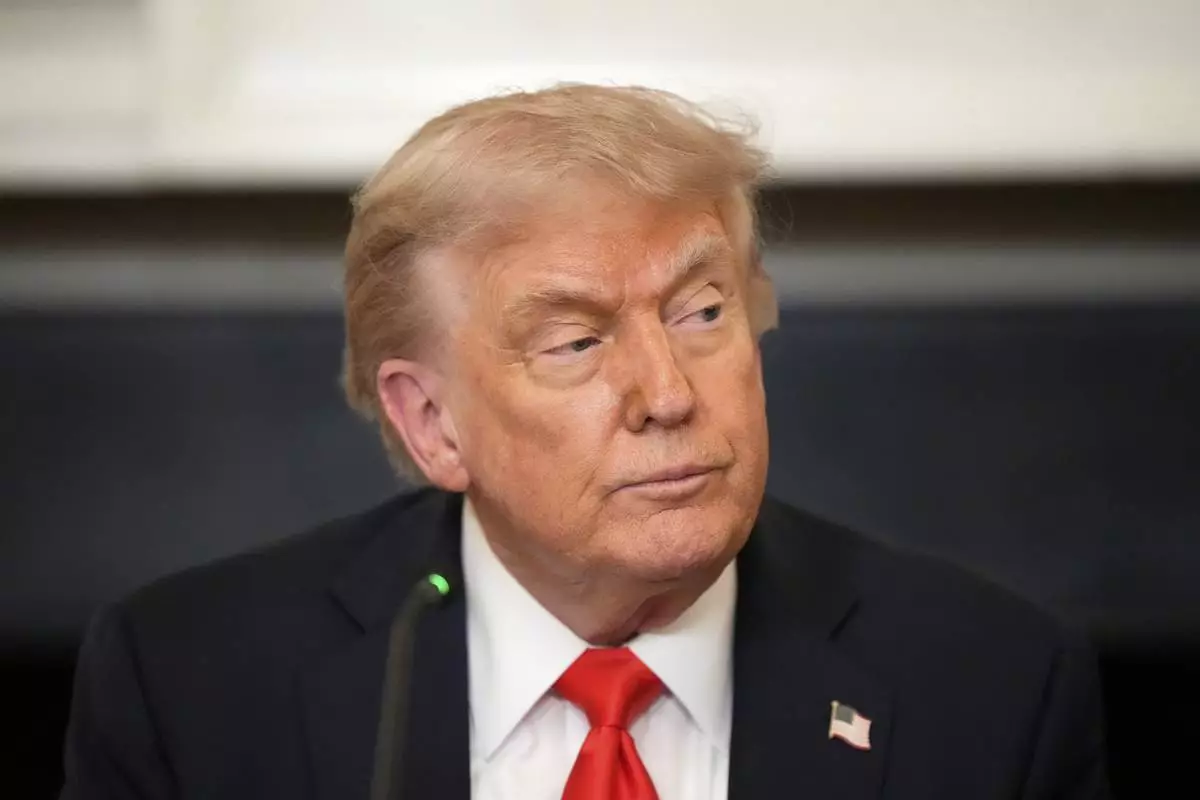
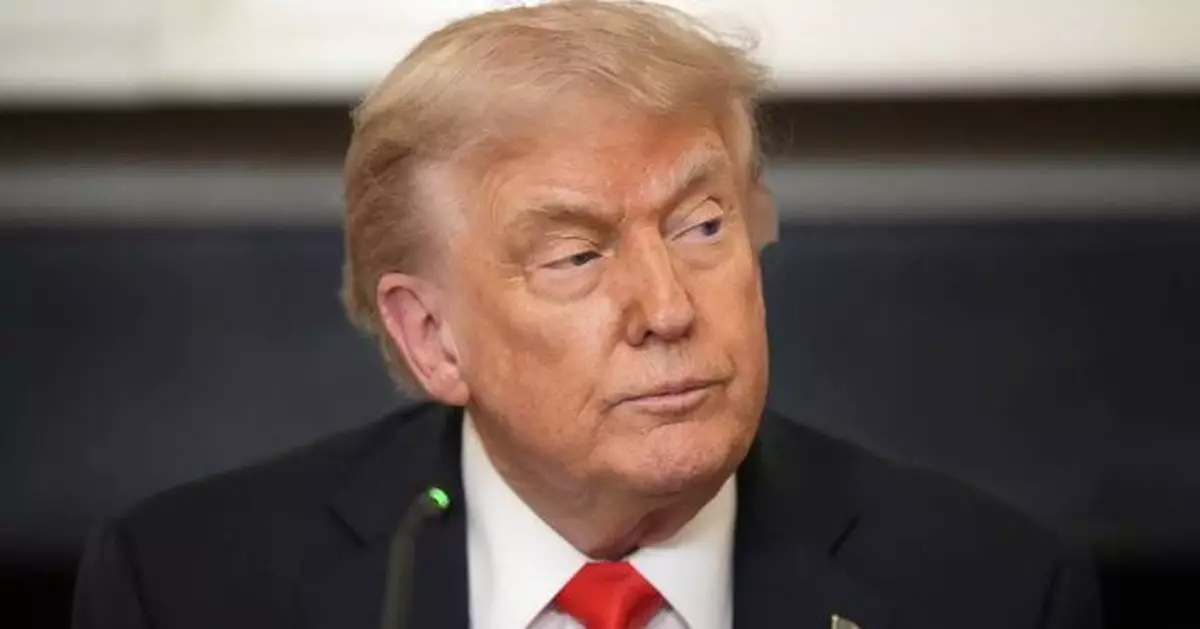
President Donald Trump attends a meeting with the Fraternal Order of Police in the State Dinning Room of the White House, Thursday, June 5, 2025, in Washington. (AP Photo/Alex Brandon)