DIAMOND BAR, Calif. (AP) — Air quality regulators in Southern California voted 7 to 5 to reject rules that would have curbed harmful emissions from gas-powered furnaces and water heaters, but the majority voted to send the rules back to committee to be changed and reconsidered.
The rules aimed to reduce emissions of smog-contributing nitrogen oxides, also called NOx, a group of pollutants linked to respiratory issues, asthma attacks, worse allergies, decreased lung function in children, premature death and more. Burning natural gas is also one of the primary drivers of climate change.
The South Coast Air Quality Management District estimates that the rules would have lowered NOx emissions from gas-fired furnaces, preventing about 2,490 premature deaths and 10,200 new asthma cases over a 26-year period in the region. The district regulates air quality for 16.8 million people in Southern California, including all of Orange County and large areas of Los Angeles, Riverside and San Bernardino counties — one of the smoggiest areas in the U.S.
The board received more than 30,000 written comments ahead of the vote, including a letter from U.S. Attorney Bilal “Bill” Essayli, the top federal prosecutor in the area, threatening to sue the board if they adopted the rules.
“California regulators are on notice: if you pass illegal bans or penalties on gas appliances, we’ll see you in court," he posted Thursday on the social platform X. “The law is clear—feds set energy policy, not unelected climate bureaucrats.”
Before the vote, board member Janet Nguyen, who serves on the Orange County Board of Supervisors, echoed opponents' concerns that the rules would financially burden people.
“I, like everybody here, support clean air," she said, adding, "These rules don't target refineries or shopping ports. They target people. The 17 million homeowners, renters, seniors and small businesses.”
Los Angeles County Supervisor Holly J. Mitchell, who supported the rules, said, “If we don't start now, when will we affect any change?”
California is moving aggressively to reduce the state’s reliance on planet-warming fossil fuels ahead of a 2045 mandate for the state to have net-zero carbon emissions. California often sets or proposes stricter environmental standards than the rest of the country, including efforts to ban the sale of new gas-powered cars by 2035.
The rules would have set targets that aimed to phase out the sale of gas-powered furnaces and water heaters starting in 2027. It would not have applied to gas stoves. The sales target would have started at 30%, then grown to 50% in 2029 and ended at 90% in 2039. The rules would not have been mandated, but manufacturers would have had to pay fees ranging from $50 to $500 if they sold gas-powered appliances.
That's a significant rollback from the original proposal, which would have required residential buildings to meet zero-emissions standards beginning in 2029 when appliances need to be replaced. The agency amended the rules after strong opposition from Southern California Gas and other businesses.
The regulations would have impacted more than 10 million appliances in an estimated 5 million buildings, most of them residential.
Officials and supporters say the rules would have reduced air pollution and substantially improved public health. But opponents — including property owners, industry professionals and natural gas companies — feared they would raise costs for consumers and businesses, and strain the power grid by adding more electric appliances.
During a packed board meeting Friday that ran for five hours, clean air advocates held signs reading “Clean Air Now," “Vote 4 Clean Air, Vote 4 Justice" and “Let SoCal Breath!”
Before public comments, board chair Vanessa Delgado thanked the more than 200 people who signed up to speak about the rules, which took more than two years to craft.
“I don't believe that there's necessarily a good or right answer about these rules," she said. “I believe that it is very complicated and I know that every single one of these board members are doing what is right to move forward air quality goals in our region.”
Lynwood City Councilmember Juan Muñoz-Guevara said the rules would be a long-overdue step toward environmental justice for communities like his.
“I've seen firsthand how families in my community are forced to live with the health consequences of dirty air. Our children grow up with asthma, our elders struggle with respiratory illness, and too many lives are cut short," he said. "Gas appliances in our home are one of the largest sources of smog-forming pollution in the region. We cannot meet clean air goals without tackling this.”
Peggy Huang, a member of Yorba Linda's City Council, urged the board to reject the rules.
“As someone who's been advocating for affordable housing, this will increase costs for us to meet those goals,” Huang said.
Chino's mayor pro tem, Curtis Burton, echoed some of Huang's concerns. He said the rules would “create an additional financial burden on residents and businesses.”
Air quality regulators say the rules would save consumers money by reducing energy bills.
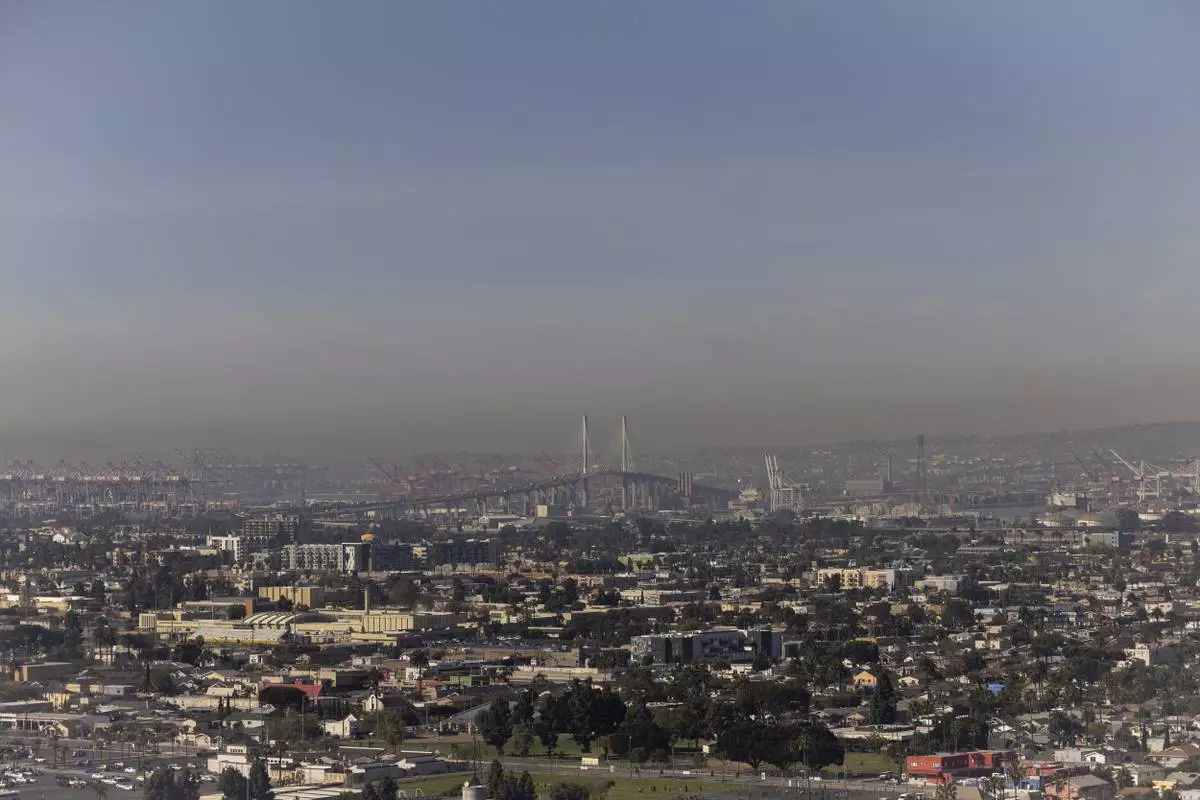
FILE - Smog lingers over the city overlooking the Ports of Long Beach and Los Angeles as seen from Signal Hill, Calif., on Monday, March 10, 2025. (AP Photo/Etienne Laurent, File)
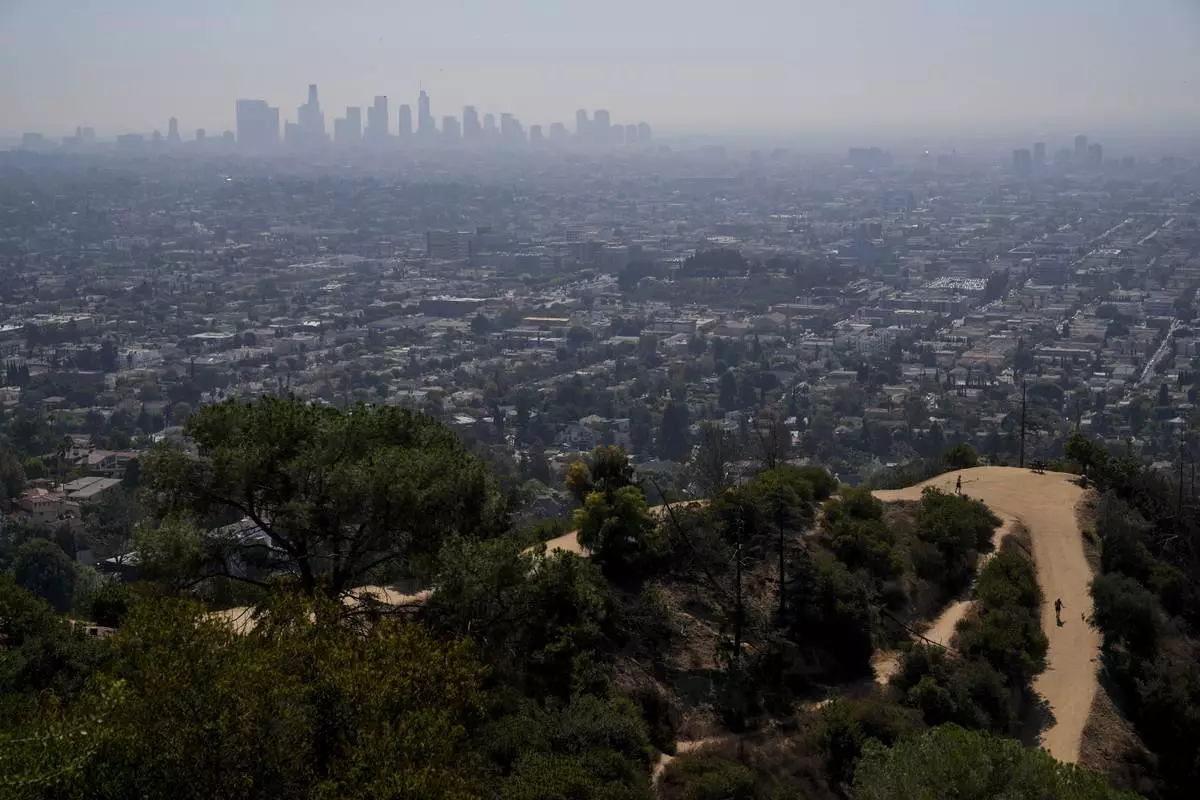
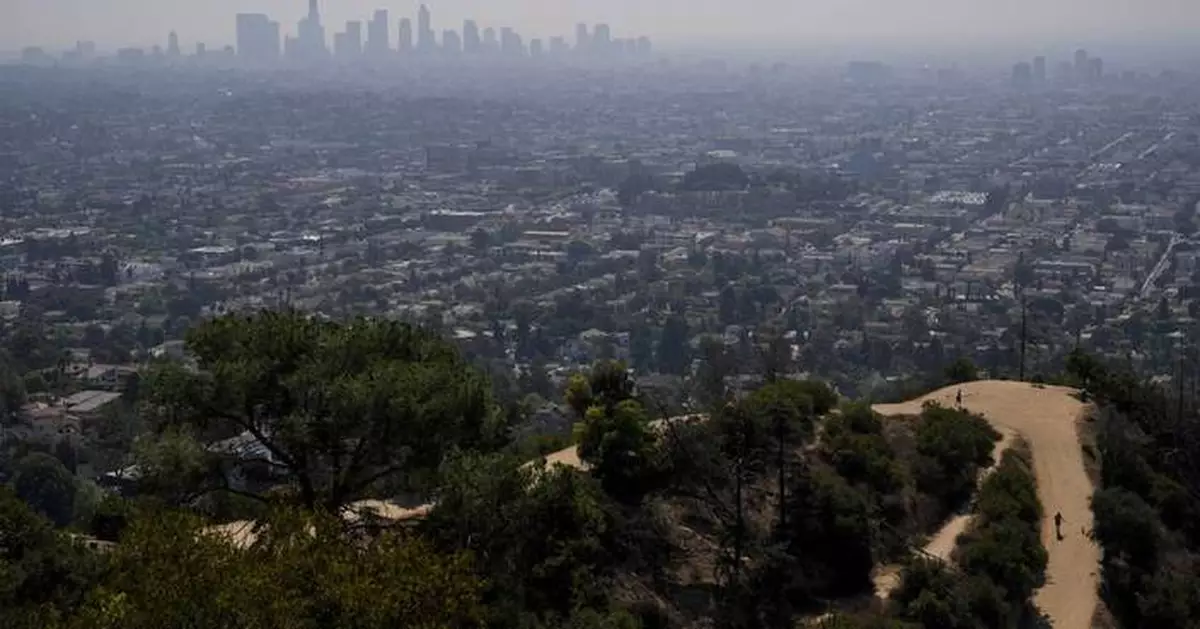
FILE - A person with a dog walks along a trail as a layer of smog blankets downtown Los Angeles, Tuesday, Oct. 1, 2024. (AP Photo/Jae C. Hong, File)

RHO, Italy (AP) — No ice is colder and harder than speedskating ice. The precision it takes has meant that Olympic speedskaters have never competed for gold on a temporary indoor rink – until the 2026 Milan Cortina Winter Games.
In the pursuit of maximum glide and minimum friction, Olympic officials brought on ice master Mark Messer, a veteran of six previous Olympic speedskating tracks and the ice technician in charge of the Olympic Oval in Calgary, Canada — one of the fastest tracks in the world with over 300 records.
Messer has been putting that experience to work one thin layer of ice at a time since the end of October at the new Speed Skating Stadium, built inside adjacent trade fair halls in the city of Rho just north of Milan.
“It’s one of the biggest challenges I’ve had in icemaking,’’ Messer said during an interview less than two weeks into the process.
If Goldilocks were a speedskater, hockey ice would be medium hard, for fast puck movement and sharp turns. Figure skating ice would be softer, allowing push off for jumps and so the ice doesn’t shatter on landing. Curling ice is the softest and warmest of all, for controlled sliding.
For speedskating ice to be just right, it must be hard, cold and clean. And very, very smooth.
“The blades are so sharp, that if there is some dirt, the blade will lose the edge,’’ Messer said, and the skater will lose speed.
Speedskater Enrico Fabris, who won two Olympic golds in Turin in 2006, has traded in his skates to be deputy sports manager at the speedskating venue in Rho. For him, perfect ice means the conditions are the same for all skaters — and then if it's fast ice, so much the better.
"It's more of a pleasure to skate on this ice,'' he said.
Messer’s first Olympics were in Calgary in 1988 — the first time speedskating was held indoors. “That gave us some advantages because we didn’t have to worry about the weather, wind blowing or rain,’’ he said. Now he is upping the challenge by becoming the first ice master to build a temporary rink for the Olympics.
Before Messer arrived in Italy, workers spent weeks setting up insulation to level the floor and then a network of pipes and rubber tubes that carry glycol — an antifreeze — that is brought down to minus 7 or minus 8 degrees Celsius (17.6 to 19.4 degrees Fahrenheit) to make the ice.
Water is run through a purification system — but it can’t be too pure, or the ice that forms will be too brittle. Just the right amount of impurities “holds the ice together,’’ Messer said.
The first layers of water are applied slowly, with a spray nozzle; after the ice reaches a few centimeters it is painted white — a full day’s work — and the stripes are added to make lanes.
“The first one takes about 45 minutes. And then as soon as it freezes, we go back and do it again, and again and again. So we do it hundreds of times,’’ Messer said.
As the ice gets thicker, and is more stable, workers apply subsequent layers of water with hoses. Messer attaches his hose to hockey sticks for easier spreading.
What must absolutely be avoided is dirt, dust or frost — all of which can cause friction for the skaters, slowing them down. The goal is that when the skaters push “they can go as far as possible with the least amount of effort,’’ Messer said.
The Zamboni ice resurfacing machine plays a key role in keeping the track clean, cutting off a layer and spraying water to make a new surface.
One challenge is gauging how quickly the water from the resurfacing machine freezes in the temporary rink.
Another is getting the ice to the right thickness so that the Zamboni, weighing in at six tons, doesn’t shift the insulation, rubber tubing or ice itself.
“When you drive that out, if there’s anything moving it will move. We don’t want that,’’ Messer said.
The rink got its first big test on Nov. 29-30 during a Junior World Cup event. In a permanent rink, test events are usually held a year before the Olympics, leaving more time for adjustments. “We have a very small window to learn,’’ Messer acknowledged.
Dutch speedskater Kayo Vos, who won the men’s neo-senior 1,000 meters, said the ice was a little soft — but Messer didn’t seem too concerned.
“We went very modest to start, now we can start to change the temperatures and try to make it faster and still maintain it as a safe ice,’’ he said.
Fine-tuning the air temperature and humidity and ice temperature must be done methodically — taking into account that there will be 6,000 spectators in the venue for each event. The next real test will be on Jan. 31, when the Olympians take to the ice for their first training session.
“Eighty percent of the work is done but the hardest part is the last 20 percent, where we have to try to find the values and the way of running the equipment so all the skaters get the same conditions and all the skaters get the best conditions,’’ Messer said.
AP Winter Olympics: https://apnews.com/hub/milan-cortina-2026-winter-olympics
Serpentines are set on the ice of the stadium where speed skating discipline of the Milan Cortina 2026 Winter Olympics will take place, in Rho, outskirt of Milan, Tuesday, Nov. 11, 2025. (AP Photo/Luca Bruno)
Ice Master Mark Messer poses in the stadium where speed skating discipline of the Milan Cortina 2026 Winter Olympics will take place, in Rho, outskirt of Milan, Tuesday, Nov. 11, 2025. (AP Photo/Luca Bruno)
Workers clean the ice surface during a peed skating Junior World Cup and Olympic test event, in Rho, near Milan, Italy, Saturday, Nov. 29, 2025. (AP Photo/Luca Bruno)
Ice Master Mark Messer poses in the stadium where speed skating discipline of the Milan Cortina 2026 Winter Olympics will take place, in Rho, outskirt of Milan, Tuesday, Nov. 11, 2025. (AP Photo/Luca Bruno)