A federal judge has approved terms of a sprawling $2.8 billion antitrust settlement that will upend the way college sports have been run for more than a century. In short, schools can now directly pay players through licensing deals — a concept that goes against the foundation of amateurism that college sports was built upon.
Some questions and answers about this monumental change for college athletics:
A: Grant House is a former Arizona State swimmer who sued the defendants (the NCAA and the five biggest athletic conferences in the nation). His lawsuit and two others were combined and over several years the dispute wound up with the settlement that ends a decades-old prohibition on schools cutting checks directly to athletes. Now, each school will be able to make payments to athletes for use of their name, image and likeness (NIL). For reference, there are nearly 200,000 athletes and 350 schools in Division I alone and 500,000 and 1,100 schools across the entire NCAA.
A: In Year 1, each school can share up to about $20.5 million with their athletes, a number that represents 22% of their revenue from things like media rights, ticket sales and sponsorships. Alabama athletic director Greg Byrne famously told Congress “those are resources and revenues that don’t exist.” Some of the money will come via ever-growing TV rights packages, especially for the College Football Playoff. But some schools are increasing costs to fans through “talent fees,” concession price hikes and “athletic fees” added to tuition costs.
A: Scholarships and “cost of attendance” have always been part of the deal for many Division I athletes and there is certainly value to that, especially if athletes get their degree. The NCAA says its member schools hand out nearly $4 billion in athletic scholarships every year. But athletes have long argued that it was hardly enough to compensate them for the millions in revenue they helped produce for the schools, which went to a lot of places, including multimillion-dollar coaches’ salaries. They took those arguments to court and won.
A: Yes, since 2021. Facing losses in court and a growing number of state laws targeting its amateurism policies, the NCAA cleared the way for athletes to receive NIL money from third parties, including so-called donor-backed collectives that support various schools. Under House, the school can pay that money directly to athletes and the collectives are still in the game.
A: Probably not. But under terms of the settlement, third parties are still allowed to cut deals with the players. Some call it a workaround, but most simply view this as the new reality in college sports as schools fight to land top talent and then keep them on campus. Top quarterbacks are reportedly getting paid around $2 million a year, which would eat up about 10% of a typical school’s NIL budget for all its athletes.
A: The defendant conferences (ACC, Big Ten, Big 12, SEC and Pac-12) are creating an enforcement arm that is essentially taking over for the NCAA, which used to police recruiting violations and the like. Among this new entity’s biggest functions is to analyze third-party deals worth $600 or more to make sure they are paying players an appropriate “market value” for the services being provided. The so-called College Sports Commission promises to be quicker and more efficient than the NCAA. Schools are being asked to sign a contract saying they will abide by the rules of this new structure, even if it means going against laws passed in their individual states.
A: A key component of the settlement is the $2.7 billion in back pay going to athletes who competed between 2016-24 and were either fully or partially shut out from those payments under previous NCAA rules. That money will come from the NCAA and its conferences (but really from the schools, who will receive lower-than-normal payouts from things like March Madness).
A: Because football and men’s basketball are the primary revenue drivers at most schools, and that money helps fund all the other sports, it stands to reason that the football and basketball players will get most of the money. But that is one of the most difficult calculations for the schools to make. There could be Title IX equity concerns as well.
A: The settlement calls for roster limits that will reduce the number of players on all teams while making all of those players — not just a portion — eligible for full scholarships. This figures to have an outsize impact on Olympic-sport athletes, whose scholarships cost as much as that of a football player but whose sports don’t produce revenue. There are concerns that the pipeline of college talent for Team USA will take a hit.
A: The new enforcement arm seems ripe for litigation. There are also the issues of collective bargaining and whether athletes should flat-out be considered employees, a notion the NCAA and schools are generally not interested in, despite Tennessee athletic director Danny White’s suggestion that collective bargaining is a potential solution to a lot of headaches. NCAA President Charlie Baker has been pushing Congress for a limited antitrust exemption that would protect college sports from another series of lawsuits, but so far nothing has emerged from Capitol Hill.
AP college sports: https://apnews.com/hub/college-sports

FILE - Grant House competes in the men's 200-meter IM final at the TYR Pro Swim Series swim meet on Saturday, June 4, 2022, in Mission Viejo, Calif. (AP Photo/Ashley Landis, File)

FILE - Grant House speaks during a players' association for college athletes meeting ahead of the college football's national title game, Saturday, Jan. 18, 2025, in Atlanta. (AP Photo/Brynn Anderson, File)
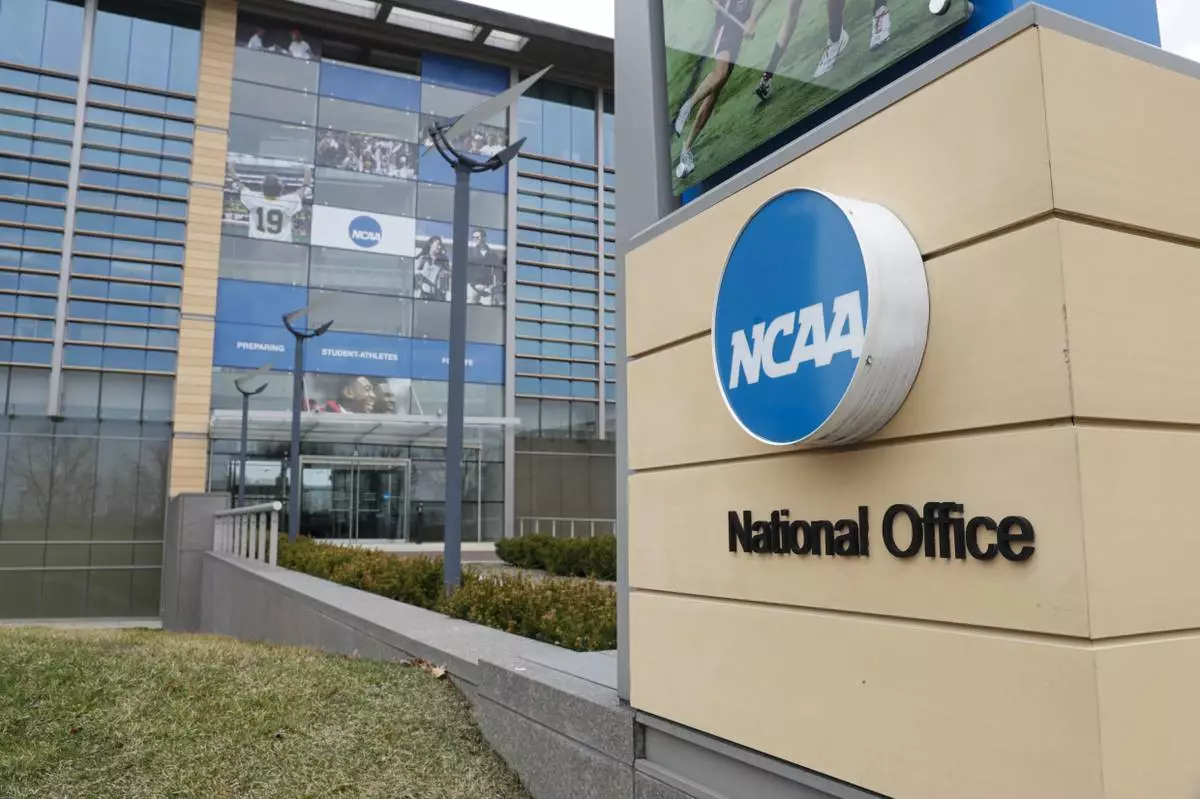
FILE - The NCAA headquarters in Indianapolis is seen on March 12, 2020. (AP Photo/Michael Conroy, File)
DUBAI, United Arab Emirates--(BUSINESS WIRE)--Oct 8, 2026--
What if students did not all have to learn the same thing, in the same way, at the same time?
This press release features multimedia. View the full release here: https://www.businesswire.com/news/home/20261008920103/en/
GEMS Education, one of the oldest and largest private K-12 education providers, today unveiled GR8 School, a global-first model combining hyper-personalised AI-powered learning with specially trained teachers (human mentors) and real-world expertise. Drawing on almost seven decades of educational experience, more than 10,000 educators and school leaders, and pathways that have taken GEMS graduates to more than 2,000 universities across 71 countries, including all eight Ivy League universities in the US and all 24 Russell Group universities and colleges in the UK, GEMS brings significant scale, experience and educational expertise to the new model.
Since its origin in 1959, GEMS has pioneered education in the UAE, from offering international curricula across schools at a range of price points to developing new models such as GEMS School of Research and Innovation (SRI). More than 500,000 GEMS alumni have gone on to become unicorn founders, entrepreneurs, doctors, engineers, scientists, academics, creatives and leaders across industries, with graduates progressing to the world’s leading universities. Its mission has remained constant: to see the potential in every child and evolve education to help them realise it.
GR8 is the latest expression of that legacy of innovation and educational firsts. It will initially operate as a “school within a school”, creating a distinct pathway within existing school communities.
The 8 October unveiling comes as Dubai’s leadership explores new approaches to education and how future school models can respond to changing student needs and the world of work.
What makes GR8 School a pioneering education model?
The GR8 School will bring together three connected parts of a student’s education:
Hyper-personalised learning: Students use AI-powered learning that allows them to work through core academic material at their own pace, rather than every student following a fixed timetable. The learning system will continually assess a student’s progress, identifying what they have mastered, where they need additional support, and where they are ready to be challenged further.
World-class teachers (Human Mentors): Real-time data provided by the adaptive learning systems empower teachers to be able to spend most of their time on high-impact 1:1 support instead of teaching an entire class at the same time, as well as on delivering all practical aspects of the curriculum. Teachers will remain responsible for academic rigour while also providing the inspiration, mentorship and human connection central to a child’s growth.
Real-world pathways: Working backwards from each student’s interests and possible future ambitions, GR8 will connect students with relevant specialists, industry experts, practitioners, projects and experiences that help turn what they learn into what they can do. Alongside academic study, the model will place deliberate emphasis on critical thinking, communication, teamwork, financial literacy, and practical life skills, while creating direct pathways from education to further study, entrepreneurship and future employment.
Together, these people will form the GR8 Learning Collective – a wider human team of teachers, specialists, practitioners bringing industry and experts closer to students.
A different learning day: The GR8 model is being designed around a more flexible use of time. Students will combine asynchronous, AI-enabled self-paced learning with approximately 90 minutes to two hours of synchronous, teacher-led learning, supported by real-world experts and globally recognised specialists. This will be complemented by a further two to three hours of enhanced enrichment programmes, creating more time for deeper specialist learning, projects, practical application, collaboration, creativity, sport, the arts and other areas of personal development.
Transformative education should meet the needs of the learners where they are and give families meaningful choice. GR8 is being developed to operate across different GEMS school segments and price points. While final fees will vary by school, market and model and will be confirmed closer to launch, current indicative annual fee ranges are approximately US$8,000–10,000 for affordable offerings and US$20,000–40,000 for premium offerings.
GR8 builds on principles already embedded across GEMS – personalised support, strong teacher-student relationships, character, critical thinking and learning beyond the classroom – as well as existing enrichment programmes and opportunities, bringing them together in a more focused and structured model.
It will offer families a distinctive new choice, designed for students who may thrive in a more personalised, flexible and independently driven learning environment.
The visionary behind the model, Sunny Varkey, Chairman and Founder of GEMS Education, said:
“For almost seven decades, we have evolved continually because the world our children are growing into keeps evolving. Throughout that journey one thing has never changed: the teacher has remained at the heart of a child’s learning and growth. A teacher provides inspiration, encouragement, judgement and human connection. That relationship remains fundamental.
“Today, artificial intelligence is changing how we learn and work, but the answer cannot simply be to put more technology into classrooms. We have to ask a bigger question: if we were designing education for young people today, knowing how rapidly the world around them is changing, what would we do differently?
“GR8 is our answer to that question. It starts with the individual child and asks what combination of technology, great teachers, industry experts and real-industry experiences will help that young person achieve academically and discover what they could become.
“GR8 is not for everyone, nor is it intended to be. No single model of education is right for every child. We are making this pathway available to all our families, but we expect it will appeal to a select group of students who are ready for greater independence, personalisation and ownership of their learning. For the right student, we believe it can be transformative.
“Technology can help us understand and personalise how a child learns. But education is, and will always remain, deeply human. Our ambition with GR8 is to bring many worlds together around the learner.
“We want young people to leave school with excellent qualifications, but also with something more: the confidence to apply what they know, the judgement to think for themselves, and the skills, experiences and relationships that can help them turn their potential into possibility.”
The first GR8 School will soft launch in January 2027, with GEMS using the interim period to continue developing and testing the systems behind the model, including its learning technology, academic model, teacher and guide roles, and network of specialist and industry expertise, with further details to be announced closer to launch.
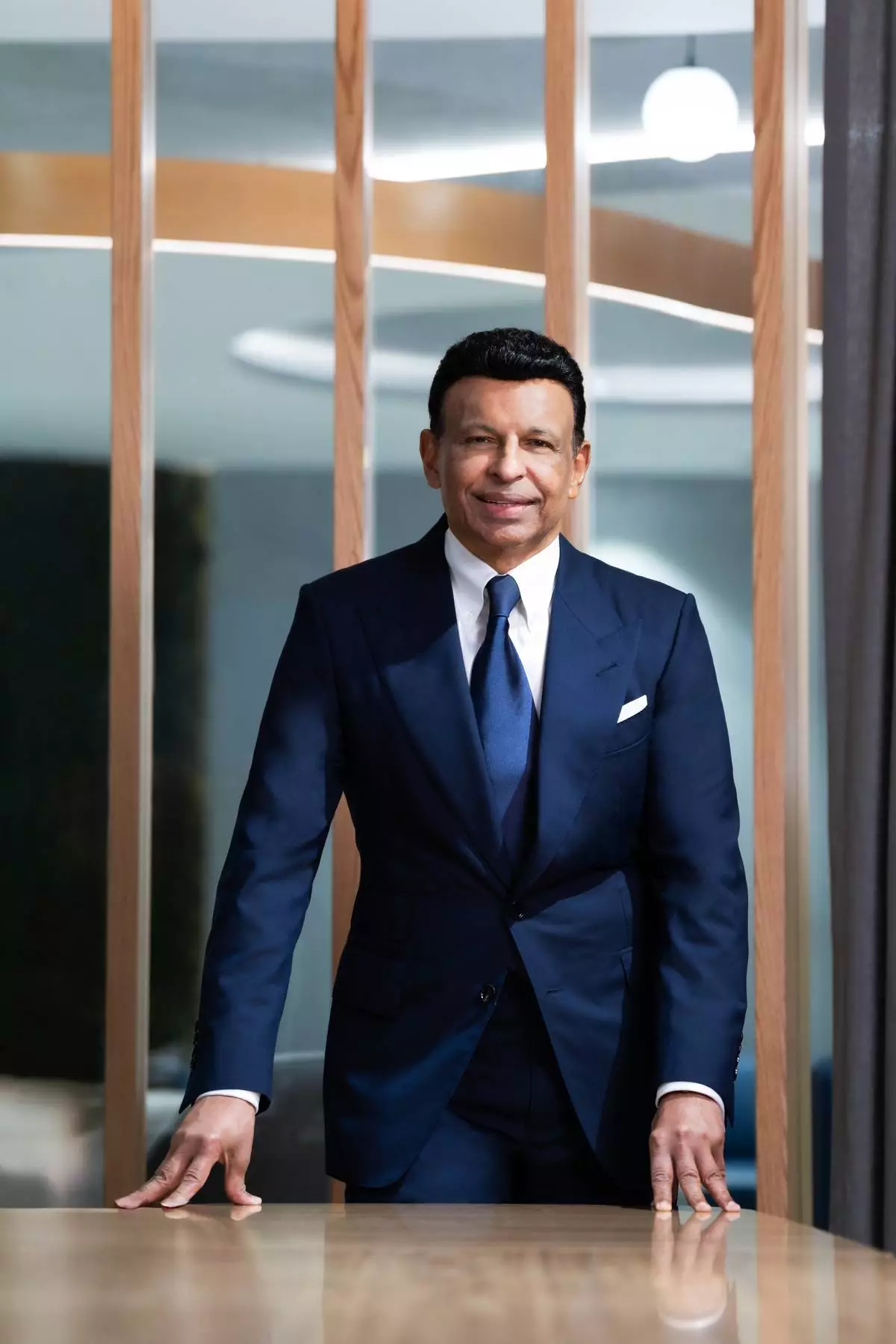
Sunny Varkey, Chairman and Founder of GEMS Education
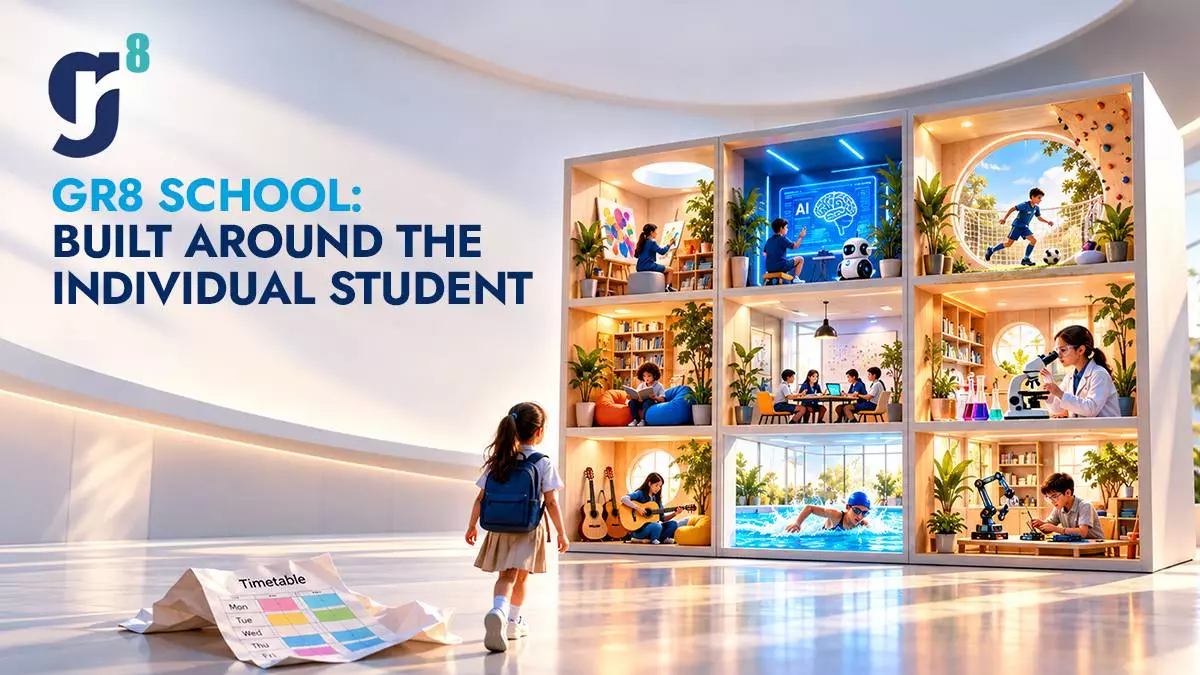
GEMS Education Unveils GR8 School, a World-First Fusion of AI, Teachers and Industry Experts Reinventing Education