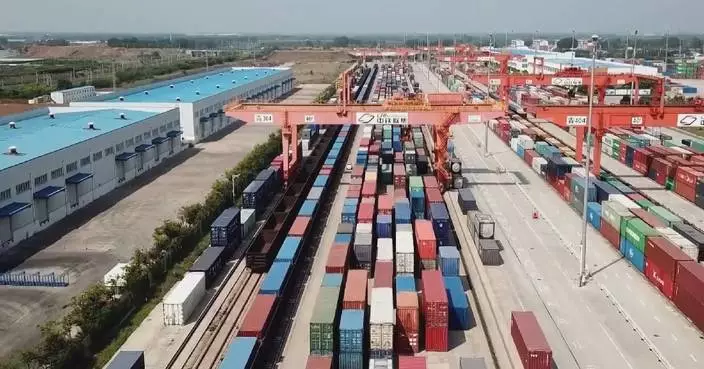
China has taken proactive steps to expand opening-up and enhance the business environment for global enterprises by fostering new quality productive forces, said Roland Busch, president and CEO of Siemens AG, during an interview with China Central Television (CCTV) aired on Friday.
The CEO stressed that China has formulated guidelines on developing new quality productive forces, opening up more possibilities for the global economy.
Busch also expressed great interest in further exploring market opportunities and increasing presence in China.
"So for us, it's just underlining and supporting what we do. So we are in this country for more than 150 years now. We have 30,000 people, counting, so we are increasing that. We have 5,000 people in research and development. I think 12,000 active patents. So I'm just encouraged to continue our strategy of developing more and more products, local for local. Eventually also have an opportunity to go global and leverage on the potential of the market. But also the people in the market, which is super relevant," he said.
Chinese President Xi Jinping mentioned that, in order to facilitate business operations, the Chinese government has implemented various measures, one of which is the crucial issue of cross-border flow of financial data that foreign enterprises are deeply concerned about. For the application of artificial intelligence technology and the advancement of digitalization, data sharing is paramount, and this relies heavily on cross-border flows of data, according to Busch.
As the Co-Chair of the China Development Forum (CDF) 2025, Busch delivered a speech at the opening ceremony in Beijing, praising China for continuously advancing high-level opening-up and striving to create a level-playing field for global enterprises.
He noted that the world is currently undergoing a significant transformation driven by multiple factors, including geopolitical rivalries, conflicts, the vulnerability of supply chains exposed by the COVID-19 pandemic, and the rapid advancement of technology, particularly artificial intelligence.
"So this transformation requires companies but also economies, countries to change. And my observation is if I read also the last 'two sessions,' and what was done in the last years, China, like Siemens does, is also changing its operating system. The way how it works, and the reform goes deeper and you can see it also from this deploying of high quality productive forces, is something which really deploys technology deeply in an economy which is again changing so fast," he said.
"The second point, which I said, is that we see that the efforts to create a level-playing field in an open market, we see it clearly, year by year. It's a step forward. Maybe, the third very interesting message which I made is that China surprises us," he continued.
The "two sessions" are the annual meetings of China's top legislature, the National People's Congress (NPC), and the top political advisory body, the National Committee of the Chinese People's Political Consultative Conference (CPPCC).
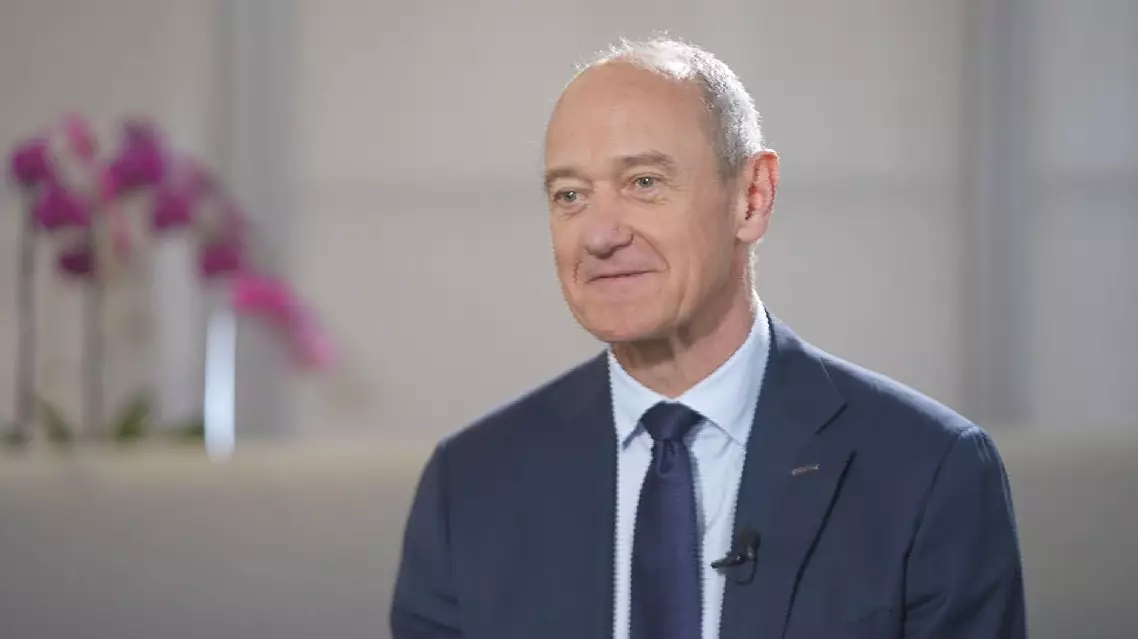
Siemens CEO highlights new opportunities from China's economic reforms, opening-up