French companies and relevant associations had proactively submitted applications on price commitments for brandy to China, according to a statement released Saturday on the Ministry of Commerce's website.
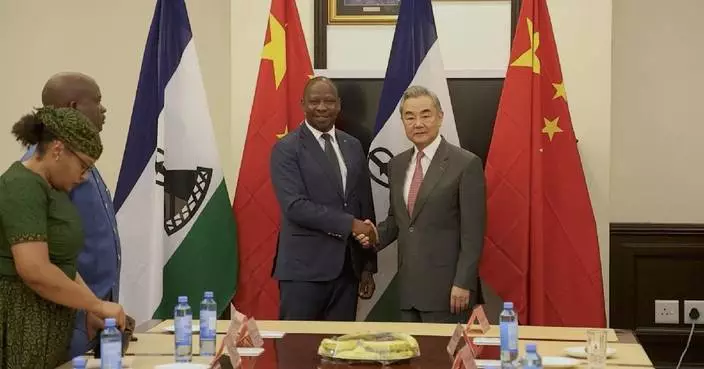
The statement says that Minister of Commerce Wang Wentao and European Commissioner for Trade and Economic Security Maros Sefcovic held talks in Paris on June 3 on the European Union's (EU's) anti-subsidy case involving Chinese electric vehicles (EVs), China's anti-dumping investigation into brandy originating from the EU, and export control policies.
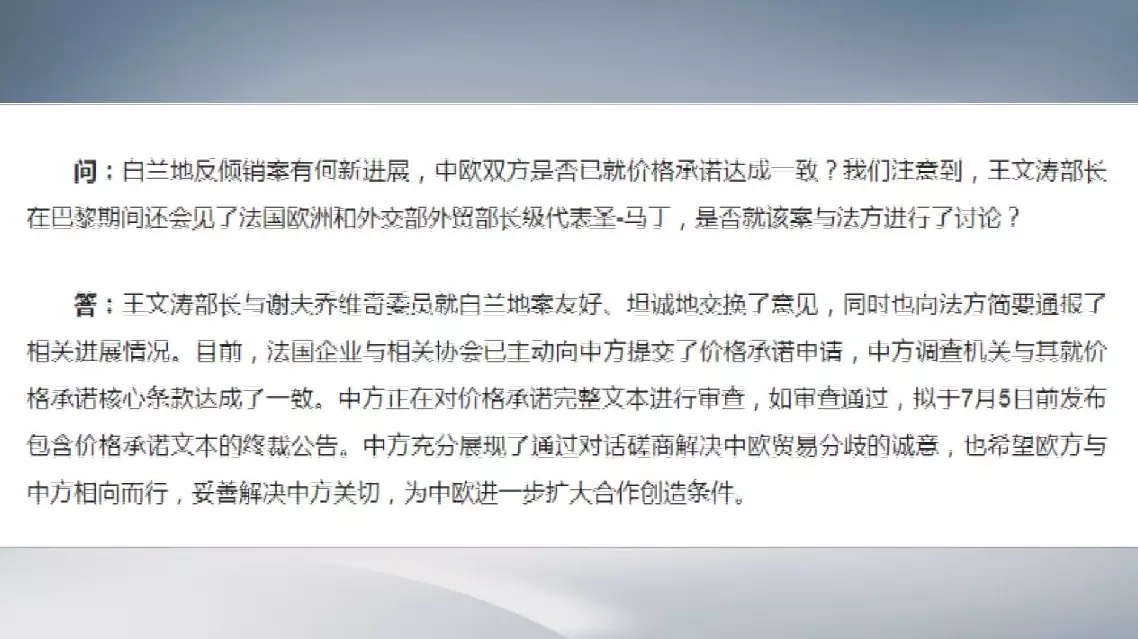
Regarding the anti-dumping investigation into brandy, French companies and relevant associations had proactively submitted applications on price commitments to China, and the Chinese investigating authorities had reached an agreement with them on the core terms of the price commitments, the ministry said in its statement.
The Chinese side is currently reviewing the complete text on those commitments. If approved, the final announcement is expected to be issued before July 5, says the statement.
China has fully demonstrated its sincerity in resolving China-EU trade differences through dialogue and consultation. It is hoped that the EU will work with China in the same direction, and properly address China's concerns, so as to create conditions for further expanding China-EU cooperation, according to the ministry.
French firms, associations submit price commitment applications for brandy to China: ministry
French firms, associations submit price commitment applications for brandy to China: ministry
French firms, associations submit price commitment applications for brandy to China: ministry
Iranian Parliament Speaker Mohammad Baqer Qalibaf warned on Sunday that Tehran would view the United States and Israel's military bases and facilities in the Middle East as "legitimate targets" should Washington take military action against Iran.
At a parliamentary session convened to review an emergency proposal on assembly regulations, Qalibaf emphasized that, at this highly sensitive juncture, Iran must accurately and thoroughly identify the schemes of its adversaries.
Qalibaf said that Iran is currently confronting Israel and the United States simultaneously on four fronts: economic, cognitive, military, and counterterrorism. Of them, the economic warfare and the cognitive and psychological warfare began many years ago and have persisted to this day, growing increasingly complex and intense in recent years.
The remarks came as U.S. President Donald Trump is reportedly "seriously considering authorizing a strike" against Iran, taking advantage of its nationwide unrest.
Protests have erupted in several Iranian cities since late December over the sharp fall of the rial and long-standing economic hardship. Iranian authorities have acknowledged the demonstrations and voiced willingness to address economic grievances, while warning against violence and vandalism.
Amid the ongoing protests, deadly clashes have been reported lately between police and what the government described as "rioters." However, no official death toll has been released.
Also on Sunday, Iran's semi-official Tasnim news agency reported that Iranian President Masoud Pezeshkian will address the country's economic situation and political environment in a televised interview later that day.
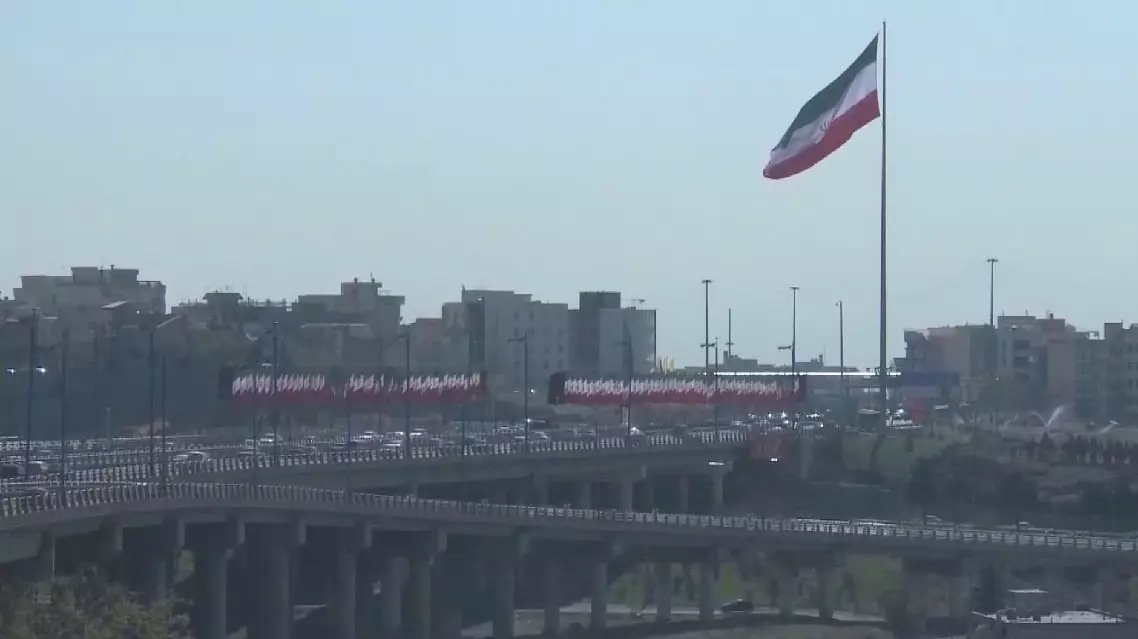
Iran swears to counterattack if attacked