Cultural and creative products, represented by fridge magnets inspired by the original museum artifacts, have become popular among Chinese young people.
In recent years, an increasing number of Chinese citizens have chosen museums and other cultural venues as must-visit destinations, igniting a trend of experiencing the charm of traditional Chinese culture. Accordingly, fridge magnets from these museums have also gained popularity.
On Chinese social media platforms, refrigerators are no longer the only display board for fridge magnets. More and more young enthusiasts of Chinese traditional culture are also creating their own "fridge magnet museums" on magnetic suction boards.
In Xining City of northwest China's Qinghai Province, fridge magnets capture local delicacies as artistic symbols, showcasing vivid details that impress tourists.
"Look, this fridge magnet is so realistic that you can even open the lid to see the raisins inside," said Zhao Shouyan, a tourist.
Fridge magnets inspired by painted pottery of the Majiayao culture in Qinghai have also drawn the attention of tourists, helping to introduce more people to the province's enchanting culture.
The Majiayao culture is one of the most renowned archaeological discoveries in Qinghai. It mainly developed in the upper reaches of the Yellow River and its tributaries, with glamorous painted pottery as its most striking feature.
"At our peak, we can sell more than 2,000 pieces of fridge magnets of Majiayao series each month. While visitors cannot take home real cultural relics, they can bring back cultural and creative products related to these relics, allowing our local culture to extend beyond the museum," said Di Tian, a staff member at the cultural and creative products flagship store of Qinghai Provincial Museum.
In Taizhou City of east China's Zhejiang Province, fridge magnets inspired by a local delicacy called shibingtong, or pancake roll, have enabled visitors to delve deeper into traditional culture.
Shibingtong features a variety of delectable fillings wrapped in a thin and soft pancake skin. The appeal of the dish lies in the various fillings. From pot-stewed meat and scrambled eggs to shrimp meat, bean sprouts, and more, almost anything can be wrapped in the pancake skin.
The fridge magnets also feature a transparent "skin" and various "fillings," allowing visitors to select their own contents and create personalized shibingtong in a unique, DIY style.
"Through this interesting form of cultural creation, we hope that more people will understand the historical stories and cultural connotations behind shibingtong," said Zhao Anru, deputy curator of the Huangyan Museum in Taizhou.
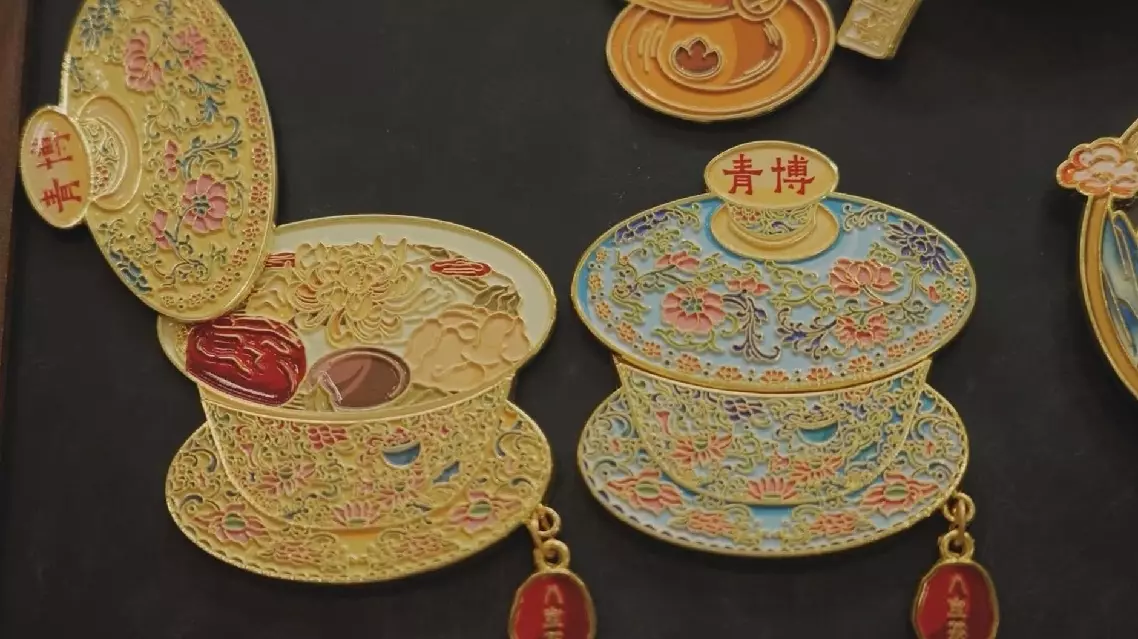
Fridge magnets inspired by original museum artifacts gain popularity