Nearly 100 guests from the Chinese and American business, academic, and media sectors gathered in New York Friday to discuss new opportunities brought to the world by China's blueprint for high-quality development.
The "China in Springtime: China's Development Opportunities for the World" high-level dialogue, hosted by China Media Group, came after the "two sessions" concluded in Beijing, an event watched closely by many industry leaders in the United States.
Speakers said that as a key window into contemporary China, the annual "two sessions" once again drew global attention. This year's meetings approved important documents, including the Outline of the 15th Five-Year Plan (2026-2030). This roadmap for China's high-quality growth is seen as providing a new list of opportunities for the world.
Participants emphasized that China's development cannot be separated from the world, and global prosperity also requires China. They described this year as significant for China-U.S. relations, calling for a steady, sound, and sustainable development in bilateral ties that benefits both nations and the world.
During the session, guests from the investment and technology sectors explored topics such as the potential for China-U.S. economic and trade cooperation, as well as the global opportunities arising from technological innovation and new quality productive forces.
The event also featured screenings of CMG-produced programs, including an amazing martial arts performance presented by a dozen humanoid robots with young Kungfu artists at the recently staged Spring Festival Gala, China's most-watched TV show.
The dialogue series will be held in countries across Europe, Asia, Africa, the Middle East, and Latin America.
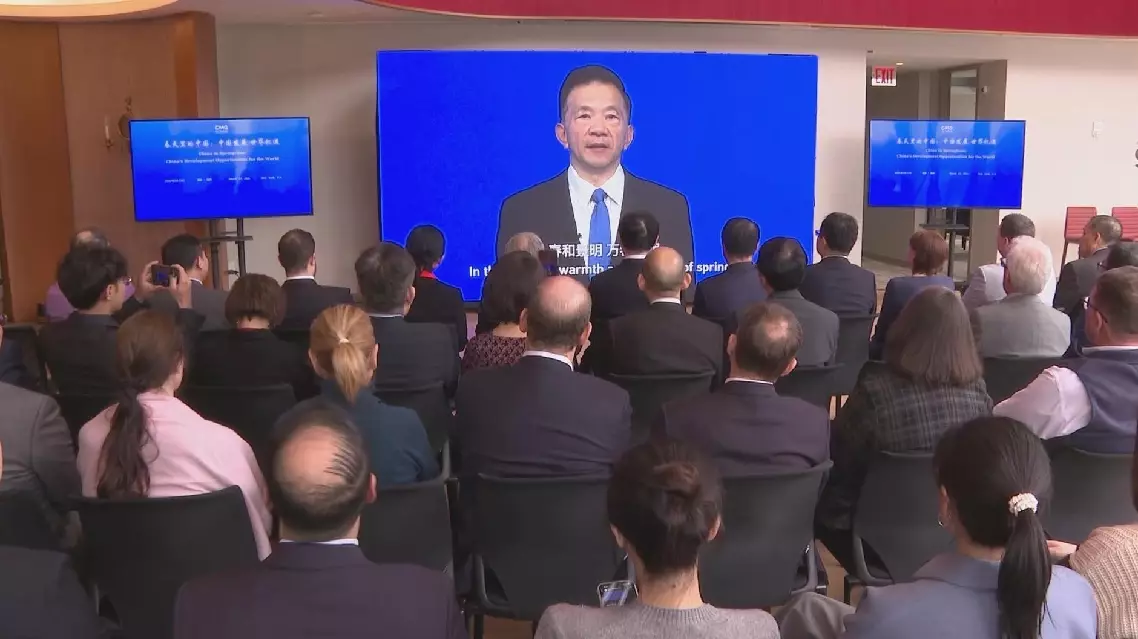
High-level dialogue in New York brings China's development opportunities to world
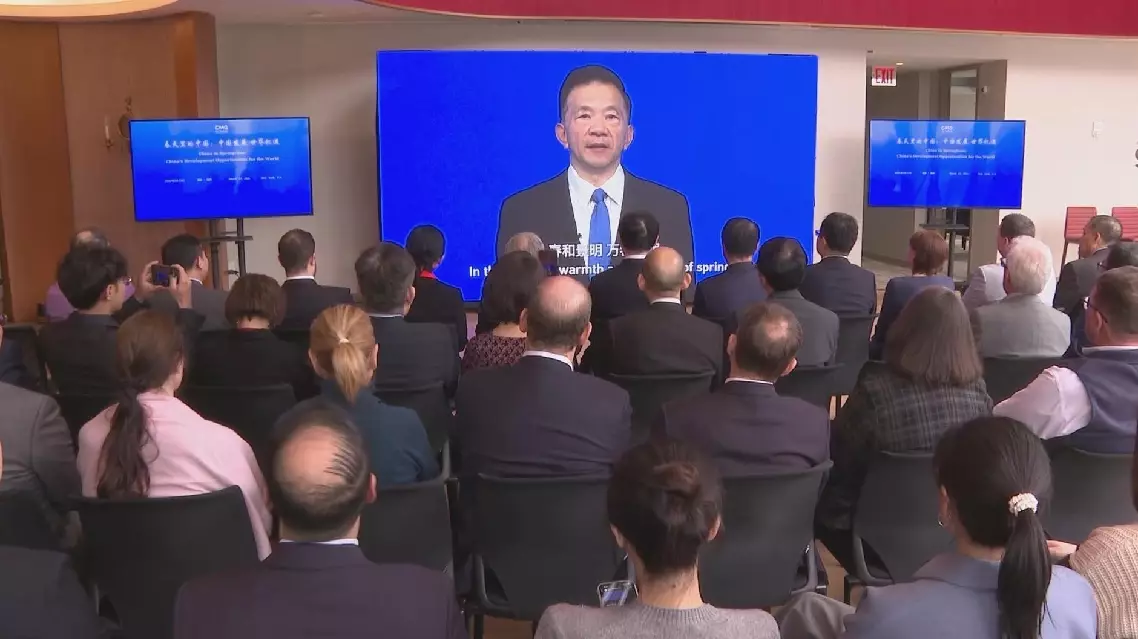
High-level dialogue in New York brings China's development opportunities to world
A young entrepreneur from southwest China's Sichuan Province has shared his ambition of better integrating Chinese traditional culture into shaping new consumption trends for his premium coffee, as he seeks to come up with new and creative coffee to appeal to customers.
Inside the Chengdu Wuhou Shrine Museum, millions of visitors come for history, but many stay for something more immersive: a cup of coffee, a moment to pause.
Known as the "mecca of the Three Kingdoms," the Wuhou Shrine Museum was constructed nearly 1,800 years ago to commemorate Zhuge Liang, a renowned military strategist in the Three Kingdoms period (220-280 AD).
At Cheng Xiang Cafe inside the museum, every cup comes with a creative twist. The "Burning of the Red Cliffs" is a bold Sichuan-style chili-infused coffee that hits both heat and caffeine in one cup, while "Green Plum Wine" blends subtle sweetness with stories from the Three Kingdoms period.
Even the foam becomes a canvas. Baristas carefully etch Zhuge Liang's portrait, turning each drink into a miniature work of art.
The founder Li Feiyang stressed that each drink blends local Sichuan flavors with history, turning a simple coffee into an interactive cultural experience.
However, Li's story didn't begin with coffee. He left his stable job to operate a book store in 2019. He has also formed a youth business network supporting small and medium enterprises.
"Life is short. I want to do something meaningful - not just follow routines or repeat the same things every day," he said.
In 2023, Li launched coffee brands across cities and tourist sites. His model mixes Chinese traditional culture with new consumption trends that now inspires young entrepreneurs.
"We use coffee to introduce Chinese culture. From flavors to visuals, every detail helps people connect with the Three Kingdoms and Chengdu - and take that culture further," he said.
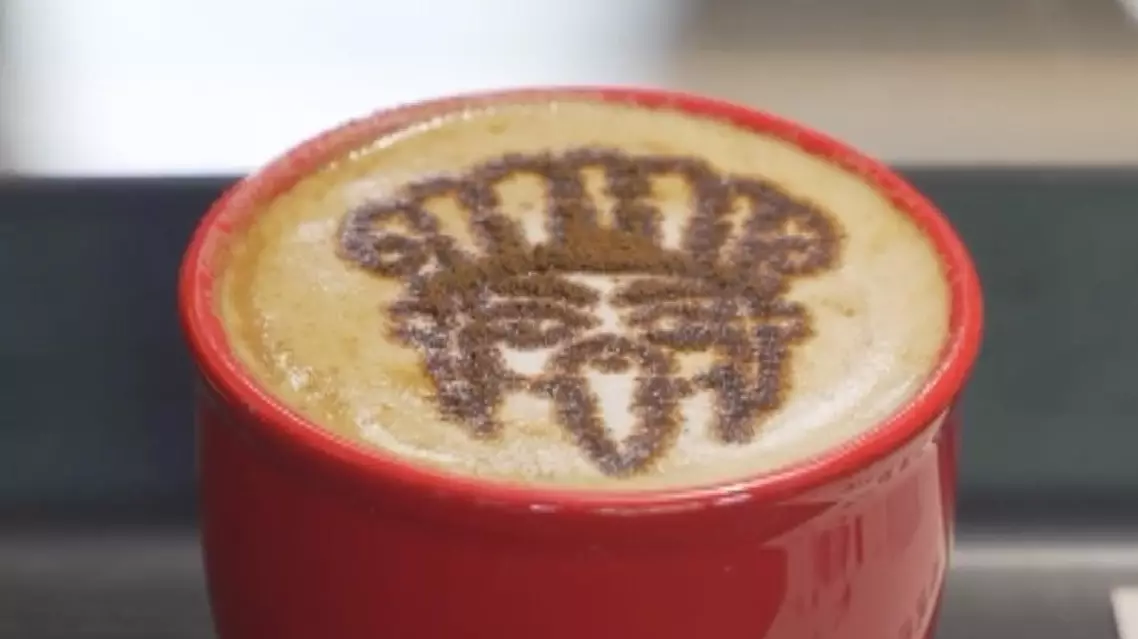
Young Sichuan entrepreneur blends coffee with Chinese tradition to shape new consumption trends