Greece's mussel farming industry is under serious threat as record-high sea temperatures last summer wiped out nearly 90 percent of the harvest in the Thermaic Gulf.
The warm, shallow waters of the Thermaic Gulf hide a growing catastrophe for local farmers. Last July, sea temperatures surged past 30 degrees Celsius, turning this once-productive bay for mussels into a lifeless zone.
Entire harvests were lost, along with the baby mussels meant to seed next year's crop. In villages like Chalastra and Kymina, hundreds of farmers now face an uncertain future.
"Last year's heat killed everything—the seed, the harvest, everything. In this area alone, we lost 100 percent. No income. No future," said Christos Bakalis, a fourth-generation mussel farmer.
Many other farmers are watching their livelihoods slip away. While scientists have warned for years that climate change would warm Mediterranean waters, few expected the impact to come so severe and so fast.
"Especially over the past four years, mussels have been struggling to grow under the methods we've always used. The future of mussel farming has become extremely uncertain," said Vasilis Anastasiou, a mussel farmer and ichthyologist.
The Thermaic Gulf once powered one of Europe's top mussel industries. However, last summer's heat pushed sea temperatures so high the mussels had no chance of survival. With no seed left to regrow, the mussel crisis goes beyond a local scale. Greece exports nearly 20,000 tonnes of mussels every year — and now, that entire chain is at risk.
"We're facing new conditions that are beyond our control. We need to adapt. If we don't adapt and do it fast, then we could be facing the end of our industry altogether, and that's our worst fear," said Anastasiou.
The Greek government has acknowledged the scale of the damage and said it's working with European institutions on potential support. But so far, farmers say little help has reached them.
With no relief yet in sight and the seas seemingly only getting hotter, many mussel farmers fear their livelihoods are now completely destroyed.
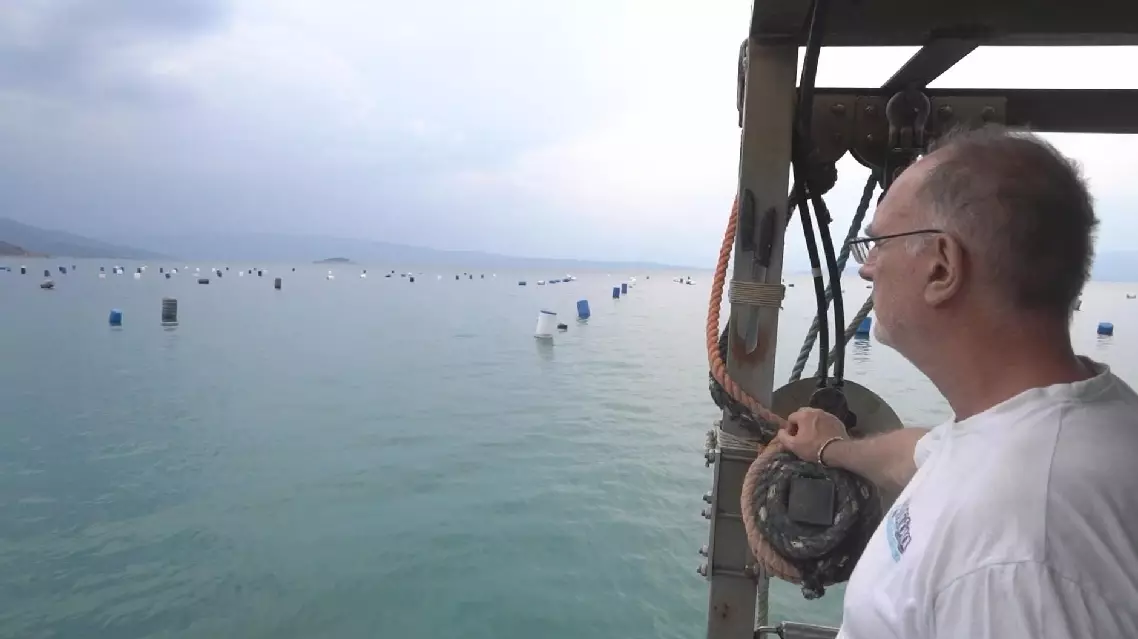
Higher sea temperatures devastate Greece's mussel farming sector
Higher sea temperatures devastate Greece's mussel farming sector
Higher sea temperatures devastate Greece's mussel farming sector