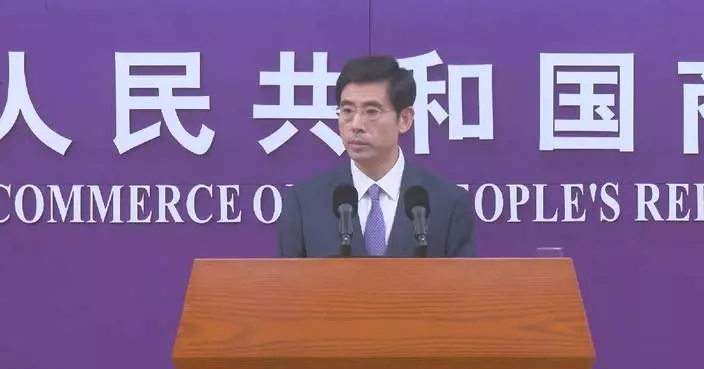
China will step up efforts to stabilize employment in 2026, said the head of the Ministry of Human Resources and Social Security (MOHRSS) at a press conference on Saturday.
Last year, China's top political advisory body issued policy guidance known as the "four stabilities", directing relevant ministries and departments to seek stabilization in the areas of jobs, firms, markets and expectations.
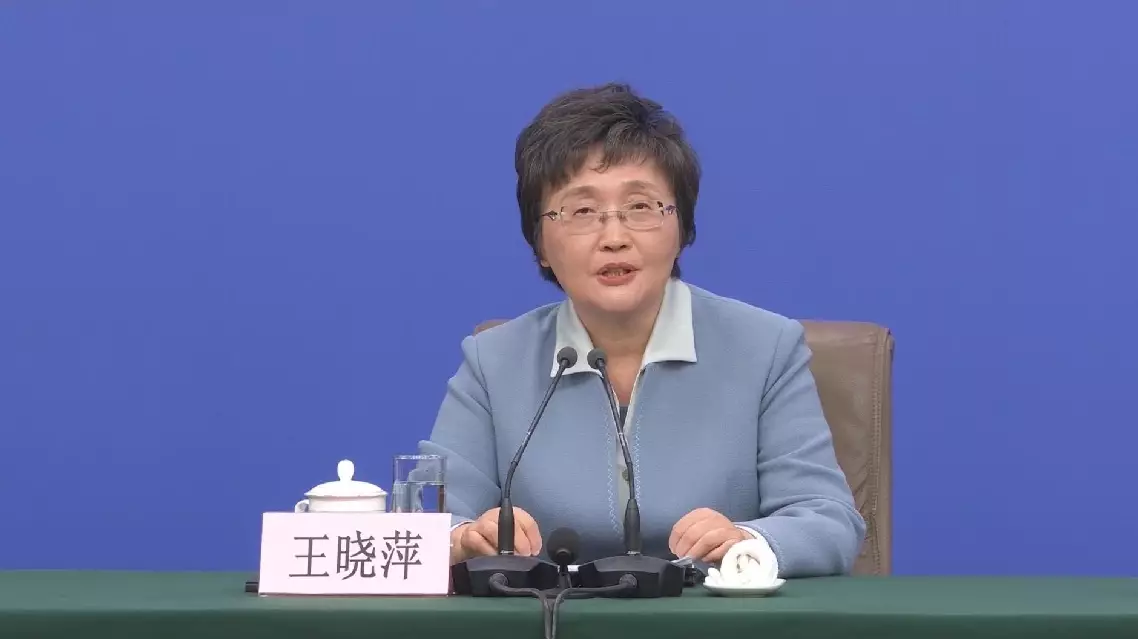
In response, the MOHRSS has implemented an employment-first strategy. According to Minister Wang Xiaoping, speaking at a presser on the sidelines of the ongoing fourth session of the 14th National People's Congress in Beijing, the ministry will continue that strategy.
"We will further implement the employment-first strategy and requirements of the 'four stabilities', strengthen guidance, expand channels and prioritize key groups to make new progress in high-quality full employment," she said.
"In terms of 'stabilizing jobs', we will increase support for labor-intensive industries such as foreign trade, construction, accommodation and catering, with the aim of stabilizing employment positions while promoting the development of these sectors. In terms of 'expanding capacity', we will actively tap the employment potential in fields such as the digital economy, high-end manufacturing and modern services to achieve job growth alongside industrial upgrading. In terms of 'improving quality', we will effectively implement the adjustment mechanism for minimum wage standards, regulate the human resources market order, and fully enforce the guarantee system guaranteeing for migrant workers' wage payments, thereby elevating employment quality through strengthened rights protection," she said.
She noted that specific measures will be introduced to assist the upcoming wave of graduates.
"The number of college graduates in China is expected to reach 12.7 million this year. We will further improve policy measures, fully tap the employment potential of various channels and fields, expand employment space at the grassroots level, and help young people display their talents in all walks of life," she said.
China to boost employment with targeted measures: minister
Iranian Foreign Minister Seyed Abbas Araghchi said Thursday U.S. "economic terrorism" threatens global economy and the sovereignty of nations worldwide.
The remarks came after U.S. President Donald Trump announced on Wednesday "the most crushing economic operation ever taken" against any country providing a lifeline to Iran.
"This will be Economic Warfare and Isolation on an unprecedented scale," Trump posted on Truth Social, calling the move "an ECONOMIC D-DAY."
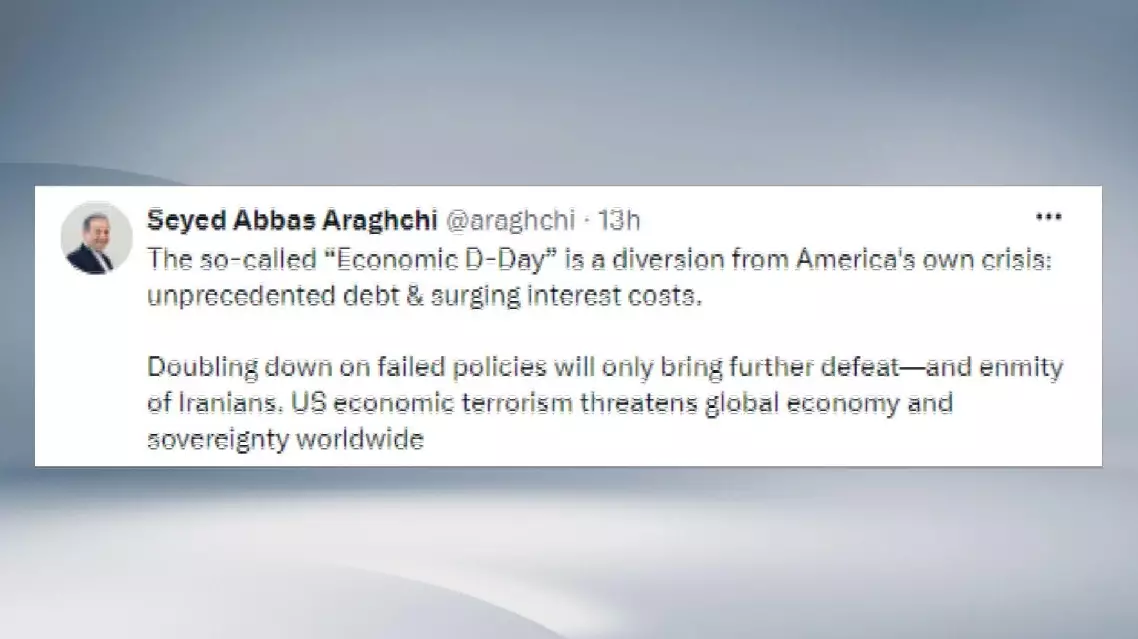
In response, Araghchi said on X that the so-called "Economic D-Day" is a diversion from Washington's own crisis: "unprecedented debt and surging interest costs."
"Doubling down on failed policies will only bring further defeat -- and enmity of Iranians. U.S. economic terrorism threatens global economy and sovereignty worldwide," he added.
On June 18, Iran and the United States signed a memorandum of understanding (MoU) on ending their war in the region on all fronts. Under the MoU, the two countries were scheduled to hold negotiations within a period of 60 days, which ended on Monday, to reach a final agreement. However, the fate of the talks remains unclear following an escalation between the two countries last month.
Washington's anti-Tehran "economic operation" comes as Iran is already under U.S. unilateral sanctions and naval blockade.
Iranian Deputy Foreign Minister for Legal and International Affairs Kazem Gharibabadi said Thursday that the United States is now further pressuring Iran under the label of an "economic war," which he views as an attempt to cover up Washington's previous failure.
Gharibabadi said in a social media post that while the United States claims Iran is "on the verge of collapse," it is reaching out to all its allies for help, Iran's official news agency IRNA reported.
To cover up its failure, the United States has to create an even bigger failure, Gharibabadi said, adding that the military war had failed to deliver results, and Washington was now calling the next defeat an "economic war."
Trump announced on social media Wednesday that the United States would launch "the most crushing economic operation ever taken against any country" against Iran.
Iran's Islamic Revolution Guard Corps (IRGC) has said the country will use more "devastating" weapons if a new war begins against it.
Following the 12-day and 40-day wars imposed against the country in June last year and late February by the United States and Israel, Iran has expanded its military capabilities, IRGC spokesperson Hossein Mohebbi said in an interview with Iran's Defa Press news agency, which was published on Thursday.
"If another war begins, our weapons will definitely be different ... in terms of the generation of missiles' warheads, as well as their precision and range," Mohebbi said.
The spokesperson emphasized that Iran has never stopped its armaments production, adding, "The destruction power of the warheads used in the IRGC's (new) missiles is far greater than the models used in the previous wars."
On Feb. 28, Israel and the United States launched joint attacks on Tehran and other Iranian cities, killing the country's then-Supreme Leader Ali Khamenei, military commanders and civilians. Iran responded with waves of missile and drone attacks targeting Israel and U.S. bases and assets in the region.
Iran's FM says U.S. "economic terrorism" threatens global economy, national sovereignty