China's high-end equipment manufacturing and high-tech manufacturing have continued to achieve new breakthroughs this year, with new growth drivers expanding rapidly and driving the industrial economy toward greater innovation and higher quality.
The latest data shows that new growth drivers, including high-tech manufacturing and digital product manufacturing, contributed around 50 percent to the growth of industrial added value above designated size in the first seven months of this year, up about three percentage points from the first half.
In terms of products, driven by AI, the output of sensors, memory chips and optical fibers grew rapidly. In terms of industries, growth in integrated circuit manufacturing, aircraft manufacturing and smart equipment manufacturing also accelerated notably.
In east China's Anhui Province, the integrated circuit industry has grown more than threefold this year, with a number of industrial projects planned years ago now entering a harvest period. "We are not advancing at the same pace across the province. Hefei City focuses on wafer manufacturing, Bengbu City specializes in sensor chips, and Wuhu City targets third-generation semiconductors. Combined with strong order demand from the new energy vehicle and new display industries in the province, this has led to a simultaneous boom," said Gong Chunwen, director of the electronic information division of the Anhui Provincial Department of Industry and Information Technology.
New growth drivers have not only boosted domestic production but also opened up new space in overseas markets.
In July, China's industrial goods exports maintained double-digit growth, with export delivery values of the automobile and electronics industries rising 41.2 percent and 8.4 percent, respectively. They contributed 25.8 percent and 30.7 percent, respectively, to the growth of export delivery value of all industrial enterprises above designated size, reflecting the increasing international competitiveness of China's industrial economy.
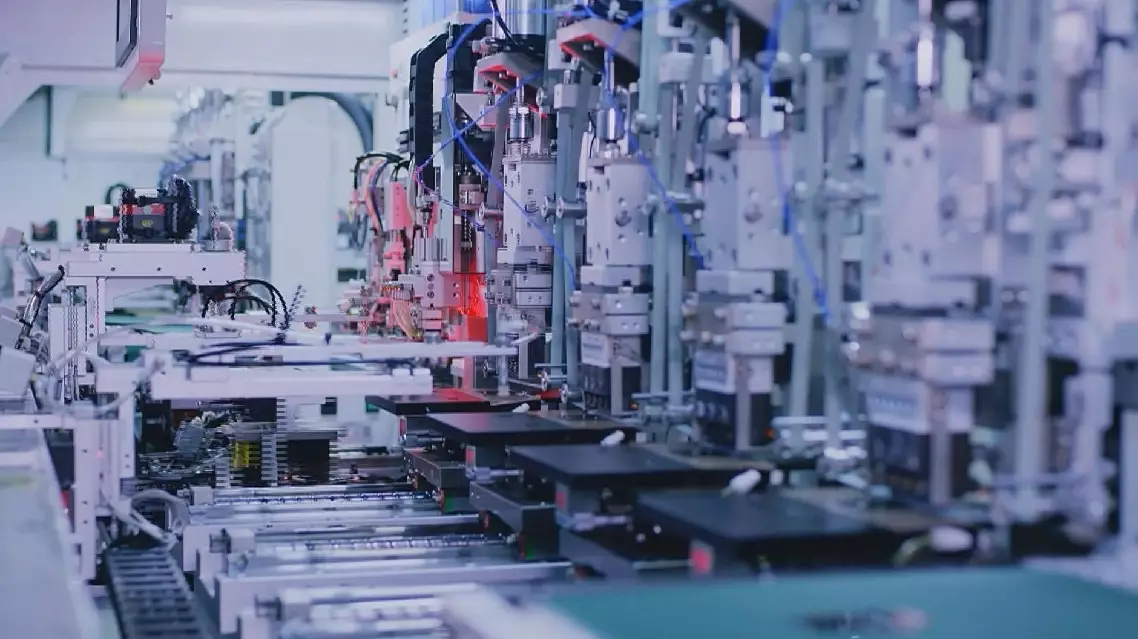
New growth drivers contribute more to China's industrial economy
Iranian Foreign Minister Seyed Abbas Araghchi said Thursday U.S. "economic terrorism" threatens global economy and the sovereignty of nations worldwide.
The remarks came after U.S. President Donald Trump announced on Wednesday "the most crushing economic operation ever taken" against any country providing a lifeline to Iran.
"This will be Economic Warfare and Isolation on an unprecedented scale," Trump posted on Truth Social, calling the move "an ECONOMIC D-DAY."
In response, Araghchi said on X that the so-called "Economic D-Day" is a diversion from Washington's own crisis: "unprecedented debt and surging interest costs."
"Doubling down on failed policies will only bring further defeat -- and enmity of Iranians. U.S. economic terrorism threatens global economy and sovereignty worldwide," he added.
On June 18, Iran and the United States signed a memorandum of understanding (MoU) on ending their war in the region on all fronts. Under the MoU, the two countries were scheduled to hold negotiations within a period of 60 days, which ended on Monday, to reach a final agreement. However, the fate of the talks remains unclear following an escalation between the two countries last month.
Washington's anti-Tehran "economic operation" comes as Iran is already under U.S. unilateral sanctions and naval blockade.
Iranian Deputy Foreign Minister for Legal and International Affairs Kazem Gharibabadi said Thursday that the United States is now further pressuring Iran under the label of an "economic war," which he views as an attempt to cover up Washington's previous failure.
Gharibabadi said in a social media post that while the United States claims Iran is "on the verge of collapse," it is reaching out to all its allies for help, Iran's official news agency IRNA reported.
To cover up its failure, the United States has to create an even bigger failure, Gharibabadi said, adding that the military war had failed to deliver results, and Washington was now calling the next defeat an "economic war."
Trump announced on social media Wednesday that the United States would launch "the most crushing economic operation ever taken against any country" against Iran.
Iran's Islamic Revolution Guard Corps (IRGC) has said the country will use more "devastating" weapons if a new war begins against it.
Following the 12-day and 40-day wars imposed against the country in June last year and late February by the United States and Israel, Iran has expanded its military capabilities, IRGC spokesperson Hossein Mohebbi said in an interview with Iran's Defa Press news agency, which was published on Thursday.
"If another war begins, our weapons will definitely be different ... in terms of the generation of missiles' warheads, as well as their precision and range," Mohebbi said.
The spokesperson emphasized that Iran has never stopped its armaments production, adding, "The destruction power of the warheads used in the IRGC's (new) missiles is far greater than the models used in the previous wars."
On Feb. 28, Israel and the United States launched joint attacks on Tehran and other Iranian cities, killing the country's then-Supreme Leader Ali Khamenei, military commanders and civilians. Iran responded with waves of missile and drone attacks targeting Israel and U.S. bases and assets in the region.
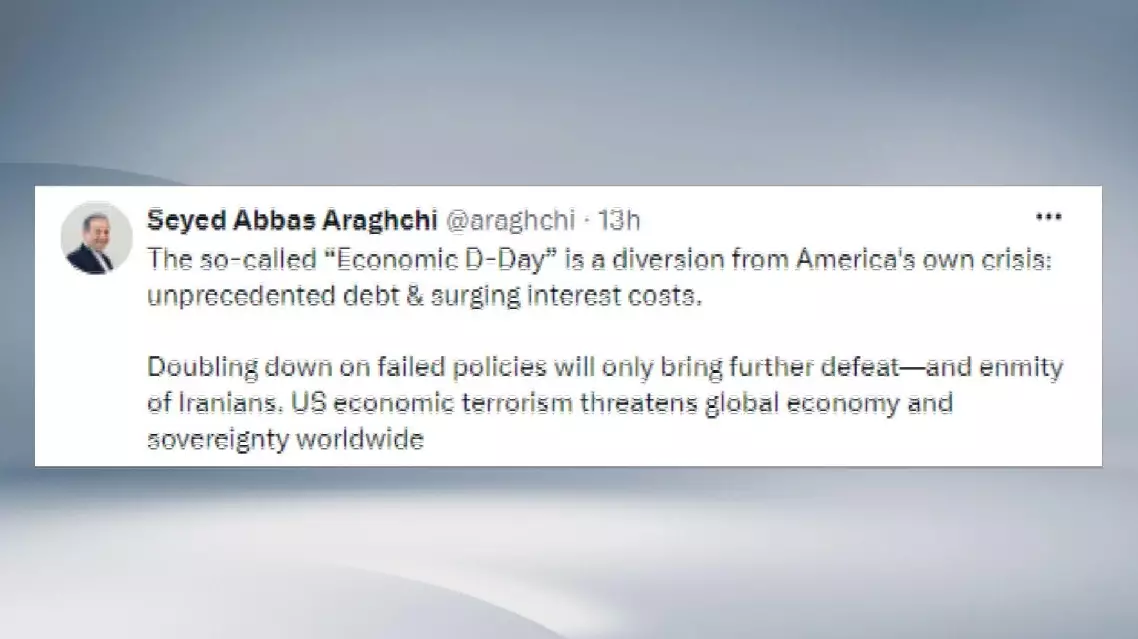
Iran's FM says U.S. "economic terrorism" threatens global economy, national sovereignty