President of the Republic of Korea (ROK) Lee Jae Myung met with Chinese Foreign Minister Wang Yi at the Blue House in Seoul on Thursday.
Lee said he was pleased to see the rapid improvement and development of current ROK-China relations, noting that bilateral trade and economic cooperation is growing strongly, and mutual visits between the two countries' citizens are expected to exceed 10 million this year. He added that the ROK public perception of China is steadily improving, and the people look forward to strengthening comprehensive cooperation with China.
Under the current international situation, Lee said, the ROK and China need each other in areas such as economy, trade, and security, emphasizing that strengthening strategic cooperation serves the fundamental interests of both countries and is important for maintaining regional peace and stability.
He called on the two countries to become mutually dependent and mutually complementary partners.
Lee said he looks forward to visiting China's Shenzhen City in November for the 2026 APEC Economic Leaders' Meeting, calling it an important opportunity to work with China to advance the ROK-China strategic cooperative partnership to a new level.
Noting that Lee has made the right choice of bringing China-ROK relations back to a normal track after taking office as president, Wang, also a member of the Political Bureau of the Communist Party of China Central Committee, said the fact that bilateral relations have recovered and made positive progress this year proves that a rational, pragmatic, and positive China policy fully serves the ROK's interests and meets the trend of the times.
Wang said China is an important force in safeguarding world peace, a prominent stabilizing factor in the world, and will become the world's largest market, underlining that China is willing to share development opportunities with all countries, especially neighboring ones.
Wang expressed the hope that the ROK will firmly pursue a friendly policy toward China. He said the two sides should take the 35th anniversary of the establishment of diplomatic relations between the two countries next year as an opportunity to make greater progress in the China-ROK strategic cooperative partnership and contribute to the development of both countries and regional peace and prosperity.
Wang said that as global economic fragmentation intensifies and trade protectionism rises, China and the ROK should play an exemplary role, complete the second phase of negotiations on the China-ROK Free Trade Agreement as soon as possible, and promote regional economic integration and inclusive economic globalization through concrete actions.
During his visit to the country, Wang also held talks with ROK Foreign Minister Cho Hyun and had a strategic dialogue with the ROK's top presidential national security advisor Wi Sung-lac.
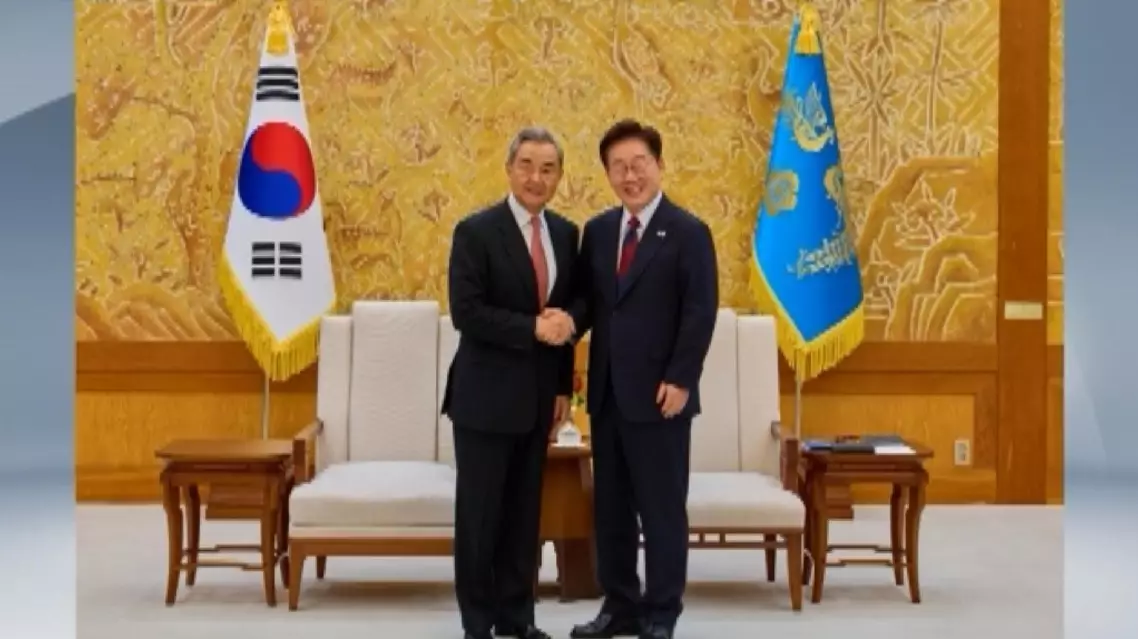
ROK president meets Chinese FM in Seoul
Iranian Foreign Minister Seyed Abbas Araghchi said Thursday U.S. "economic terrorism" threatens global economy and the sovereignty of nations worldwide.
The remarks came after U.S. President Donald Trump announced on Wednesday "the most crushing economic operation ever taken" against any country providing a lifeline to Iran.
"This will be Economic Warfare and Isolation on an unprecedented scale," Trump posted on Truth Social, calling the move "an ECONOMIC D-DAY."
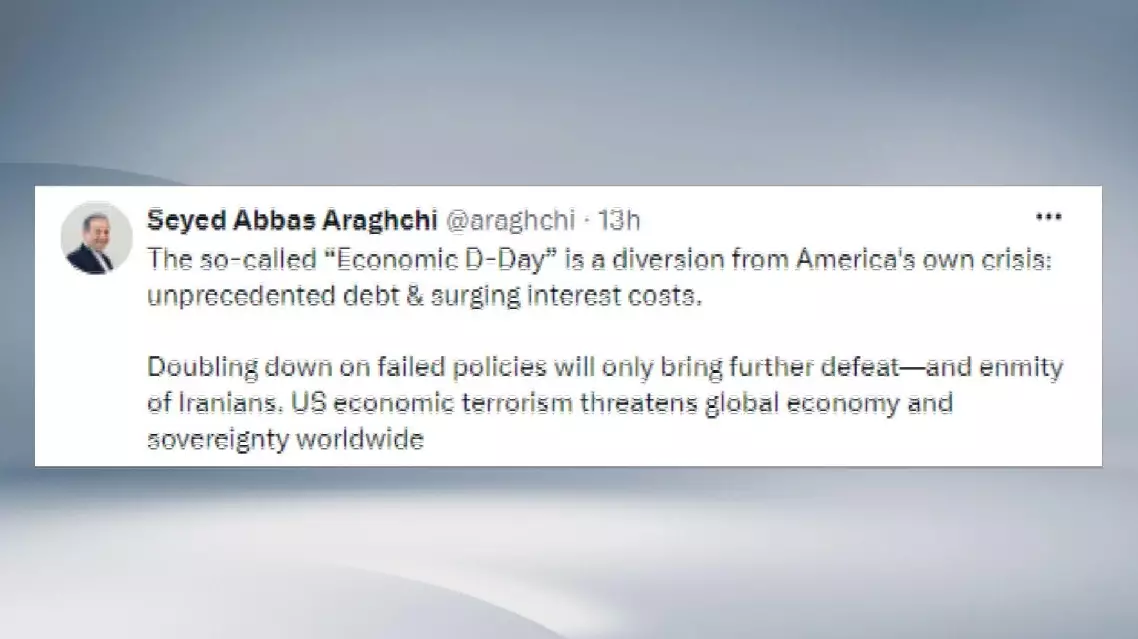
In response, Araghchi said on X that the so-called "Economic D-Day" is a diversion from Washington's own crisis: "unprecedented debt and surging interest costs."
"Doubling down on failed policies will only bring further defeat -- and enmity of Iranians. U.S. economic terrorism threatens global economy and sovereignty worldwide," he added.
On June 18, Iran and the United States signed a memorandum of understanding (MoU) on ending their war in the region on all fronts. Under the MoU, the two countries were scheduled to hold negotiations within a period of 60 days, which ended on Monday, to reach a final agreement. However, the fate of the talks remains unclear following an escalation between the two countries last month.
Washington's anti-Tehran "economic operation" comes as Iran is already under U.S. unilateral sanctions and naval blockade.
Iranian Deputy Foreign Minister for Legal and International Affairs Kazem Gharibabadi said Thursday that the United States is now further pressuring Iran under the label of an "economic war," which he views as an attempt to cover up Washington's previous failure.
Gharibabadi said in a social media post that while the United States claims Iran is "on the verge of collapse," it is reaching out to all its allies for help, Iran's official news agency IRNA reported.
To cover up its failure, the United States has to create an even bigger failure, Gharibabadi said, adding that the military war had failed to deliver results, and Washington was now calling the next defeat an "economic war."
Trump announced on social media Wednesday that the United States would launch "the most crushing economic operation ever taken against any country" against Iran.
Iran's Islamic Revolution Guard Corps (IRGC) has said the country will use more "devastating" weapons if a new war begins against it.
Following the 12-day and 40-day wars imposed against the country in June last year and late February by the United States and Israel, Iran has expanded its military capabilities, IRGC spokesperson Hossein Mohebbi said in an interview with Iran's Defa Press news agency, which was published on Thursday.
"If another war begins, our weapons will definitely be different ... in terms of the generation of missiles' warheads, as well as their precision and range," Mohebbi said.
The spokesperson emphasized that Iran has never stopped its armaments production, adding, "The destruction power of the warheads used in the IRGC's (new) missiles is far greater than the models used in the previous wars."
On Feb. 28, Israel and the United States launched joint attacks on Tehran and other Iranian cities, killing the country's then-Supreme Leader Ali Khamenei, military commanders and civilians. Iran responded with waves of missile and drone attacks targeting Israel and U.S. bases and assets in the region.
Iran's FM says U.S. "economic terrorism" threatens global economy, national sovereignty