The China National Offshore Oil Corporation (CNOOC) announced Sunday the successful float-over installation of the central processing platform for Phase I of the Kenli 10-2 oilfield cluster, a billion-ton-grade project in the Bohai Bay. The project set new regional records in terms of both size and weight of offshore platforms, bolstering production capacity at China's largest crude oil production base.
The Kenli 10-2 central processing platform is an eight-legged, three-tiered offshore structure standing 22.8 meters tall with a footprint equivalent to 15 standard basketball courts. Weighing over 20,000 metric tons, it is the largest and heaviest platform ever installed in the Bohai Bay.
Conventional cranes could not handle the platform's massive weight, so engineers opted for a float-over installation -- a technique akin to an Olympic weightlifter's "clean and jerk." The method leverages tidal forces to precisely lower the platform onto pre-installed jacket legs in the sea.
Shen Liang, project manager of the Kenli 10-2 Oilfield, highlighted the use of digital twin technology for 3D modeling and simulation to refine the installation plan.
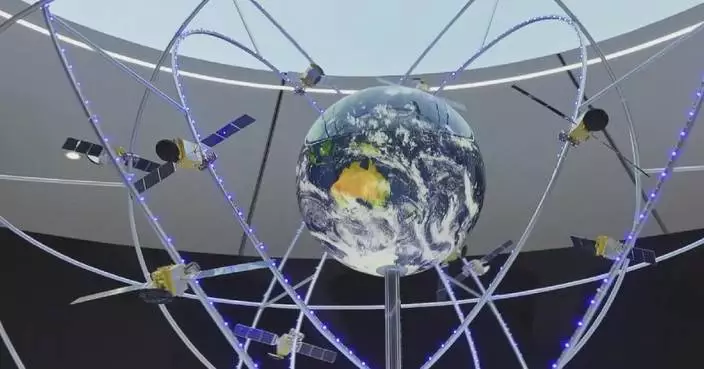
"The project team employed digital twin technology for 3D modeling and computational analysis, repeatedly optimizing the construction plan through simulation rehearsals. We equipped the main installation vessel, Haiyang Shiyou 228, with three Beidou positioning systems integrated with AI algorithms, while coordinating multiple tugboats to achieve precision installation at one go," he said.
The installation pushed engineering limits to unprecedented levels. The massive 20,000-ton platform caused the installation vessel to sit 12 meters deep in the water, while maintaining a perilously narrow 1.7-meter clearance between the ship's hull and underwater structures. In what engineers described as a maneuver comparable to docking a spacecraft with a space station in rough seas, the 200-meter-long vessel had to navigate through gaps of just 10 centimeters between the jacket legs -- a testament to the extraordinary precision required for this operation.
"We meticulously monitored sea conditions and installed multiple millimeter-grade anti-collision radars on the construction vessel. By applying self-developed new fender systems and pile-leg coupling buffers, we successfully controlled the docking precision between all eight pile tips and legs within five millimeters," said Ma Jinxiong, installation manager for the project.
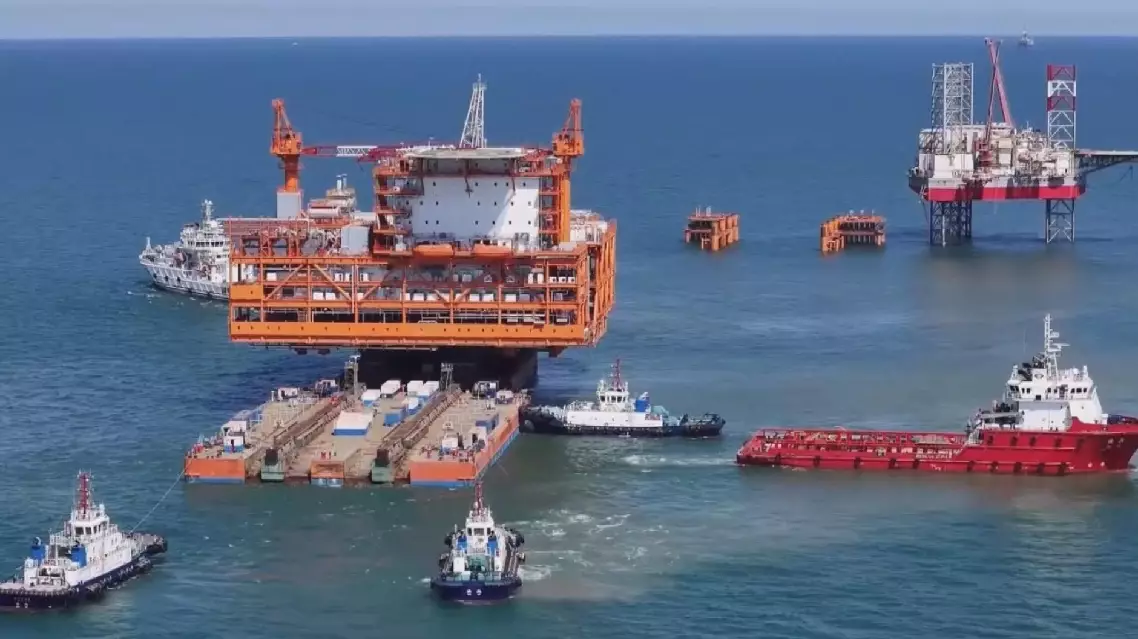
New central processing platform for Bohai offshore oilfield installed
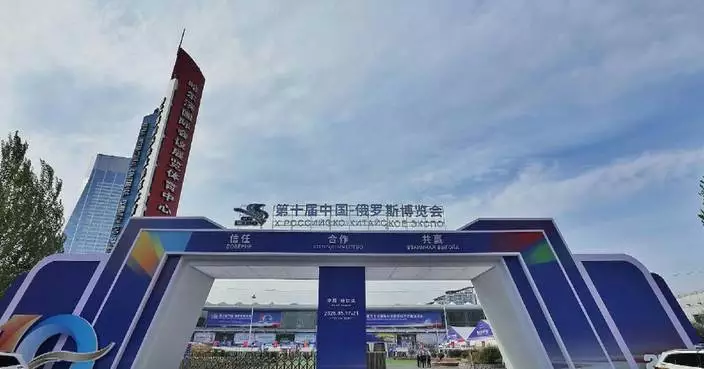
The 10th China-Russia Expo opened on Sunday in Harbin, the provincial capital of Heilongjiang in northeast China, highlighting the resilience, vitality and mutual benefits of China-Russia economic ties.
Held from May 17 to 21, this year's expo covers a floor space of 55,000 square meters, with more than 1,500 companies from 46 countries and regions taking part. Nearly 300 Russian companies are attending, while over 5,000 buyers are expected.
Since 2014, the event has attracted more than 7,200 Chinese and Russian companies and over a million visitors.
The China-Russia Expo is the largest comprehensive exhibition platform between the two countries.
President Xi Jinping and Russian President Vladimir Putin each sent congratulatory letters to the event, encouraging all sectors from both countries to seize the opportunity, make full use of their geographical proximity and economic complementarity, and further expand all-round practical cooperation.
"Leaders of the two countries have signed agreements to deepen practical cooperation, which we fully support. Russia and China stand side by side for common development, benefiting young people and all people. Such cooperation is timely and far-reaching. We are here in Harbin for the China-Russia Expo, coming from Russia's Sakha Republic. Our region is dominated by agriculture. We are seeking advanced farming technologies including irrigation equipment and harvesters. We hope to reach deals in the coming days to boost local development," said Vasiliy Petrovich Alexeev, head of Ust-Aidan Region of the Russian Federation.
"We are greatly inspired by the congratulatory letters from the heads of state of China and Russia. We will keep building targeted and efficient cooperation platforms, and smooth channels for sub-national exchanges between China and Russia," said Chen Shijun, president of Heilongjiang Council for the Promotion of International Trade.
China-Russia trade volume has surpassed 200 billion U.S. dollars for three consecutive years. China has been Russia's largest trading partner for 16 years running.
In the first quarter of this year, bilateral trade volume hit 60 billion U.S. dollars, a year-on-year increase of more than 14 percent.
This year's Expo features eight major exhibition zones. Beyond the exhibition halls, Russian delegations have also conducted field visits to Chinese companies. A delegation from the Republic of Buryatia visited one of northeast China's largest building materials distribution centers to explore potential areas of cooperation.
"Regular China-Russia economic and trade events continuously bring fresh cooperation opportunities for both sides. This field trip to Xilong Building Materials Market has helped us explore more practical directions and modes for bilateral cooperation," said Alexei Tsydenov, head of the Republic of Buryatia of the Russian Federation.
"Relying on Buryatia's abundant mineral resources and sound logistics conditions, we plan to build industrial parks focusing on home building materials, mineral resources and energy sectors in Russia. We will introduce advanced Chinese technologies and management models to drive coordinated industrial upgrading between the two countries," said Wu Jinrong, vice president of Harbin Xilong International Trade and Logistics Park.
From everyday consumer goods to advanced helicopters, and from mineral resources to intelligent robotics, China-Russia cooperation now spans a wide range of sectors. Economic ties and people-to-people exchanges between the two countries continue to advance toward higher-quality development and broader prospects.
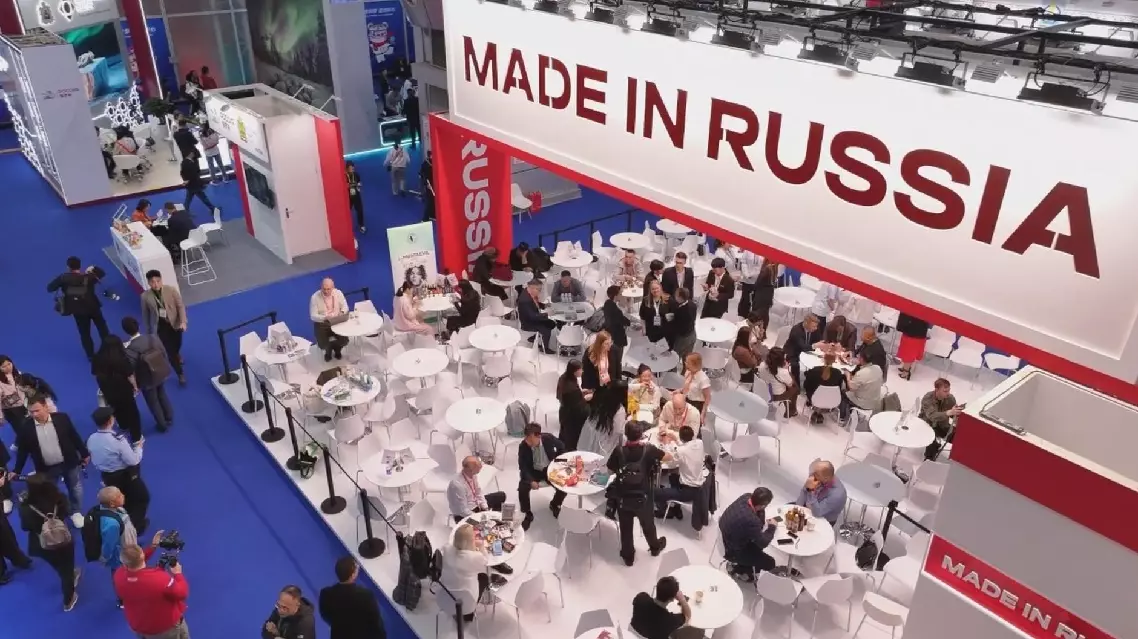
China-Russia Expo promotes trust, cooperation, mutual benefit