
Skip to Content Facebook Feature Image

US Open '25: Decades ago under dark of night, Oakmont began removing trees and started a golf trend

Sport

US Open '25: Decades ago under dark of night, Oakmont began removing trees and started a golf trend
Sport

Sport

US Open '25: Decades ago under dark of night, Oakmont began removing trees and started a golf trend

2025-06-09 18:00 Last Updated At:18:21

Last month, Scottie Scheffler made mention of a trend in golf design that rubs him wrong — removing trees from courses.

This week, the world's best player and favorite to win the U.S. Open will play a course that did just that, but didn't become one bit easier the way some layouts do when the trees go away. Under the dark of night three decades ago, the people in charge of Oakmont Country Club started cutting down trees. They didn’t stop until some 15,000 had been removed.

More Images
FILE - Johnny Miller, of Hilton Head Island S.C., who started his final Open round Sunday, June 17, 1973 six strokes behind the leaders and 3-over par 216, takes over fourth round lead with a charging 5-under par by birdie on the 15th, where he raises his hand after sinking the putt in Oakmont, Pa. (AP Photo, file)
FILE - Johnny Miller, of Hilton Head Island S.C., who started his final Open round Sunday, June 17, 1973 six strokes behind the leaders and 3-over par 216, takes over fourth round lead with a charging 5-under par by birdie on the 15th, where he raises his hand after sinking the putt in Oakmont, Pa. (AP Photo, file)

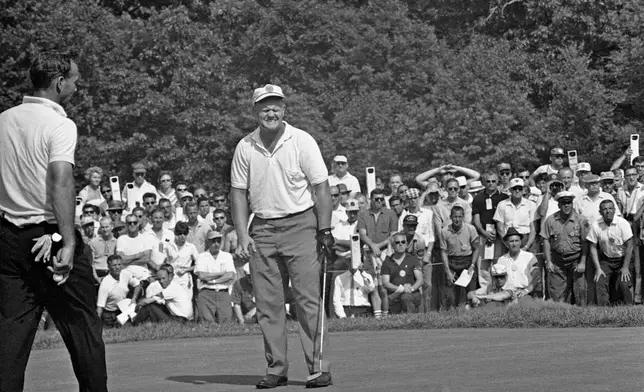
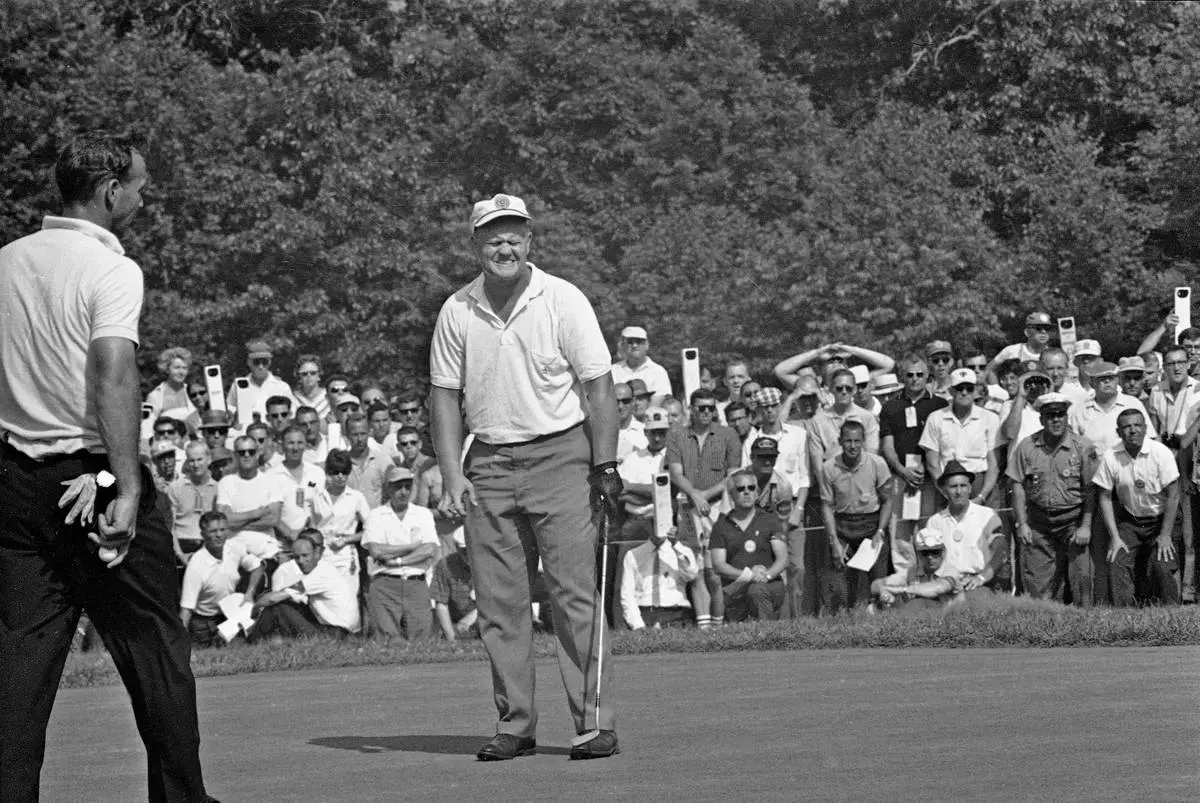
FILE - Jack Nicklaus reacts on the first green during the playoff for the National Open Golf Tournament in Oakmont, Penn., June 17, 1962, against Arnold Palmer. (AP Photo/Preston Stroup, file)
FILE - Jack Nicklaus reacts on the first green during the playoff for the National Open Golf Tournament in Oakmont, Penn., June 17, 1962, against Arnold Palmer. (AP Photo/Preston Stroup, file)

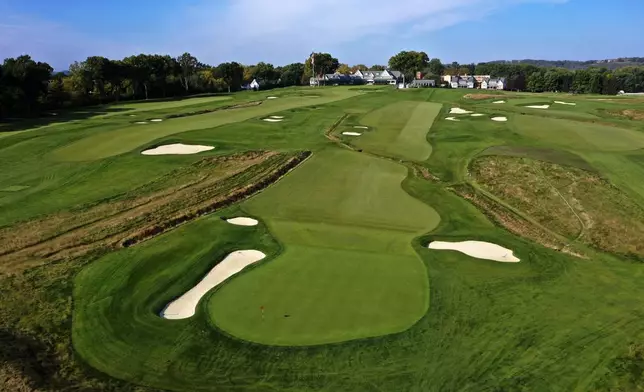
FILE - This is the tenth green at Oakmont Country Club in Oakmont, Pa., Monday, Sept. 16, 2024, the course for the 2025 U.S. Open golf tournament. (AP Photo/Gene J. Puskar, File)
FILE - This is the tenth green at Oakmont Country Club in Oakmont, Pa., Monday, Sept. 16, 2024, the course for the 2025 U.S. Open golf tournament. (AP Photo/Gene J. Puskar, File)

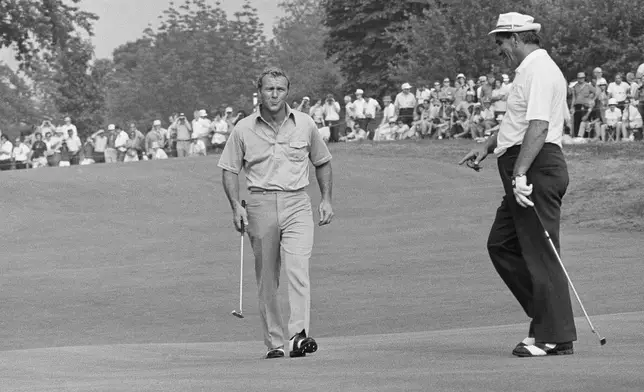
FILE - Arnold Palmer, left, swings his club as he and Julius Boros walk on to green at Oakmont Country Club at Oakmont, Penn., where they were in a four-way tie for the lead in the end of third round of the U.S. Open Golf Championship, June 16, 1973. Palmer, Boros, Jerry Hear and John Schlee all had 3 under 210. (AP Photo/File)

FILE - Arnold Palmer, left, swings his club as he and Julius Boros walk on to green at Oakmont Country Club at Oakmont, Penn., where they were in a four-way tie for the lead in the end of third round of the U.S. Open Golf Championship, June 16, 1973. Palmer, Boros, Jerry Hear and John Schlee all had 3 under 210. (AP Photo/File)

FILE - This is an overall photo of Oakmont Country Club in Oakmont, Pa., Monday, Sept. 16, 2024, the course for the 2025 U.S. Open golf tournament. (AP Photo/Gene J. Puskar, File)

FILE - This is an overall photo of Oakmont Country Club in Oakmont, Pa., Monday, Sept. 16, 2024, the course for the 2025 U.S. Open golf tournament. (AP Photo/Gene J. Puskar, File)

The project reimagined one of America’s foremost golf cathedrals and started a trend of tree cutting that continues to this day.

While playing a round on YouTube with influencer Grant Horvat, Scheffler argued that modern pro golf — at least at most stops on the PGA Tour — has devolved into a monotonous cycle of “bomb and gouge”: Hit drive as far as possible, then gouge the ball out of the rough from a shorter distance if the tee shot is off line.

“They take out all the trees and they make the greens bigger and they typically make the fairways a little bigger, as well,” Scheffler said. “And so, the only barrier to guys just trying to hit it as far as they want to or need to, it’s trees.”

Scheffler and the rest in the 156-man field that tees off Thursday should be so lucky.

While the latest Oakmont renovation, in 2023, did make greens bigger, fairways are never wide at the U.S. Open and they won’t be this week.

Tree-lined or not, Oakmont has a reputation as possibly the toughest of all the U.S. Open (or any American) courses, which helps explain why it is embarking on its record 10th time hosting it. In the two Opens held there since the tree-removal project was completed, the deep bunkers, serpentine drainage ditches and lightning-fast greens have produced winning scores of 5-over par (Angel Cabrera in 2007) and 4 under (Dustin Johnson in 2016).

In an ironic twist that eventually led to where we (and Oakmont) are today, the layout was completely lined with trees in 1973 when Johnny Miller shot 63 on Sunday to win the U.S. Open. That record stood for 50 years, and the USGA followed up with a course setup so tough in 1974 that it became known as “The Massacre at Winged Foot” -- won by Hale Irwin with a score of 7-over par.

“Everybody was telling me it was my fault,” Miller said in a look back at the ’74 Open with Golf Digest. “It was like a backhanded compliment. The USGA denied it, but years later, it started leaking out that it was in response to what I did at Oakmont. Oakmont was supposed to be the hardest course in America.”

It might still be.

In a precursor to what could come this week, Rory McIlroy and Adam Scott played practice rounds last Monday in which McIlroy said he made a 7 on the par-4 second and Scott said he hit every fairway on the front nine and still shot 3 over.

While Oakmont leaned into tree removal, there are others who aren’t as enthused.

Jack Nicklaus, who added trees to the 13th hole at Muirfield Village after seeing players fly a fairway bunker on the left for a clear look at the green, said he’s OK with tree removal “if they take them down for a reason.”

“Why take a beautiful, gorgeous tree down?” he said. “Like Oakmont, for example. What’s the name of it? Oak. Mont. What’s that mean? Oaks on a mountain, sort of. And then they take them all down. I don’t like it.”

A lot of Oakmont’s members weren’t fans, either, which is why this project began under dark of night. The golf course in the 1990s was barely recognizable when set against pictures taken shortly after it opened in 1903.

Architect Henry Fownes had set out to build a links-style course. Dampening the noise and view of the Pennsylvania Turnpike, which bisects the layout, was one reason thousands of trees were planted in the 1960s and ’70s.

“We were finding that those little trees had all grown up and they were now hanging over some bunkers,” R. Banks-Smith, the chairman of Oakmont’s grounds committee when the project began, said in a 2007 interview. “And once you put a tree on either side of a bunker, you lose your bunker. So, you have to make a decision. Do you want bunkers or do you want trees?”

Oakmont went with bunkers – its renowned Church Pew Bunker between the third and fourth fairways might be the most famous in the world – and thus began a tree project that divides people as much today as it did when it started.

“I’m not always the biggest fan of mass tree removal,” Scott said. “I feel a lot of courses that aren’t links courses get framed nicely with trees, not like you’re opening it up to go play way over there.”

Too many trees, though, can pose risks.

Overgrown tree roots and too much shade provide competition for the tender grasses beneath. They hog up oxygen and sunlight and make the turf hard to maintain. They overhang fairways and bunkers and turn some shots envisioned by course architects into something completely different.

They also can be downright dangerous. In 2023 during the second round of the Masters, strong winds toppled three towering pine trees on the 17th hole, luckily missing fans who were there watching the action.

“There are lots of benefits that trees provide, but only in the right place,” said John Fech, the certified arborist at University of Nebraska who consults with the Golf Course Superintendents Association of America.

When Oakmont decided they didn’t want them at all, many great courses followed. Winged Foot, Medinah, Baltusrol and Merion are among those that have undergone removal programs.

Five years ago, Bryson DeChambeau overpowered Winged Foot, which had removed about 300 trees, simply by hitting the ball as far as he could, then taking his chances from the rough.

It’s the sort of golf Scheffler seems to be growing tired of: “When you host a championship tournament, if there’s no trees, you just hit it wherever you want, because if I miss a fairway by 10 yards, I’m in the thick rough (but) if I miss by 20, I’m in the crowd," Scheffler told Horvat.

How well that critique applies to Oakmont will be seen this week.

AP Golf Writer Doug Ferguson contributed.

AP golf: https://apnews.com/hub/golf

FILE - Johnny Miller, of Hilton Head Island S.C., who started his final Open round Sunday, June 17, 1973 six strokes behind the leaders and 3-over par 216, takes over fourth round lead with a charging 5-under par by birdie on the 15th, where he raises his hand after sinking the putt in Oakmont, Pa. (AP Photo, file)
FILE - Johnny Miller, of Hilton Head Island S.C., who started his final Open round Sunday, June 17, 1973 six strokes behind the leaders and 3-over par 216, takes over fourth round lead with a charging 5-under par by birdie on the 15th, where he raises his hand after sinking the putt in Oakmont, Pa. (AP Photo, file)

FILE - Jack Nicklaus reacts on the first green during the playoff for the National Open Golf Tournament in Oakmont, Penn., June 17, 1962, against Arnold Palmer. (AP Photo/Preston Stroup, file)
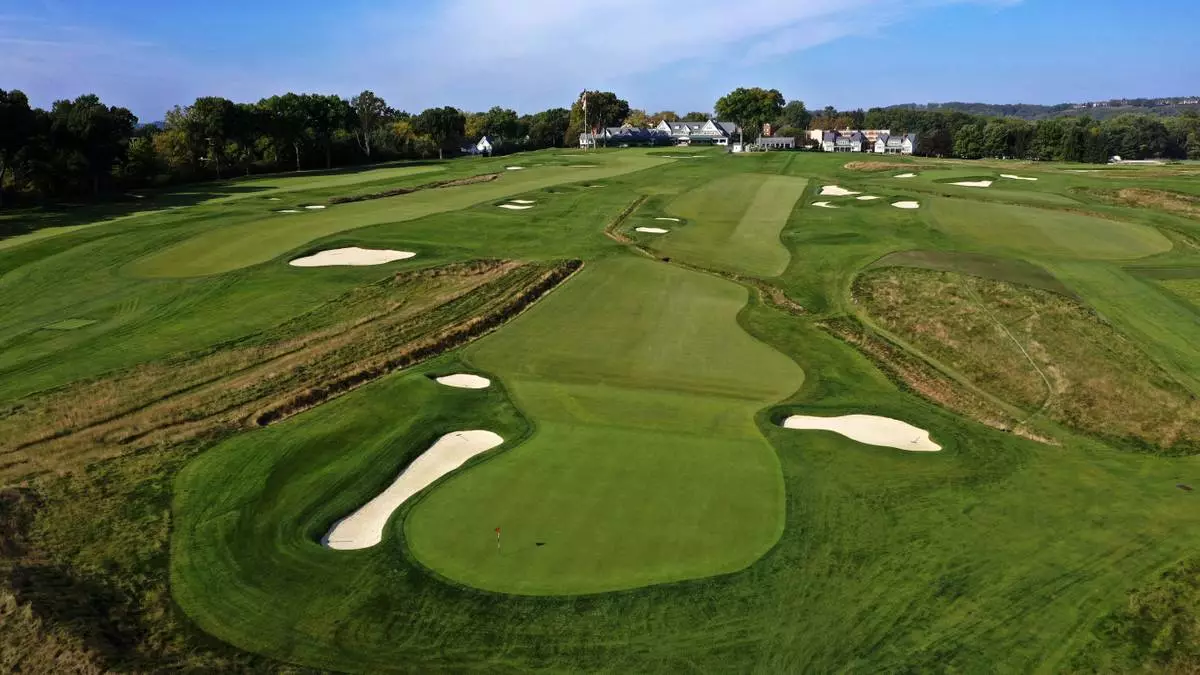
FILE - Jack Nicklaus reacts on the first green during the playoff for the National Open Golf Tournament in Oakmont, Penn., June 17, 1962, against Arnold Palmer. (AP Photo/Preston Stroup, file)

FILE - This is the tenth green at Oakmont Country Club in Oakmont, Pa., Monday, Sept. 16, 2024, the course for the 2025 U.S. Open golf tournament. (AP Photo/Gene J. Puskar, File)
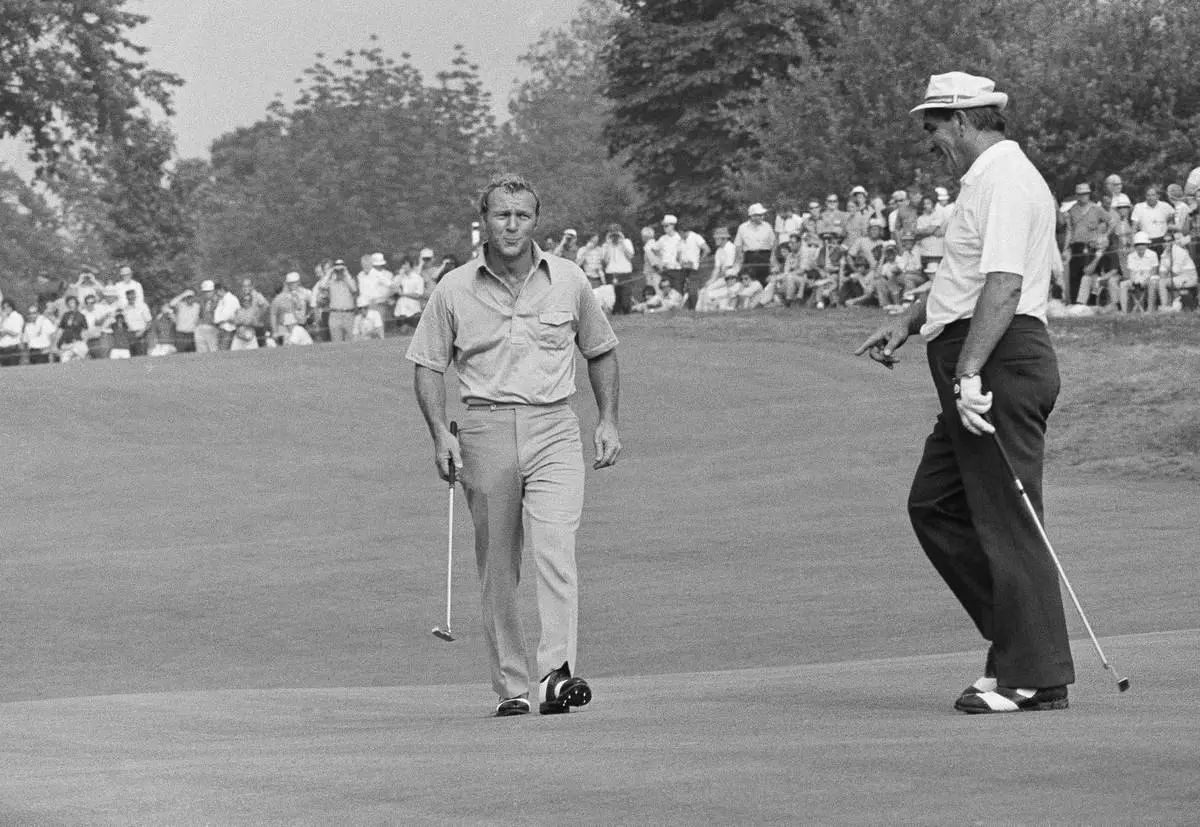
FILE - This is the tenth green at Oakmont Country Club in Oakmont, Pa., Monday, Sept. 16, 2024, the course for the 2025 U.S. Open golf tournament. (AP Photo/Gene J. Puskar, File)

FILE - Arnold Palmer, left, swings his club as he and Julius Boros walk on to green at Oakmont Country Club at Oakmont, Penn., where they were in a four-way tie for the lead in the end of third round of the U.S. Open Golf Championship, June 16, 1973. Palmer, Boros, Jerry Hear and John Schlee all had 3 under 210. (AP Photo/File)

FILE - Arnold Palmer, left, swings his club as he and Julius Boros walk on to green at Oakmont Country Club at Oakmont, Penn., where they were in a four-way tie for the lead in the end of third round of the U.S. Open Golf Championship, June 16, 1973. Palmer, Boros, Jerry Hear and John Schlee all had 3 under 210. (AP Photo/File)

FILE - This is an overall photo of Oakmont Country Club in Oakmont, Pa., Monday, Sept. 16, 2024, the course for the 2025 U.S. Open golf tournament. (AP Photo/Gene J. Puskar, File)


FILE - This is an overall photo of Oakmont Country Club in Oakmont, Pa., Monday, Sept. 16, 2024, the course for the 2025 U.S. Open golf tournament. (AP Photo/Gene J. Puskar, File)

INDIANAPOLIS (AP) — Indiana's Republican-led senate voted against a redrawn congressional map Thursday that would have favored their party in the 2026 elections, despite months of pressure by President Donald Trump for a rare mid-cycle redistricting.

Twenty-one senators from the Republican supermajority and all 10 of the chamber’s Democrats voted down the redistricting proposal. Trump has urged GOP-led states to gerrymander their U.S. house districts ahead of the midterms to create more winnable seats for Republicans. It's an unusual move, since the district boundaries are usually adjusted based on the census every 10 year.

Ahead of the vote, Trump again criticized Indiana senators who resisted the plan, repeating his vow to back primary challengers against them.

“If Republicans will not do what is necessary to save our Country, they will eventually lose everything to the Democrats,” Trump wrote on social media. Some Indiana lawmakers have also received violent threats during the debate over the last month. Half of the state Senate is up for reelection in 2026.

Democratic state senators spoke against the redistricting legislation one by one during Thursday's session.

“Competition is healthy my friends,” said Sen. Fady Qaddoura. “Any political party on earth that cannot run and win based on the merits of its ideas is unworthy of governing.”

Outside the state Senate chamber, redistricting opponents chanted “Vote no!” and “Fair maps!” while holding signs with slogans like “Losers cheat.”

The proposed map was designed to give Republicans control of all nine of Indiana’s congressional seats, up from the seven they currently hold. It would effectively erase Indiana’s two Democrat-held districts by splitting Indianapolis into four districts that extend into rural areas, reshaping U.S. Rep. André Carson’s safe district in the city. It would also eliminate the northwest Indiana district held by U.S. Rep. Frank Mrvan.

Despite Trump’s push, support for gerrymandering in Indiana’s Senate was uncertain. A dozen of the 50 state senators had not publicly committed to a stance ahead of the vote.

Republican Sen. Greg Goode, previously undecided, signaled his displeasure with the redistricting plan. In firmly delivered remarks, he said some of his constituents objected to seeing their county split up or paired with Indianapolis. He expressed “love” for Trump but criticized what he called “over-the-top pressure” from inside and outside the state.

Sen. Michael Young, another Republican, said the stakes in Congress justify redistricting, as Democrats are only a few seats away from flipping control of the U.S. House in 2026. “I know this election is going to be very close,” he said.

Republican Sen. Mike Gaskill, the redistricting legislation's sponsor, showed Senators maps of congressional districts around the country, including several focused on Democratic-held seats in New England and Illinois. He argued other states gerrymander and Indiana Republicans should play by the same rules.

Nationally, mid-cycle redistricting so far has resulted in nine more congressional seats that Republicans believe they can win and six more congressional seats that Democrats think they can win. However, redistricting is being litigated in several states.

Texas, Missouri, Ohio and North Carolina quickly enacted new GOP-favorable maps, while California voters approved a new congressional map favorable to Democrats in response to Texas. In Utah, a judge imposed new districts that could allow Democrats to win a seat, saying Republican lawmakers violated voter-backed standards against gerrymandering.

The bill cleared its first hurdle Monday with a 6-3 Senate committee vote, although one Republican joined Democrats in opposing it and a few others signaled they might vote against the final version. The state House passed the proposal last week, with 12 Republicans siding with Democrats in opposition.

Among them was state Rep. Ed Clere, who said state troopers responded to a hoax message claiming a pipe bomb outside his home Wednesday evening. Indiana state police said “numerous others” received threats but wouldn't offer details about an ongoing investigation.

In an interview, Clere said these threats were the inevitable result of Trump’s pressure campaign and a “winner-take-all mentality.”

“Words have consequences,” Clere said.

The White House has mounted an aggressive lobbying push. Vice President JD Vance met twice with Indiana Senate GOP leaders, including the full caucus in October, and senators also visited him in Washington.

Trump joined a conference call with senators on Oct. 17 to make his own 15-minute pitch. State Sen. Andy Zay said White House political aides stayed in frequent contact for more than a month, even after he backed the bill, urging him to publicly support it and track developments among colleagues as part of a “full-court press.”

Volmert reported from Lansing, Michigan. Associated Press writer Tom Beaumont in Des Moines, Iowa, contributed.

Nancy Kohn, of Indianapolis, hold signs outside the Indiana Senate chamber before a vote to redistrict the state's congressional map at the Statehouse in Indianapolis, Thursday, Dec. 11, 2025. (AP Photo/Michael Conroy)

Nancy Kohn, of Indianapolis, hold signs outside the Indiana Senate chamber before a vote to redistrict the state's congressional map at the Statehouse in Indianapolis, Thursday, Dec. 11, 2025. (AP Photo/Michael Conroy)

Protestors hold signs outside the Indiana Senate chamber before a vote to redistrict the state's congressional map at the Statehouse in Indianapolis, Thursday, Dec. 11, 2025. (AP Photo/Michael Conroy)

Protestors hold signs outside the Indiana Senate chamber before a vote to redistrict the state's congressional map at the Statehouse in Indianapolis, Thursday, Dec. 11, 2025. (AP Photo/Michael Conroy)

Recommended Articles