WASHINGTON (AP) — U.S. inflation picked up a bit last month as higher prices for groceries and some imported goods were largely offset by cheaper gas, travel services, and rents.
Consumer prices increased 2.4% in May compared with a year ago, according to a Labor Department report released Wednesday. That is up from a 2.3% yearly increase in April. Excluding the volatile food and energy categories, core prices rose 2.8% for the third straight month. Economists pay close attention to core prices because they generally provide a better sense of where inflation is headed.
The cost of groceries, toys and games, and large appliances rose, which could reflect the impact of President Donald Trump's tariffs. Yet the price of new and used cars, clothes, air fares, and hotel rooms all dropped from April to May.
On a monthly basis, overall prices ticked up just 0.1% from April to May, down from 0.2% the previous month, with inflationary pressures appearing muted. Core prices also dropped to 0.1% from 0.2%.
The data showed that Trump's tariffs haven't yet pushed overall prices higher, suggesting many companies may be absorbing the cost of the higher duties for now. Yet many economists expect the import taxes to modestly increase inflation in the second half of the year. Companies ranging from Walmart to Lululemon to J.M. Smucker have said they will raise prices in the coming months to offset the impact of tariffs.
“You can point to seeing tariffs in this report, but the more important message is that you’re seeing inflation soften enough elsewhere that overall, price pressures continue to subside for the U.S. consumer,” Sarah House, an economist at Wells Fargo, said.
But offsetting price drops for things like cars and air fares may not continue at the same pace for the rest of this year, she said.
“I don’t think this report signals an all clear -- that tariffs are not going to be a concern for the inflation picture,” House said.
The figures also show that core inflation remains stubbornly above the Federal Reserve’s 2% target, which makes it less likely that the central bank will cut its key short-term interest rate. Trump has repeatedly urged the central bank to reduce borrowing costs.
Grocery prices rose 0.3% from April to May, and are up 2.2% in the past year. Fruits and vegetables, breakfast cereals, and frozen foods all rose last month. Egg costs fell 2.7%, though they are still more than 40% more expensive than a year ago. Gas prices dropped 2.6% last month.
Marilyn Kirschner, editor of an online fashion magazine, was shopping for toothpaste Tuesday at Gristedes in lower Manhattan. She’s surprised every day by high prices for items like Swiffer refills, which she said recently cost her $30.
“You go into the store and it’s like, wait a minute, how can this be?” Kirschner said. “Every single thing. It’s sticker shock at this point. It’s scary, with rent and everything.”
Peter Manning, a software engineer, bought a loaf of French bread and milk at Gristedes in his lower Manhattan neighborhood. He’s been noticing high yogurt prices, at $8 or $9, and butter for $11.
“When we go out to the suburbs we shop there, because it’s a little cheaper,” Manning said. “I’m sure everything’s going to probably go up. It takes a long time ... I tell my friends, this economy, we’re watching a slow-motion train wreck.”
Last week, the Labor Department’s Bureau of Labor Statistics, which compiles inflation data, said it is reducing the amount of data it collects for each inflation report. Economists have expressed concern about the cutback. Still, less data could make inflation reports more volatile.
Nearly all economists expect Trump's duties will make many things more expensive this year, including cars and groceries, though by how much is still uncertain. Trump said Wednesday the U.S. will place 55% tariffs on all imports from China, up from the previous level of 30%. He has also imposed a 10% baseline tariff on imported goods from every other country, and 50% import taxes on steel and aluminum.
There are several reasons it can take months for the tariffs to be felt by consumers.
To begin with, many companies tried to beat the clock by bringing in foreign goods before Trump’s tariffs took effect, producing a flood of imports in March. They have stockpiled goods that weren’t hit by tariffs in warehouses, delaying price increases for customers.
Some also held off on hiking prices during the chaos of April and May, when Trump announced sweeping tariffs on imports from nearly 60 countries, only to put them on hold a week later.
Kim Vaccarella, founder and CEO of Bogg Bag, a line of sturdy, washable handbags, said she had resisted raising prices even though all her products are manufactured in China. She stocked up on inventory in the spring, before the tariffs went into effect, and stopped importing when tariffs on China were at 145%.
The Seacaucus, N.J., company employs about 80 people and did $100 million in business in 2024.
Vaccarella plans to raise prices in July, with the original Bogg bag going from $90 to $95 and the “Baby” bag increasing from $70 to $75.
The increase isn’t enough to fully cover the higher tariffs. She hopes not to raise prices any further, but said that it's hard to predict.
“We’ve forecasted, and reforecasted, and reforecasted again,” she said. “We just need to get a handle of what will ultimately be the price we have to pay.”
Bryan Eshelman, a partner and managing director at consulting firm AlixPartners, said higher prices “are coming.”
Eshelman says Americans will start feeling the impact in July, and predicts prices for back-to-school items like clothing and backpacks could go up anywhere from 5% to 15%.
The impact is just starting to hit U.S. food producers, some of which have already passed along higher prices to customers. The J.M. Smucker Co., which raised the price for its coffee in May, said Tuesday that it will raise those prices again in August.
CEO Mark Smucker said that “the current US tariff impact on green coffee is our largest exposure.” The company’s shares tumbled 17% Tuesday.
J.M. Smucker imports 500 million pounds of green coffee annually, mostly from Brazil and Vietnam, which currently face the 10% universal tariff Trump imposed in April. But the two countries could face much higher tariffs when the pause on the so-called “reciprocal” tariffs ends in July.
Most imported goods are actually parts or raw materials for larger products, such as the steel and aluminum goods now facing 50% duties. It will take time for those costs to filter through the supply chain and affect prices. But the sting would likely be broad, from grocery aisles to car lots.
AP Business Writer Cathy Bussewitz contributed to this report from New York City.
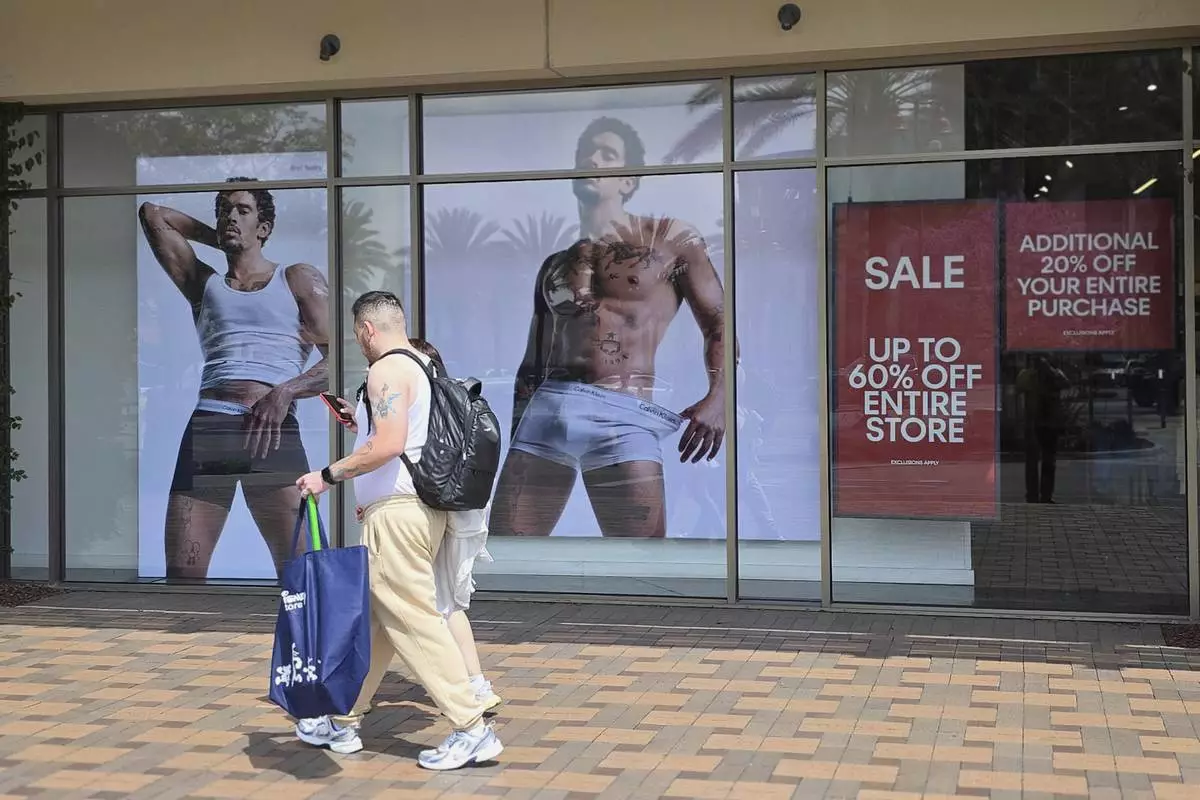
FILE - Shoppers walks past a Calvin Klein store at Citadel Outlets in Commerce, Calif., April 14, 2025. (AP PhotoDamian Dovarganes, file)