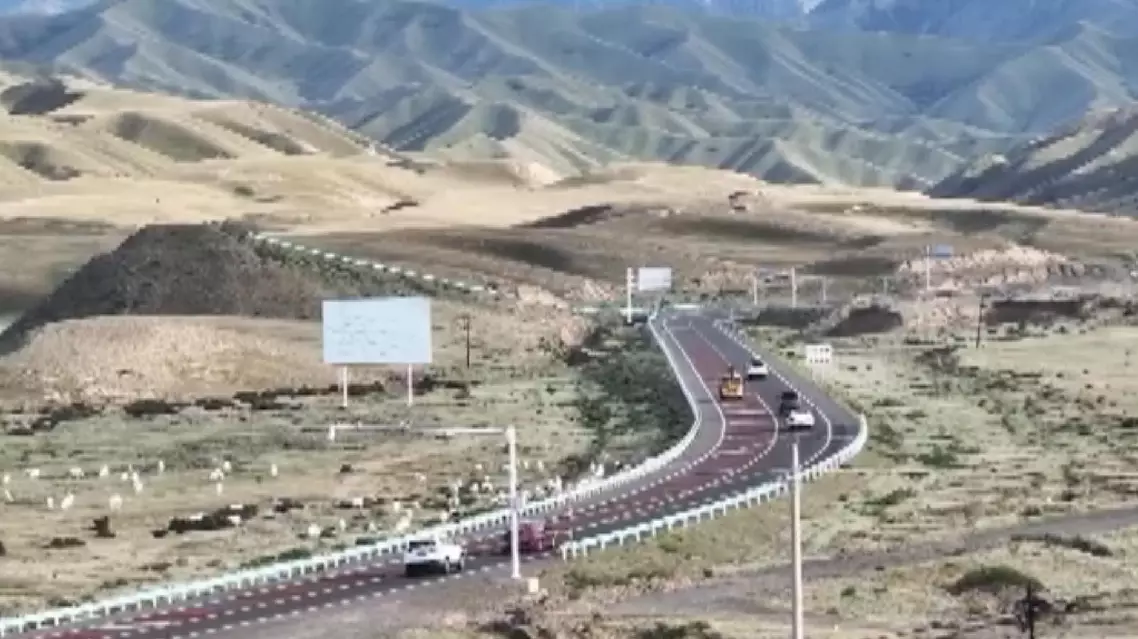
The Duku Highway in northwest China's Xinjiang Uygur Autonomous Region, renowned as one of China's most scenic roads, has attracted a surge of self-drive tourists eager to experience its breathtaking landscapes.
The 561-kilometer highway opened to traffic on May 31 following its seasonal closure of eight months. It was the road's earliest seasonal reopening in five years.
As part of National Highway G217, the road stretches from Dushanzi district in the northern area of the Xinjiang and Kuqa County in the south.
Traversing the Tianshan Mountains, with half of its route at altitudes exceeding 2,000 meters, the highway offers a stunning view of diverse landscapes and connects many famous scenic spots.
To enhance the visitor experience, parking areas have been established along the highway in Nilka County, allowing tourists to pause and admire the scenery. Guesthouses have also been built along the route to accommodate overnight stays.
A township government has provided free building materials for over 100 Kazakh yurts to more than 50 households to establish pastoral homestays.
Muhetar, a local herder, prepared his yurt homestay well in advance of the highway's reopening. Liu Ping, a tourist from south China's Guangdong Province, became one of Muhetar's first guests this year, enjoying a traditional meal of hand-pulled meat and rice pilaf.
"The local herdsmen were very hospitable. And the food they cooked today was just to our taste. We just wanted to experience the flavor of mutton on the grassland. We had it today and were very satisfied," Liu said.
Originally opened in 1983, the Duku Highway shortened the journey between northern and southern Xinjiang by nearly half. However, due to the challenging mountainous terrain and weather conditions, it remains open for only about four months each year.
Xinjiang's scenic Duku highway reopens, attracting self-drive tourists