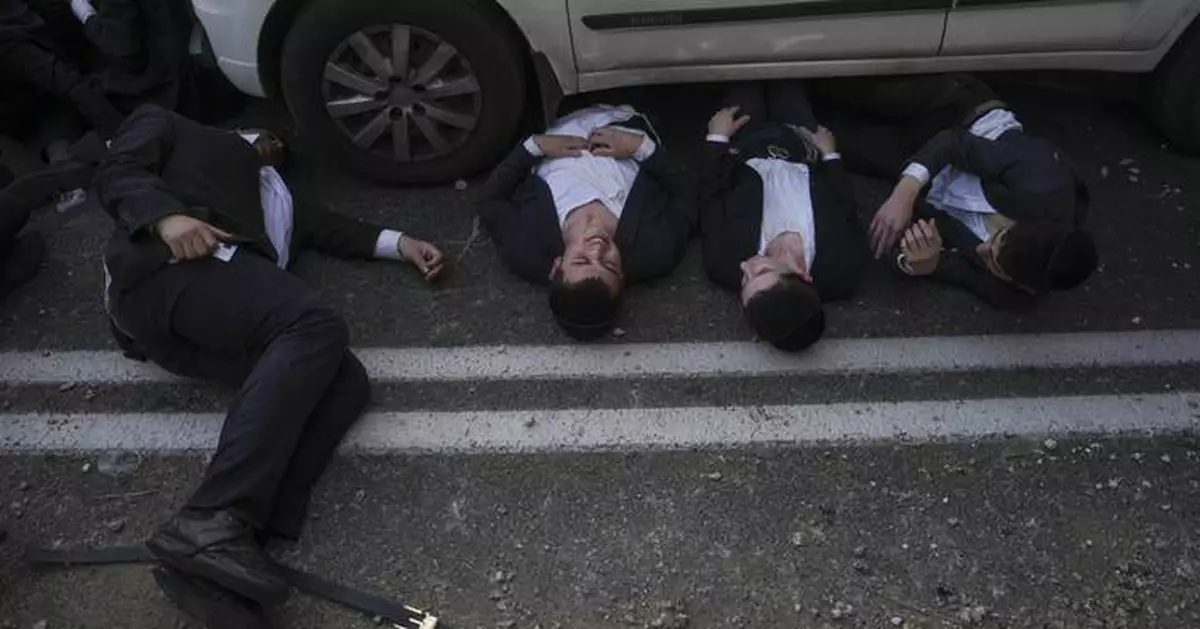
JERUSALEM (AP) — The deadliest attack in Israel’s history happened on Prime Minister Benjamin Netanyahu's watch. The country's economy is struggling under the weight of the ongoing war in Gaza. And Netanyahu is on trial for corruption.
Yet a far more obscure issue is posing the greatest test to Netanyahu's lengthy rule: the draft of young ultra-Orthodox men to the military.
Click to Gallery
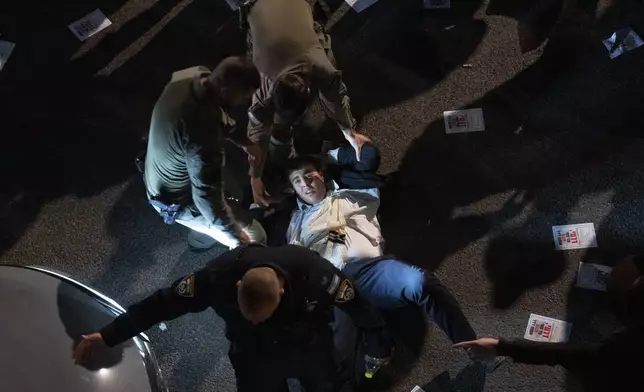
FILE - Israeli police officers disperse ultra-Orthodox Jewish men blocking a highway during a protest against army recruitment in Bnei Brak, Israel, on Jan. 9, 2025. (AP Photo/Oded Balilty, File)
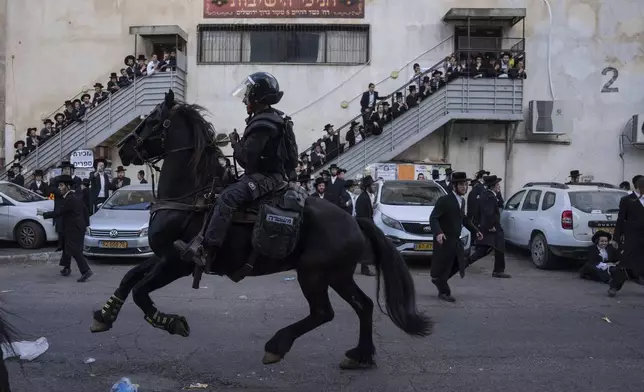
FILE - Israeli police officers scuffle with ultra-Orthodox Jewish men during a protest against a potential new draft law in Jerusalem, Oct. 31, 2024. (AP Photo/Ohad Zwigenberg, File)
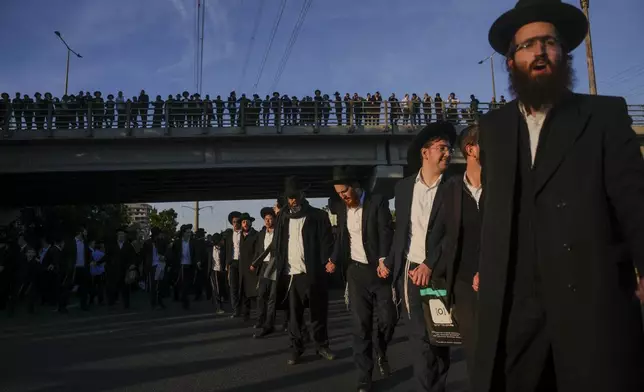
FILE - Ultra-Orthodox Jewish men block a highway during a protest against army recruitment in Bnei Brak, Israel, on March 2, 2025. (AP Photo/Ohad Zwigenberg, File)
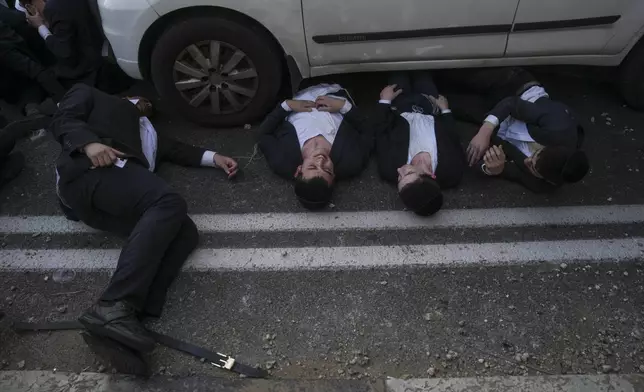
FILE - Ultra-Orthodox Jewish men block a highway during a protest against army recruitment in Bnei Brak, Israel, on March 2, 2025. (AP Photo/Ohad Zwigenberg, File)
It’s an issue that has long divided Jewish Israelis, for whom military service is compulsory. But a decades-old arrangement long allowed tens of thousands of ultra-Orthodox Jews to avoid the draft and study religious texts instead. Netanyahu’s ultra-Orthodox coalition partners want the government to pass a law that would enshrine their constituents' desire to stay out of the military.
The issue of ultra-Orthodox enlistment has long inflamed tensions between secular and religious Jews. That has only intensified since the war in Gaza began, when the burden on soldiers has been prominent in the public consciousness.
Why is the draft of the ultra-Orthodox such a pivotal issue in Israel?
Most Jewish men are required to serve nearly three years in the military, followed by years of reserve duty. Jewish women serve two mandatory years.
But the politically powerful ultra-Orthodox, who make up roughly 13% of Israel's population, have traditionally received exemptions from the military while studying full-time in religious seminaries, or yeshivas.
The religious exemption dates back to Israel’s founding 80 years ago, a compromise the country’s first prime minister, David Ben Gurion, made with ultra-Orthodox leaders to allow some 400 Jewish seminary students to devote themselves fully to Torah study.
The significant growth of the ultra-Orthodox population since then has made the exemption a hugely divisive issue to Israeli society. Some 66,000 enlistment age men currently study in seminaries.
The decades-old system has bred widespread resentment among the broader Jewish public, a feeling that has deepened during the 20-monthlong war in Gaza and the regional conflicts it sparked. For much of that time, many Israelis viewed the fighting as an existential battle for their country's security in the Middle East.
Nearly 870 Israeli soldiers have been killed in the fighting. Reserve soldiers have repeatedly been called up, often for weeks at a time, leaving jobs and families to serve in a war that Israelis increasingly view as having run its course.
The ultra-Orthodox say they carry their share of the burden to society through prayer and study of sacred texts. Many fear that greater contact with secular society through the military will distance adherents from strict observance of the faith.
After years of legal battles, the country's High Court last year ruled unanimously that the military must begin drafting ultra-Orthodox men for compulsory service. The military has since attempted to increase call ups for ultra-Orthodox men, to little success.
Out of 12,000 draft orders sent since the High Court ruling, only dozens of ultra-Orthodox have actually enlisted, said Shuki Friedman, vice president of the Jewish People Policy Institute, a Jerusalem think tank.
Netanyahu needs political support from the ultra-Orthodox to remain in power. That support is all the more important to him because public opinion polls show he would struggle to form a coalition if elections were held now.
Netanyahu has promised his politically powerful ultra-Orthodox governing partners that he would find a way out of the quagmire that would protect their interests. But with a few holdouts in his Likud party urging a more just approach, the ultra-Orthodox parties have grown increasingly impatient with the lack of a resolution.
The war in Gaza has added a new dimension to the years-old quarrel and foisted the issue of fair enlistment to the foreground.
Sensing a political opportunity emerging from the ultra-Orthodox community's frustration with Netanyahu and the broader Jewish public's desire for an equitable draft, the country's opposition is pouncing.
On Wednesday or early Thursday, legislators are expected to hold a preliminary vote in parliament on the motion.
If it passes with the support of the ultra-Orthodox parties — which isn't guaranteed — the bill then heads to committee to be lined up for the first reading and then later a second and final vote. That could take days or weeks depending on each sides' strategy.
The first votes need a plurality to pass while the third and final votes need at least 61 of the 120 members of Knesset.
If any of the votes fail to pass, the bill falls and the opposition cannot attempt to dissolve parliament for another six months.
If it passes, new elections are triggered. Those wouldn't happen for another three to six months.
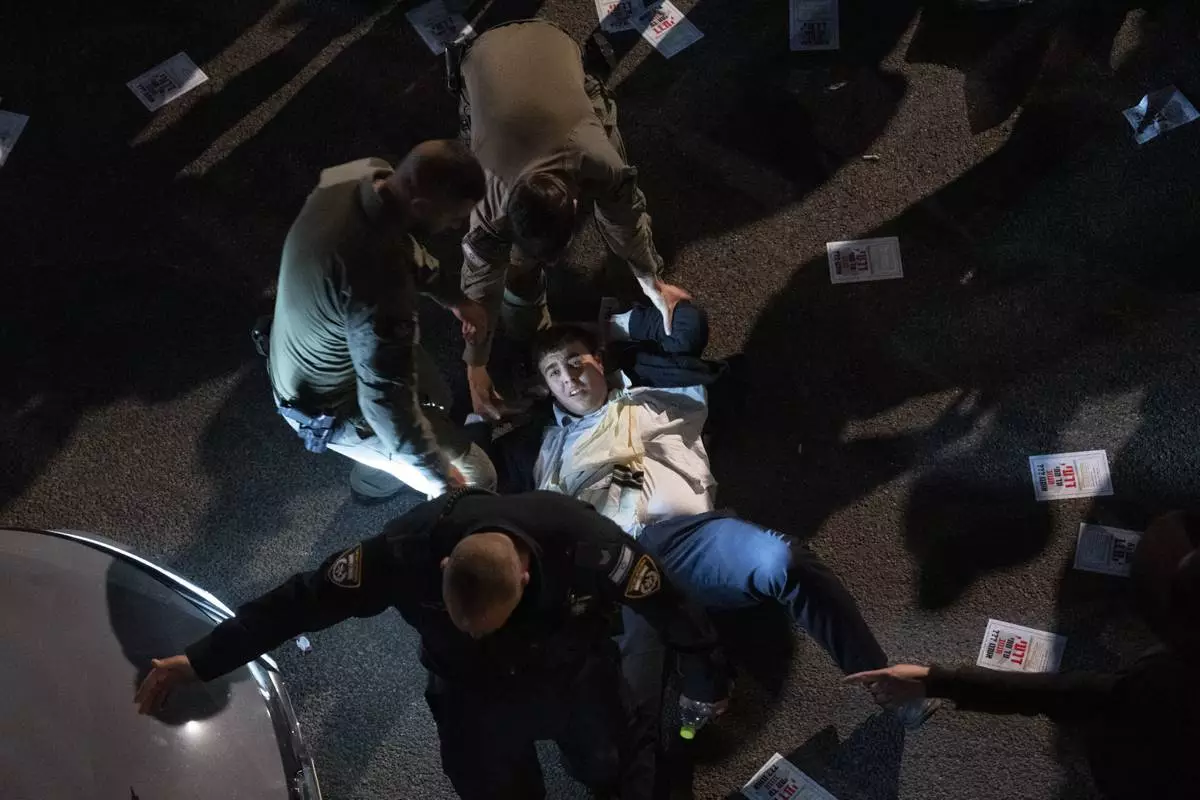
FILE - Israeli police officers disperse ultra-Orthodox Jewish men blocking a highway during a protest against army recruitment in Bnei Brak, Israel, on Jan. 9, 2025. (AP Photo/Oded Balilty, File)
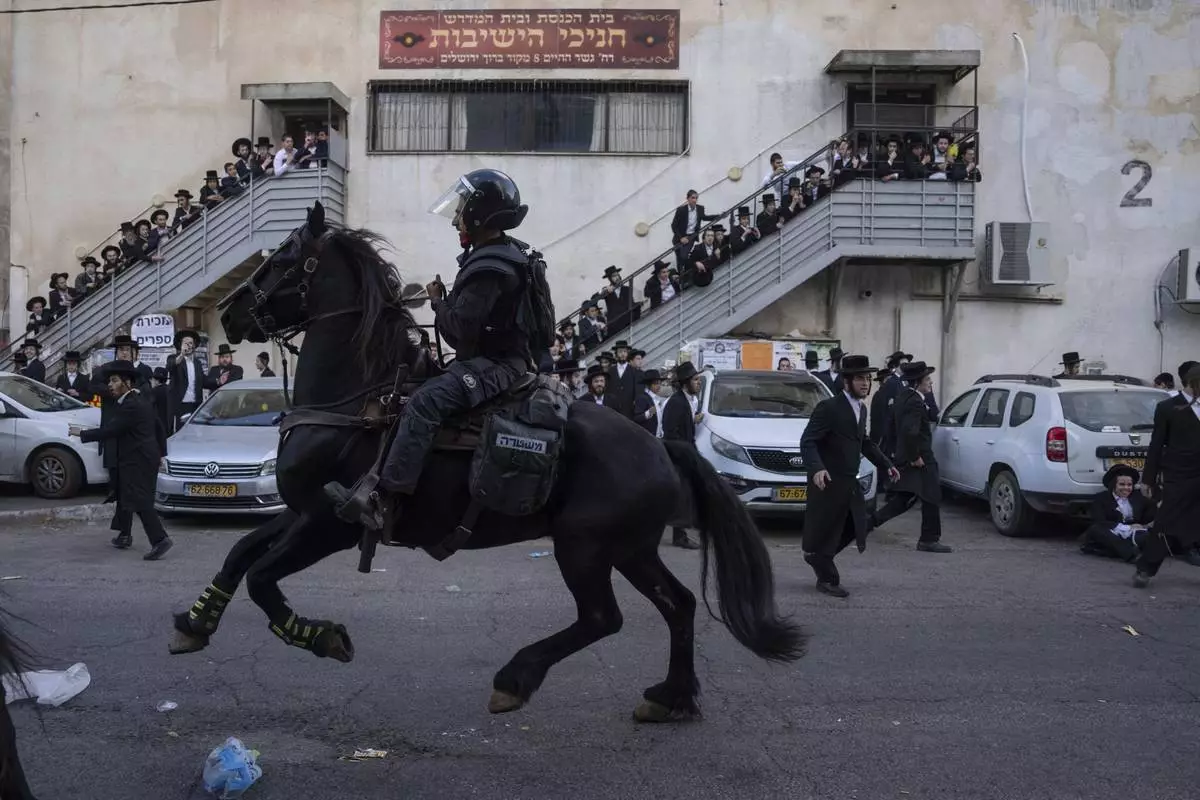
FILE - Israeli police officers scuffle with ultra-Orthodox Jewish men during a protest against a potential new draft law in Jerusalem, Oct. 31, 2024. (AP Photo/Ohad Zwigenberg, File)
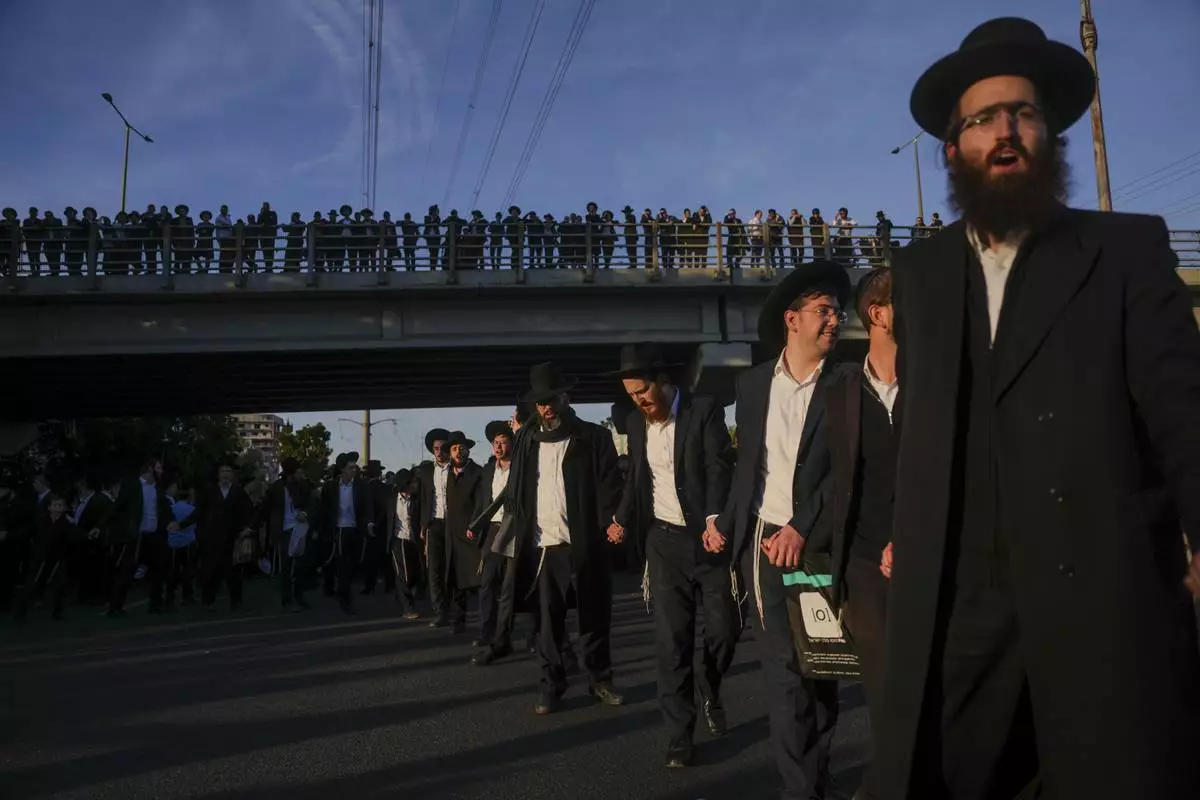
FILE - Ultra-Orthodox Jewish men block a highway during a protest against army recruitment in Bnei Brak, Israel, on March 2, 2025. (AP Photo/Ohad Zwigenberg, File)
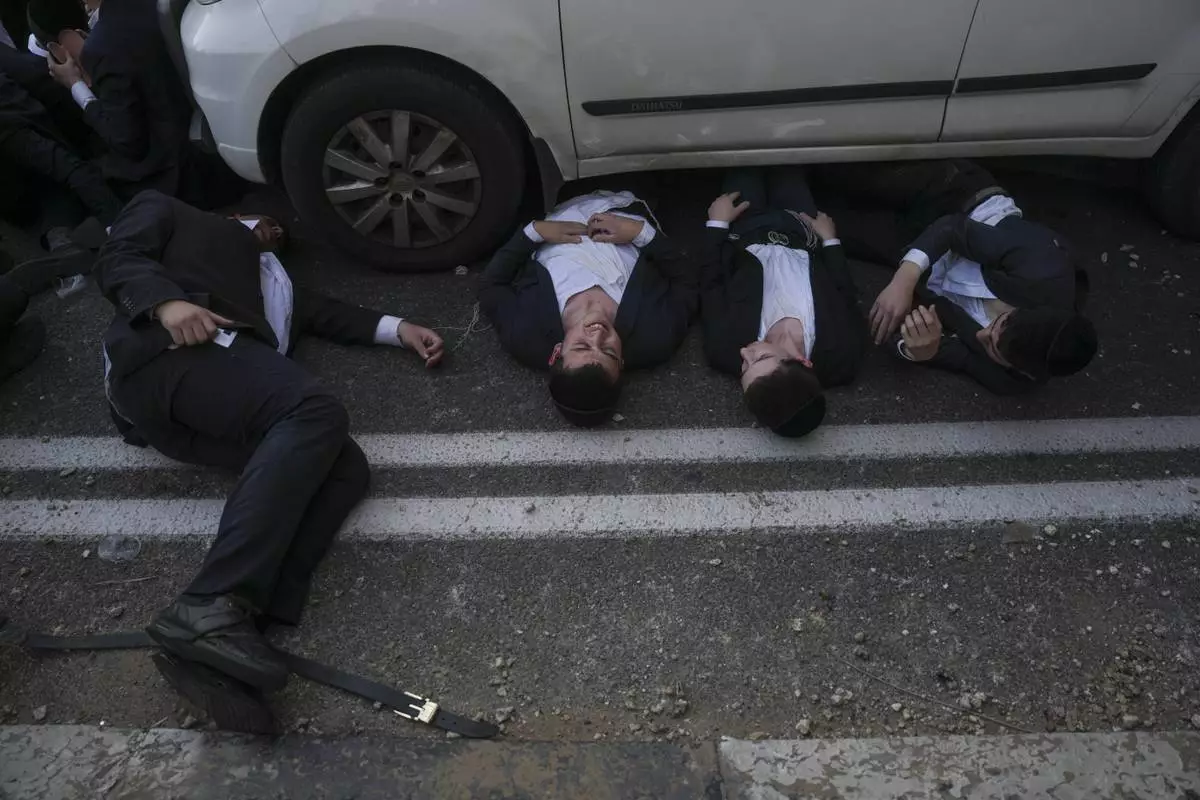
FILE - Ultra-Orthodox Jewish men block a highway during a protest against army recruitment in Bnei Brak, Israel, on March 2, 2025. (AP Photo/Ohad Zwigenberg, File)