Committee for Safeguarding National Security of HKSAR launches 5th Anniversary of Promulgation and Implementation of Hong Kong National Security Law Thematic Exhibition
The following is issued on behalf of the Committee for Safeguarding National Security of the Hong Kong Special Administrative Region:
Click to Gallery

Committee for Safeguarding National Security of HKSAR launches 5th Anniversary of Promulgation and Implementation of Hong Kong National Security Law Thematic Exhibition Source: HKSAR Government Press Releases

Committee for Safeguarding National Security of HKSAR launches 5th Anniversary of Promulgation and Implementation of Hong Kong National Security Law Thematic Exhibition Source: HKSAR Government Press Releases
Committee for Safeguarding National Security of HKSAR launches 5th Anniversary of Promulgation and Implementation of Hong Kong National Security Law Thematic Exhibition Source: HKSAR Government Press Releases
Committee for Safeguarding National Security of HKSAR launches 5th Anniversary of Promulgation and Implementation of Hong Kong National Security Law Thematic Exhibition Source: HKSAR Government Press Releases
Committee for Safeguarding National Security of HKSAR launches 5th Anniversary of Promulgation and Implementation of Hong Kong National Security Law Thematic Exhibition Source: HKSAR Government Press Releases
Committee for Safeguarding National Security of HKSAR launches 5th Anniversary of Promulgation and Implementation of Hong Kong National Security Law Thematic Exhibition Source: HKSAR Government Press Releases
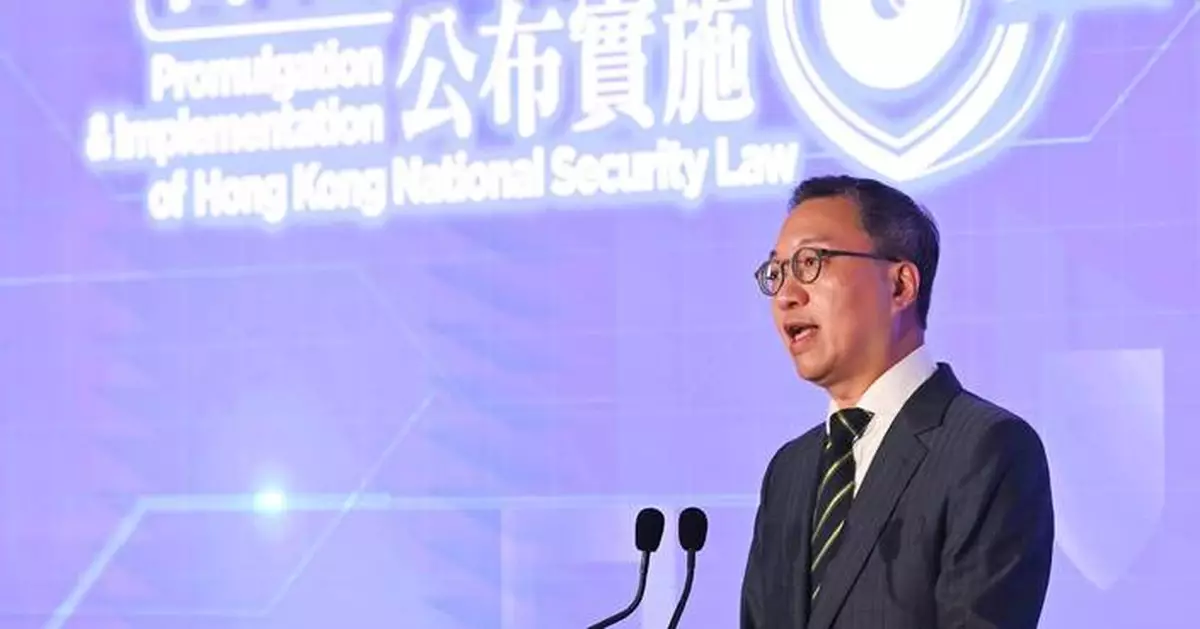
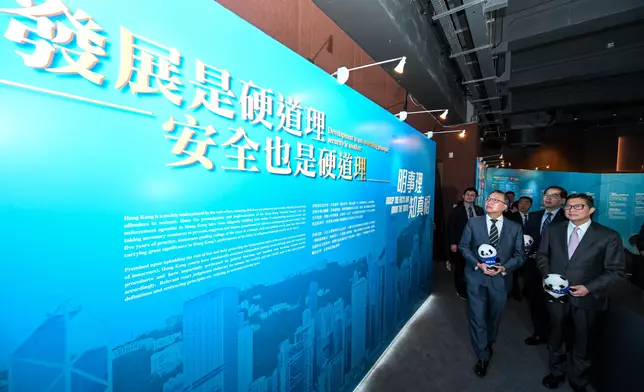
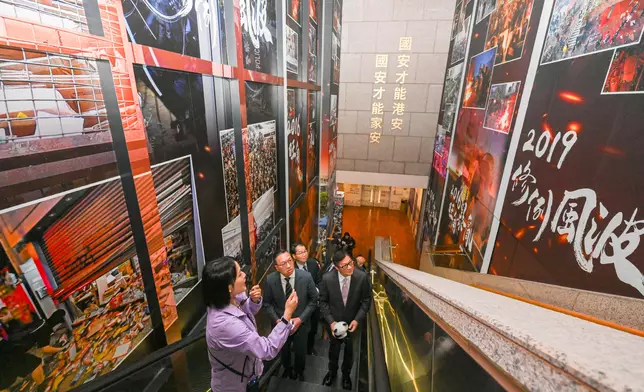
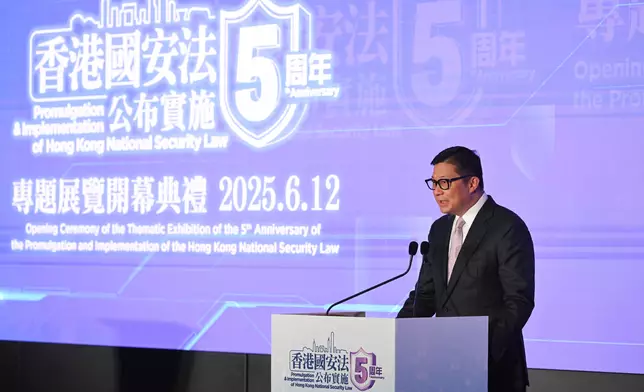
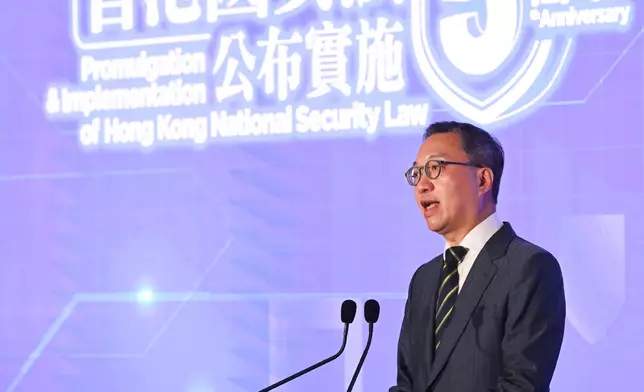
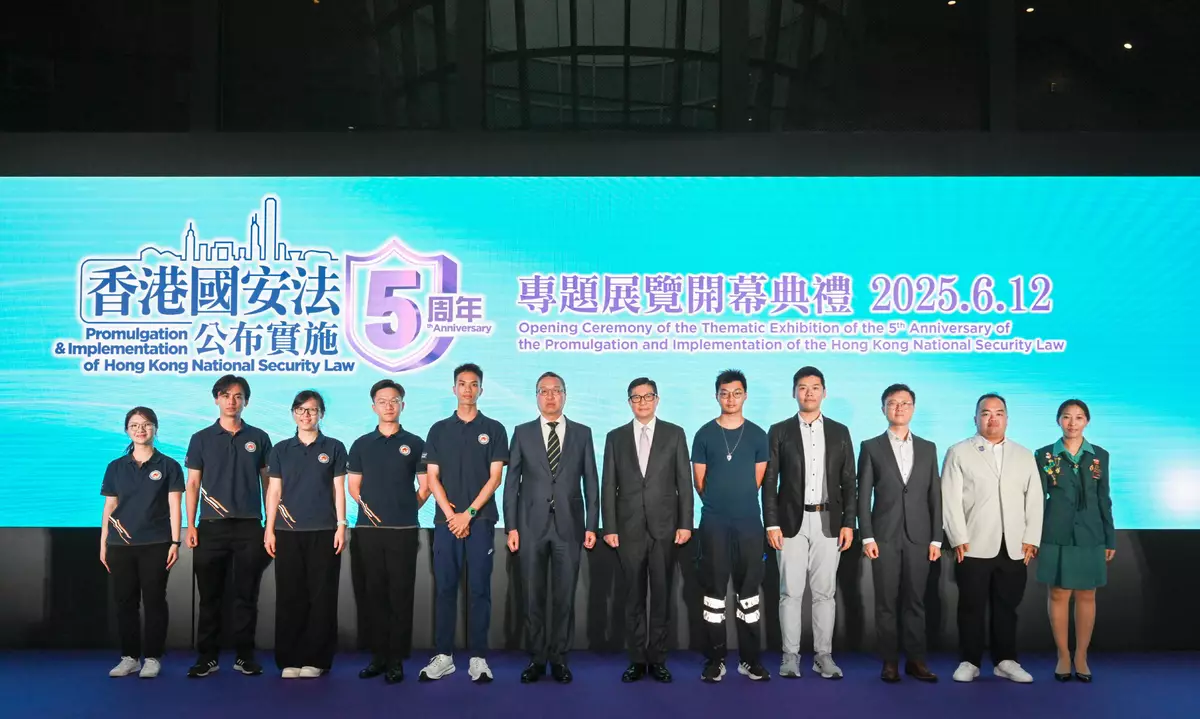
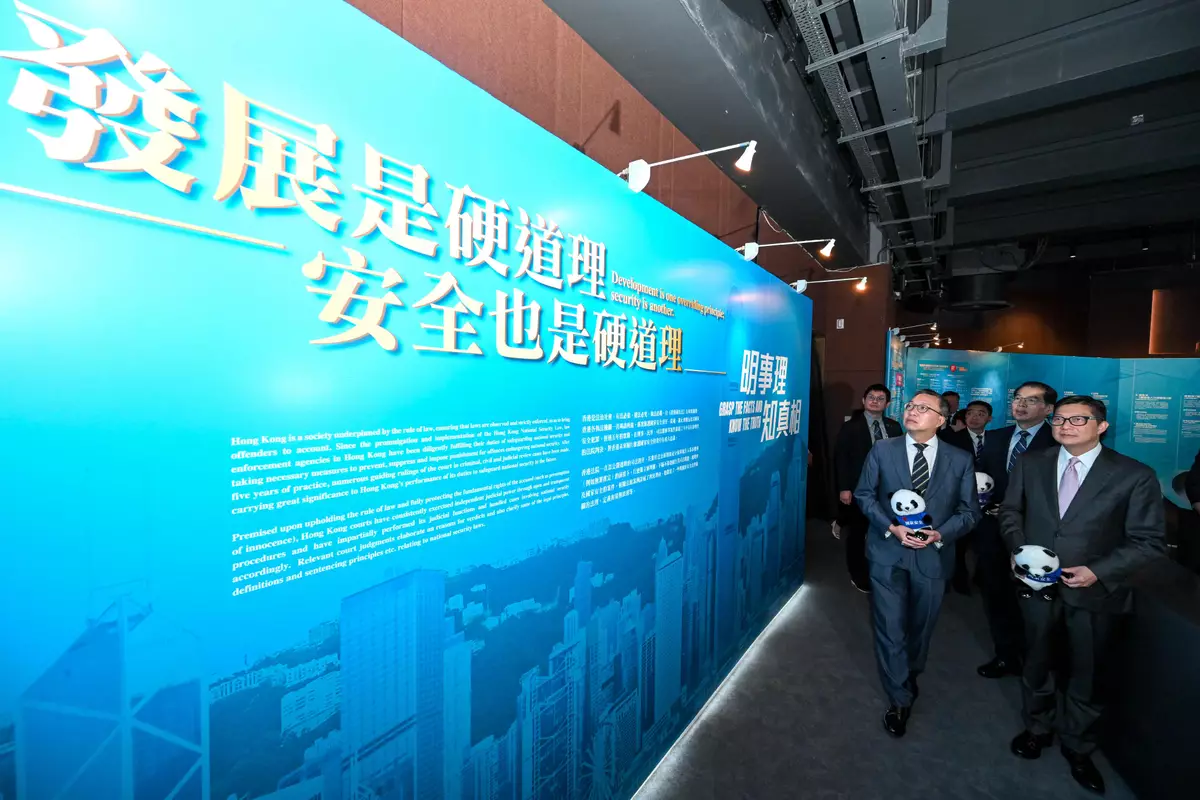
The Chief Executive announced in the 2024 Policy Address that a thematic exhibition will be held at the National Security Exhibition Gallery to mark the fifth anniversary of the promulgation and implementation of the Hong Kong National Security Law. The opening ceremony of the thematic exhibition was launched today (June 12) at the Hong Kong Museum of History, and the exhibition is now open to all Hong Kong citizens.
National security is the bedrock of national rejuvenation, and social stability is a prerequisite for building a strong and prosperous China. The overarching principle of "One Country, Two Systems" is to safeguard national security, sovereignty and development interests.
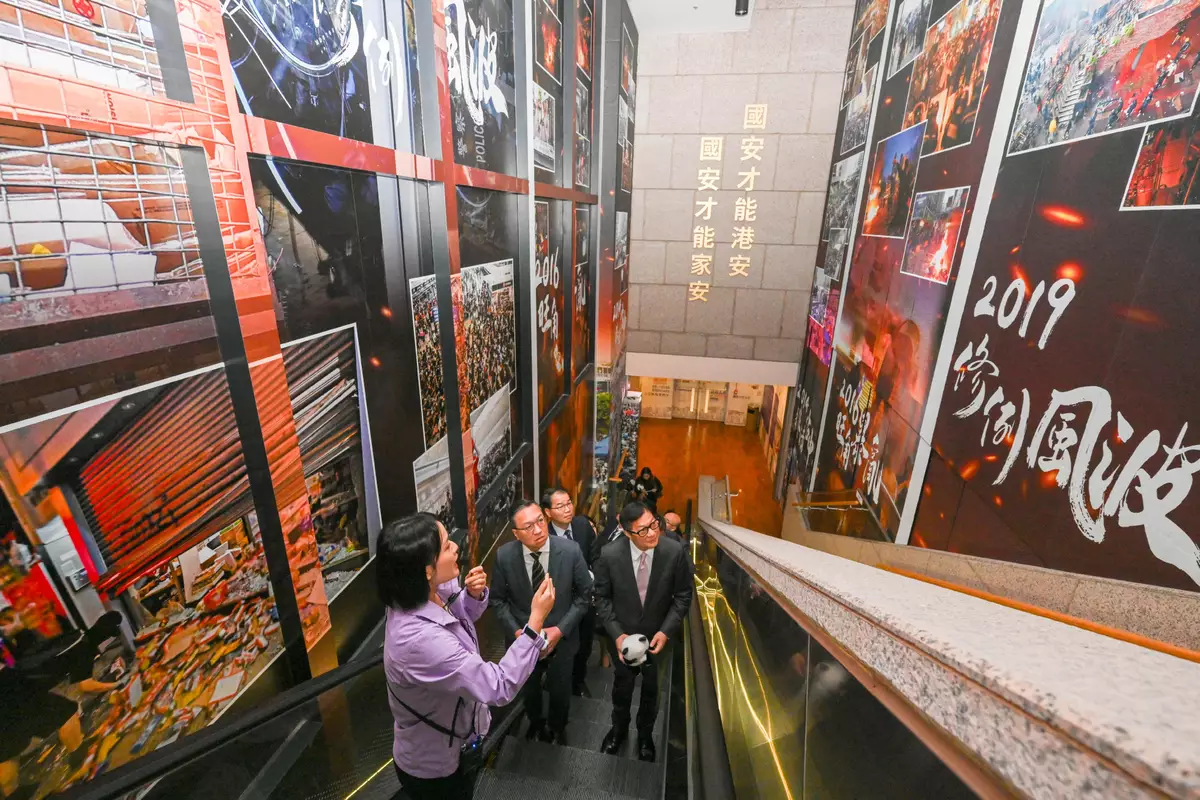
For over 20 years after Hong Kong's return to the motherland, due to the obstruction and interference by anti-China destabilising elements in the city and external forces, the legislative process of Article 23 of the Basic Law had not been completed, presenting significant loopholes in national security. Activities endangering national security, including the illegal "Occupy Central" movement in 2014 and the Mong Kok riots in 2016, continued and evolved into the Hong Kong version of "colour revolution" in 2019, posing a serious threat to national security.
On June 30, 2020, the Central Government took decisive action to turn the tide by enacting the Hong Kong National Security Law. This immediately stopped the violence and curbed disorder, thereby restoring social order and putting Hong Kong back on the right track. On March 19, 2024, the Legislative Council unanimously passed the Safeguarding National Security Ordinance, which took effect upon gazettal on March 23, 2024. The Hong Kong Special Administrative Region (HKSAR) Government and the Legislative Council have thus accomplished the historic mission of legislating for Article 23 of the Basic Law. The Hong Kong National Security Law achieves convergence, compatibility and complementarity with the Safeguarding National Security Ordinance, thereby strengthening effective legal protection for national security.
The HKSAR Government has consistently been committed to promoting national security education. This thematic exhibition aims to facilitate the public's understanding of and appreciation for the hard-won situation that Hong Kong is now enjoying, and to motivate all to work together to help the city shine on the global stage.
At the opening ceremony of the thematic exhibition, the Secretary for Justice, Mr Paul Lam, SC, who officiated the event, reiterated the three "must-nots" and one "must":
"The first 'must-not' is that we must not forget history. Traditional Chinese wisdom has it that 'history, if not forgotten, can serve as a guide for the future'. We all surely remember the 2019 legislative amendment turmoil, which posed a grave threat to national security and severely undermined the peaceful and stable environment we took for granted.
"The second 'must-not' is that we must not turn a blind eye to reality. Traditional Chinese wisdom teaches us to 'remain vigilant in times of peace'. We must not ignore problems around us. Although Hong Kong society has restored stability and national security, threats are often not immediately visible. It is obvious that hostile states and forces continue to try to suppress our country's development.
"The third 'must-not' is that we must not stand idly by. Chinese culture values action, not just empty words. Since national security is closely related to our individual well-being, naturally we all must take concrete steps and shoulder our responsibilities in safeguarding national security.
"On the foundation of these three 'must-nots', we have one 'must': we must uphold the rule of law in safeguarding national security. This principle is explicitly stated in Article 5 of the Hong Kong National Security Law. A robust legal system has long been the cornerstone of Hong Kong's success. It is the prerequisite for the city to thrive as an international financial, trade, and shipping centre."
Another officiating guest, the Secretary for Security, Mr Tang Ping-keung, remarked during the ceremony:
"Safeguarding national sovereignty, security, and development interests is not only a constitutional duty of the HKSAR, but also a fundamental obligation of every citizen.
"We must always remember that the previous chaos left an indelible scar on Hong Kong's history."
He further stated that hostile forces have not given up. Citizens must remain vigilant against the following risks: first, external hostile forces continue to attempt to undermine national security through smears and so-called "sanctions"; second, anti-China destabilising elements in the city who have fled overseas continue to engage in activities and behaviours that threaten national security; third, local terrorism; and fourth, "soft resistance", where individuals with ulterior motives exploit fake news and misinformation to divide society and incite hatred.
"National security has been hard-won. The HKSAR Government will continue to make full use of national security laws and remain steadfast in its duty to protect national security."
The Hong Kong National Security Law has been in effect for five years, marking Hong Kong's transition from chaos to order, and from order to prosperity. The HKSAR Government will continue to enhance publicity and promotional efforts, unite all sectors of society, and break new ground in national security work. It will fully and accurately implement the principle of "one country, two systems", safeguard national sovereignty, security, and development interests, and maintain Hong Kong's long-term prosperity and stability.
Committee for Safeguarding National Security of HKSAR launches 5th Anniversary of Promulgation and Implementation of Hong Kong National Security Law Thematic Exhibition Source: HKSAR Government Press Releases

Committee for Safeguarding National Security of HKSAR launches 5th Anniversary of Promulgation and Implementation of Hong Kong National Security Law Thematic Exhibition Source: HKSAR Government Press Releases
Committee for Safeguarding National Security of HKSAR launches 5th Anniversary of Promulgation and Implementation of Hong Kong National Security Law Thematic Exhibition Source: HKSAR Government Press Releases
Committee for Safeguarding National Security of HKSAR launches 5th Anniversary of Promulgation and Implementation of Hong Kong National Security Law Thematic Exhibition Source: HKSAR Government Press Releases
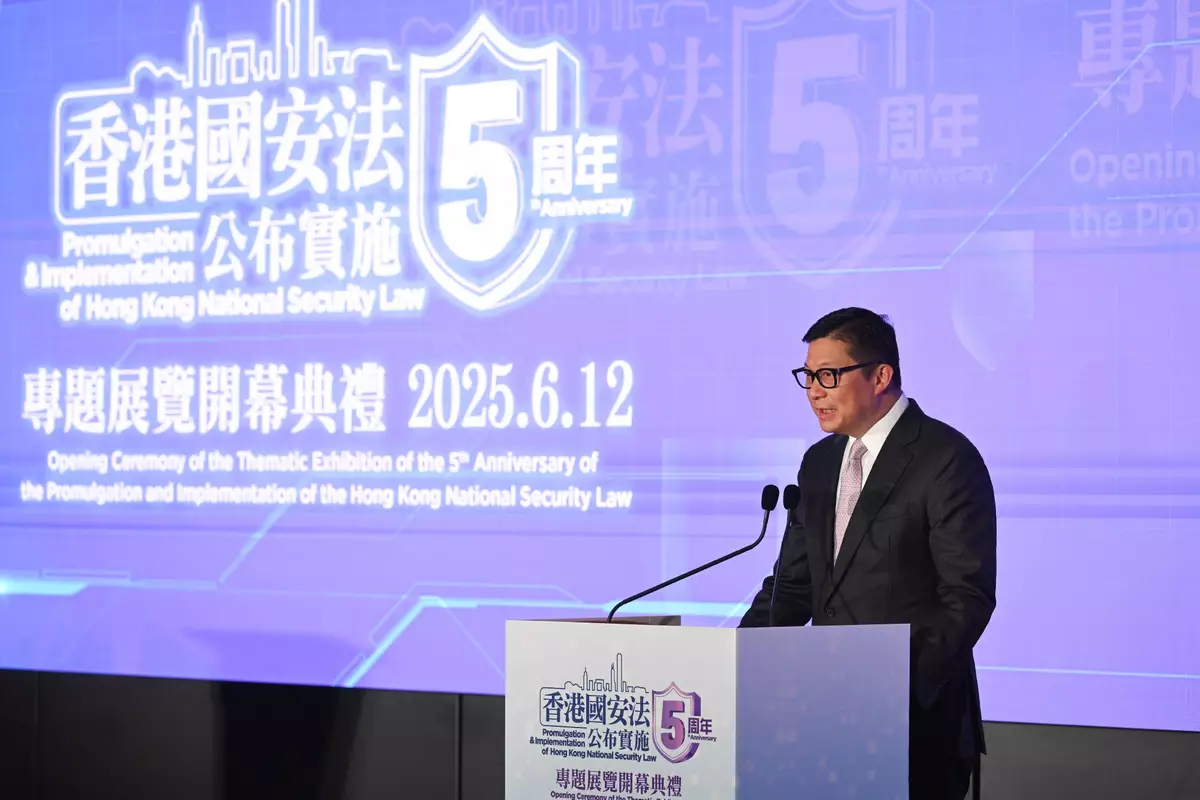
Committee for Safeguarding National Security of HKSAR launches 5th Anniversary of Promulgation and Implementation of Hong Kong National Security Law Thematic Exhibition Source: HKSAR Government Press Releases
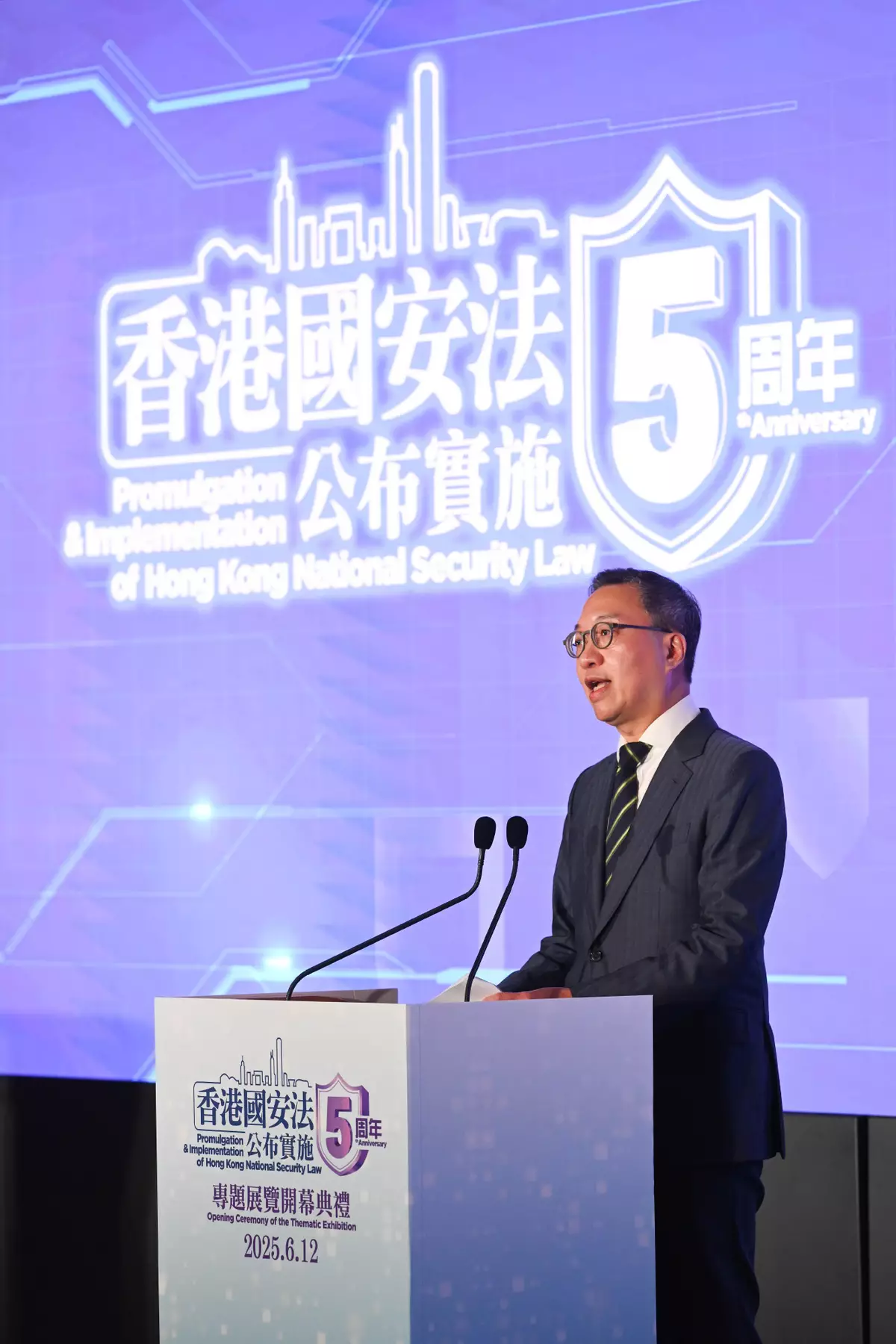
Committee for Safeguarding National Security of HKSAR launches 5th Anniversary of Promulgation and Implementation of Hong Kong National Security Law Thematic Exhibition Source: HKSAR Government Press Releases