BOSTON (AP) — A Russian-born scientist and Harvard University researcher charged with smuggling frog embryos in the U.S. shared hugs and laughs with supporters after a judge released her from federal custody on Thursday.
“I just want to thank everybody,” Kseniia Petrova said outside the federal building in Boston shortly after her release.
She wore a T-shirt that said, “Hakuna Matata,” a popular phrase from “The Lion King” that means “no worries.”
“A lot of people started contacting me and sending me letters, and it was a huge support without which I won’t be able to survive,” she said.
“I never really felt alone any minute when I was in custody, and it’s really helped me very much,” Petrova added.
Petrova, 30, who was brought into court wearing an orange jumpsuit, had been in federal custody since February.
Lawyers on both sides came to an agreement on conditions for Petrova's release, which included limiting her travel. Authorities are still holding onto her passport. Petrova must return to court next week for a probable cause hearing on the smuggling charge.
“I hear it’s sunny. Goodbye,” Magistrate Judge Judith Dein said after approving the agreement.
Greg Romanovsky, Petrova's attorney, said his client hasn't “decided whether she wants to stay in the United States yet.”
“She has offers from different countries around the world, countries that are eager to support the important research that she’s doing. She’s weighing her options at the moment, and she’s very grateful to be out,” he said.
Petrova was returning from a vacation earlier this year in France, where she had stopped at a lab specializing in splicing superfine sections of frog embryos and obtained a package of samples for research. She was questioned about the samples while passing through a U.S. Customs and Border Protection checkpoint at Boston Logan International Airport.
After an interrogation, Petrova was told her visa was being canceled.
Petrova was briefly detained by immigration officials in Vermont, where she filed a petition seeking her release. She was later sent to a U.S. Immigration and Customs Enforcement facility in Louisiana.
The Department of Homeland Security had said in a statement on the social media platform X that Petrova was detained after “lying to federal officers about carrying substances into the country.” They allege that messages on her phone “revealed she planned to smuggle the materials through customs without declaring them.”
She told The Associated Press in an interview in April that she did not realize the items needed to be declared and was not trying to sneak anything into the country.
In May, Petrova was charged with smuggling in Massachusetts as a federal judge in Vermont set the hearing date on her petition. That judge later ruled that the immigration officers’ actions were unlawful, that Petrova didn’t present a danger, and that the embryos were nonliving, nonhazardous and “posed a threat to no one.”
The judge released Petrova from ICE custody, but she remained in the custody of the U.S. Marshals Service on the smuggling charge before her release Thursday.
Colleagues and academics have testified on Petrova’s behalf, saying she is doing valuable research to advance cures for cancer.
McCormack reported from Concord, New Hampshire.

Kseniia Petrova, 30, smiles after being released on bail from federal custody at the John Joseph Moakley United States Courthouse on Thursday, June 12, 2025, in Boston. (AP Photo/Leah Willingham)

Harvard University researcherKseniia Petrova, 30, smiles next to lawyers after being released on bail from federal custody outside the John Joseph Moakley United States Courthouse on Thursday, June 12, 2025, in Boston. (AP Photo/Leah Willingham)

Harvard University researcher Kseniia Petrova, 30, smiles after being released on bail from federal custody at the John Joseph Moakley United States Courthouse on Thursday, June 12, 2025, in Boston. (AP Photo/Leah Willingham)
JOHANNESBURG (AP) — Torrential rains and flooding have killed more than 100 people in South Africa, Mozambique and Zimbabwe, and authorities warned Friday that more severe weather was expected across several countries in southern Africa.
South Africa has reported at least 19 deaths in two of its northern provinces following heavy rains that began last month and led to severe flooding.
Tourists and staff members were evacuated this week by helicopter from flooded camps to other areas in the renowned Kruger National Park, which is closed to visitors while parts of it are inaccessible because of washed out roads and bridges, South Africa's national parks agency said.
In neighboring Mozambique, the Institute for Disaster Management and Risk Reduction said 103 people had died in an unusually severe rainy season since late last year. Those deaths were from various causes including electrocution from lightning strikes, drowning in floods, infrastructure collapse caused by the severe weather and cholera, the institute said.
The worst flooding in Mozambique has been in the central and southern regions, where more than 200,000 people have been affected, thousands of homes have been damaged, while tens of thousands face evacuation, the World Food Program said.
Zimbabwe’s disaster management agency said that 70 people have died and more than 1,000 homes have been destroyed in heavy rains since the beginning of the year, while infrastructure including schools, roads and bridges collapsed.
Flooding has also hit the island nation of Madagascar off the coast of Africa as well as Malawi and Zambia. Authorities in Madagascar said 11 people died in floods since late November.
The United States' Famine Early Warning System said flooding was reported or expected in at least seven southern African nations, possibly due to the presence of the La Nina weather phenomenon that can bring heavy rains to parts of southeastern Africa.
South African President Cyril Ramaphosa visited flood-stricken areas in the northern Limpopo province on Thursday and said that region had received around 400 millimeters (more than 15 inches) of rain in less than a week. He said that in one district he visited “there are 36 houses that have just been wiped away from the face of the Earth. Everything is gone ... the roofs, the walls, the fences, everything.”
The flooding occurred in the Limpopo and Mpumalanaga provinces in the north, and the South African Weather Service issued a red-level 10 alert for parts of the country for Friday, warning of more heavy rain and flooding that poses a threat to lives and could cause widespread infrastructure damage.
The huge Kruger wildlife park, which covers some 22,000 square kilometers (7,722 square miles) across the Limpopo and Mpumalanga provinces, has been impacted by severe flooding and around 600 tourists and staff members have been evacuated from camps to high-lying areas in the park, Kruger National Park spokesperson Reynold Thakhuli said.
He couldn't immediately say how many people there were in the park, which has been closed to visitors after several rivers burst their banks and flooded camps, restaurants and other areas. The parks agency said precautions were being taken and no deaths or injuries had been reported at Kruger.
The South African army sent helicopters to rescue other people trapped on the roofs of their houses or in trees in northern parts of the country, it said. An army helicopter also rescued border post officers and police officers stranded at a flooded checkpoint on the South Africa-Zimbabwe border.
Southern Africa has experienced a series of extreme weather events in recent years, including devastating cyclones and a scorching drought that caused a food crisis in parts of a region that often suffers food shortages.
The World Food Program said more than 70,000 hectares (about 173,000 acres) of crops in Mozambique, including staples such as rice and corn, have been waterlogged in the current flooding, worsening food insecurity for thousands of small-scale farmers who rely on their harvests for food.
Imray reported from Cape Town, South Africa. AP writers Charles Mangwiro in Maputo, Mozambique, and Farai Mutsaka in Harare, Zimbabwe, contributed to this report.
AP Africa news: https://apnews.com/hub/africa
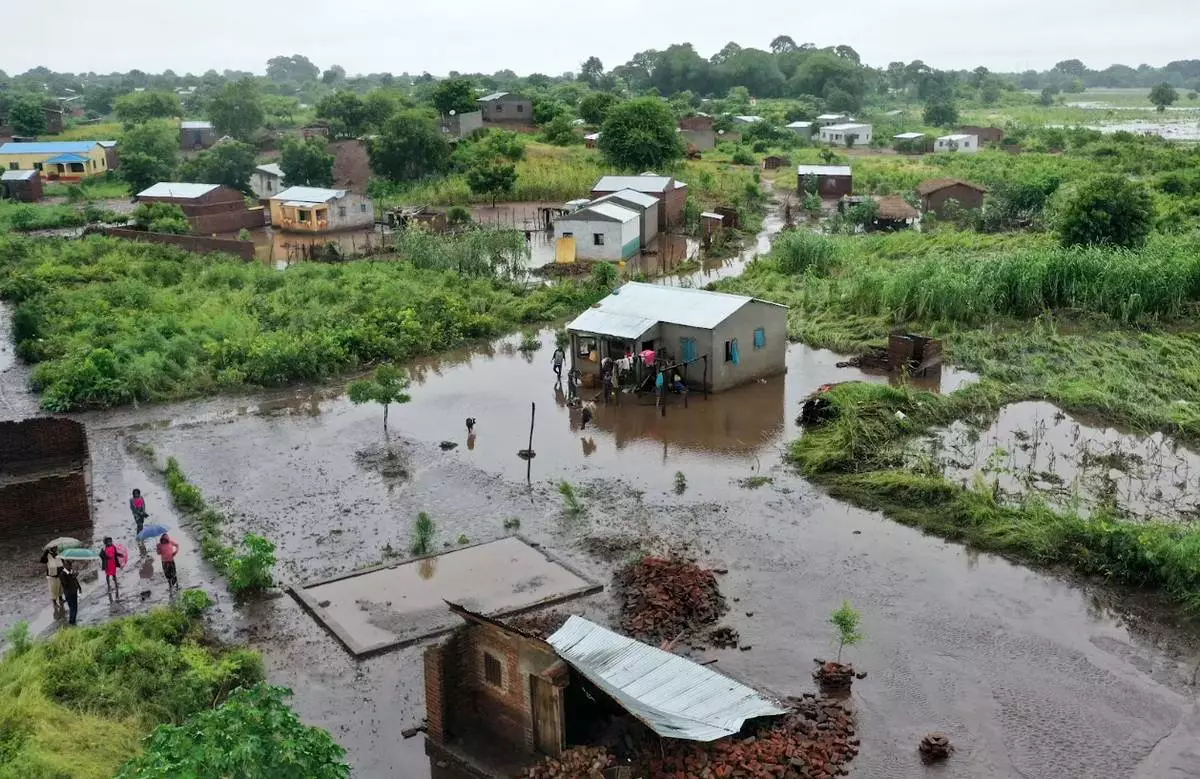
This image made from video shows the scene after flooding in Tete Province, Mozambique, Thursday, Jan. 15, 2026. (AP Photo)
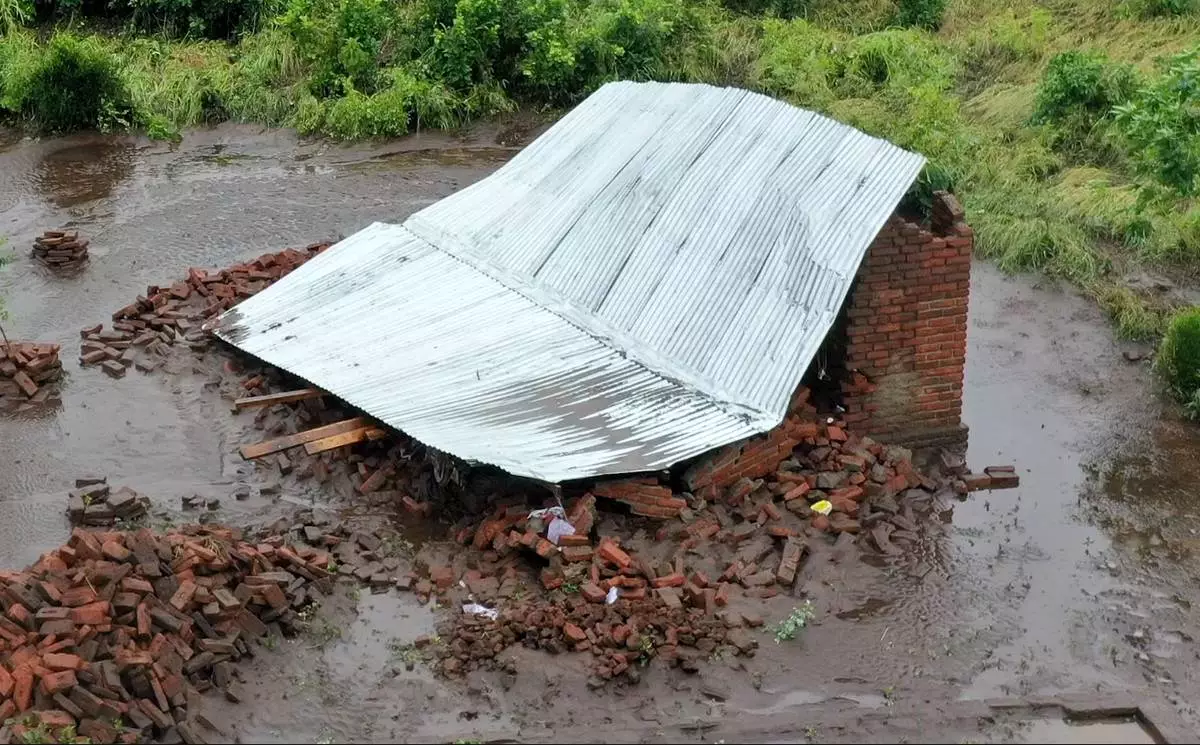
This image made from video shows the scene after flooding in Tete Province, Mozambique, Thursday, Jan. 15, 2026. (AP Photo)
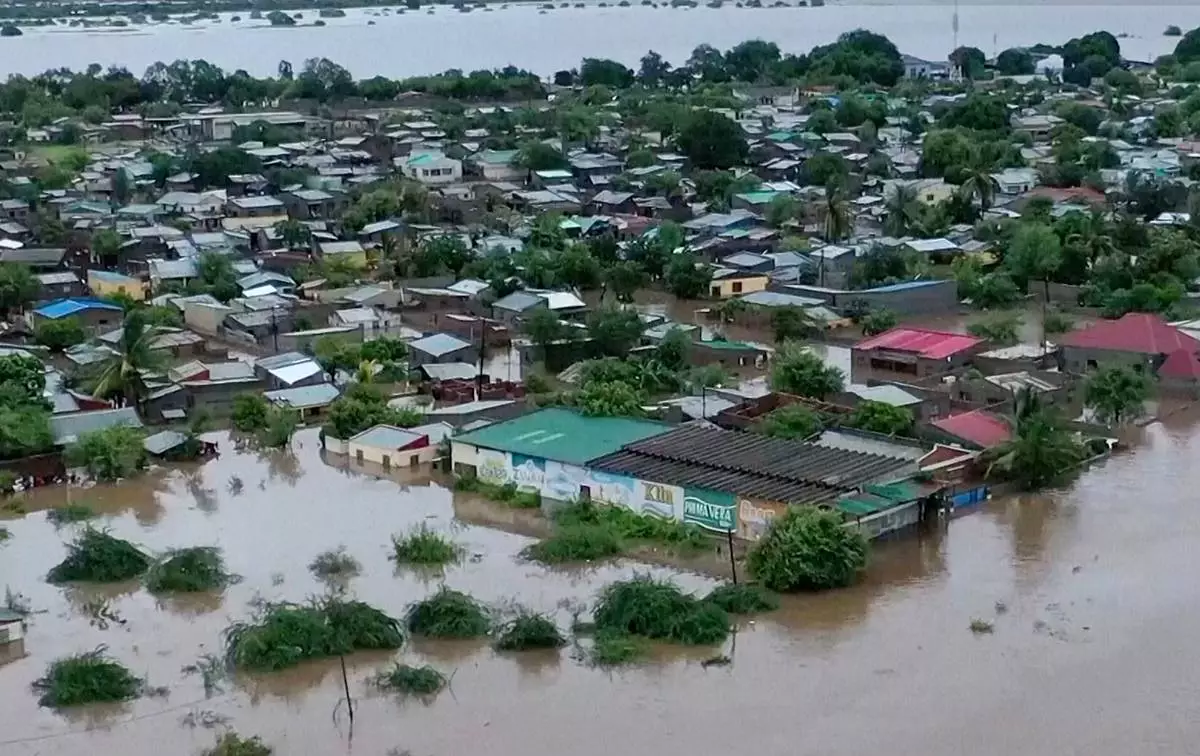
This image made from video shows the scene after flooding in Tete Province, Mozambique, Thursday, Jan. 15, 2026. (AP Photo)