Meta is making a $14.3 billion investment in artificial intelligence company Scale and recruiting its CEO Alexandr Wang to join a team developing “superintelligence” at the tech giant.
The deal announced Thursday reflects a push by Meta CEO Mark Zuckerberg to revive AI efforts at the parent company of Facebook and Instagram as it faces tough competition from rivals such as Google and OpenAI.
Meta announced what it called a “strategic partnership and investment” with Scale late Thursday. Scale said the $14.3 billion investment puts its market value at over $29 billion.
Scale said it will remain an independent company but the agreement will “substantially expand Scale and Meta’s commercial relationship.” Meta will hold a 49% stake in the startup.
Wang, though leaving for Meta with a small group of other Scale employees, will remain on Scale’s board of directors. Replacing him is a new interim Scale CEO Jason Droege, who was previously the company’s chief strategy officer and had past executive roles at Uber Eats and Axon.
Zuckerberg's increasing focus on the abstract idea of “superintelligence” — which rival companies call artificial general intelligence, or AGI — is the latest pivot for a tech leader who in 2021 went all-in on the idea of the metaverse, changing the company's name and investing billions into advancing virtual reality and related technology.
It won't be the first time since ChatGPT's 2022 debut sparked an AI arms race that a big tech company has gobbled up talent and products at innovative AI startups without formally acquiring them. Microsoft hired key staff from startup Inflection AI, including co-founder and CEO Mustafa Suleyman, who now runs Microsoft's AI division.
Google pulled in the leaders of AI chatbot company Character.AI, while Amazon made a deal with San Francisco-based Adept that sent its CEO and key employees to the e-commerce giant. Amazon also got a license to Adept’s AI systems and datasets.
Wang was a 19-year-old student at the Massachusetts Institute of Technology when he and co-founder Lucy Guo started Scale in 2016.
They won influential backing that summer from the startup incubator Y Combinator, which was led at the time by Sam Altman, now the CEO of OpenAI. Wang dropped out of MIT, following a trajectory similar to that of Zuckerberg, who quit Harvard University to start Facebook more than a decade earlier.
Scale's pitch was to supply the human labor needed to improve AI systems, hiring workers to draw boxes around a pedestrian or a dog in a street photo so that self-driving cars could better predict what's in front of them. General Motors and Toyota have been among Scale's customers.
What Scale offered to AI developers was a more tailored version of Amazon's Mechanical Turk, which had long been a go-to service for matching freelance workers with temporary online jobs.
More recently, the growing commercialization of AI large language models — the technology behind OpenAI's ChatGPT, Google's Gemini and Meta's Llama — brought a new market for Scale's annotation teams. The company claims to service “every leading large language model,” including from Anthropic, OpenAI, Meta and Microsoft, by helping to fine tune their training data and test their performance. It's not clear what the Meta deal will mean for Scale's other customers.
Wang has also sought to build close relationships with the U.S. government, winning military contracts to supply AI tools to the Pentagon and attending President Donald Trump's inauguration. The head of Trump's science and technology office, Michael Kratsios, was an executive at Scale for the four years between Trump's first and second terms. Meta has also begun providing AI services to the federal government.
Meta has taken a different approach to AI than many of its rivals, releasing its flagship Llama system for free as an open-source product that enables people to use and modify some of its key components. Meta says more than a billion people use its AI products each month, but it's also widely seen as lagging behind competitors such as OpenAI and Google in encouraging consumer use of large language models, also known as LLMs.
It hasn't yet released its purportedly most advanced model, Llama 4 Behemoth, despite previewing it in April as "one of the smartest LLMs in the world and our most powerful yet.”
Meta's chief AI scientist Yann LeCun, who in 2019 was a winner of computer science's top prize for his pioneering AI work, has expressed skepticism about the tech industry's current focus on large language models.
“How do we build AI systems that understand the physical world, that have persistent memory, that can reason and can plan?” LeCun asked at a French tech conference last year.
These are all characteristics of intelligent behavior that large language models “basically cannot do, or they can only do them in a very superficial, approximate way,” LeCun said.
Instead, he emphasized Meta's interest in “tracing a path towards human-level AI systems, or perhaps even superhuman.” When he returned to France's annual VivaTech conference again on Wednesday, LeCun dodged a question about the pending Scale deal but said his AI research team's plan has “always been to reach human intelligence and go beyond it.”
“It’s just that now we have a clearer vision for how to accomplish this,” he said.
LeCun co-founded Meta's AI research division more than a decade ago with Rob Fergus, a fellow professor at New York University. Fergus later left for Google but returned to Meta last month after a 5-year absence to run the research lab, replacing longtime director Joelle Pineau.
Fergus wrote on LinkedIn last month that Meta's commitment to long-term AI research “remains unwavering” and described the work as “building human-level experiences that transform the way we interact with technology.”
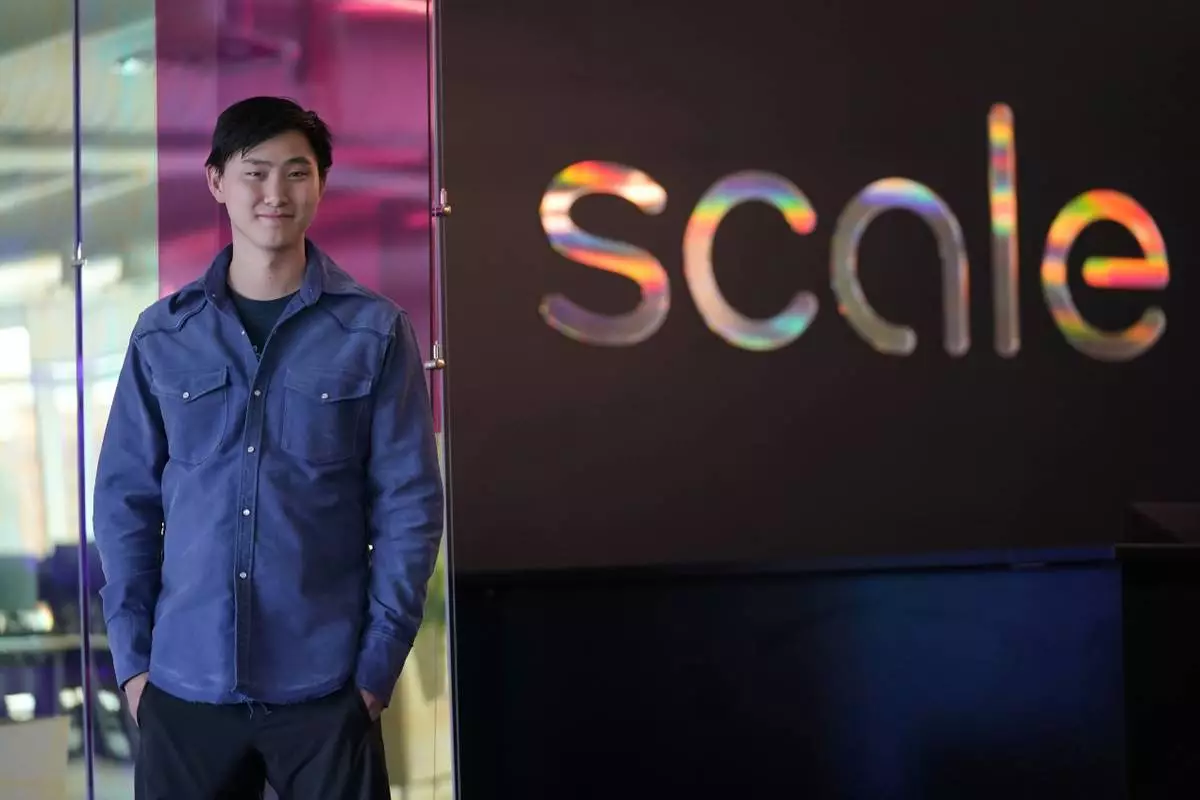
FILE - Scale AI founder and CEO Alexandr Wang poses for photos at the company's office in San Francisco, May 15, 2023. (AP Photo/Jeff Chiu, File)
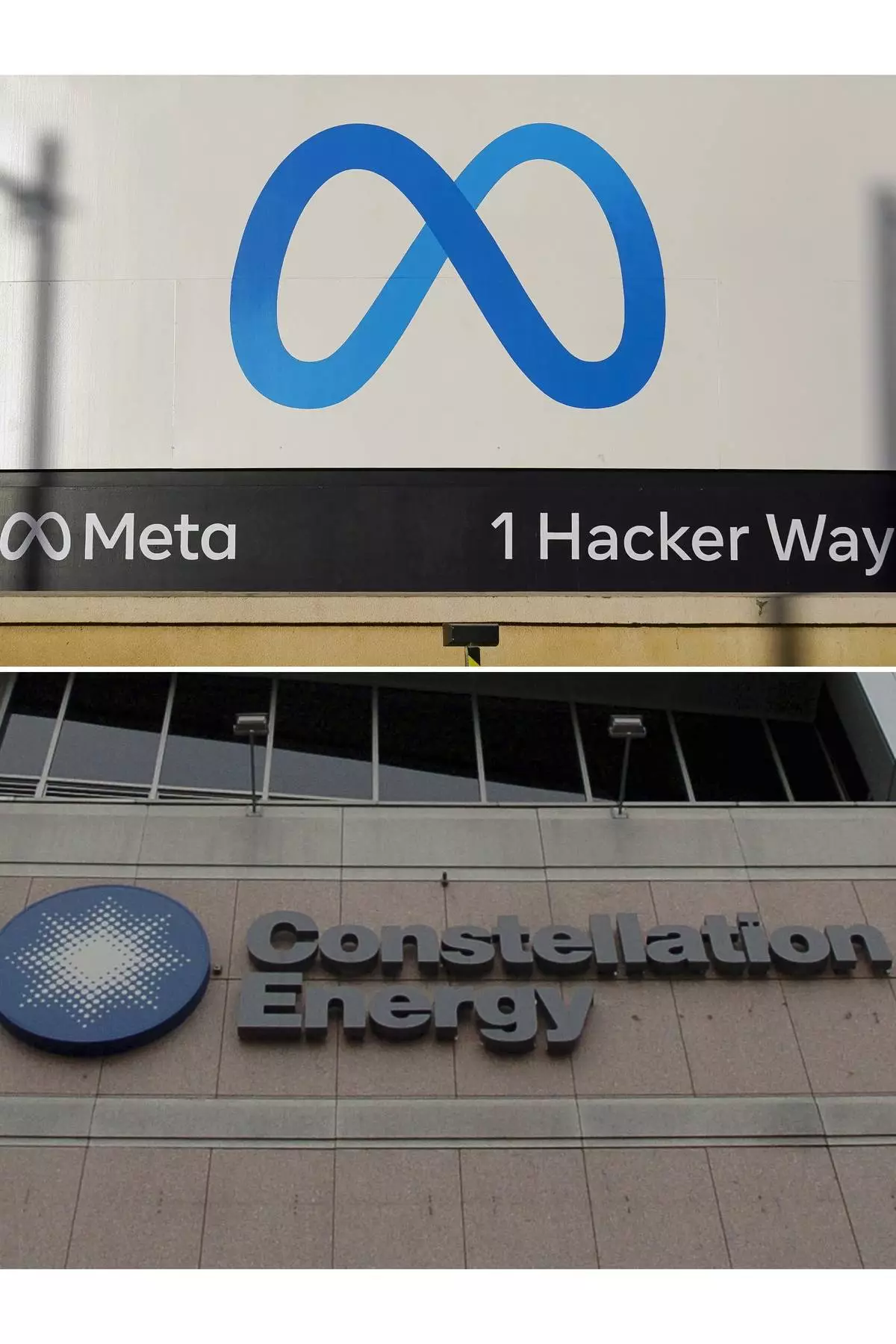
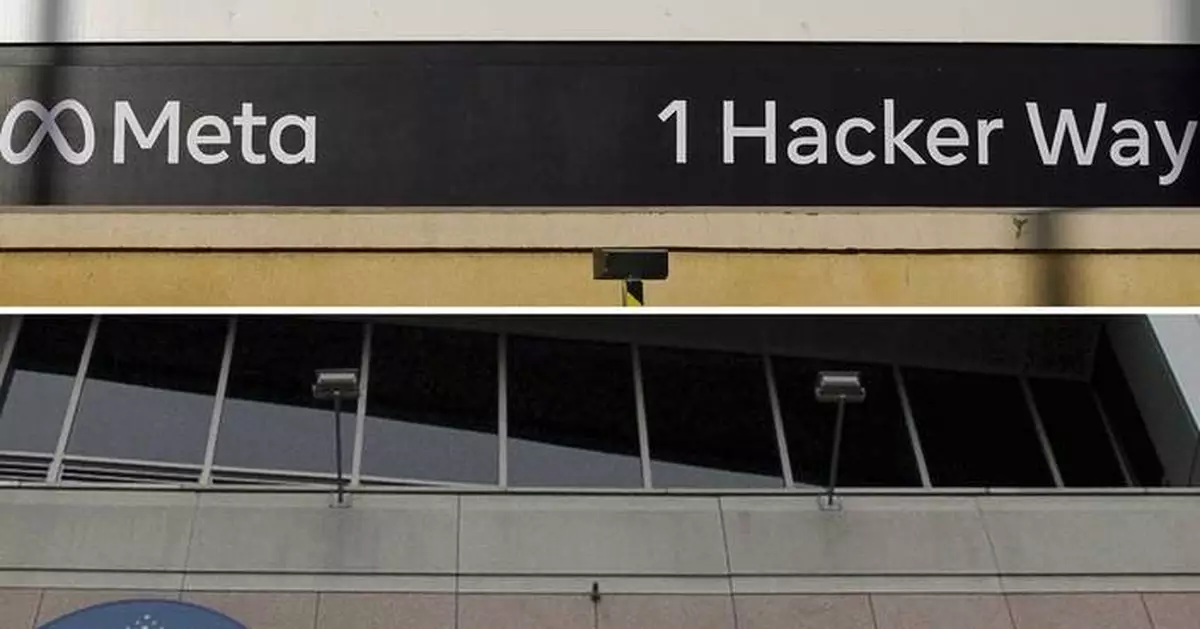
FILE - This combo image shows Meta's logo, top, at the company's headquarters in Menlo Park, Calif., Nov. 9, 2022 and The Constellation Energy building, Dec. 19, 2005 in a Baltimore. (AP Photo/Godofredo A. Vásquez, Gail Burton, File)
DUBAI, United Arab Emirates (AP) — The United States launched a second round of airstrikes into Thursday morning on Iran after President Donald Trump warned that Tehran would “pay the price” for stalled negotiations.
The new assault across multiple cities comes as efforts to negotiate an end the war again appeared stuck, with Iran insisting it would maintain its chokehold on the Strait of Hormuz, which has disrupted global energy supplies and sent oil prices higher.
Iran threatened to retaliate for the strikes, and missile sirens sounded Thursday morning in Bahrain, home to the headquarters of the U.S. Navy’s 5th Fleet. However, any immediate Iranian response appeared more muted than the one that came after the first round of American strikes on Wednesday, when it launched missiles at Bahrain, Kuwait and Jordan.
The U.S. Central Command said it had “completed” its latest round of airstrikes just before sunrise in Iran. The military command said the stirkes came “in response to Iran’s unwarranted and continued aggression” and targeted “Iranian military surveillance capabilities, communication systems and air defense sites.” It did not elaborate on the damage done by the strikes, which it said were carried out by the U.S. Air Force, Marines and Navy.
Explosions from the strikes echoed around Iran’s capital, Tehran, as well as in the port city of Bandar Abbas and other southern areas along the strait.
It was the third time this week that back-and-forth strikes have tested a two-month ceasefire. The strikes took place after a day of Iranian fire in Bahrain, Kuwait and Jordan, all of which host U.S. troops.
Trump has urged Iran to sign a deal to end the war and suggested earlier this week that an agreement could be reached in days.
Iran’s United Nations envoy said the U.S. should refrain from threats of force if it wants a deal.
“Iran has never negotiated under threats and pressure and will never submit to pressure or question,” Ambassador Amir Saeid Iravani told the U.N. Security Council on Wednesday.
Still, both countries seem to be looking for a way to end the conflict — if they can manage to sell it as a win at home.
Iran has proved resilient despite weeks of heavy bombing. It is betting that its ability to effectively close the Strait of Hormuz — a crucial passageway for oil and natural gas — gives it a strong bargaining chip.
Israeli Prime Minister Benjamin Netanyahu appears intent on pursuing goals that make compromise harder: the collapse of Iran’s theocratic government, the elimination of its nuclear program, and the destruction of the Iranian-allied Hezbollah militant group in Lebanon. On Monday, Iran and Israel targeted each other.
Since the U.S. and Israel started the war with Feb. 28 attacks on Iran, the conflict has shaken the global economy, driven up energy prices worldwide, and made food and other basics more expensive.
The international benchmark for crude oil traded above $93 a barrel on Wednesday, up more than 25% since the start of the war.
Trump said the U.S. military has since last month undertaken a “secret mission” to sneak oil shipments past Iran’s forces in the Strait of Hormuz. He said ships were slipping through at night, aided by the destruction of Iranian radar equipment.
Trump said as a result more than 100 million barrels of oil have evaded Iran’s chokehold on the strait. There was no immediate confirmation of that figure, which roughly equals five days of oil shipments through the waterway before the war began.
The military’s role was not immediately clear. Capt. Tim Hawkins, a Central Command spokesman, said U.S. forces “communicate and coordinate” with commercial ships in the area, but gave no details on military support being offered.
The U.S. Central Command on Wednesday refuted Iran’s claims that the Strait of Hormuz is closed, saying commercial ships are continuing to transit in and out.
Earlier Wednesday, the U.S. military said an American aircraft fired “precision munitions” into the engine room of the Palau-flagged vessel M/T Settebello as it attempted to breach the naval blockade with a shipment of Iranian oil. It was the eighth merchant vessel disabled by U.S. forces in waters off Iran.
India’s foreign ministry said three Indian sailors were missing after the Settebello was struck, while 21 others were rescued. Its statement did not mention the U.S. military or the blockade.
Hawkins of the U.S. Central Command said American forces warned the crew before firing on the ship.
The U.S. military said strikes earlier Wednesday targeted “air defense, ground control stations, and surveillance radar sites."
Iran said U.S. strikes hit two water reservoirs in the southern city of Sirik, temporarily cutting off water to thousands of people. U.S. Central Command had no immediate comment. Tehran later claimed attacks in Kuwait, Bahrain and Jordan.
Iranian Foreign Minister Abbas Araghchi condemned the American attacks as a violation of Iranian sovereignty.
Still, efforts to mediate a deal continued. Following consultations with the U.S., a delegation from Qatar arrived in Tehran for talks earlier Wednesday, according to an official with knowledge of the visit who requested anonymity due to the sensitivity of the talks.
The exchanges of fire came a day after a U.S. Army attack helicopter crashed near the Strait of Hormuz. The helicopter collided with an Iranian drone, according to a U.S. official speaking on condition of anonymity to discuss an ongoing investigation. It wasn’t clear whether the collision was intentional.
A drone boat rescued the helicopter’s two crew. Trump said they were uninjured.
Wary of high gas prices in the run-up to congressional elections in November, Trump seems to be looking for a quick win. But he is also making demands that will be tough for Iran to swallow.
The U.S. wants to see Iran give up its stockpile of highly enriched uranium. While Iran insists its nuclear program is peaceful, that uranium is a short technical step from weapons-grade levels.
Iran is refusing to give up the uranium and demanding relief from sanctions. It also wants the release of frozen assets even before a final agreement is in place, something Trump rejected.
Iran has insisted that any deal to end the war must also end fighting between its ally Hezbollah and Israel. Israel has instead intensified its military campaign against the Lebanon-based militant group.
Price reported from Washington. Associated Press writers Konstantin Toropin and Will Weissert in Washington; Edith M. Lederer at the United Nations; Natalie Melzer in Nahariya, Israel; David Rising in Bangkok; Bassem Mroue in Beirut; Michelle L. Price in New York; Russ Bynum in Savannah, Georgia; and Hannah Schoenbaum in Salt Lake City contributed to this report.
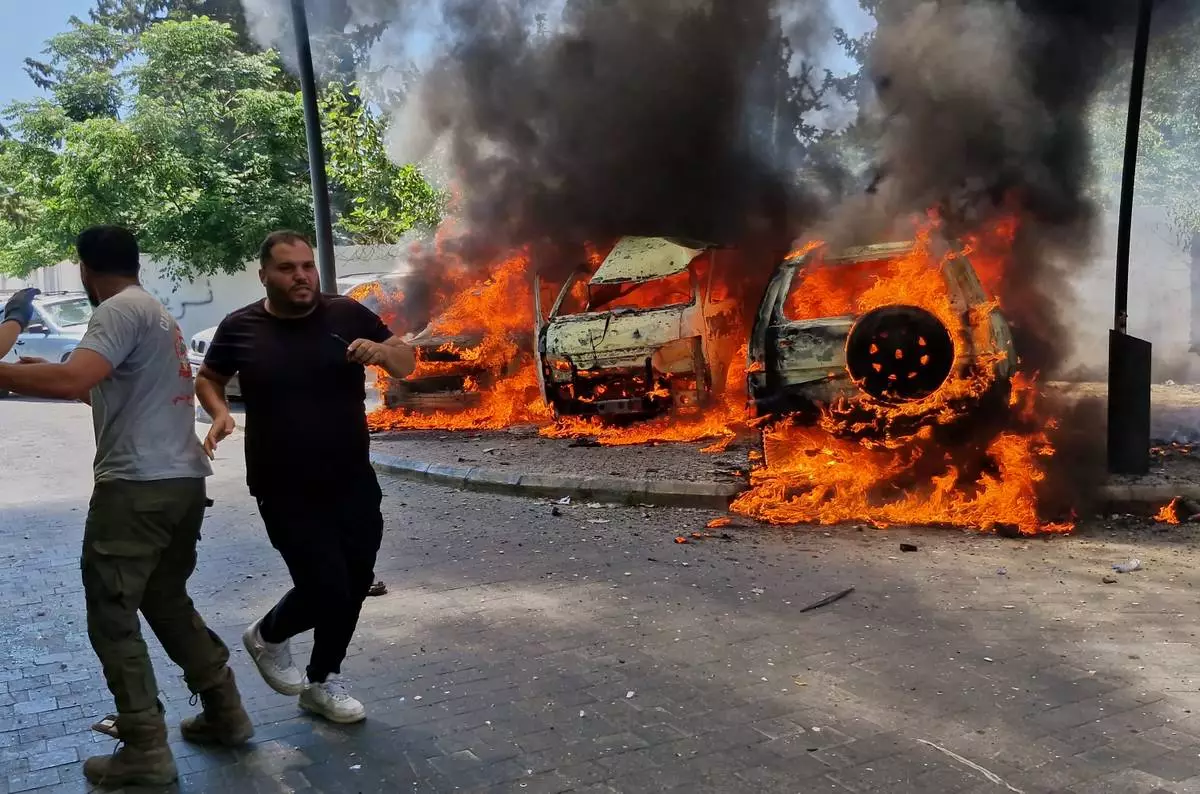
A man runs past burning cars following an Israeli airstrike in the southern port city of Sidon, Lebanon, Wednesday, June 10, 2026. (AP Photo/Mohammed Zaatari)

People take shelter as air raid sirens warn of incoming Iranian missiles in Ramat Gan, Israel, Monday, June 8, 2026. (AP Photo/Oded Balilty)

A projectile streaks through the sky over central Israel during an Iranian missile attack, Sunday, June 7, 2026. (AP Photo/Ohad Zwigenberg)
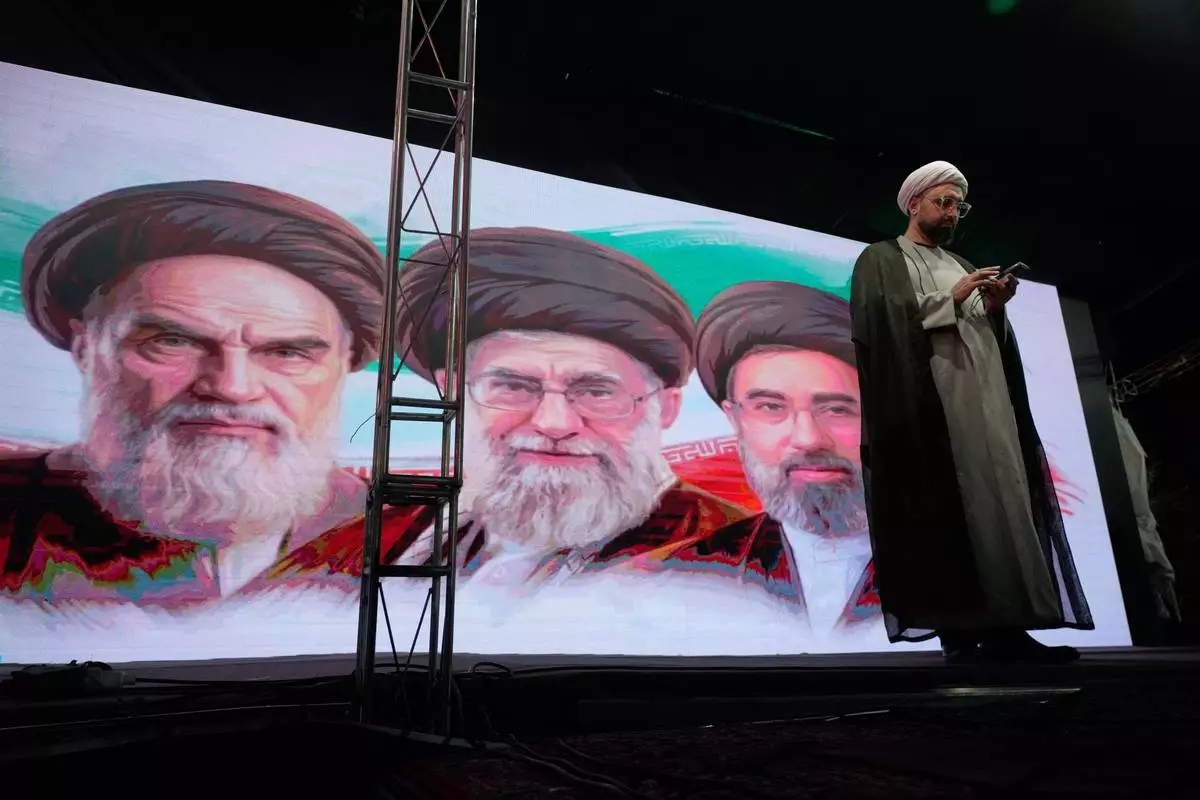
A cleric checks his cell phone on stage in front of a screen displaying portraits of the late Iranian revolutionary founder Ayatollah Khomeini, left, late Supreme Leader Ayatollah Ali Khamenei, center, and Supreme Leader Ayatollah Mojtaba Khamenei, during a pro-government gathering in Tehran, Iran, Sunday, June 7, 2026. (AP Photo/Vahid Salemi)
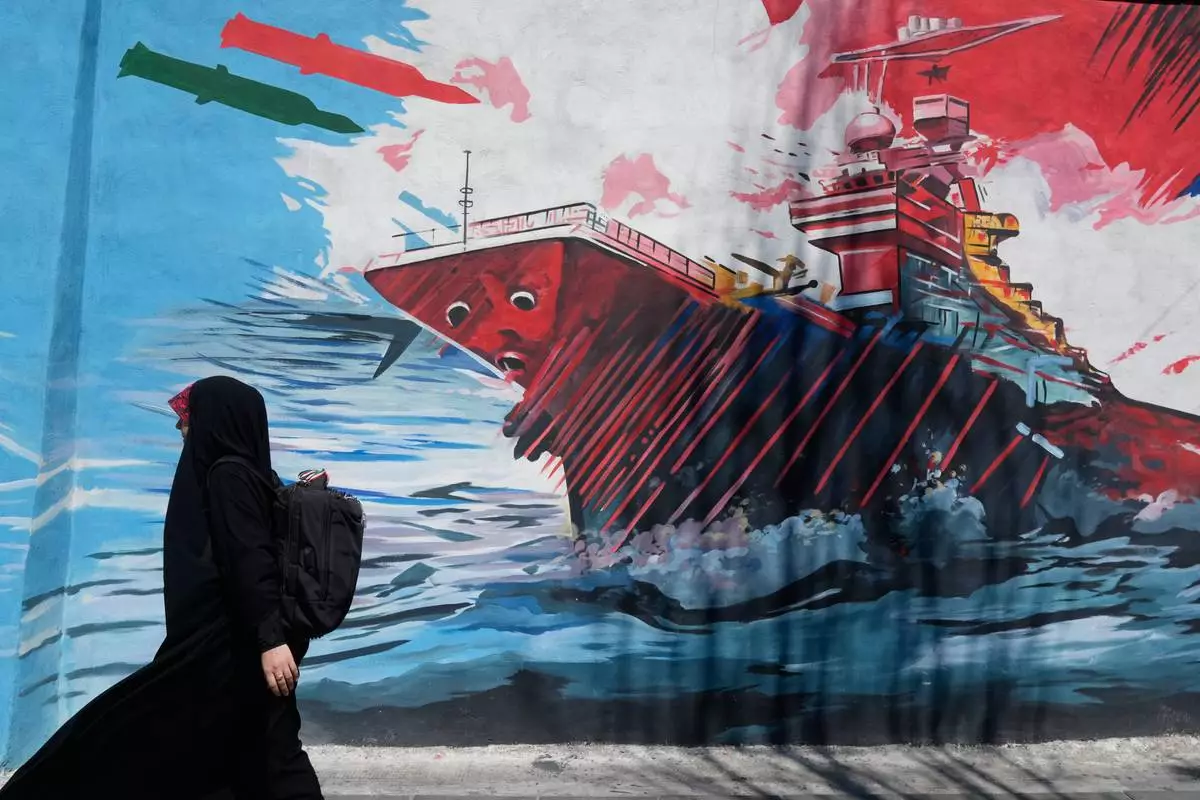
A woman walks past a mural depicting a U.S. aircraft carrier under missile attack in downtown Tehran, Iran, Monday, June 8, 2026. (AP Photo/Vahid Salemi)