The Department of Justice on Friday released some of its records related to its investigations of Jeffrey Epstein. The convicted sex offender and wealthy financier known for his connections to some of the world’s most powerful people, including President Donald Trump, who long sought to keep the files sealed.
Among the thousands of records released are photos, call logs, grand jury testimony and interview transcripts. Many of the documents have been redacted and at least some have already been in the public domain. Justice Department authorities acknowledged in a letter to Congress obtained by The Associated Press that the complete files were not released and the department expected to disclose more by the end of the year.
The White House said the release of the files, mandated by a law passed by Congress, shows how the Trump administration is the “most transparent in history.”
Many photos released by the DOJ were put out without context or explanation, making it difficult to determine what relevancy, if any, the images had to the criminal investigations.
Here's the latest:
Massie and retiring GOP Rep. Marjorie Taylor Greene, who had been leaders in the effort, kept pushing Friday for full disclosure.
“Trump called me a traitor,” Greene said about her refusal to take her name off of what is known as the discharge petition, which broke a legislative logjam on releasing the files. “I couldn’t be more proud I stayed on,” she said in a post.
But the broader GOP leadership in Congress did not immediately join in those calls or warn of potential legal action, as Democrats did, if the Justice Department failed to comply.
The DOJ posted another batch of Epstein-related records a few hours after an initial wave of documents were released.
The new batch contains 120 photographs from the FBI, mostly of boxes, envelopes and folders of evidence from investigations into the late sex offender and his longtime confidante Ghislaine Maxwell. But for the most part, they didn’t show the evidence itself.
Some of the photographs pertained to the investigation into Epstein’s suicide at a Manhattan jail in August 2019. One showed a hard drive with a label stating that it contained security camera footage from the special housing unit and attorney visiting areas at the now-shuttered Metropolitan Correctional Center, where Epstein died. Other photos showed boxes of records from the Palm Beach, Florida, police department’s investigation into Epstein in the 2000s, including a folder labeled “Probable Cause Affidavit” and photos of envelopes which appeared to contain records of interviews in 2007 and telephone surveillance conducted in 2009.
There were also photos of computer hardware seized from his home on Little St. James in the U.S. Virgin Islands, as well as CDs and other items.
Among those flying with Trump on Air Force One to a rally in North Carolina Friday is Deputy Attorney General Todd Blanche.
As the second-ranking official at the DOJ, Blanche has overseen the review of the Epstein files.
He also wrote the letter to Congress that outlined the DOJ’s review and redaction process of the files, and appeared on television earlier Friday to preview the release.
The late “King of Pop” appears in multiple photos released by the DOJ. In one image, Jackson is standing next to a smiling Epstein. In another image he appears alongside singer Diana Ross and former President Clinton. Clinton has his hand on Jackson’s shoulder in the image while the pop icon stares off camera. The photo also includes a woman whose face is redacted.
There is no other context for the photos including when and where they were taken.
Jackson’s name was first connected to Epstein in documents released in January 2024; Jackson was mentioned during a deposition in the lawsuit against Maxwell, though he was not accused of any wrongdoing.
Among the documents was a report of a complaint made to the FBI by a woman in 1996 who believed that photos and negatives she had taken of her 12-year-old and 16-year-old sisters for a personal art project had been stolen by Epstein.
The one-page report was taken years before an investigation was launched into allegations that Epstein was sexually abusing underage girls. The artist’s name is redacted in the file, but the handwritten report says she believed Epstein sold the photos. The woman said Epstein had previously asked her to take photos of young girls at swimming pools.
The complaint also says the woman reported being threatened by Epstein not to talk about the photos or “he will burn her house down.”
An FBI spokesperson said the agency did not have a comment Friday evening when asked about the complaint.
The Epstein investigation “isn’t about Bill Clinton,” a spokesperson for the former President said Friday.
“They can release as many grainy 20-plus-year-old photos as they want, but this isn’t about Bill Clinton,” Angel Ureña said in a statement.
“There are two types of people here,” he said. “The first group knew nothing and cut Epstein off before his crimes came to light. The second group continued relationships after that. We’re in the first. No amount of stalling by people in the second group will change that.”
Long before the DOJ’s release of case files on Epstein — which included several photos of former President Bill Clinton — Republicans had honed in on his association with the wealthy financier.
Republicans on the House Oversight Committee had subpoenaed both Bill and Hillary Clinton for depositions earlier this year, but received a response that the Clintons wanted to provide a written statement of what “little information” they had on Epstein.
The Republican chair of the committee, Rep. James Comer, has demanded they appear for in-person testimonies and threatened to initiate contempt of Congress proceedings if they don’t.
Multiple former presidents have voluntarily testified before Congress, but none has been compelled to do so. Clinton has never been accused of wrongdoing in connection with Epstein, and the mere inclusion of someone’s name or images in files from the investigation does not imply otherwise.
Marina Lacerda, one of the women who says she survived sexual assault by Epstein, beginning when she was 14 years old, said Friday she wanted to see greater transparency from the Justice Department and expressed frustration that all the files aren’t out yet.
“Just put out the files,” she said. “And stop redacting names that don’t need to be redacted.” She said she was skeptical of the administration saying it’s aiming to be transparent.
“In the beginning, they were calling us a hoax, right?” she said. “Now they’re like, ‘We believe you, we’re gonna release the files,’ but yet you still haven’t released the files and it’s not even fully transparent.”
Senior Trump White House aides are taking to X to promote photos in the Epstein files that show Bill Clinton with women whose faces are redacted. Clinton has never been accused of wrongdoing in connection with Epstein, and the mere inclusion of someone’s name or images in files from the investigation does not imply otherwise.
Karoline Leavitt, the White House press secretary, wrote “Oh my!” and added a shocked face emoji in response to a photo of Clinton in a hot tub with a woman whose face was redacted.
In another post, Steven Cheung, the White House communications director, wrote: “Slick Willy! Bill Clinton just chillin, without a care in the world. Little did he know ...” and included a photo of the former president with his arms around someone whose face was also redacted.
The Justice Department says more than 1,200 people were eventually identified as victims of Epstein or their family members. That disclosure came in a letter that DOJ sent to Congress discussing how they reviewed the Epstein files and prepared them for public release.
During the review process, DOJ asked lawyers representing Epstein’s victims to provide those peoples’ names, whether they were previously identified or not. That process led to more than 1,200 people being identified.
“The Department has redacted reference to such names,” Blanche wrote in the letter, obtained by the AP. “In addition to redacting the names of these victims, the Department has also redacted and is not producing any materials that could result in their identification.”
The released files include a small number of photos of Trump which appear to have been in the public domain for decades, including two in which the president and Epstein are posing with now-first lady Melania Trump.
The photo was taken in February 2000 at an event at Trump’s Palm Beach club, Mar-a-Lago, before the pair’s friendship ruptured.
Democratic Rep. Ro Khanna of California said the release so far has been “disappointing.”
Khanna, who worked in Congress with Republican Rep. Thomas Massie of Kentucky on legislation to force the release the files, said they will explore “all options” to ensure compliance with the law.
If Justice Department officials need more time to review, he said, they need to publicly explain their timeline for release.
The Justice Department discussed in detail how it is making decisions on what files to withhold and what files to release. That review protocol was outlined in a six-page letter that Blanche sent to Capitol Hill and was obtained by the AP.
It redacted material that included personally identifiable information about victims, that depicted child sexual abuse materials, that could jeopardize ongoing investigations, or showed images of death, physical abuse or injury.
Material was also withheld if it included classified national security information, and a “limited amount of information” was withheld if it involved certain privileges, such as attorney-client privilege.
In contrast, DOJ attorneys said all unclassified information involving Jeffrey Epstein — including details of criminal investigations and of his detention — and Ghislaine Maxwell could be released.
Other information that could be released, according to DOJ: Flight logs or travel records for aircraft or vehicles used by Epstein, internal DOJ communications on investigations into Epstein and his associates, and details of any immunity deals.
The team that reviewed and prepared the documents for public release included more than 200 Justice Department lawyers, according to a DOJ letter sent to Congress.
In that letter, obtained by the AP, Blanche said 187 lawyers from DOJ’s national security division reviewed all the files to determine what should be released.
Then, 25 attorneys, deemed a “quality control team,” worked to ensure that information that personally identified victims was redacted. Those lawyers came from the DOJ’s Office of Privacy and Civil Liberties and the Office of Information Policy. Lawyers from the Southern District of New York also reviewed the material to confirm that personal information was appropriately redacted.
Democrats in Congress say they are reviewing all their legal options as they assess the Department of Justice’s release of the Epstein files, which they say is not a full release of documents.
Lawmakers could go to court to force the Justice Department to comply with the law passed earlier this year forcing the release, but that would almost certainly be a lengthy process that plays out while the Justice Department releases more files.
Separately, the House Oversight Committee has issued a subpoena for the Epstein files. That could give Congress another avenue to force the release of more information to the committee, but it would require Democrats to convince Republicans to join them in contempt of Congress proceedings. It would be highly unusual for GOP lawmakers to take such a move against a Republican administration.
Democratic Sen. Jeff Merkley of Oregon expressed frustration that the Trump administration had not taken steps to “appropriately redact the Epstein Files to prepare them for release” of their own accord over the last year.
“Instead of meeting the legally required deadline today to release all of the files, they have chosen to illegally disregard the law I led the fight in the Senate to pass,” Merkley said. “By failing to comply, the Administration is openly denying ‘equal justice under the law’ to all of Jeffrey Epstein’s victims.”
Merkley continued: “I’ll keep fighting to release all the Epstein Files and am exploring all avenues and legal tools to get justice for the victims and transparency for the American people.”
In a letter to Congress obtained by the AP, Deputy Attorney General Todd Blanche wrote that the Justice Department was continuing to review files in its possession and expected additional disclosures by the end of the year.
The Justice Department also said it was withholding some documents under exemptions allowed in the law and was redacting names of victims.
Blanche wrote that the department will “continue to add to the public website materials that are responsive under the Act and the Department will inform Congress when that review and production are complete by the end of this year.”
Some show Clinton on a private plane, including one with a woman whose face was redacted from the photo. She's seated alongside the former president with one arm draped over his shoulder. Another photo shows him in a pool with Maxwell and a person whose face also was redacted.
Another photo shows Clinton in a hot tub with a woman whose face was redacted.
The files do not say when the photos were taken.
Clinton has never been accused of wrongdoing in connection with Epstein, and the mere inclusion of someone’s name or images in files from the investigation does not imply otherwise.
Clinton minimized his relationship with Epstein, acknowledging that he traveled on Epstein’s private jet but saying through a spokesperson that he had no knowledge of the late financier’s crimes.
The White House said the release of the Jeffrey Epstein files, which began Friday afternoon, shows how the administration is the “most transparent in history.”
“By releasing thousands of pages of documents, cooperating with the House Oversight Committee’s subpoena request, and President Trump recently calling for further investigations into Epstein’s Democrat friends, the Trump Administration has done more for the victims than Democrats ever have,” said a White House spokeswoman, Abigail Jackson.
Jackson pointed to other Democrats who have had ties to Epstein, such as Delegate Stacey Plaskett, who had received text messages from Epstein during a 2019 House hearing with Michael Cohen, Trump’s former fixer.
The Justice Department said “all reasonable efforts have been made to review and redact personal information pertaining to victims, other private individuals, and protect sensitive materials from disclosure.”
However, in a notice posted with the files, the department warned that some may have been missed as it rushed to get records online. Because of the volume of information involved, the release “may nevertheless contain information that inadvertently includes non-public personally identifiable information or other sensitive content, to include matters of a sexual nature,” the notice said.
The department asked members of the public to notify it promptly of any information that should not have been posted “so we can take steps to correct the problem as soon as possible.
”The law mandating the release, the Epstein Files Transparency Act, requires the Justice Department to make such redactions.
Compiling accurate and thorough information takes time. A team of AP reporters is working to confirm information released by the Justice Department regarding Jeffrey Epstein.
These standards guide our reporting process:
__ We generally do not identify those who say they have been sexually assaulted or subjected to extreme abuse
__ We must make significant efforts to reach anyone who may be portrayed in a negative way in our content
__ We will not knowingly introduce rumor or false information into material
__ We abhor inaccuracies, carelessness, bias or distortions
__ We always strive to identify all the sources of our information
Among the thousands of records released by the Justice Department are photos, call logs, grand jury testimony and interview transcripts. Many of the documents have been redacted and at least some have already been in the public domain.
Some of the photos and transcripts feature Epstein and his longtime confidant, British socialite Ghislaine Maxwell.
Maxwell was charged with recruiting underage girls for Epstein to abuse. She was convicted in late 2021 and is serving a 20-year-prison sentence.
The files also included video clips from inside the Metropolitan Correctional Center in New York City from the day Epstein died by suicide in his jail cell. The video clips had already been released previously by the Justice Department and officials have said for years they showed no one else entering the area around Epstein’s cell before he was found dead.
High interest led the Justice Department to regulate access to its Epstein files website for a time.
The webpage went live Friday afternoon with a waiting room-type queue akin to what concertgoers sometimes see when they go online to purchase tickets.
Visitors were greeted with the message: “You are in line for Department of Justice web content. When it is your turn, you will have 10 minutes to enter the website.”
The webpage then refreshed to reveal a landing page with various categories of documents, including court records and other disclosures.
The secretary of state has finished a sweeping news conference that ran more than two hours and offered a firm defense of Trump agenda from Russian aggression and Venezuelan oil tankers to curtailing legal immigration routes into the U.S.
Rubio said the U.S. is seeking a fair deal between Russia and Ukraine. Building on the Trump administration’s new national security strategy document, Rubio emphasized “security and stability” in the western hemisphere as top U.S. priority.
He defended an aggressive stance toward Venezuela but stopped short of answering whether toppling Nicolas Maduro is a priority.
Rubio emphasized that progress in Israel and Gaza is a long-term proposition.
He acknowledged the backsliding on U.S-mediated deals between Thailand and Cambodia in southeast Asia and Democratic Republic of Congo and Rwanda in Africa.
Rubio defended administration roll backs of legal immigration processes but said freezing certain visas and asylum programs is part of necessary reviews.
“The situation is obviously very tense,” Antonio Guterres told reporters at U.N. headquarters in New York on Friday. “That is why we have been consistently appealing for de-escalation, for dialogue, and for international law to be fully respected.”
Venezuelan President Nicolas Maduro called Guterres on Wednesday and the U.N. deputy spokesman, Farhan Haq, told reporters then that the secretary-general reaffirmed the need to de-escalate and for all U.N. member nations to respect international law, particularly the U.N. Charter.
The Charter requires all 193 U.N. member nations – including the United States and Venezuela – to refrain from the use of force against all other nations and settle all disputes peacefully.
Rubio acknowledged the backsliding on U.S.-mediated deals involving Cambodia and Thailand in southeast Asia and the Democratic Republic of Congo and Rwanda in Africa.
Trump has included both conflicts in a list of wars he insists he has ended. Fighting continues.
Rubio said the U.S. role now is to bring Cambodia and Thailand “back to the table.” Both sides, he said, are not keeping the agreement they signed and “claim grievances against one another.”
In Africa, Rubio says administration officials remain engaged and “have asked our friends on the Hill, both Republicans and Democrats, to also engage in conversations of their own with these leaders” to emphasize a bipartisan U.S. interest in peace.
Attorneys for Trump urged a federal judge on Friday to rule that Trump is entitled to presidential immunity from civil claims that he instigated a mob’s attack on the U.S. Capitol to stop Congress from certifying the results of the 2020 election.
U.S. District Judge Amit Mehta didn’t rule from the bench after hearing arguments from Trump attorneys and lawyers for Democratic members of Congress who sued the Republican president and allies over the Jan. 6. 2021, attack.
Trump spoke to a crowd of his supporters at the “Stop the Steal” rally near the White House before the mob’s attack disrupted the joint session of Congress for certifying Democratic President Joe Biden’s electoral victory.
Trump’s attorneys argue that his conduct leading up to Jan. 6 and on the day of the riot were official acts protected by presidential immunity.
“The entire point of immunity is to give the president clarity to speak in the moment as the commander-in-chief,” Trump attorney Joshua Halpern told the judge.
The lawmakers’ lawyers argue Trump can’t prove he was acting entirely in his official capacity rather than as an office-seeking private individual.
Rubio has defended Trump’s prerogatives on Venezuela but allowed that Congress has a role in military action.
The secretary of state said “multiple administrations, including this one, have sought congressional approval and or certainly congressional notification of actions taken. Why? Because American action is always strongest when it has the buy in and the participation of a broad set of actors.”
He clarified, though, that the administration believes “nothing has happened that requires us to notify Congress or get congressional approval or cross the threshold into war.” He added, “We have very strong legal opinions.”
Rubio’s response came to a question about White House chief of staff Susie Wiles telling Vanity Fair magazine that ground troop involvement would require congressional ratification.
The secretary of state said that while the Trump administration aims to solve military conflicts around the world, there is no negotiating with drug cartels or international criminal organizations.
Speaking with reporters, Rubio said that while the U.S. is working to resolve several conflicts around the world, confronting drug traffickers is a different challenge that requires a different response.
Rubio’s comments came amid attacks on alleged drug vessels in the Caribbean and eastern Pacific as well as an escalating conflict with Venezuela, whose leaders Trump says have worked to facilitate the trafficking of drugs into the U.S.
“We’re not going to reach a peace deal with narcotrafficking bands,” Rubio said. “We can’t reach a peace deal with MS-13. We can’t reach a peace deal with Tren de Argua.”
Reps. Robert Garcia of California and Jamie Raskin of Maryland said in a joint statement that Trump and the Justice Department “are now violating federal law.”
They released the statement after a DOJ official said the department would only release a partial tranche of files related Epstein by a legally mandated deadline.
“We are now examining all legal options in the face of this violation of federal law. The survivors of this nightmare deserve justice, the co-conspirators must be held accountable, and the American people deserve complete transparency from DOJ,” the statement continued.
Congress passed Trump signed a law that requires the Justice Department to publish “all unclassified records, documents, communications, and investigative materials in DOJ’s possession that relate to the investigation and prosecution of Jeffrey Epstein” with a deadline by midnight tonight.
Deputy Attorney General Todd Blanche said during a Friday Fox News interview that the department would release “several hundred thousand” documents today, “and then over the next couple weeks, I expect several hundred thousand more.”
Rubio gave an intense defense of his job performance when asked about criticism from Senate Democrats who once served with him on Capitol Hill.
“When I was a senator, I represented the state of Florida,” he said. “Today, I am the secretary of state for Donald J. Trump, the president of the United States, and my job is to implement the president’s foreign policy -- provide advice, provide counsel, provide ideas, provide for opportunities and ways in which his foreign policy can be implemented.”
He said the notion that he’s an independent actor “ridiculous” and “stupid really.”
Rubio added that the current political environment makes it easy for Democrats to criticize Trump. There’s not political upside, he said, for a Democrat “saying what a great guy Marco Rubio is.”
Senate Democrats voted unanimously for Rubio’s confirmation but several have expressed regrets and criticized his role in administering Trump’s policies, notably curtailing visas and other legal immigration avenues.
A coalition of nonprofit organizations has filed a lawsuit challenging cancellation of conservation grants issued by the Interior Department.
Officials canceled 79 grant agreements, totaling nearly $14 million, to restore species, recover ecosystems and manage watersheds and other natural resources. Groups affected include the nonprofit Institute for Applied Ecology, Institute for Bird Populations and Mid Klamath Watershed Council.
The September cancellations came the same day as posts on social media and in The Daily Caller, an online conservative publication, that cited “diversity, equity and inclusion values” espoused by the affected groups as justification for canceling the grants.
The lawsuit says the timing “makes clear that the grants were cancelled as part of an unlawful political viewpoint purge.” The Interior Department did not immediately respond to a request for comment.
Rubio says the U.S. is working with regional powers to try to secure a humanitarian ceasefire in Sudan in time for the new year.
Speaking to reporters Friday, Rubio said negotiators have engaged with representatives from Egypt, the United Arab Emirates and Saudi Arabia. Of particular concern, he said, is the shipment of weapons from other countries to the paramilitary Rapid Support Forces for use in its war against the Sudanese military.
“Our No. 1 priority … is this humanitarian truce and achieving that as soon as possible,” Rubio said. “We think the new year and holidays are a great opportunity for both sides to agree to that.”
The president said in a post on his social media network that the unemployment rate ticked up because “because we are reducing the Government Workforce by numbers that have never been seen before.”
The Labor Department reported this week that federal government job losses did play a role, but losses in the transportation and warehousing sectors did as well.
Trump in his post got the unemployment rate wrong: It rose last month to 4.6%, the highest since 2021. Trump in post said that it was 4.5%.
Trump said he could lower the unemployment rate to 2% “overnight by just hiring people into the Federal Government, even though those Jobs are not necessary.”
Rubio describes an ultimate goal of U.S. foreign policy as “security and stability” in the Western Hemisphere, and singled out Venezuela as an especially uncooperative state in that aim.
He says Venezuela is actively “in cahoots with drug trafficking organizations” that the Trump administration has labeled as international terrorists.
The U.S. has amassed an unusually large force in the Caribbean Sea and the waters off the coast of Venezuela since this summer and recently seized a tanker with sanctioned oil tied to leader Nicolás Maduro. Venezuela has not responded militarily.
Rubio is addressing reporters for the first time since a Vanity Fair piece quoted White House chief of staff Susie Wiles suggesting that Trump’s ultimate aim in Venezuela is to topple Maduro.
Rubio says international leaders are working out the details of a plan to enforce the ceasefire in Gaza, including an International Stabilization Force.
He told reporters Friday that the creation of a “ Board of Peace ” is the first step, and will involve figuring out the specifics of daily governance in the region.
Then officials must agree on the funding and scope of the mission for the international force, which would be dedicated to enforcing the U.S.-brokered ceasefire between Hamas and Israel that was enacted following two years of fighting.
Then it will be time to formalize the list of countries willing to send personnel for the force, Rubio said.
“We owe them a few more answers before we ask them to firmly commit,” Rubio said when asked about reports that Pakistan was considering its participation in the force.
Rubio says the U.S. diplomatic effort to end the Russia-Ukraine war will turn on identifying what compromises Moscow and Kyiv can accept.
“We’re trying to figure out what can Russia give and what do they expect to get and what can Ukraine get,” he said, emphasizing that any “negotiated settlement” requires sacrifices from both sides.
Rubio said that he, Trump, Vice President JD Vance and other top administration officials have invested considerable time pushing for answers, and “the decision will be up to Ukraine and up to Russia.”
Rubio is speaking to reporters for the first time since a Vanity Fair piece quoted him and White House chief of staff Susie Wiles suggesting that Trump does not think Putin would be satisfied with annexing only a part of Ukraine.
The most draconian sanctions imposed on Syria in decades are finally lifted. The U.S. Congress imposed the so-called Caesar Act sanctions on Syria’s government and financial system in 2019 to punish then-President Bashar Assad for human rights abuses during the country’s nearly 14-year civil war that began in 2011.
After Assad was ousted in a lightning rebel offensive in December 2024, advocates — including some who had previously lobbied for the imposition of the sanctions — argued that the sanctions were preventing international investors from launching reconstruction projects and blocking Syria from rebuilding its battered economy and infrastructure.
Trump had temporarily lifted the penalties by executive order and signed off on the final repeal late Thursday after Congress passed it as part of the annual defense spending bill.
▶ Read more about the lifting of U.S. sanctions on Syria
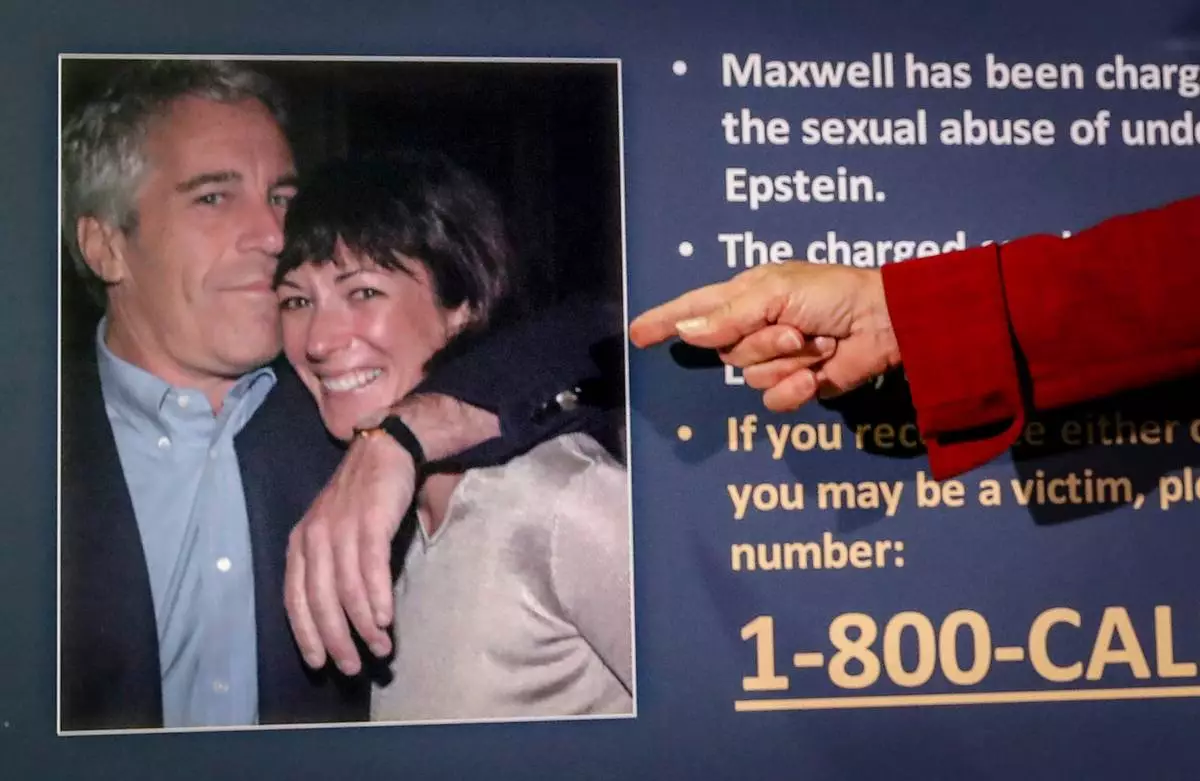
FILE - Audrey Strauss, acting U.S. attorney for the Southern District of New York, points to a photo of Jeffrey Epstein and Ghislaine Maxwell, during a news conference in New York on July 2, 2020. (AP Photo/John Minchillo, File)
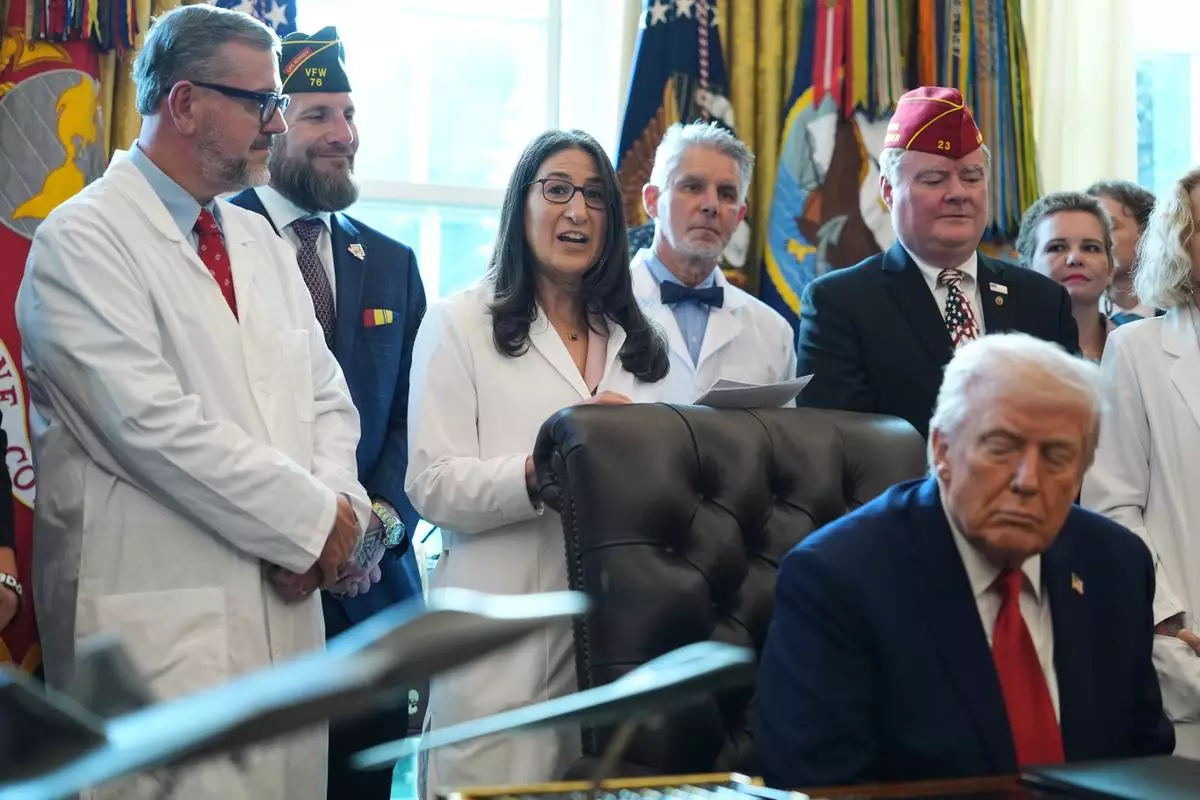
President Donald Trump listens as Dr. Ilana Braun, chief of Dana-Faber cancer Institute's Adult Psychosocial Oncology Service, speaks after the president signed an executive order reclassifying marijuana as a less dangerous drug in the Oval Office of the White House, Thursday, Dec. 18, 2025, in Washington. (AP Photo/Evan Vucci)
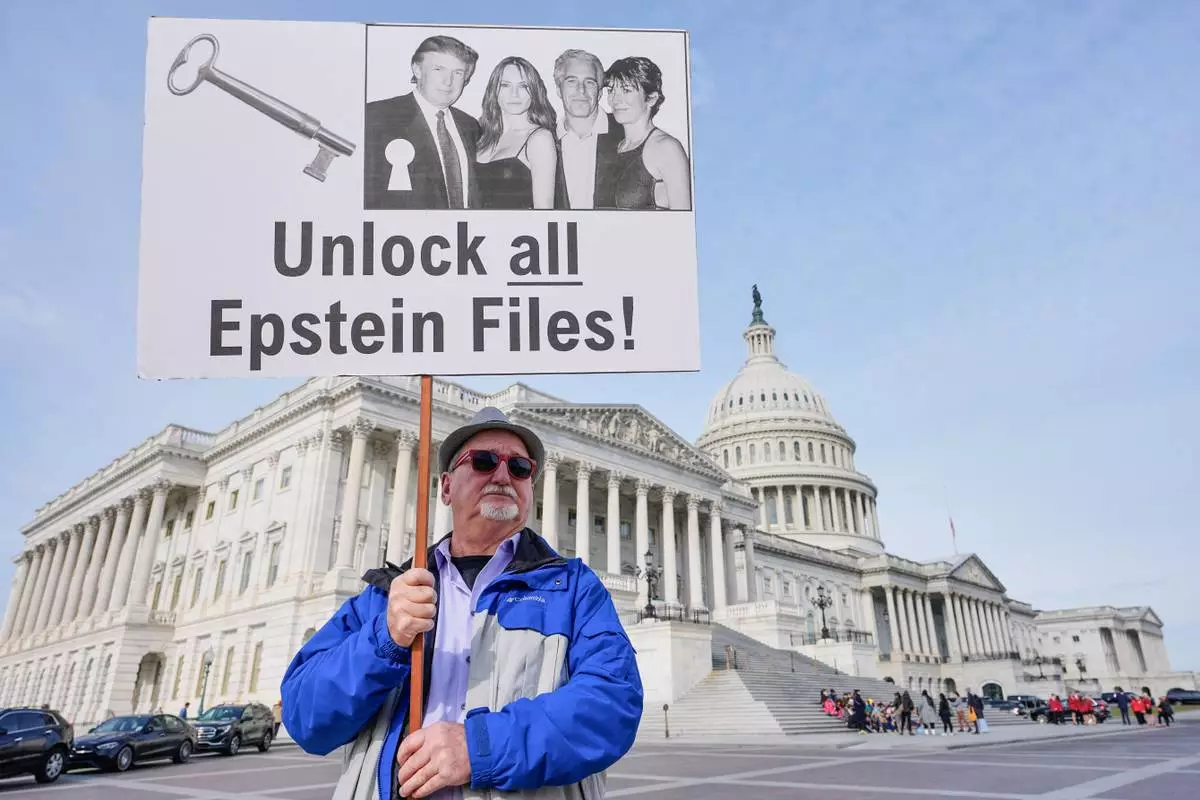
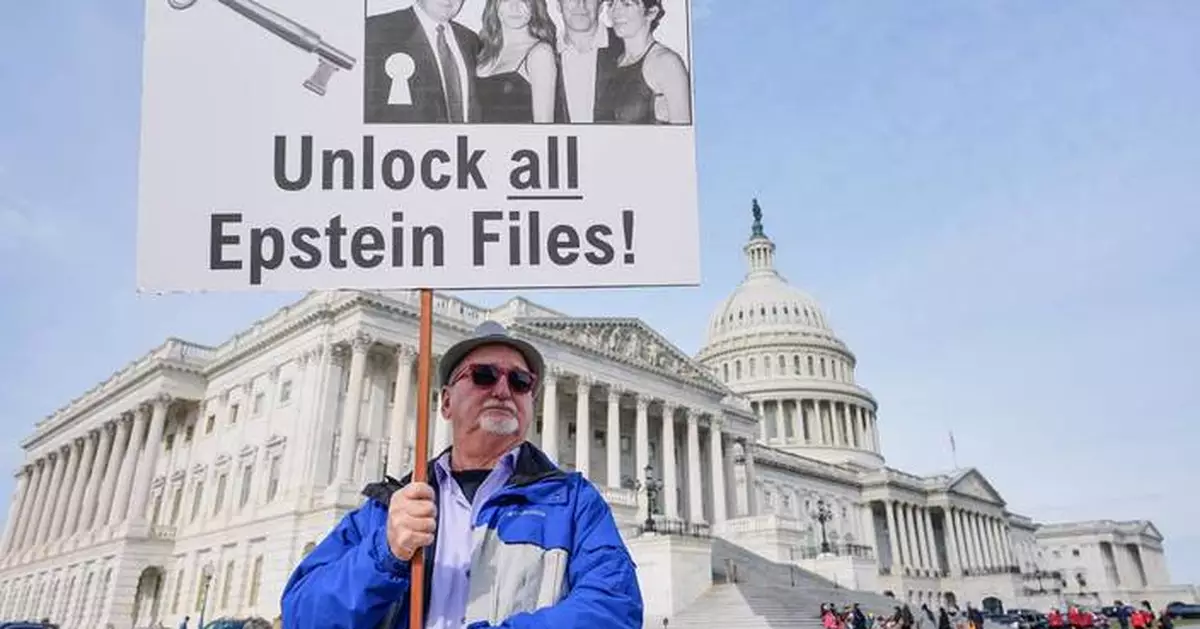
FILE - Gary Rush, College Park, MD, holds a sign before a news conference on the Epstein files in front of the Capitol, Tuesday, Nov. 18, 2025, in Washington. (AP Photo/Mariam Zuhaib, File)