DENVER (AP) — Imagine this inspirational slogan on a T-shirt: Give 70% effort.
It’s not quite as catchy as the 110% baseball players have been instructed to exert since Little League. But maybe, just maybe, Jazz Chisholm Jr.’s on to something with his theory that going 70% might be the way to be his best self — and cut down on strained obliques or pulled hamstrings in the process.
Only, hustle is woven into the fabric of the game. Nicknames derive from it (Charlie Hustle) and awards are built around it ( Heart & Hustle ).
This season, hustle has already come into play on several occasions. Most notably, when Juan Soto, the Mets $765 million star, didn’t run hard to second base after smacking a ball high off the Green Monster at Fenway Park.
In this modern era of baseball, where the average salary topped $5 million for the first time this season, the politics of hustle may play a role. There's the fundamental notion of hustle (run everything out) set against the possible ramifications of hustle (injuries to high-priced players).
To the old guard, though, hustle is a non-negotiable. A lack thereof risks the wrath of not only teammates but a spot in a manager’s doghouse. Which is why Chisholm’s 70% mindset doesn’t quite fly for Ron Washington, a gritty player back in the late 1970s and '80s who now manages the Los Angeles Angels.
“You give the visual of 100% at all times," the 73-year-old Washington told The Associated Press. "The only person who knows you’re 70% is you, but don’t tell people you’re 70%, so when they see you dog it, they say, ‘Well, he’s only 70%.’”
The Baseball Almanac defines hustle as “to play aggressively, quickly, and alertly.”
Translation: You know it when you see it.
Two months ago, Braves star Ronald Acuña Jr. criticized manager Brian Snitker’s lack of response to Jarred Kelenic failing to hustle out of the batter’s box. Acuña was removed from a Braves game on Aug. 19, 2019, when he was slow to leave the batter’s box on a long drive that bounced off the right-field wall for a long single.
“There’s no blanket thing,” Snitker said after the Kelenic situation on removing players for lack of hustle.
To Washington, the definition of hustle has “changed in this generation,” he said. ”Because (the lack of hustle) wouldn’t have been allowed in other generations. ... Now people don’t want to pull their best player off the field when he acts like an (expletive). I’m sorry. They don’t want to pull him. Because you pull him, you just gutted the whole team.
“Back in the day, they didn’t care. You didn’t hustle, your (butt) is off the field. And you know who took care of it when they took you off the field? The players. Not management. Not the manager, not the coaches. The players took care of it.”
That’s Vinny Castilla’s take, too. The two-time All-Star for the Colorado Rockies in the 1990s had veterans pull him aside when sometimes “you don’t feel too good and you don’t go 100%.”
“The veterans step in and say, ‘Hey, man, you’ve got to do it. You’ve got to hustle every day,'” Castilla said. “Hustle doesn’t change. ... Some players love to play hard and get their uniform dirty, and some players don’t like to do it."
Diamondbacks manager Torey Lovullo said that he generally expects players to give 100% each day, but that’s relative to how their feeling. As a recent example, Lovullo cited star outfielder Corbin Carroll, who was nursing a tight hamstring during a series in Cincinnati.
“For Corbin the past couple days, just give me 100% of what you have," Lovullo said. "So, yeah, we’ll protect players.”
In most cases, Lovullo said, hustle is a hard thing to turn on and off.
“If a player is healthy, I feel like there’s no reason to not go 100%. To run fast, you’ve got to practice running fast," he said. "To throw hard, you’ve got to practice throwing hard. You can’t turn it on and off. I think you’re risking injury when you don’t go hard and then all (of a) sudden you need to go hard."
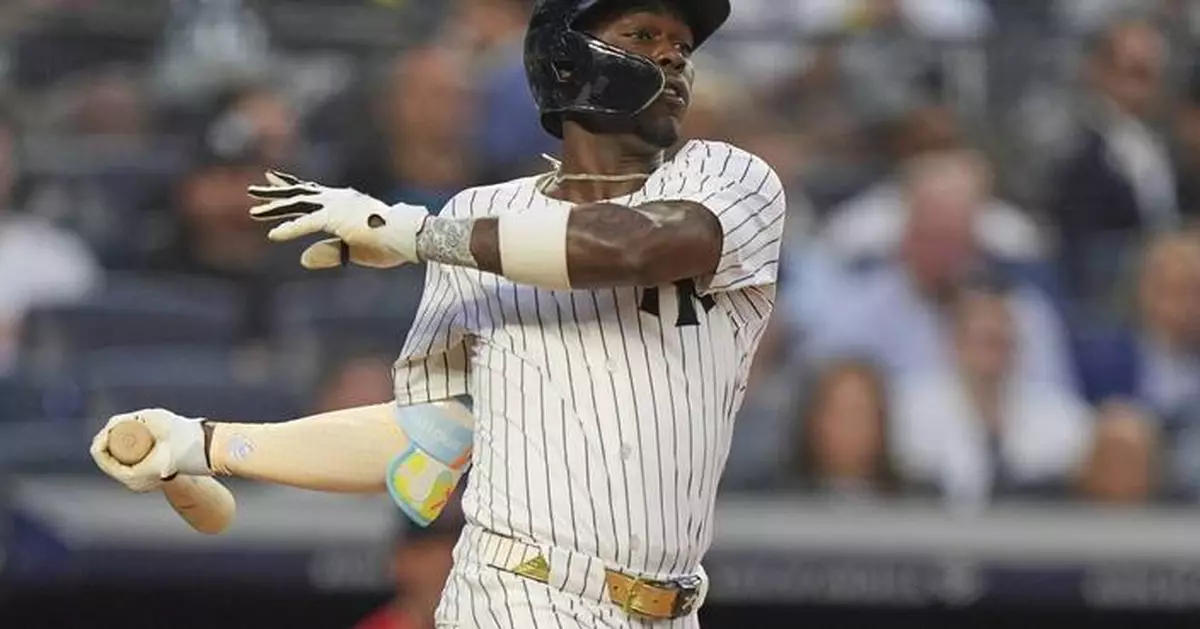
Chisholm believes he found the key to playing well and staying healthy by going 70%. The New York Yankees infielder postulated that his success since returning from the injured list has been caused by limiting intensity.
“Play at 70%: defense, offense, running, everything,” Chisholm said. "Stay healthy. You don’t overswing. You don’t swing and miss as much, and you’re a great player at 70%.”
Of course, that wouldn’t have gone over well with “Charlie Hustle” himself — the late Pete Rose, who elevated hustling to an art form.
That was also before the age of the viral bat flip. Admiring homers is not just permitted, it's encouraged — and doesn't result in a fastball to the ribs the next go-around at the plate. In Soto's case, he appeared slow out of the box after watching what he thought was a homer.
It's a different time from Washington's day.
“The game became young and it got to the point where we don’t want to hurt nobody’s feelings,” he said. “I don’t remember (longtime big-league manager) Gene Mauch giving a (expletive) about hurting my feelings. ... You didn’t get the job done, then I’m letting you know you didn’t get the job done. And if you don’t want me screaming at you, guess what you better do? Get the job done!”
It’s a balancing act for sure.
“Some days are tougher than others. We always say that,” Nationals manager Dave Martinez said. "We’re going to play hard for 27 outs. There’s gonna be days where Woody (22-year-old budding star James Wood) sometimes will run out a groundball because he knows he’ got a chance to make it. There will be some days where he hits a 110-mph one-hopper where he doesn’t go hard out of the box, and I can understand that.”
Hustle, much like Chisholm’s theory, remains complicated.
“Some of it is what you would call eyewash, and some of it’s real,” Brewers manager Pat Murphy explained. “Real hustle means staying present in the game and staying on the game, being relentless in pitch-to-pitch readiness. Sometimes you can’t even see it. I can see it.
“Your mind’s decided on something else. You’re worried about your contract or you’re worried about next year or you’re worried about a .300 batting average versus .299. I look at that as kind of lack of proper focus, not necessarily not hustling, the actual physical hustle. I think these guys play their (butts) off.”
Yankees outfielder Cody Bellinger learned the importance of hustle through a stare. He and his teammates growing up called it the “Clay Stare.” It was the look from Bellinger’s father, Clay, his longtime coach who helped instill the values of the game.
“You don’t ever want the ‘Clay Stare,’” Bellinger said. “My dad was always like, ‘Hey, run balls out. People are always watching.’”
Bellinger's been benched in his career, like when he was with the Dodgers in 2018 and manager Dave Roberts sat him for not hustling on a double.
“Hustle, I think, it’s one of the few things in this game you can control,” Bellinger said. “You can’t control where you hit the ball. But you can always control hustle and energy.”
AP Baseball Writers Mike Fitzpatrick, David Brandt and Ronald Blum, AP Sports Writer Steve Megargee and AP freelance writer Mike DiGiovanna contributed to this report.
AP MLB: https://apnews.com/MLB
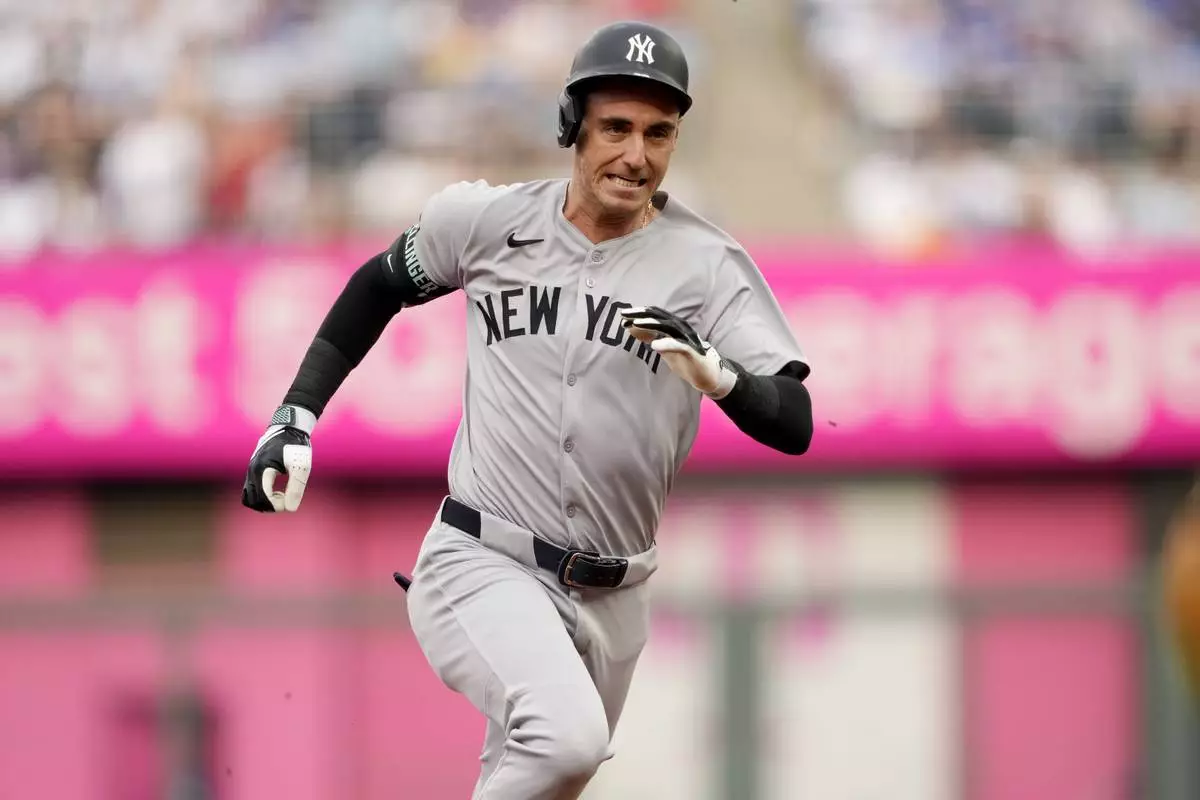
New York Yankees' Cody Bellinger heads to third for a triple in the second inning during a baseball game against the Kansas City Royals, Wednesday, June 11, 2025, in Kansas City, Mo. (AP Photo/Ed Zurga)
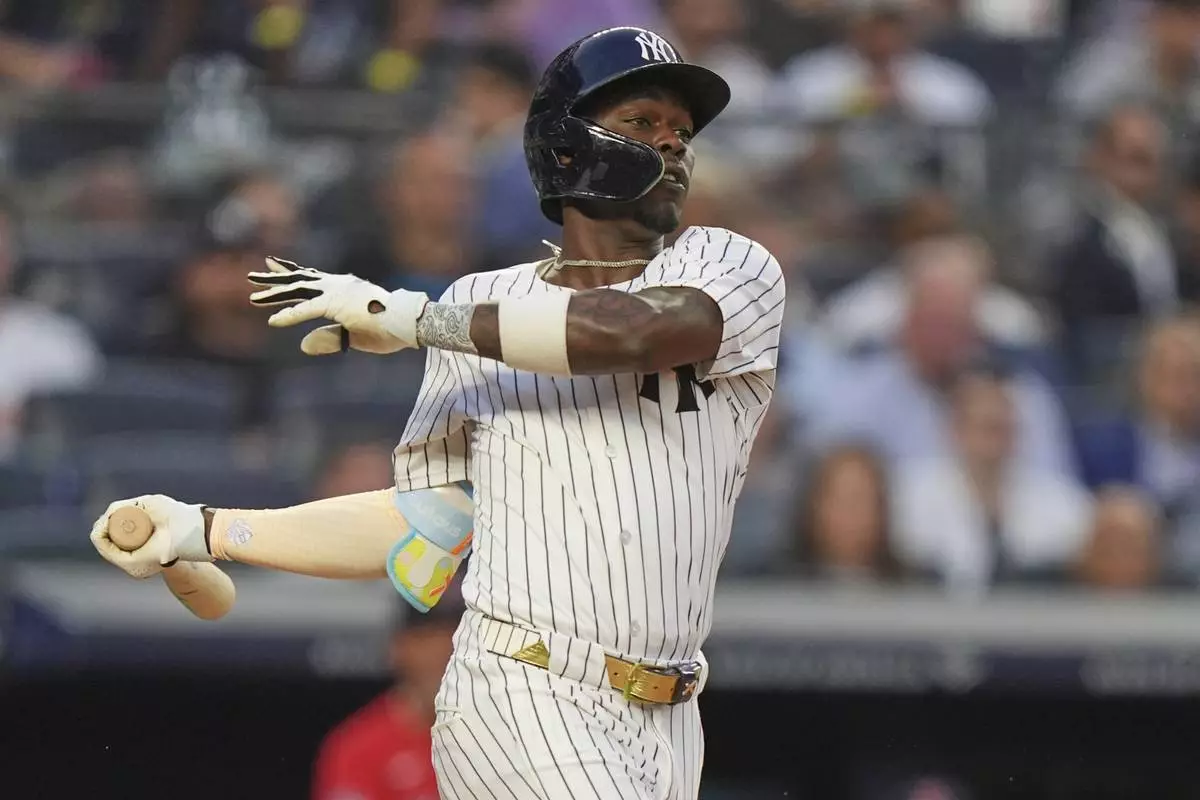
New York Yankees' Jazz Chisholm Jr. hits an RBI single during the second inning of a baseball game against the Boston Red Sox, Friday, June 6, 2025, in New York. (AP Photo/Frank Franklin II)
U.S. President Donald Trump wants to own Greenland. He has repeatedly said the United States must take control of the strategically located and mineral-rich island, which is a semiautonomous region that's part of NATO ally Denmark.
Officials from Denmark, Greenland and the United States met Thursday in Washington and will meet again next week to discuss a renewed push by the White House, which is considering a range of options, including using military force, to acquire the island.
Trump said Friday he is going to do “something on Greenland, whether they like it or not.”
If it's not done “the easy way, we're going to do it the hard way," he said without elaborating what that could entail. In an interview Thursday, he told The New York Times that he wants to own Greenland because “ownership gives you things and elements that you can’t get from just signing a document.”
Danish Prime Minister Mette Frederiksen has warned that an American takeover of Greenland would mark the end of NATO, and Greenlanders say they don't want to become part of the U.S.
This is a look at some of the ways the U.S. could take control of Greenland and the potential challenges.
Trump and his officials have indicated they want to control Greenland to enhance American security and explore business and mining deals. But Imran Bayoumi, an associate director at the Atlantic Council’s Scowcroft Center for Strategy and Security, said the sudden focus on Greenland is also the result of decades of neglect by several U.S. presidents towards Washington's position in the Arctic.
The current fixation is partly down to “the realization we need to increase our presence in the Arctic, and we don’t yet have the right strategy or vision to do so,” he said.
If the U.S. took control of Greenland by force, it would plunge NATO into a crisis, possibly an existential one.
While Greenland is the largest island in the world, it has a population of around 57,000 and doesn't have its own military. Defense is provided by Denmark, whose military is dwarfed by that of the U.S.
It's unclear how the remaining members of NATO would respond if the U.S. decided to forcibly take control of the island or if they would come to Denmark's aid.
“If the United States chooses to attack another NATO country militarily, then everything stops,” Frederiksen has said.
Trump said he needs control of the island to guarantee American security, citing the threat from Russian and Chinese ships in the region, but “it's not true” said Lin Mortensgaard, an expert on the international politics of the Arctic at the Danish Institute for International Studies, or DIIS.
While there are probably Russian submarines — as there are across the Arctic region — there are no surface vessels, Mortensgaard said. China has research vessels in the Central Arctic Ocean, and while the Chinese and Russian militaries have done joint military exercises in the Arctic, they have taken place closer to Alaska, she said.
Bayoumi, of the Atlantic Council, said he doubted Trump would take control of Greenland by force because it’s unpopular with both Democratic and Republican lawmakers, and would likely “fundamentally alter” U.S. relationships with allies worldwide.
The U.S. already has access to Greenland under a 1951 defense agreement, and Denmark and Greenland would be “quite happy” to accommodate a beefed up American military presence, Mortensgaard said.
For that reason, “blowing up the NATO alliance” for something Trump has already, doesn’t make sense, said Ulrik Pram Gad, an expert on Greenland at DIIS.
U.S. Secretary of State Marco Rubio told a select group of U.S. lawmakers this week that it was the Republican administration’s intention to eventually purchase Greenland, as opposed to using military force. Danish and Greenlandic officials have previously said the island isn't for sale.
It's not clear how much buying the island could cost, or if the U.S. would be buying it from Denmark or Greenland.
Washington also could boost its military presence in Greenland “through cooperation and diplomacy,” without taking it over, Bayoumi said.
One option could be for the U.S. to get a veto over security decisions made by the Greenlandic government, as it has in islands in the Pacific Ocean, Gad said.
Palau, Micronesia and the Marshall Islands have a Compact of Free Association, or COFA, with the U.S.
That would give Washington the right to operate military bases and make decisions about the islands’ security in exchange for U.S. security guarantees and around $7 billion of yearly economic assistance, according to the Congressional Research Service.
It's not clear how much that would improve upon Washington's current security strategy. The U.S. already operates the remote Pituffik Space Base in northwestern Greenland, and can bring as many troops as it wants under existing agreements.
Greenlandic politician Aaja Chemnitz told The Associated Press that Greenlanders want more rights, including independence, but don't want to become part of the U.S.
Gad suggested influence operations to persuade Greenlanders to join the U.S. would likely fail. He said that is because the community on the island is small and the language is “inaccessible.”
Danish Foreign Minister Lars Løkke Rasmussen summoned the top U.S. official in Denmark in August to complain that “foreign actors” were seeking to influence the country’s future. Danish media reported that at least three people with connections to Trump carried out covert influence operations in Greenland.
Even if the U.S. managed to take control of Greenland, it would likely come with a large bill, Gad said. That’s because Greenlanders currently have Danish citizenship and access to the Danish welfare system, including free health care and schooling.
To match that, “Trump would have to build a welfare state for Greenlanders that he doesn’t want for his own citizens,” Gad said.
Since 1945, the American military presence in Greenland has decreased from thousands of soldiers over 17 bases and installations to 200 at the remote Pituffik Space Base in the northwest of the island, Rasmussen said last year. The base supports missile warning, missile defense and space surveillance operations for the U.S. and NATO.
U.S. Vice President J.D. Vance told Fox News on Thursday that Denmark has neglected its missile defense obligations in Greenland, but Mortensgaard said that it makes “little sense to criticize Denmark,” because the main reason why the U.S. operates the Pituffik base in the north of the island is to provide early detection of missiles.
The best outcome for Denmark would be to update the defense agreement, which allows the U.S. to have a military presence on the island and have Trump sign it with a “gold-plated signature,” Gad said.
But he suggested that's unlikely because Greenland is “handy” to the U.S president.
When Trump wants to change the news agenda — including distracting from domestic political problems — “he can just say the word ‘Greenland' and this starts all over again," Gad said.
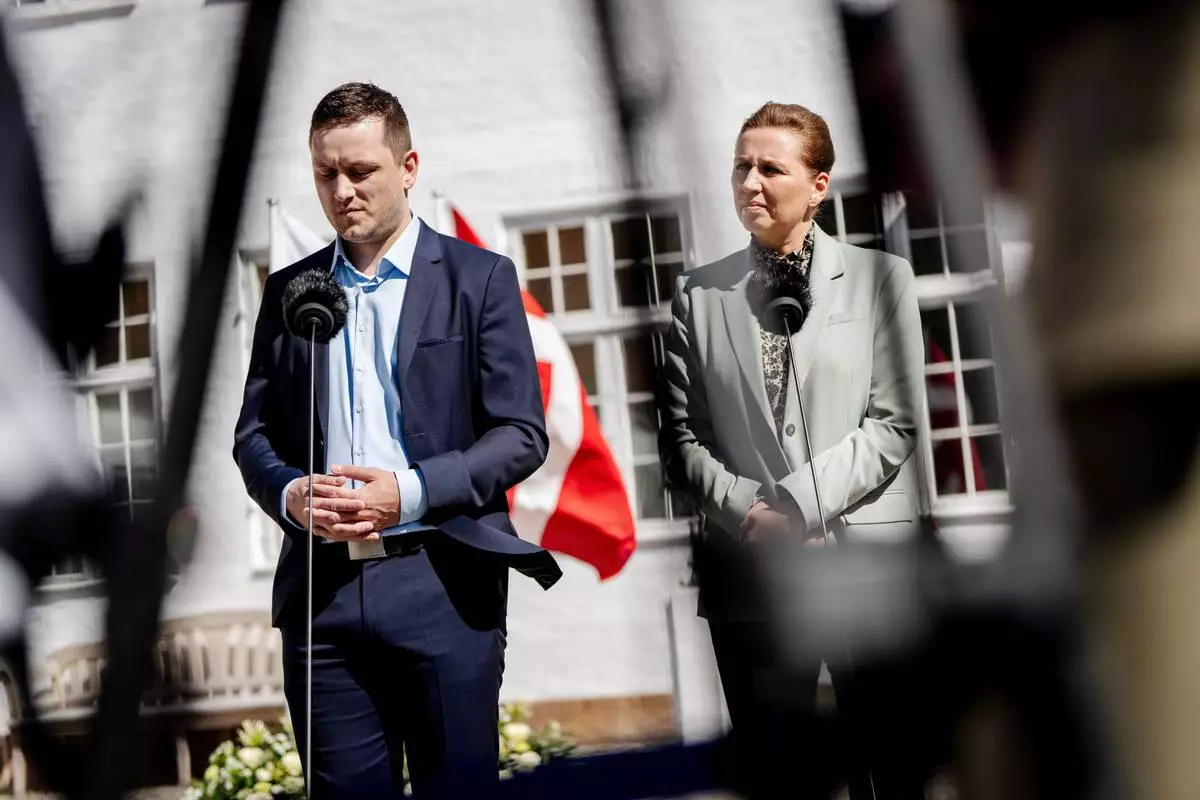
CORRECT THE ORDER OF SPEAKERS, FILE - Denmark's Prime Minister Mette Frederiksen, right, and Greenland's Prime Minister Jens-Frederik Nielsen, left, speak on April 27, 2025, in Marienborg, Denmark. (Mads Claus Rasmussen/Ritzau Scanpix via AP, File)

FILE - Danish military forces participate in an exercise with hundreds of troops from several European NATO members in the Arctic Ocean in Nuuk, Greenland, Sept. 15, 2025. (AP Photo/Ebrahim Noroozi, File)
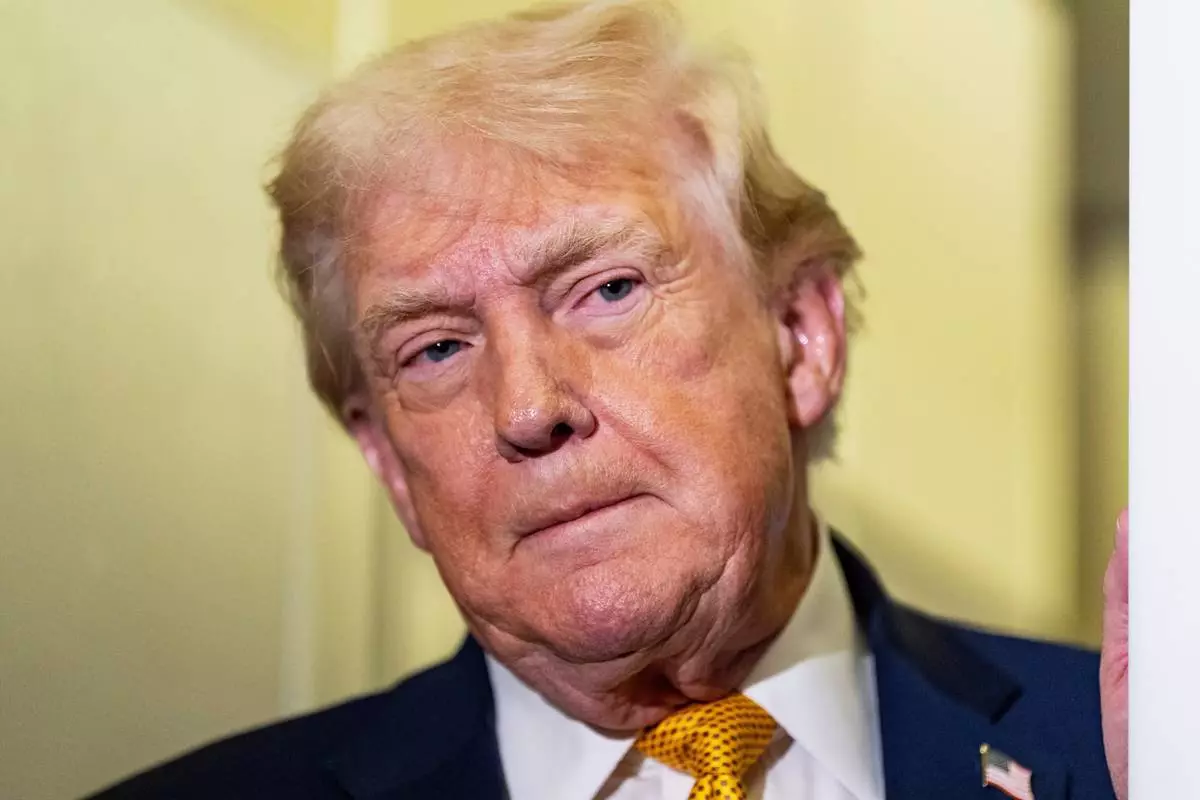
President Donald Trump listens as he was speaking with reporters while in flight on Air Force One, Sunday, Jan. 4, 2026, as returning to Joint Base Andrews, Md. (AP Photo/Alex Brandon)
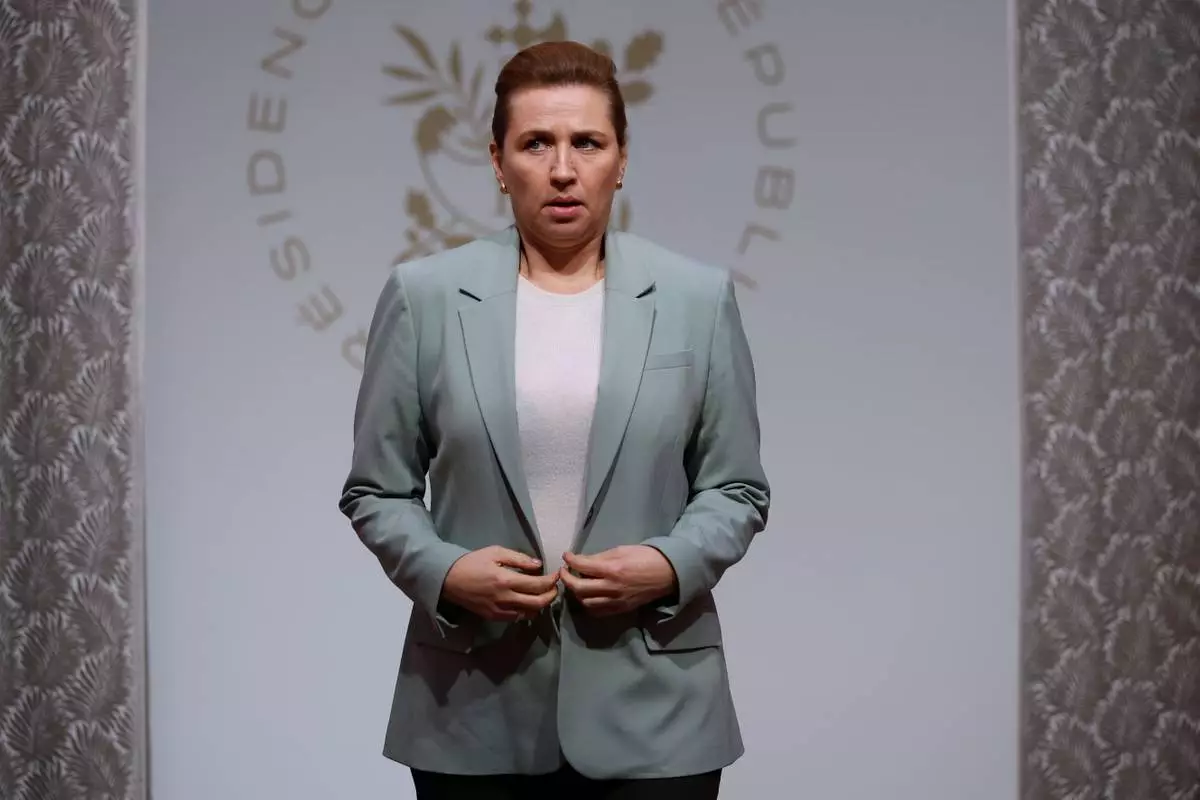
Danish Prime Minister Mette Frederiksen arrives for a meeting of the Coalition of the Willing at the Elysee Palace in Paris, France, Tuesday, Jan.6, 2026. (Yoan Valat, Pool photo via AP)

FILE - A plane carrying Donald Trump Jr. lands in Nuuk, Greenland, Jan. 7, 2025. (Emil Stach/Ritzau Scanpix via AP, file)