Skip to Content Facebook Feature Image

China-aided irrigation project helps Kyrgyz villagers tackle drought, boost incomes

China

China

China

China-aided irrigation project helps Kyrgyz villagers tackle drought, boost incomes

2025-06-13 17:20 Last Updated At:20:57

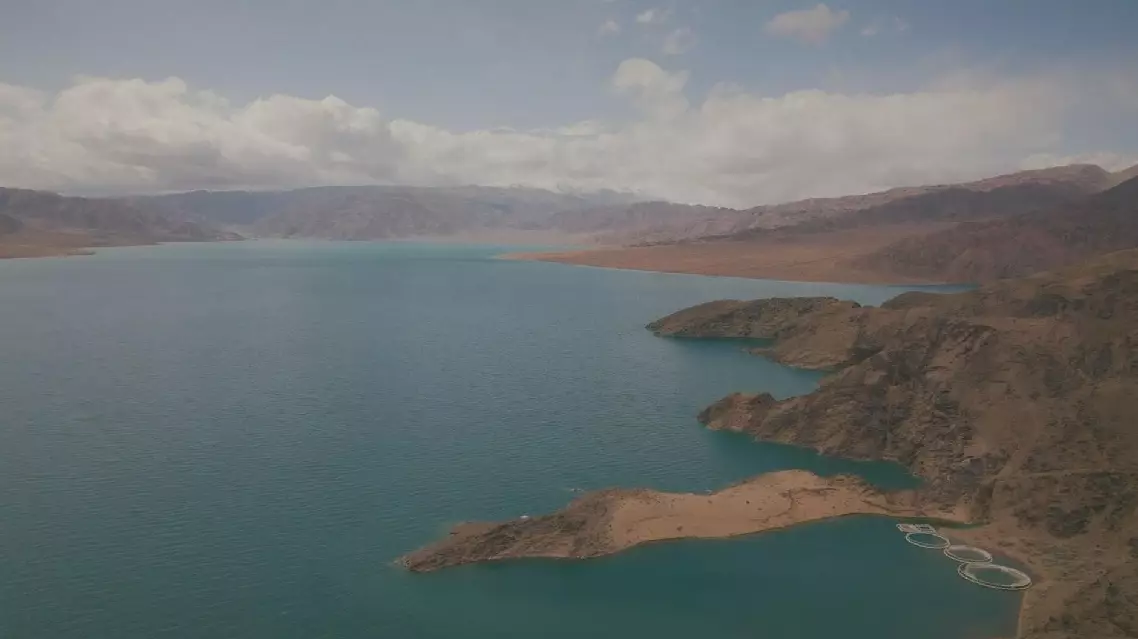
A China-aided irrigation system spanning three irrigation areas in Kyrgyzstan's Issyk-Kul and Batken regions is transforming lives by tackling drought, providing reliable access to water, and boosting incomes through irrigated farming.

The project, launched in May 2018 and undertaken by the China Railway No.5 Engineering Group, focuses on upgrading and renovating local irrigation systems. Its scope includes the construction, maintenance, and expansion of agricultural irrigation canals and subsidiary structures, transforming water management across the region.

Situated 194 kilometers from Kyrgyzstan's capital Bishkek, Ak-Olon village in the Issyk-Kul region long faced inadequate irrigation. After three years of reconstruction, the China-aided Ak-Olon Canal greatly improved the situation.

"One of our greatest challenges was the persistent water shortage. We appealed to numerous state authorities and investment programs for support in building a canal. Thanks to collective efforts and a major grant from China—one of the largest infrastructure projects in our region—the canal was completed. Today, it supplies water not just to our village, but also to neighboring communities," said Mairam Kydyralieva, former head of the Ak-Olon Village council.

A former project engineer reflected on his team's dedication, noting that despite facing harsh natural conditions, the technicians and workers constructed the irrigation system to exceptionally high standards.

"In the early stages of construction, we faced numerous challenges. Despite enduring harsh weather, including winter temperatures that plunged to between minus 13 degrees Celsius and minus 20 degrees Celsius, the team maintained exceptionally high-quality standards throughout. We worked around the clock all year long to get the job done," said Cholponkul Baryktabasov, a former surveying engineer at the Kyrgyzstan Branch of China Railway No. 5 Engineering Group.

After years of dedicated effort, the project reached completion in 2021, securing reliable water access for 11,100 hectares of farmland and directly benefiting 20,000 residents. The improved irrigation system dramatically reduced water waste while ensuring steady irrigation, which in turn boosted both crop yields and quality.

"Each year, just from the apple trees, we fill two trucks with apples, and another two with apricots. The canal has made a huge difference for my family's income. Before, there were often disputes among residents over water use, but since the new canal was completed. Every household is able to tend their own land and farm successfully. I now have 800 apricot trees and 500 apple trees—enough to support my family well," said Mamytov Zhumagul, a resident of Ak-Olon Village.

"The project helped increase the crop yields in nearby regions by about 15 to 20 percent. It also helps promote both agriculture and livestock production," said Zhang Liang, general manager of the Kyrgyzstan Branch of the Chinese company.
China-aided irrigation project helps Kyrgyz villagers tackle drought, boost incomes

China-aided irrigation project helps Kyrgyz villagers tackle drought, boost incomes
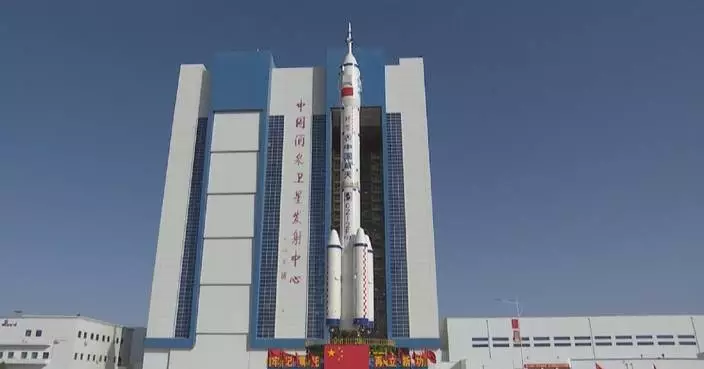
Artificial intelligence and robotics, both major topics of discussion at the ongoing Boao Forum this year, are also being widely adopted at the event as ways to improve the service inside and outside the venue.

The BFA Annual Conference 2026 is being held in Boao, south China's Hainan Province. Running from March 24 to 27, this year's conference is themed "Shaping a Shared Future: New Dynamics, New Opportunities, New Cooperation."

A water generator at the venue cools and condenses moisture from the air into water, then filters and sterilizes it. It can also run on solar power for a completely off-grid, zero-carbon operation.

Meanwhile, a special robot barista operates a coffee stand where guests can order a drink with the press of a button, prompting the robotic arm to get to work -- grabbing a cup, brewing, and frothing -- all in one smooth motion.

The venue has also adopted an AI-based management system, which can automatically adjust a range of factors based on current conditions and detect and respond to anomalies when they occur.

These sorts of systems are already being adopted at a wider scale across Hainan.

"This is our operational management center for the zero-carbon demonstration zone. It’s powered by an AI-driven system that manages all energy consumption and carbon emissions. From here, we can remotely control over three thousand devices across the island with a click, including air conditioners and lighting. It's smart management, done remotely," said Zeng Youwen, chief general engineer of the China Academy of Urban Planning and Design Hainan Branch.

Outside the venue, some smart equipment is also sharing the workload. On Boao's coastline, a beach-cleaning robot moves along the shore, sweeping up cigarette butts, debris, and coconut shells.

The robots can work before visitors arrive or after sunset, cleaning up to 3,000 square meters of beach per hour. In the water, a diving robot that clears debris and even has emergency rescue capabilities.

These on-site applications of emerging technologies have helped spur discussions at the forum on how the deep integration of technology and industry is gaining momentum as China enters the 15th Five-Year Plan period.

"Industries can only be upgraded by applying the new technologies, by applying AI, by applying other innovative technology, science and technology, there should all be injected into industries. And that's how the industries are going to produce high quality products. And you will have high quality productive forces that will change the lifestyle, the living standard of the Chinese people and the people living beyond," said Sohail Khan, deputy secretary-general of Shanghai Cooperation Organization.

Founded in 2001, the BFA is a non-governmental and non-profit international organization committed to promoting regional economic integration and bringing Asian countries closer to their development goals.

Robots, AI facilitate guest services at Boao Forum venue

Robots, AI facilitate guest services at Boao Forum venue

Recommended Articles