Unlike the World Cup, the CONCACAF Gold Cup often is contested by B and C teams due to vacation, injuries and youth callups.
“We have a lot of young players that need more opportunities to play real minutes," Canada coach Jesse Marsch said ahead of this year's championship of North and Central America and the Caribbean. “There’s a lot ways I think to use the tournament to broaden our player pool and to strengthen what we’re doing with our team.”
Defending champion Mexico opens the 16-nation event Saturday against the Dominican Republic in a first-round group that also includes Costa Rica and Suriname. The reeling United States, on its first four-game losing streak since 2007, starts Sunday against Trinidad and Tobago, then plays invited guest Saudi Arabia and Haiti.
Canada is grouped with Honduras, El Salvador and Curacao, and Panama is together with Jamaica, Guatemala and Guadeloupe.
“We have the obligation of being the favorites. We have to accept that title,” Javier Aguirre, hired last summer for his third stint as Mexico's coach, said through a translator.
Mexico has won nine Gold Cups, including 2023. The U.S. has won seven, including 2021, and Canada won in 2000. The tournament will be played at the same time as the Club World Cup, which has been given priority for players by FIFA.
“It’s not to say that if someone isn’t here now they won’t be here next year,” Aguirre said. “So many things can happen in a year.”
Gold Cup matches will be played at 14 stadiums in 11 areas, avoiding the Eastern seaboard. The championship is at Houston on July 6.
El Tri will be missing forwards Hirving “Chucky” Lozano and Henry Martín, who have hamstring injuries.
Canada is without star winger Alphonso Davies, who tore his right ACL during the CONCACAF Nations League third-place game against the U.S. on March 23.
The U.S. roster is notable for the missing as much as the present. The Americans are without star Christian Pulisic (wanted time off); Yunus Musah (personal reason not disclosed); Weston McKennie, Tim Weah, Gio Reyna (headed to the Club World Cup); Antonee Robinson, Tyler Adams and Folarin Balogun (injured); and Sergiño Dest (regaining fitness).
“I don’t think there’s any denying that some of our performances have fallen short over the past year to 18 months,” defender Walker Zimmerman said. “When you look at Gold Cup and you look at some players maybe having their first experience with Gold Cup or even new guys coming into the team in general, it’s always such a great opportunity to have a month in front of a staff, get a lot of quality trainings in together and find yourself hopefully getting into a rhythm of playing multiple games where you can put everything on the line to try and make a World Cup team in a year’s time.”
The U.S. has won its group in 16 of 17 Gold Cups, along with a second-place finish to Panama in 2011, and its group stage record is 40 wins, one loss and five draws.
American players are aware of the criticism of their play since the 2022 World Cup.
“What you see online, all that media, all the opinions, it’s impossible this day not to see it,” defender John Tolkin said Friday. “We have a huge opportunity right now to kind of change the narrative and, yeah, set the focus towards the World Cup coming up next summer, and that’s to win this tournament.”
AP soccer: https://apnews.com/hub/soccer

United States head coach Mauricio Pochettino looks onto the field during the first half of an international friendly soccer match against Switzerland, Tuesday, June 10, 2025, in Nashville, Tenn. (AP Photo/George Walker IV)
JOHANNESBURG (AP) — Torrential rains and flooding have killed more than 100 people in South Africa, Mozambique and Zimbabwe, and authorities warned Friday that more severe weather was expected across several countries in southern Africa.
South Africa has reported at least 19 deaths in two of its northern provinces following heavy rains that began last month and led to severe flooding.
Tourists and staff members were evacuated this week by helicopter from flooded camps to other areas in the renowned Kruger National Park, which is closed to visitors while parts of it are inaccessible because of washed out roads and bridges, South Africa's national parks agency said.
In neighboring Mozambique, the Institute for Disaster Management and Risk Reduction said 103 people had died in an unusually severe rainy season since late last year. Those deaths were from various causes including electrocution from lightning strikes, drowning in floods, infrastructure collapse caused by the severe weather and cholera, the institute said.
The worst flooding in Mozambique has been in the central and southern regions, where more than 200,000 people have been affected, thousands of homes have been damaged, while tens of thousands face evacuation, the World Food Program said.
Zimbabwe’s disaster management agency said that 70 people have died and more than 1,000 homes have been destroyed in heavy rains since the beginning of the year, while infrastructure including schools, roads and bridges collapsed.
Flooding has also hit the island nation of Madagascar off the coast of Africa as well as Malawi and Zambia. Authorities in Madagascar said 11 people died in floods since late November.
The United States' Famine Early Warning System said flooding was reported or expected in at least seven southern African nations, possibly due to the presence of the La Nina weather phenomenon that can bring heavy rains to parts of southeastern Africa.
South African President Cyril Ramaphosa visited flood-stricken areas in the northern Limpopo province on Thursday and said that region had received around 400 millimeters (more than 15 inches) of rain in less than a week. He said that in one district he visited “there are 36 houses that have just been wiped away from the face of the Earth. Everything is gone ... the roofs, the walls, the fences, everything.”
The flooding occurred in the Limpopo and Mpumalanaga provinces in the north, and the South African Weather Service issued a red-level 10 alert for parts of the country for Friday, warning of more heavy rain and flooding that poses a threat to lives and could cause widespread infrastructure damage.
The huge Kruger wildlife park, which covers some 22,000 square kilometers (7,722 square miles) across the Limpopo and Mpumalanga provinces, has been impacted by severe flooding and around 600 tourists and staff members have been evacuated from camps to high-lying areas in the park, Kruger National Park spokesperson Reynold Thakhuli said.
He couldn't immediately say how many people there were in the park, which has been closed to visitors after several rivers burst their banks and flooded camps, restaurants and other areas. The parks agency said precautions were being taken and no deaths or injuries had been reported at Kruger.
The South African army sent helicopters to rescue other people trapped on the roofs of their houses or in trees in northern parts of the country, it said. An army helicopter also rescued border post officers and police officers stranded at a flooded checkpoint on the South Africa-Zimbabwe border.
Southern Africa has experienced a series of extreme weather events in recent years, including devastating cyclones and a scorching drought that caused a food crisis in parts of a region that often suffers food shortages.
The World Food Program said more than 70,000 hectares (about 173,000 acres) of crops in Mozambique, including staples such as rice and corn, have been waterlogged in the current flooding, worsening food insecurity for thousands of small-scale farmers who rely on their harvests for food.
Imray reported from Cape Town, South Africa. AP writers Charles Mangwiro in Maputo, Mozambique, and Farai Mutsaka in Harare, Zimbabwe, contributed to this report.
AP Africa news: https://apnews.com/hub/africa
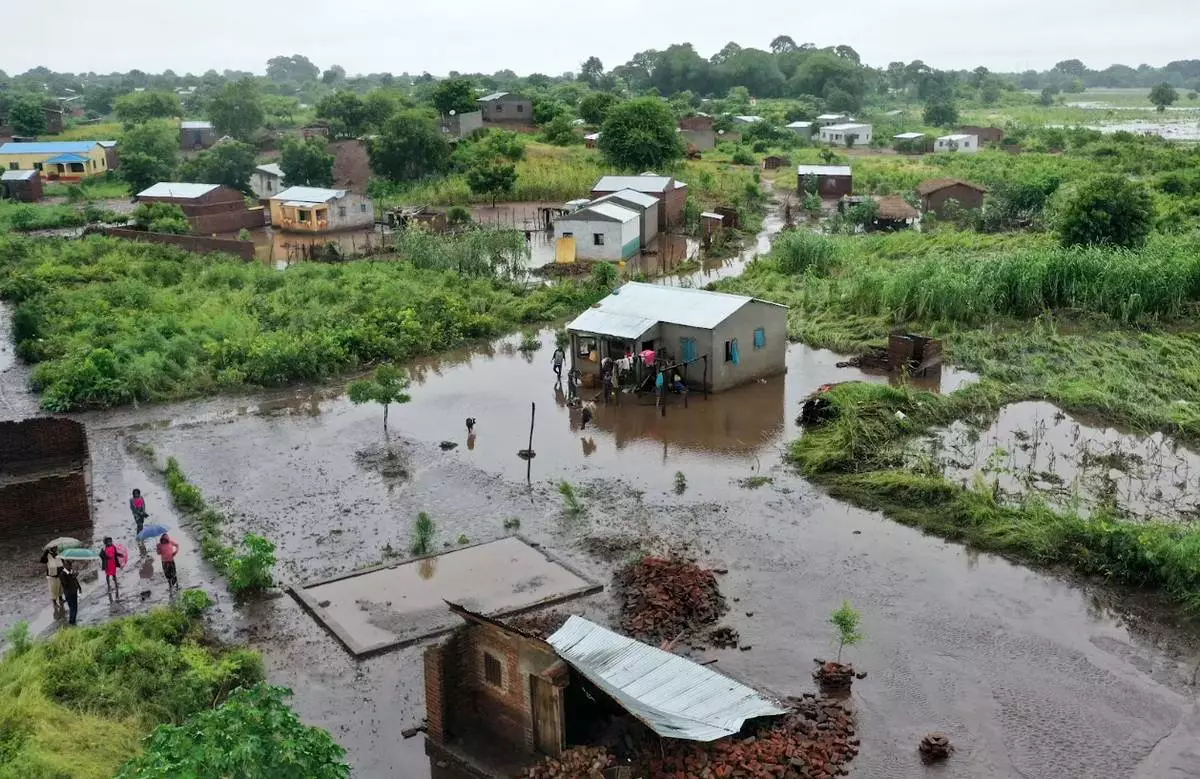
This image made from video shows the scene after flooding in Tete Province, Mozambique, Thursday, Jan. 15, 2026. (AP Photo)
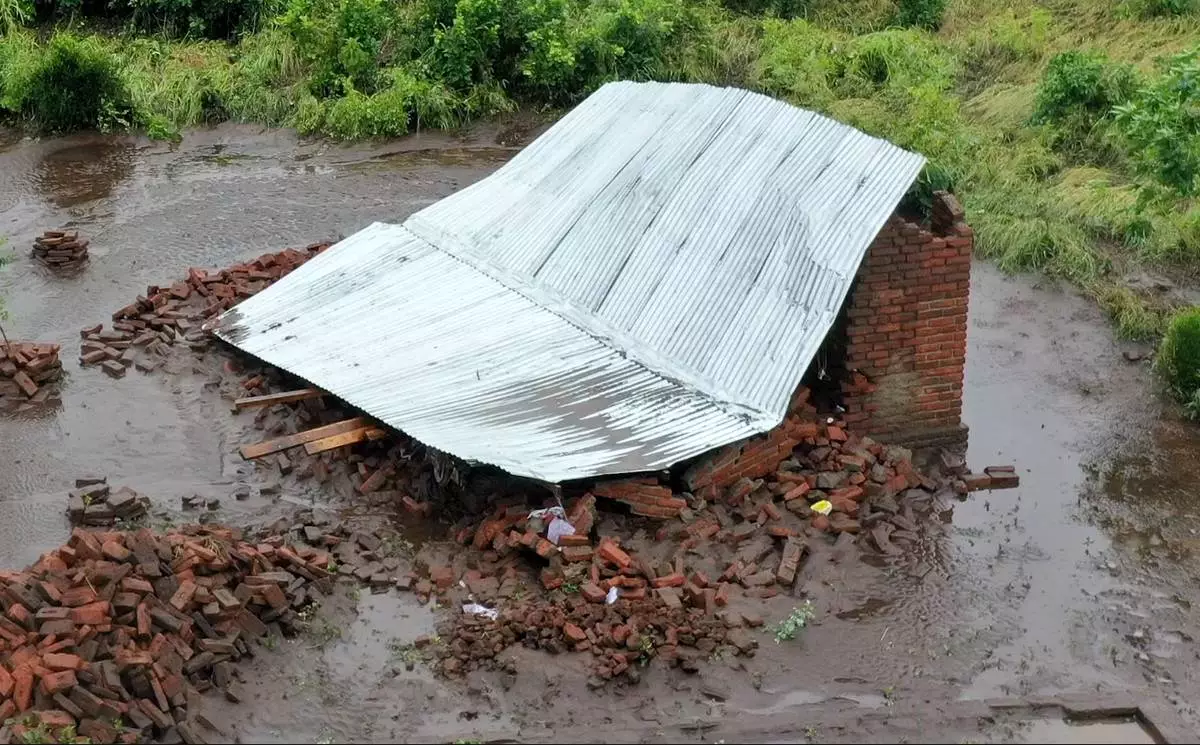
This image made from video shows the scene after flooding in Tete Province, Mozambique, Thursday, Jan. 15, 2026. (AP Photo)
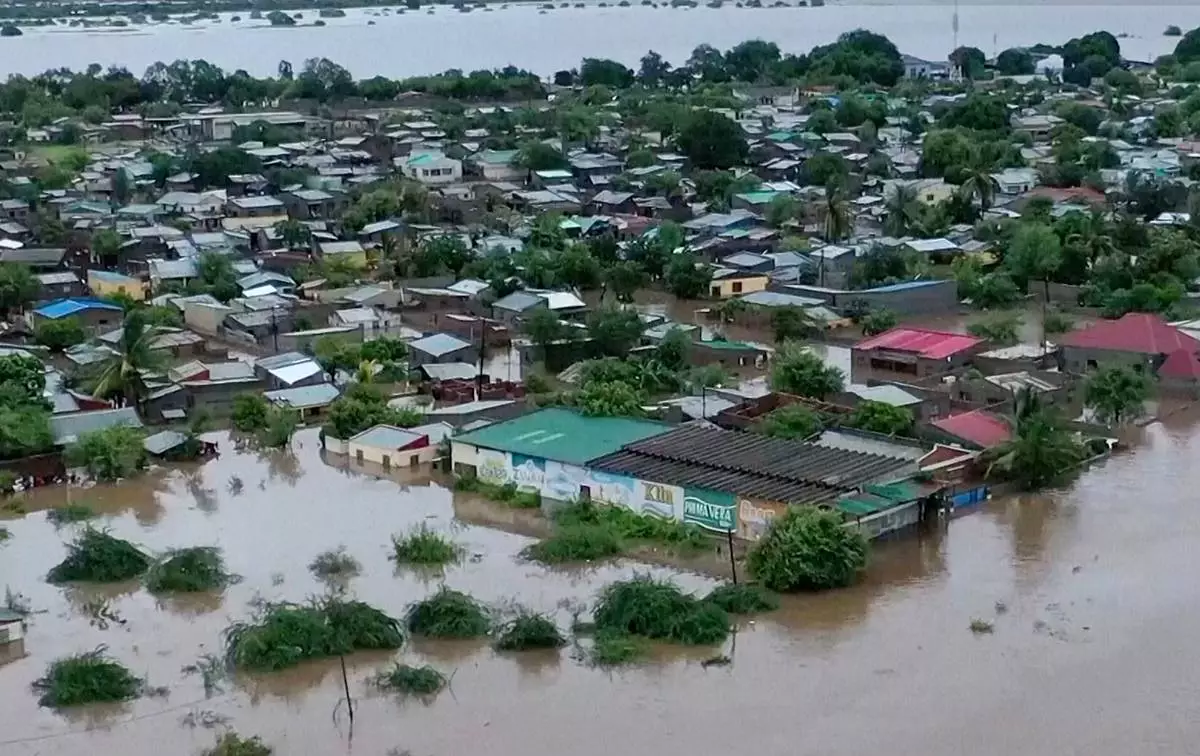
This image made from video shows the scene after flooding in Tete Province, Mozambique, Thursday, Jan. 15, 2026. (AP Photo)