BEIRUT (AP) — Hezbollah has long been considered Iran’s first line of defense in case of a war with Israel. But since Israel launched its massive barrage against Iran, triggering the ongoing Israel-Iran war, the Lebanese militant group has stayed out of the fray — even after the U.S. entered the conflict Sunday with strikes on Iranian nuclear sites.
A network of powerful Iran-backed militias in Iraq has also remained mostly quiet.
Click to Gallery
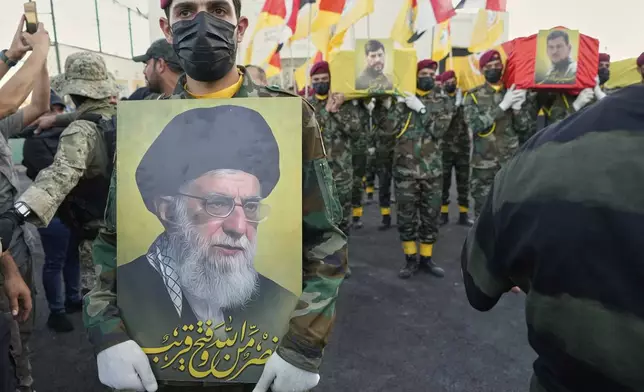
Members from the Popular Mobilization Forces carrying the coffins of Iraqi commander Haider al-Moussawi from Kataeb Sayyed Al-Shuhada and Hussein Khalil, a former aide to the late Hezbollah Secretary-General Hassan Nasrallah that killed by an Israeli airstrike inside Iran, in Baghdad, Iraq, Sunday, June 22, 2025. (AP Photo/Hadi Mizban)
Members from the Popular Mobilization Forces attend the funeral of commander Haider al-Moussawi from Kataeb Sayyed Al-Shuhada who was killed with Hussein Khalil, a former aide to the late Hezbollah's former leader Hassan Nasrallah an Israeli airstrike inside Iran, in Baghdad, Iraq, Sunday, June 22, 2025. (AP Photo/Hadi Mizban)
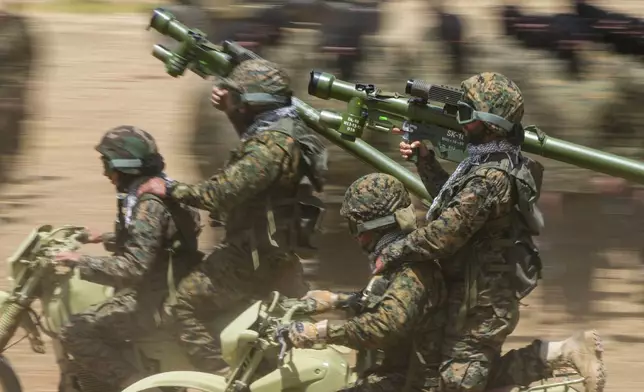
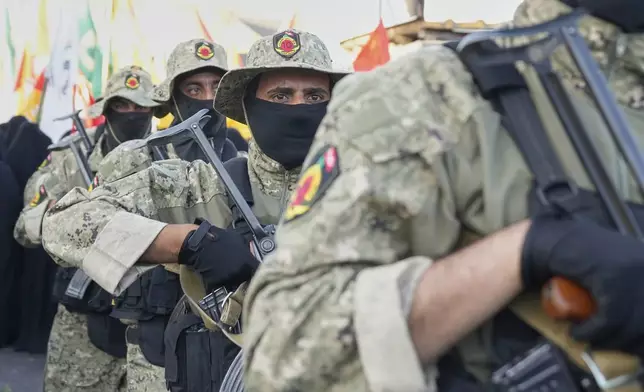
FILE - Fighters from the Lebanese militant group Hezbollah train in southern Lebanon, May 21, 2023. (AP Photo/Hassan Ammar, File)
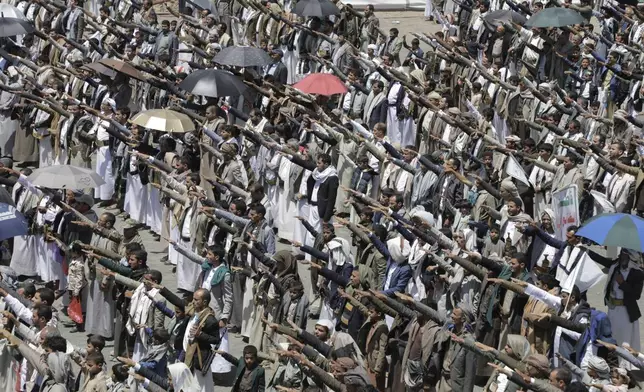
Yemeni Houthis chant religious slogans as they celebrate Eid al-Ghadir, the day on which they believe Islam was completed as a religion by the appointment of Ali as Prophet Muhammad's successor, at Al Imam Ali park in Sanaa, Yemen, Saturday, June 14, 2025. (AP Photo/Osamah Abdulrahman)
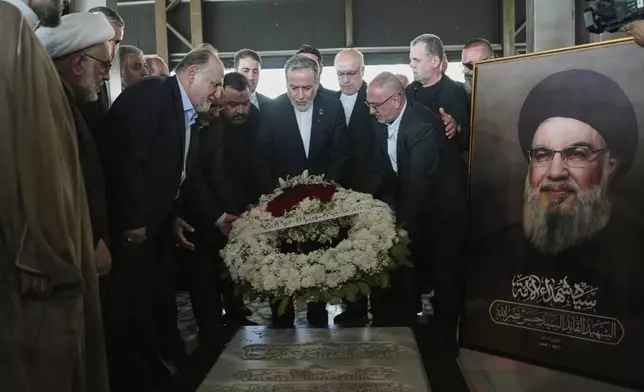
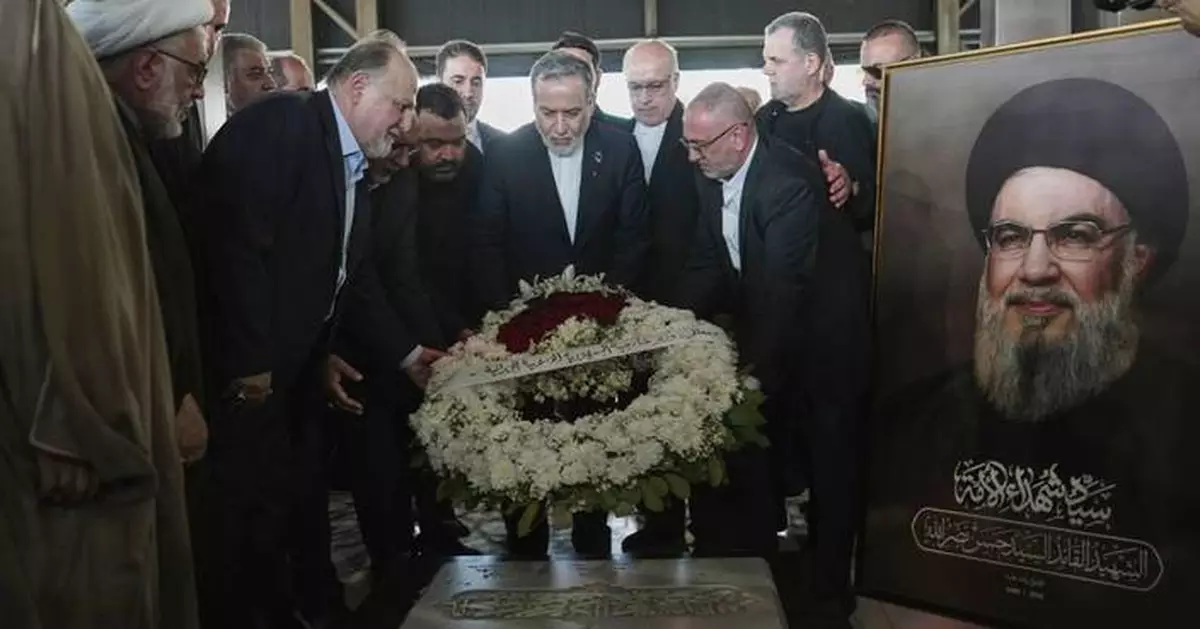
Iranian Foreign Minister Abbas Araghchi, center, lays a wreath at the tomb of slain Hezbollah leader Hassan Nasrallah in the southern suburbs of Beirut, Lebanon, Tuesday, June 3, 2025. (AP Photo/Hassan Ammar)
Domestic political concerns, as well as tough losses suffered in nearly two years of regional conflicts and upheavals, appear to have led these Iran allies to take a back seat in the latest round convulsing the region.
“Despite all the restraining factors, wild cards remain,” said Tamer Badawi, an associate fellow with the Germany-based think tank Center for Applied Research in Partnership with the Orient.
That's especially true after the U.S. stepped in with strikes on three nuclear facilities in Iran.
Hezbollah was formed with Iranian support in the early 1980s as a guerilla force fighting against Israel’s occupation of southern Lebanon at the time.
The militant group helped push Israel out of Lebanon and built its arsenal over the ensuing decades, becoming a powerful regional force and the centerpiece of a cluster of Iranian-backed factions and governments known as the “ Axis of Resistance.”
The allies also include Iraqi Shiite militias and Yemen's Houthi rebels, as well as the Palestinian militant group Hamas.
At one point, Hezbollah was believed to have some 150,000 rockets and missiles, and the group’s former leader, Hassan Nasrallah once boasted of having 100,000 fighters.
Seeking to aid its ally Hamas in the aftermath of the Palestinian militants' Oct. 7, 2023 attack on southern Israel and Israel's offensive in Gaza, Hezbollah began launching rockets across the border.
That drew Israeli airstrikes and shelling, and the exchanges escalated into full-scale war last September. Israel inflicted heavy damage on Hezbollah, killing Nasrallah and other top leaders and destroying much of its arsenal, before a U.S.-negotiated ceasefire halted that conflict last November. Israel continues to occupy parts of southern Lebanon and to carry out near-daily airstrikes.
For their part, the Iraqi militias occasionally struck bases housing U.S. troops in Iraq and Syria, while Yemen's Houthis fired at vessels in the Red Sea, a crucial global trade route, and began targeting Israel.
Hezbollah has condemned Israel’s attacks and the U.S. strikes on Iran. Just days before the U.S. attack, Hezbollah leader Naim Kassem said in a statement that the group “will act as we deem appropriate in the face of this brutal Israeli-American aggression.”
A statement issued by the group after the U.S. strikes called for called for “Arab and Islamic countries and the free peoples of the world” to stand with Iran but did not suggest Hezbollah would join in Tehran's retaliation.
Lebanese government officials have pressed the group to stay out of the conflict, saying that Lebanon cannot handle another damaging war, and U.S. envoy Tom Barrack, who visited Lebanon last week, said it would be a “very bad decision” for Hezbollah to get involved.
Iraq’s Kataib Hezbollah militia — a separate group from Hezbollah — had said prior to the U.S. attack that it will directly target U.S. interests and bases spread throughout the region if Washington gets involved. The group has also remained silent since Sunday's strikes.
The Houthis last month reached an agreement with Washington to stop attacks on U.S. vessels in the Red Sea in exchange for the U.S. halting its strikes on Yemen, but the group threatened to resume its attacks if Washington entered the Iran-Israel war.
In a statement on Sunday, the Houthis’ political bureau described the U.S. attack on Iran as a “grave escalation that poses a direct threat to regional and international security and peace." The Houthis did not immediately launch strikes.
Hezbollah was weakened by last year's fighting and after losing a major supply route for Iranian weapons with the fall of Syrian President Bashar Assad, a key ally, in a lightning rebel offensive in December.
“Hezbollah has been degraded on the strategic level while cut off from supply chains in Syria,” said Andreas Krieg, a military analyst and associate professor at King’s College London.
Still, Qassem Qassir, a Lebanese analyst close to Hezbollah, said a role for the militant group in the Israel-Iran conflict should not be ruled out.
“The battle is still in its early stages," he said. "Even Iran hasn't bombed American bases (in response to the U.S. strikes), but rather bombed Israel.”
He said that both the Houthis and the Iraqi militias "lack the strategic deep strike capability against Israel that Hezbollah once had."
Renad Mansour, a senior research fellow at the Chatham House think tank in London, said Iraq's Iran-allied militias have all along tried to avoid pulling their country into a major conflict.
Unlike Hezbollah, whose military wing has operated as a non-state actor in Lebanon — although its political wing is part of the government — the main Iraqi militias are members of a coalition of groups that are officially part of the state defense forces.
“Things in Iraq are good for them right now, they’re connected to the state — they’re benefitting politically, economically,” Mansour said. “And also they’ve seen what’s happened to Iran, to Hezbollah and they’re concerned that Israel will turn on them as well.”
Badawi said that for now, the armed groups may be lying low because “Iran likely wants these groups to stay intact and operational.”
“But if Iran suffers insurmountable losses or if the Supreme Leader (Ayatollah Ali Khamenei) is assassinated, those could act as triggers," he said.
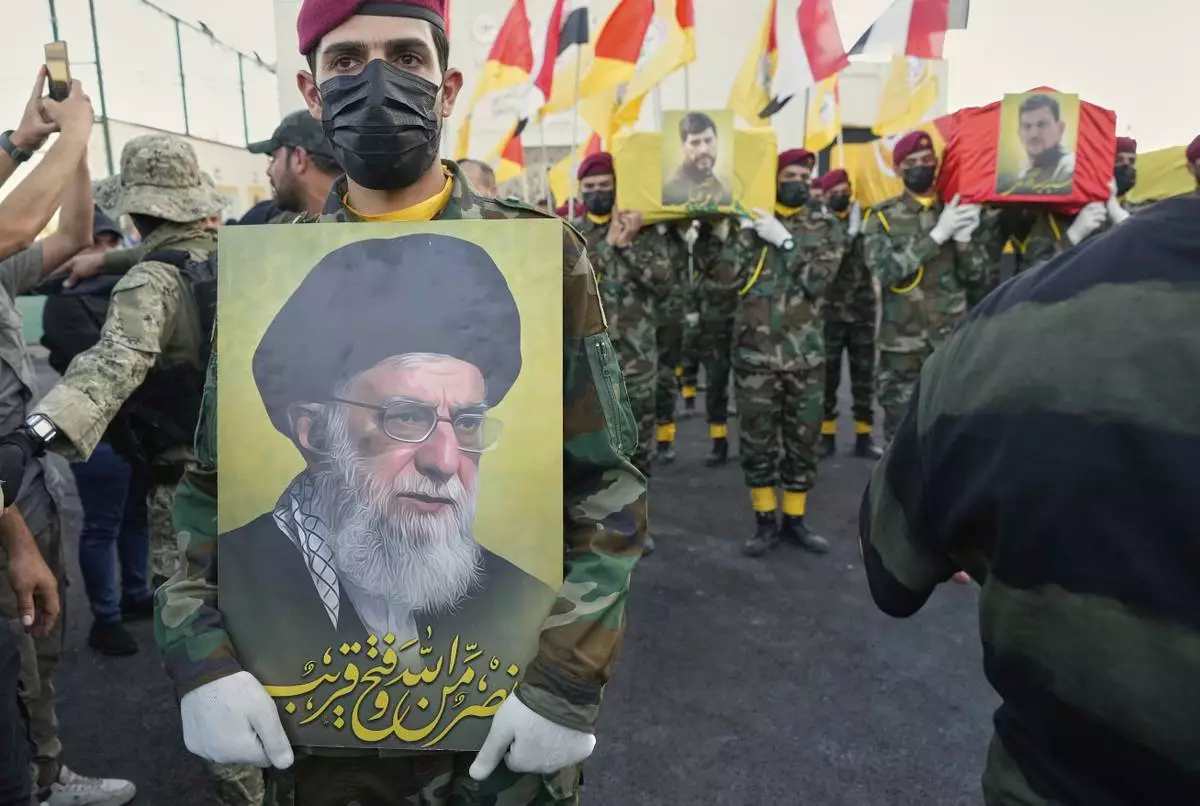
Members from the Popular Mobilization Forces carrying the coffins of Iraqi commander Haider al-Moussawi from Kataeb Sayyed Al-Shuhada and Hussein Khalil, a former aide to the late Hezbollah Secretary-General Hassan Nasrallah that killed by an Israeli airstrike inside Iran, in Baghdad, Iraq, Sunday, June 22, 2025. (AP Photo/Hadi Mizban)
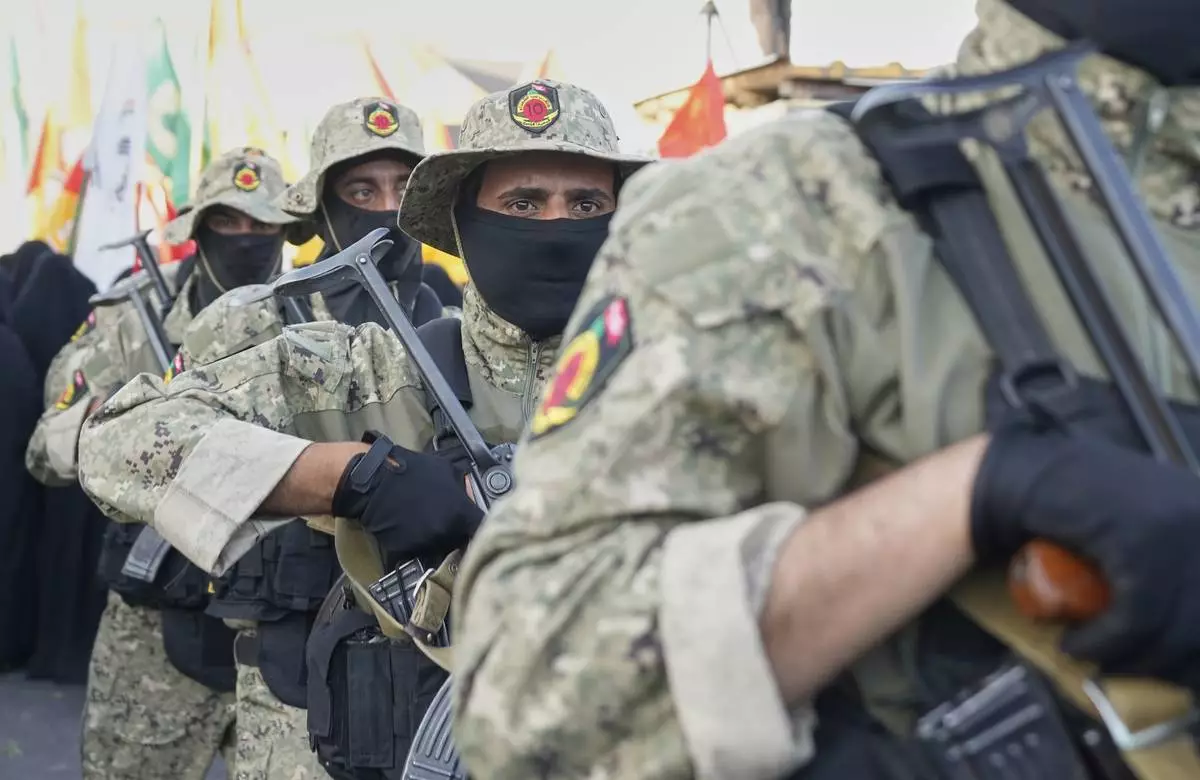
Members from the Popular Mobilization Forces attend the funeral of commander Haider al-Moussawi from Kataeb Sayyed Al-Shuhada who was killed with Hussein Khalil, a former aide to the late Hezbollah's former leader Hassan Nasrallah an Israeli airstrike inside Iran, in Baghdad, Iraq, Sunday, June 22, 2025. (AP Photo/Hadi Mizban)
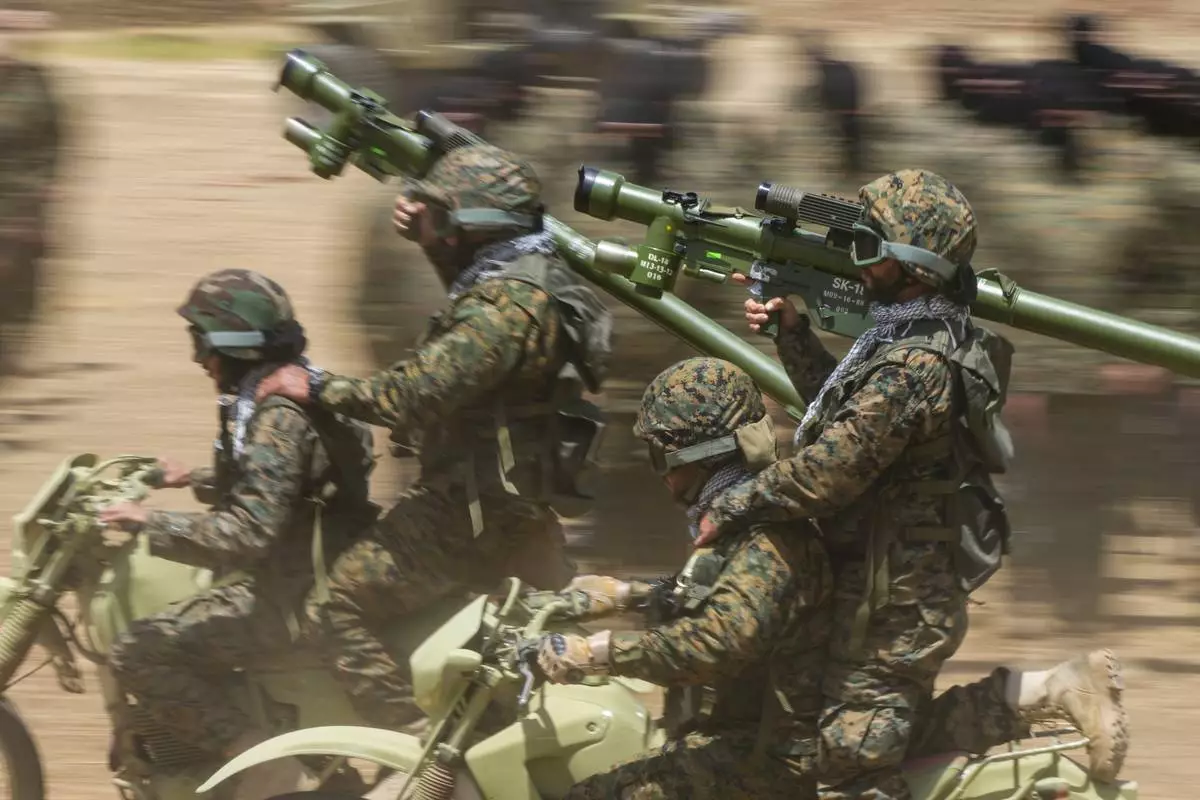
FILE - Fighters from the Lebanese militant group Hezbollah train in southern Lebanon, May 21, 2023. (AP Photo/Hassan Ammar, File)
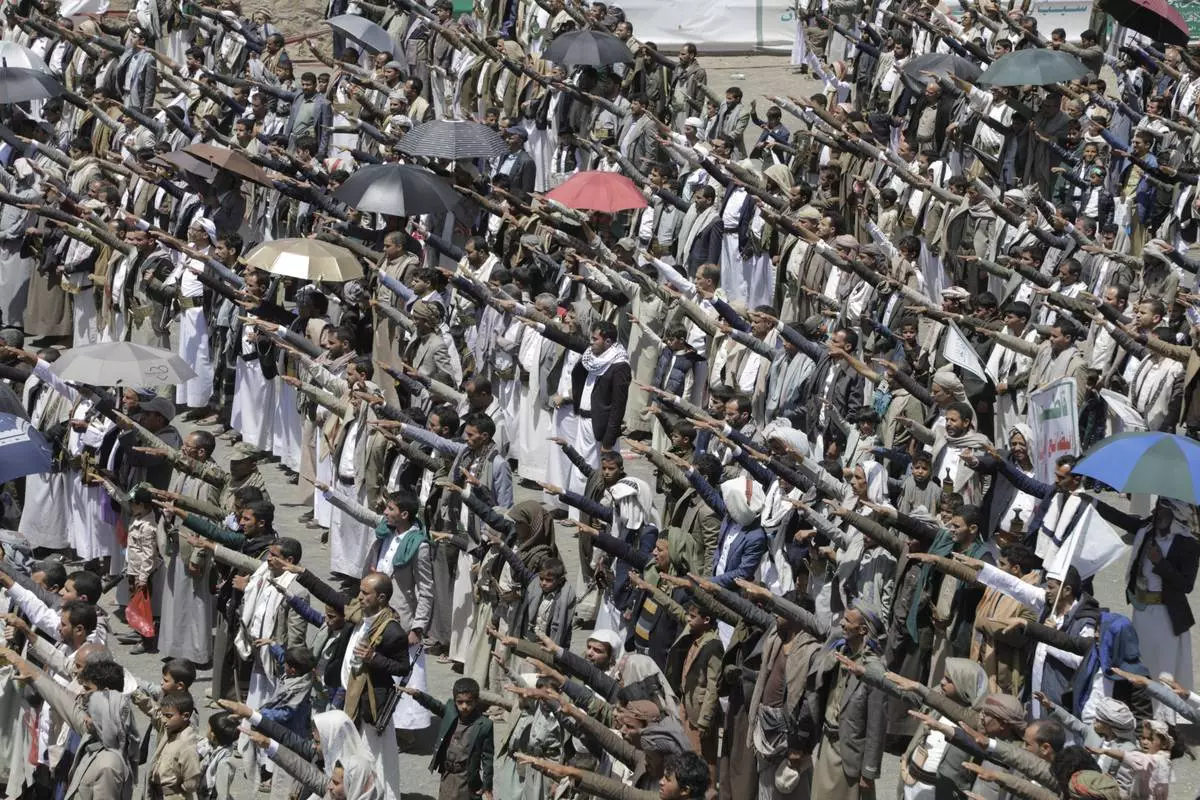
Yemeni Houthis chant religious slogans as they celebrate Eid al-Ghadir, the day on which they believe Islam was completed as a religion by the appointment of Ali as Prophet Muhammad's successor, at Al Imam Ali park in Sanaa, Yemen, Saturday, June 14, 2025. (AP Photo/Osamah Abdulrahman)
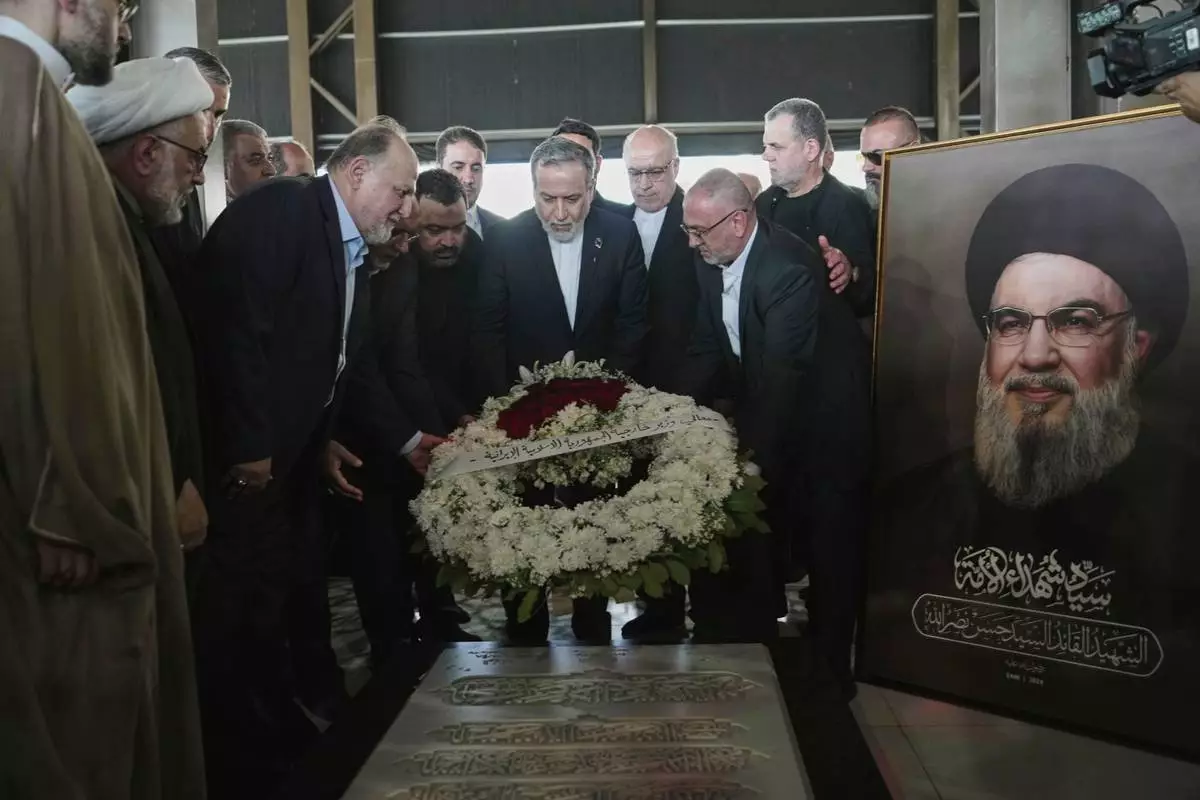
Iranian Foreign Minister Abbas Araghchi, center, lays a wreath at the tomb of slain Hezbollah leader Hassan Nasrallah in the southern suburbs of Beirut, Lebanon, Tuesday, June 3, 2025. (AP Photo/Hassan Ammar)