Iranian President Masoud Pezeshkian said Saturday that Tehran would not attend nuclear talks with the United States so long as Israel keeps up its attacks on Iran.
In a call with his French counterpart Emmanuel Macron, Pezeshkian said Iran would not accept irrational demands and double standards under pressure or sit at the negotiating table while Israel continues its attacks.
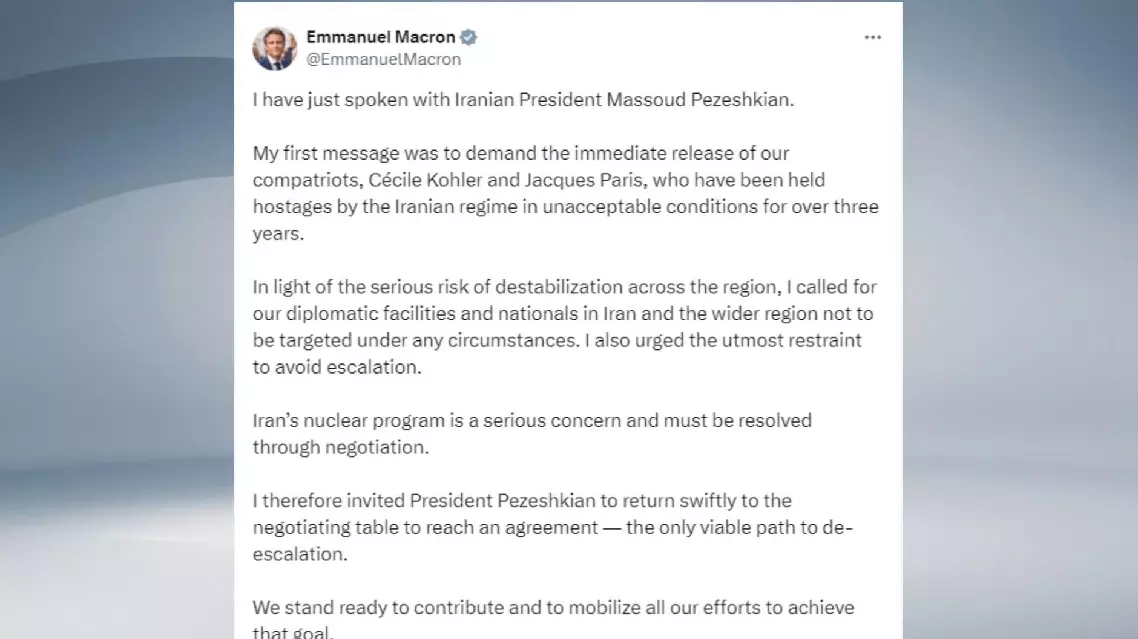
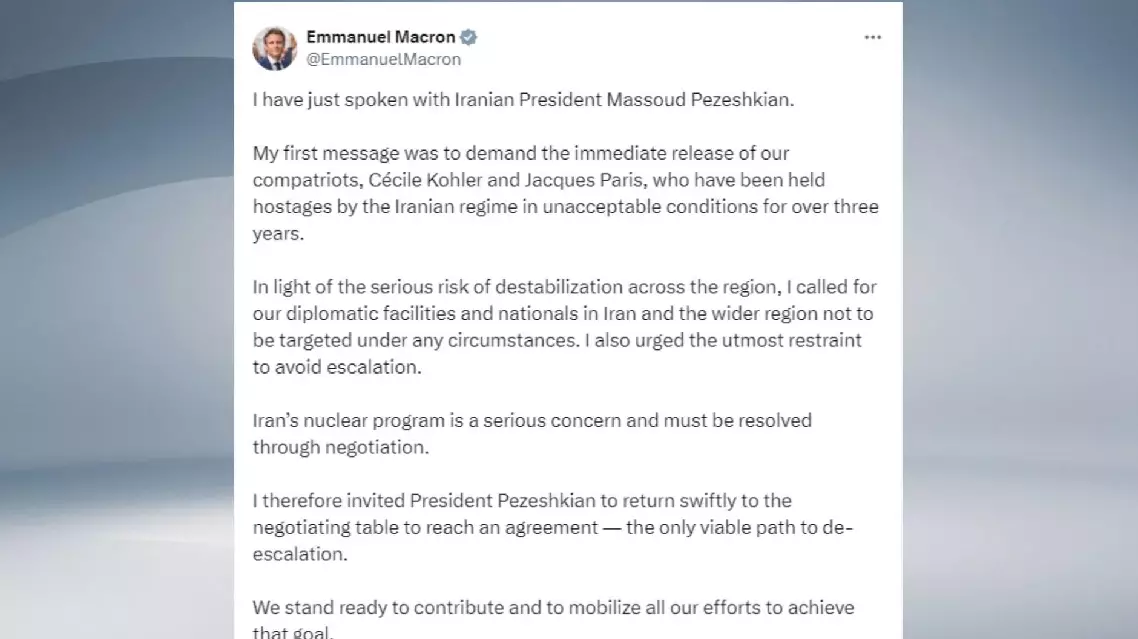
Macron said in a statement that he noted the Iranian nuclear question must be resolved through negotiation in the phone conversation.
The French president had invited President Pezeshkian to return swiftly to the negotiating table and urged the utmost restraint to avoid escalation, according to the statement.
Early Friday, Israel launched a "preemptive strike" targeting Iran's nuclear facilities, senior military leaders, and research scientists, a significant escalation against Tehran.
Later that day, Iran announced its withdrawal from nuclear talks with the United States, canceling a sixth round of negotiations which was scheduled to take place on Sunday in Muscat, Oman.
Iranian president says no nuclear talks if Israeli attacks continue
Iranian president says no nuclear talks if Israeli attacks continue
Nicaragua's co-foreign minister Valdrack Jaentschke has warned that militarism must never be allowed to rise again, as Japan's recent moves to lift its arms export ban and revise the pacifist Constitution continue to draw international concern.
This year marks the 80th anniversary of the opening of the Tokyo Trials, where Japan's Class-A war criminals from World War II were brought to justice.
In an interview with China Global Television Network (CGTN), Valdrack Jaentschke voiced his concern that today's world order is being undermined by interventionism and other challenges.
"It is necessary for us to remember that after the end of World War II, countries worked hard to build a new international order based on international law. However, regrettably, more than 80 years later, we are seeing that this once explored and attempted order is being challenged by interventionism, a confrontational mindset, and tendencies like 'might makes right.' These are precisely the conditions that gave rise to fascism and militarism in the past, which ultimately led to the tragedy of World War II," he said.
He said the international community has a responsibility to pursue a new international order -- one fundamentally grounded in peace.
"Looking back at the history more than eight decades ago and comparing it with today's reality, it is our responsibility to recognize that the world should, and must, build a new international order that is more just, fairer, rooted in international law, based on a logic of mutual benefit and shared success, and fundamentally grounded in peace," said the minister.
"Today, as we revisit the Tokyo Trials, it is meant to remind the world that such a tragedy must never be repeated -- and that we must do everything in our power to prevent it from happening again. We must stop that dark world -- born from militarism, interventionism, and fascism -- from ever returning," he said.
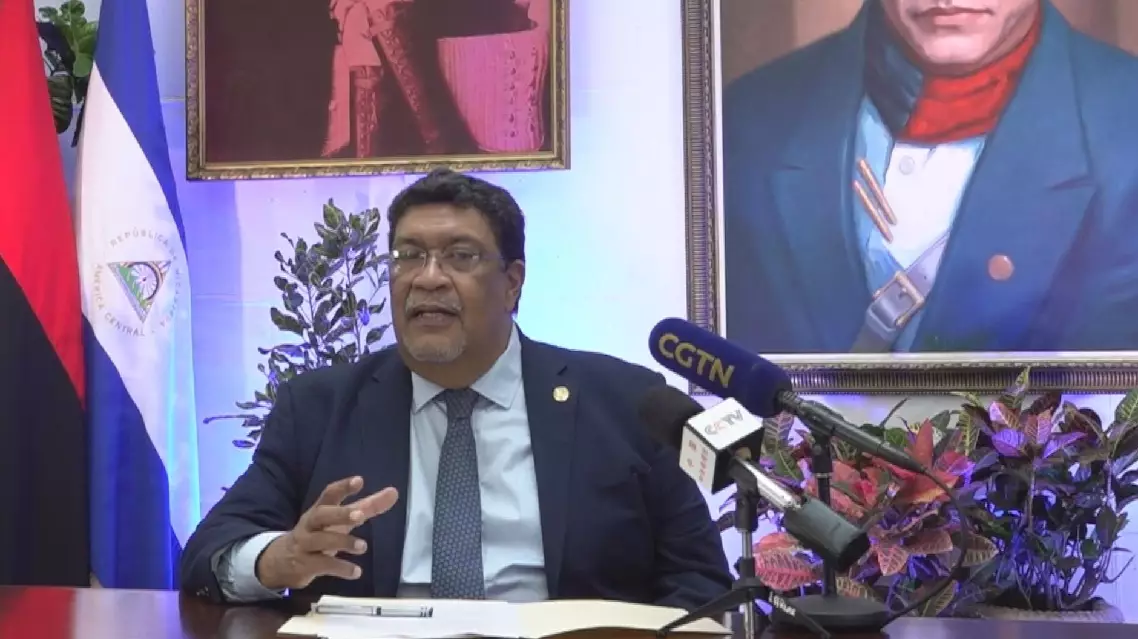
Nicaraguan FM warns of militarism revival