China and Central Asian countries have witnessed soaring bilateral economic and trade cooperation amid global trade tensions, as their strong economic and trade complementarity will serve as a foundation for extensive collaborations, said a Chinese expert in an interview with the China Global Television Network (CGTN).
The second China-Central Asia Summit will take place in Astana, the capital of Kazakhstan, from June 16-18, and Chinese President Xi Jinping will attend the event at the invitation of Kazakh President Kassym-Jomart Tokayev.
Central Asia is now at the heart of China's resilient trade strategy. As global headwinds mount, China is strengthening its economic connections through the Belt and Road Initiative (BRI), which was launched years before the trade conflicts, initially aiming at strengthening regional connectivity and fostering economic growth. While, the advent of the tariff war gave a far deeper strategic value to the BRI, transforming it into a crucial tool for China to forge new resilient trade corridors, particularly to Central Asia, the Middle East and Africa.
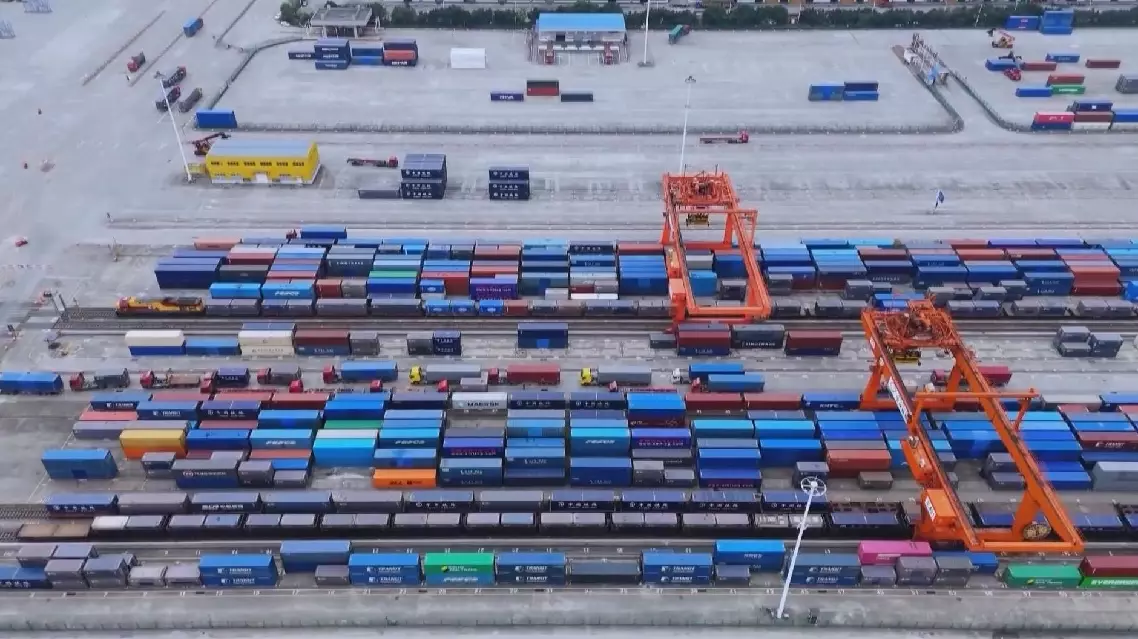
The figures speak for themselves. Trade between China and Central Asia is soaring. From a respectable 46.4 billion U.S. dollars in 2019, it surged to 69.8 billion U.S. dollars in 2022, hitting the 70-billion-U.S. dollar target a full 8 years ahead of schedule. By 2024, the total trade volume hit a record 94.7 billion U.S. dollars, a staggering 104 percent increase from 2019. This fully demonstrates the resilience and adaptability of China-Central Asia trade cooperation.
Kazakhstan has consistently been China's largest trade partner in the region, with its trade volume accounting for nearly half of China's total trade with the five Central Asian nations. In 2024, Kazakhstan primarily imported machinery, electronics, apparel and automobiles from China, while exporting natural resources, mineral products and chemical goods.
Kyrgyzstan's foreign trade with China has also seen rapid growth, increasing by 260 percent from 6.3 billion U.S. dollars in 2019 to 22.7 billion U.S. dollars in 2024. Its share in China's total trade with Central Asia expanded from 14 percent to 24 percent. This remarkable growth is a testament to the region's untapped potential.
Yang Jin, deputy director of the Central Asia and Caucasus Research Office at the Chinese Academy of Social Sciences, emphasized the "strong economic and trade complementarity" between China and Central Asia, which provide a solid basis for deepening cooperation and achieving mutual benefits.
"China and Central Asian countries have very strong economic and trade complementarity. China has a huge market, a very complete industrial and agricultural system, and a very rich technical foundation. Central Asian countries are currently in a stage of rapid development and desperately need investment, trade and technology. This is the basis for China and Central Asian countries to further expand their trade volume and improve the quality of their economic and trade relations in the future," said Yang.
It is precisely this high degree of economic complementarity that lays a solid foundation for robust cooperation in Central Asia, fostering a truly win-win outcome for both sides.
China secures critical resource supplies and alternative export markets, while Central Asian nations gain ready access to markets for primary products and affordable manufactured goods. The crucible of the trade war has drawn China and Central Asia even closer, creating a dynamic new economic landscape, but this is just the beginning of the story - an even more exciting chapter is about to unfold in the realm of investment.
Strong economic, trade complementarity to facilitate China-Central Asia cooperation: expert