The delicious pomegranate has remained a steadfast part of the age-old ties between China and Central Asia even as the friendship enters a new era, with new seeds being planted in modern diplomacy, trade and a shared vision for the future.
Xi'an in northwest China is where the ancient Silk Road began its journey. Once the heart of trade, culture, and philosophy, the city remains a vital symbol of the longstanding ties between China and Central Asia.
Over two thousand years ago, Chinese envoy Zhang Qian set out on a journey that would reshape history and open the gates to the West. Zhang ventured deep into Central Asia, crossing deserts, mountains, and foreign lands.
Among the precious gifts he brought back to China were the seeds of pomegranate, which over time came to represent more than just food to the Chinese people.
"In the eyes of people in the Tang Dynasty, the pomegranate motif symbolized not only the blessing of having many children and abundant fortune, but also wishes for a prosperous family line. In front of us is a gilded silver box adorned with a pomegranate flower design. The craftsman integrated traditional Chinese floral patterns with Western-style pomegranate motifs, making this artifact a testament to the cultural exchange between China and the West," said Jia Xuchen, a docent at the Shaanxi History Museum.
In a powerful gesture of unity, Chinese President Xi Jinping and the leaders of Central Asia gathered to plant pomegranate trees two years ago in Xi'an. The trees are living symbols of the region’s commitment to peace and prosperity.
From the bustling markets of ancient times to the modern highways and railways connecting China and Central Asia today, Xi'an has always been a point of connection.
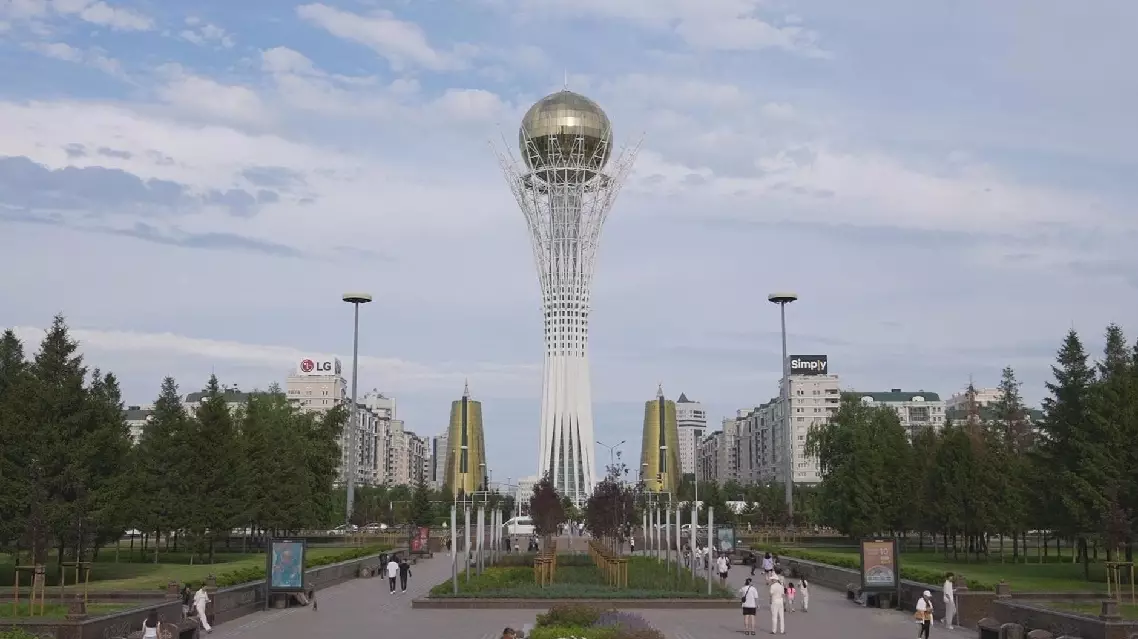
In the heart of Astana, the capital of Kazakhstan, the future of Central Asia's collaboration with China is taking shape. The modern city is a testament to the transformation that the capital of Kazakhstan has undergone.
Astana is home to many cooperative projects, from energy pipelines to transportation networks, and has been a leading force in advancing connectivity and regional stability.
The China-Kazakhstan Khorgos Gateway, one of the largest dry ports in Central Asia, exemplifies the region's growing role in global trade. Kazakhstan plays a critical role in this partnership, serving as a key transit hub in the Belt and Road Initiative (BRI). In recent years, bilateral trade has surged, reaching over 13.5 billion US dollars in the first half of 2024.
Beloved fruit carries on Silk Road connections between China, Central Asia