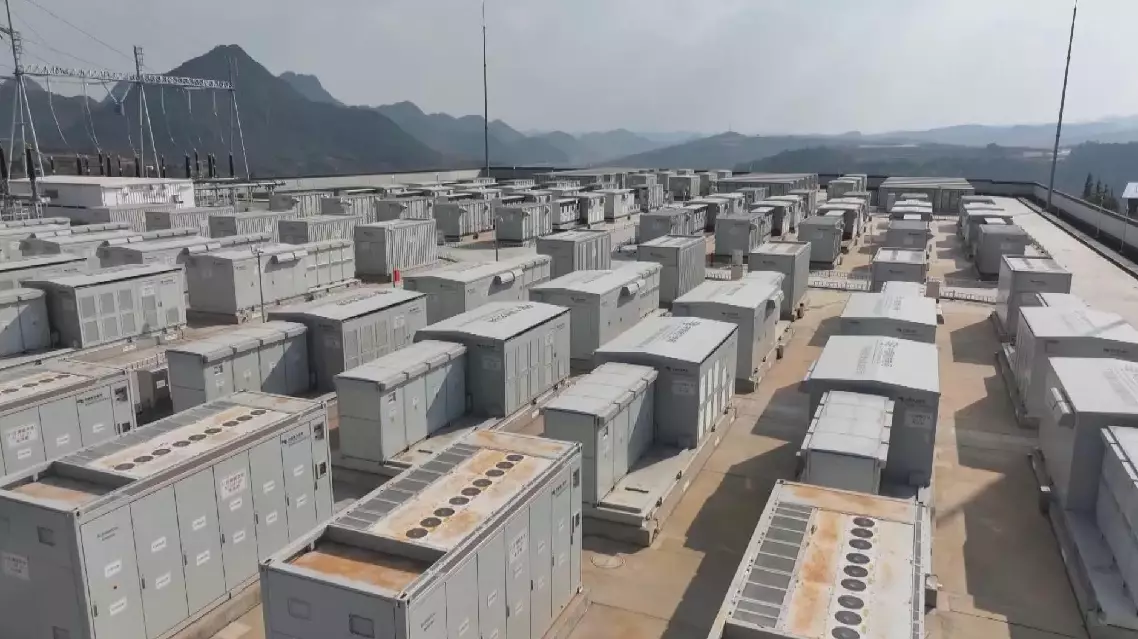
China's first large-scale lithium-sodium hybrid battery storage station in southwestern Yunnan Province has played a pivotal role in storing vast amounts of clean power and boosting grid stability by efficiently balancing supply and demand, according to experts.
The country has taken a major step forward in renewable energy development with the launch of Baochi Battery Storage Power Station in Wenshan Zhuang and Miao Autonomous Prefecture.
The facility began operation on May 25.
From the outside, it might not look like much but inside, it represents a breakthrough in storing and stabilizing renewable energy.
The station has the capacity to regulate up to 1.6 million kilowatt-hours daily, enough to meet the daily electricity needs of nearly 270,000 households.
Huang Dan, a technician of China Southern Power Grid Energy Storage, said it will help utilize clean energy efficiently.
"The capacity of the energy storage station is shared by more than 30 wind and solar power plants, enabling comprehensive and efficient utilization by renewable energy enterprises. It provides vital support for integrating clean energy into the grid and participating in electricity market trading," he said.
By combining the best of lithium and sodium batteries, this station can store more energy, respond faster, and keep the grid more stable even when the sun doesn't shine or the wind stops.
"The sodium-ion battery system stands out for its long cycle life and strong adaptability to temperature changes. Compared to traditional lithium-ion batteries, its biggest advantages lie in abundant raw material sources and vast global reserves. This high-power grid-forming sodium-ion battery system delivers up to three times the maximum power and responds six times faster than conventional sodium-ion batteries," said Lin Qihua, project manager of Baochi Battery Storage Power Station.
Yunnan is one of China's leading regions in renewable energy, with installed capacity now exceeding 60 million kilowatts.
Gao Daochun, an engineer of Yunnan Power Dispatch and Control Center under China Southern Power Grid, said such facilities offer a smart solution to enlarging the capacity of the power grid.
"While the large-scale integration of renewable energy brings new development opportunities, it also places greater demands on the grid's capacity. Thanks to its short construction time and fast response, new energy storage has become a key solution for enhancing the grid's regulation capabilities," he said.
China's large-scale power storage station plays key role in stabilizing power grid: experts
International guests who have dedicated their lives to historical truth joined China's 12th national memorial event honoring the hundreds of thousands of victims killed by Japanese troops in the Nanjing Massacre during World War II.
The memorial was held on Saturday at the public square of the Memorial Hall of the Victims in Nanjing Massacre by Japanese Invaders in Nanjing, capital of east China's Jiangsu Province. China's national flag was flown at half-mast in the presence the crowd that included survivors of the massacre, local students, and international guests.
In one of the most barbaric episodes during WWII, the Nanjing Massacre took place when Japanese troops captured the then-Chinese capital Nanjing on Dec 13, 1937. Over the course of six weeks, they proceeded to kill approximately 300,000 Chinese civilians and unarmed soldiers.
Joining the crowd was Christoph Reinhardt, the great-grandson of John Rabe (1882-1950) who was then a representative of German conglomerate Siemens in the war-ravaged Nanjing. During the Nanjing Massacre, Rabe set up an international safety zone with other foreigners, and they together saved the lives of around 250,000 Chinese people between 1937 and 1938 from the Japanese invaders.
Throughout the massacre, Rabe continued to keep a diary. To this day, all his pages remain one of the most comprehensive historical records of the atrocities committed by the Japanese aggressors.
Sayoko Yamauchi, who was also in the crowd of mourners, arrived in Nanjing on Friday from Japan's Osaka to attend Saturday's ceremony, just as she has done almost every year since China designated Dec 13 as the National Memorial Day for the Victims of the Nanjing Massacre in 2014.
Yamauchi's grandfather was one of the Japanese soldiers who invaded Nanjing in January 1938. However, since first setting foot in Nanjing in 1987, she has dedicated herself to uncovering and spreading the truth about Japan's history of aggression and enlightening the Japanese public about their country's wartime atrocities.
In 2014, ahead of China's first National Memorial Day for the Victims of the Nanjing Massacre, Yamauchi, along with 10 other individuals, received an award for her special contribution to the Memorial Hall of the Victims in the Nanjing Massacre by Japanese Invaders.
By attending the grand memorial event, Reinhardt and Yamauchi both said they hope to convey a message of remembering history and cherishing peace.
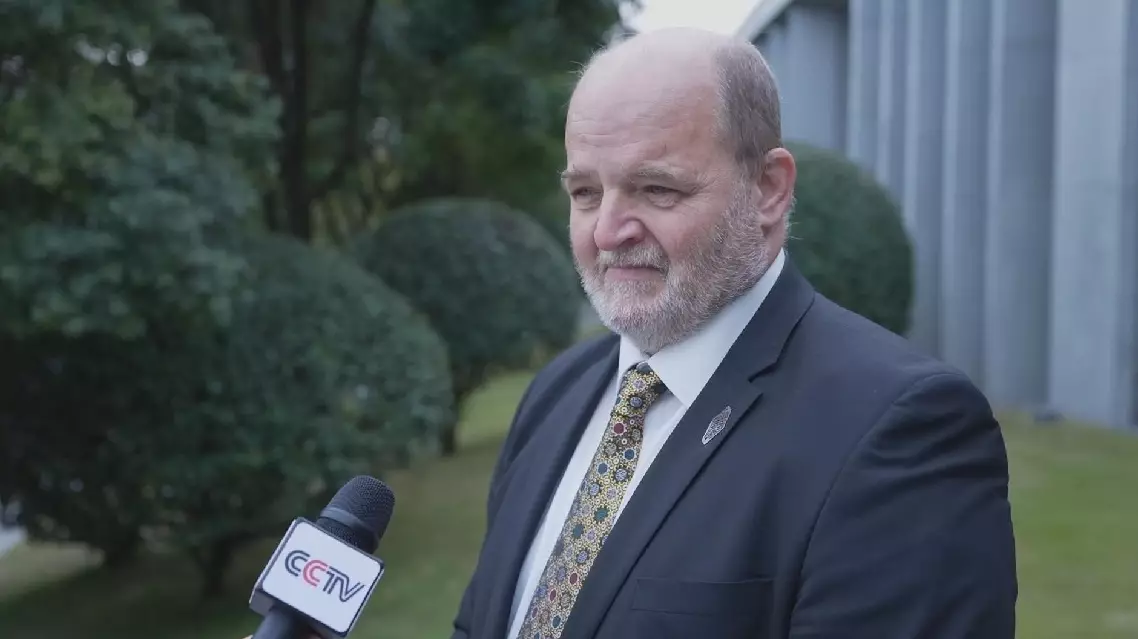
"This is my fifth visit to China, and Nanjing, and the third times I visited the ceremony. I have a wish that these survivors survive again and again and again. But my other wish is that the families of the survivors, that they transport the information, the right intention like their ancestors, because anyone must hold a hand (during) this remembering," Reinhardt told China Central Television (CCTV) in an interview before the event began on Saturday.
"Our delegation is on its 20th visit to China, coming to Nanjing to express our heartfelt condolences to those who perished 88 years ago, to remember this history, and to reflect on what we can do for a new future. That's why we are here," Yamauchi told CCTV on board the bus that took her to a local hotel in Nanjing on Friday evening.
Int'l guests call for remembering history at China's national event honoring Nanjing Massacre victims