Skip to Content Facebook Feature Image

Special exhibition takes audiences on trip through history of Chinese filmmaking

China

China

China

Special exhibition takes audiences on trip through history of Chinese filmmaking

2025-06-17 03:46 Last Updated At:12:17

A special exhibition marking 120 years of Chinese cinema has opened in Shanghai on the sidelines of the 27th Shanghai International Film Festival.

Titled "Where Dreams Were Created", the showcase offers visitors a chance to immerse themselves the rich history of Chinese filmmaking and how it has developed over the past century.

The exhibition comprises eight themed sections, ranging from martial arts and animation to science-fiction, cinematography and virtual reality. Many of the items on display are being shown to the public for the first time.

At the animation section, clips from films made by the Shanghai Animation Film Studio (SAFS) are on view alongside the original celluloid from Havoc in Heaven, an award-winning animated film produced by SAFS in the 1960s.

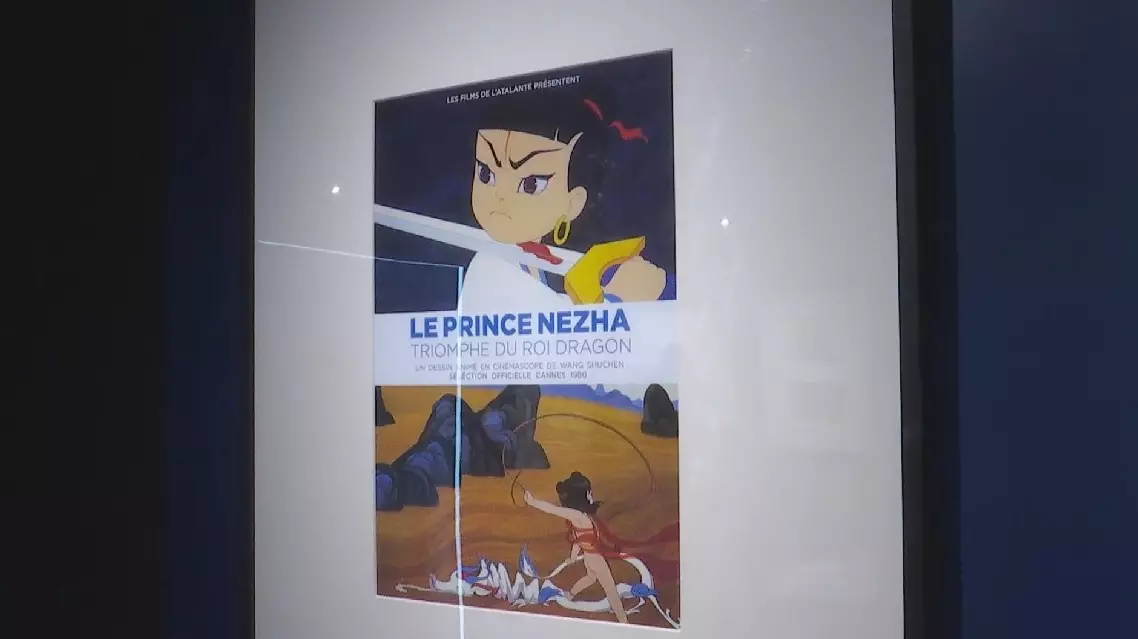
Also on display is a poster for Nezha Conquers the Dragon King, another SAFS production first released in 1979 which inspired the recent Chinese blockbuster Ne Zha 2.

The poster, which appeared in Cannes in 1980 to promote the movie, marks a key moment in the international recognition of Chinese animation.

"Nezha Conquers the Dragon King was the first feature-length animated film from China to be showcased at the Cannes Film Festival. The poster here is actually the one that appeared in Cannes. It sees to be just a poster, but it signifies a crucial milestone for Chinese animation as it stepped onto the international stage," said Xu Yi, curator of the exhibition.

The science fiction section includes stills from Death-Ray on Coral Island, the first sci-fi film made after the founding of the People’s Republic of China, and the July 2000 issue of Science Fiction World magazine -- where the novel The Wandering Earth first appeared -- a story that was later adapted into a blockbuster in 2019.

The "Where Dreams Were Created" exhibition runs until 27 July.
Special exhibition takes audiences on trip through history of Chinese filmmaking


Special exhibition takes audiences on trip through history of Chinese filmmaking

A veteran agricultural scientist and deputy to the National People's Congress (NPC), China's national legislature, shared his decades-long mission to reduce the country's reliance on food imports and safeguard its food security by developing high-yield, disease-resistant wheat varieties.

Gao Derong, a researcher from the Lixiahe Regional Institute of Agricultural Sciences in east China's Jiangsu Province, detailed his relentless pursuit of better wheat varieties while taking a question at a press conference on the sidelines of the ongoing "two sessions", a major event in China's political calendar.

He has dedicated more than 30 years to wheat breeding and succeeded in the fight against Fusarium head blight, a serious fungal disease of cereals, including wheat and other small-grain crops, by implanting "disease-resistant genes" inside seeds.

"After 30 years of countless and repeated trials, we finally developed our first Fusarium head blight resistant variety in 2021. It exhibits strong disease resistance and high yield, with a yield of up to 600 kg per mu (0.066 hectare) in a demonstration plot. This means farmers can use fewer pesticides, produce more wheats, and secure a more stable harvest," said Gao.

Addressing the tight rotation schedule in the rice-wheat rotation system in south China, his team developed time-smart varieties like "Yangmai 25," which can be sown as late as December and still achieve a yield of 6,00 kg per mu.

"We have also cultivated a high-quality weak-gluten wheat variety tailored for biscuits and pastries, reversing China's long-standing reliance on imports. These grain varieties, like elite guard teams, help us hold our rice bowl firmly and contribute to securing our food security," Gao said.

As an NPC deputy, Gao extends his research from the lab to the field, gathering farmers' concerns alongside experimental data.

"My duty as a deputy is also written in the fields. 'Can we construct high-standard farmland at an accelerated pace?' 'Can we have more targeted agricultural subsidies?' These are the voices I often heard in the fields, which I carefully recorded like experimental data and transformed into suggestions," he said. Gao said he will continue working to enable the land to yield more grain, help farmers increase their incomes, and contribute to ensuring national food security.

This year's "two sessions," the annual meetings of China's top political advisory body and national legislature, opened in Beijing Wednesday and Thursday, respectively. As the world's second-largest economy embarks on the inaugural year of its 15th Five-Year Plan (2026-2030) period, these gatherings will serve both as a review of past achievements, and as a strategic compass guiding the nation's future development.

NPC deputy vows to fortify China's food security through seed innovation

NPC deputy vows to fortify China's food security through seed innovation

Recommended Articles