Skip to Content Facebook Feature Image

China to build more open, inclusive capital market ecosystem: top securities regulator

China

China

China

China to build more open, inclusive capital market ecosystem: top securities regulator

2025-06-18 16:33 Last Updated At:17:57

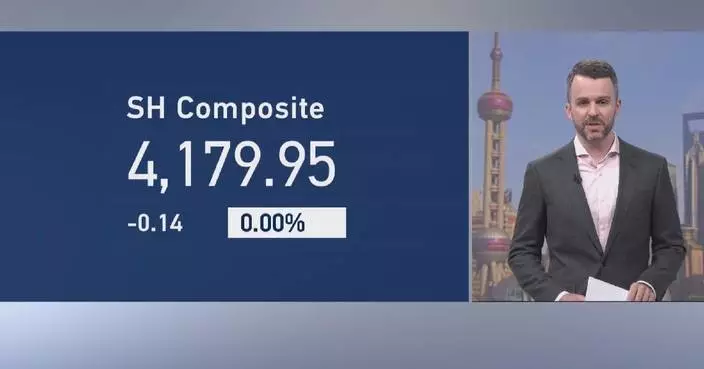
China is to accelerate the implementation of a series of measures to build a more open and inclusive ecosystem of the capital market in the country, Wu Qing, chairman of China Securities Regulatory Commission (CSRC), said on Wednesday.

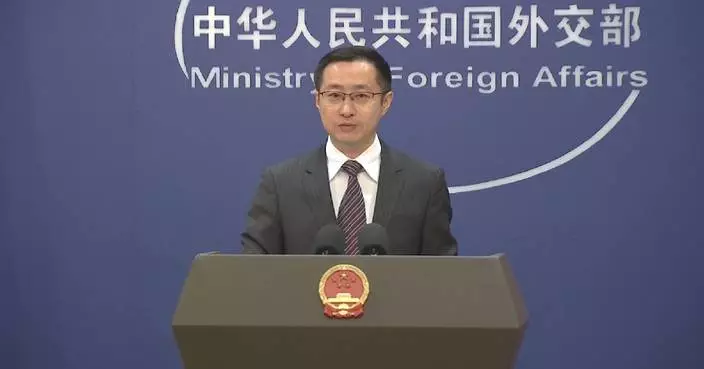
Addressing the opening ceremony of the 2025 Lujiazui Forum in the financial hub of Shanghai, Wu said foreign capital and foreign institutions are important participants in China's capital market.

He said the CSRC will continue to reform and deepen the all-round opening up of markets, products and institutions to promote efficient capital flows.

"In the near future, we will accelerate the implementation of a package of key measures for opening the capital market to foreign investment in 2025, which includes issuing a plan to optimize the qualified foreign institutional investor (QFII) system, further optimizing access management, arrangement for investment operations, etc. We will include more products into the scope of foreign investment transactions and expand the total number of futures and options products that can be traded by QFII to 100 as soon as possible," he said.

In his speech, Wu mentioned the launch of Chinese yuan foreign exchange futures and liquefied natural gas (LNG) futures and options.

"Together with the People's Bank of China, we will launch, on the basis of research, Chinese yuan foreign exchange futures to create favorable conditions for financial institutions and the real economy to better manage exchange rate risks. We will also work with other relevant parties to promote the listing of products such as liquefied natural gas futures and options. We will provide further convenience to various types of foreign capital participating in China's capital market and allow global investors to share China's innovation and development opportunities in a smooth and sufficient way," Wu said.

He also affirmed the significant role which listed companies have played in China's technological innovation.

In 2024, A-share listed companies' research and development investment reached 1.88 trillion yuan (262 billion U.S. dollars), accounting for more than half of the total research and development investment from the whole society. And the number of patents they own accounts for one third of the national total, Wu said.

"Private equity venture capital funds have participated in investment in 90 percent of the companies listed on the Science and Technology Innovation Board and the Beijing Stock Exchange, and more than half of the companies listed on the Growth Enterprise Market. The 'incubator' and 'accelerator' effects continue to be unleashed. The innovation ecosystem has been further constructed. A large number of listed companies have grown and become industry leaders or hidden champions, driving the collaborative innovation of upstream and downstream companies and scientific research institutions. In some fields, a vivid situation has emerged where all parties concerned are uniting efforts to tackle tough problems," he said.

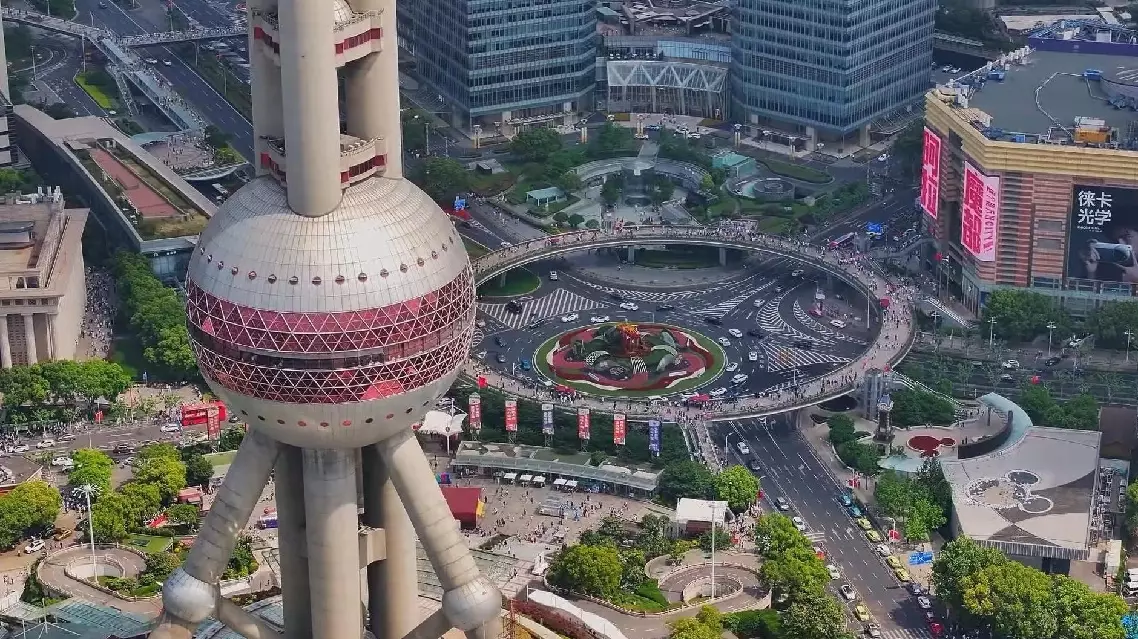
The Lujiazui Forum was created in 2008 as a high-level global platform for government officials, world financial leaders and outstanding scholars to discuss and foster international financial cooperation and further the financial reform and market opening in China. Named after Lujiazui -- the financial district of China’s financial capital of Shanghai, the forum also symbolizes Shanghai’s vision of becoming a leading international financial center.

With the theme of "Financial opening up and cooperation for high-quality development in a changing global economy," the two-day 2025 Forum officially opened in Shanghai on Wednesday morning, gathering policymakers, regulators, and financial leaders from over ten countries and regions.
China to build more open, inclusive capital market ecosystem: top securities regulator
China to build more open, inclusive capital market ecosystem: top securities regulator
Chinese President Xi Jinping's New Year message delivered on the New Year Eve has drawn positive responses from scholars and former officials from several countries, who say that the series of global initiatives proposed by Xi have provided fresh momentum for multilateralism and shared development at a time of growing uncertainty.

While the reactions touched on the broader vision outlined in Xi's New Year message, they also focused on the initiatives Xi has put forward over recent years, particularly the Global Development Initiative, the Global Security Initiative, the Global Civilization Initiative and the newly proposed Global Governance Initiative.

Highlighting the significant importance of these initiatives, they have emphasized the need for equality, inclusiveness and a fairer international order.

"We need a more just international order and a truly multilateral system. China stands almost alone today as a global force actively advancing genuine multilateralism. Therefore, these initiatives are most welcome," said Michael Schumann, chairman of the German Federal Association for Economic Development and Foreign Trade.

Former Lebanese Prime Minister Hassan Diab has placed the emphasis on dialogue and trust-building between civilizations.

"It is essential now more than ever to promote communication and understanding between China and the world to enhance cultural exchanges and build mutual trust. As President Xi has repeatedly emphasized, China supports principles of unity, inclusiveness and peacefulness. These values should guide our collective efforts to build bridges rather than walls," he said.

From a governance perspective, Russian scholar Ekaterina Zaklyazminskaya, head of the Center for World Politics and Strategic Analysis at the Institute of China and Modern Asia under the Russian Academy of Sciences, has viewed the Global Governance Initiative as a structured response to global challenges.

"The recently proposed Global Governance Initiative presents a comprehensive framework of ideas. It prioritizes establishing a more just international order, champions multilateralism, and upholds the principle of 'people first.' Through its concrete practices, financial assistance, and tangible support for multilateral bodies like the U.N., China has demonstrated that its commitments are substantive. China is taking tangible steps toward a fairer and more reasonable global governance system," she said.

Scholars from the Global South also have seen historical echoes in the initiatives.

"Some of the developed and developing countries have highly welcomed the Global Development Initiative, because this initiative emphasizes the need for partnerships -- partnerships that commit resources to end global poverty and pursue common and shared development. The Global Governance Initiative, in my view, echoes again the call that was made by Asian [and] African countries at the Bandung Conference in 1955 for equality, for mutual respect, for respect of territorial integrity, [and] for respect of sovereignty," said Bongani Maimele, director of international relations at South Africa's National School of Government.

"These initiatives are revolutionary in nature. They are reshaping the political philosophy of global governance. Today's world is far more complex than it was 80 years ago, and interdependence among nations has deepened. Therefore, we need new philosophical perspectives to examine our world and new models of engagement to foster a new type of international relations," said Sheradil Baktygulov, director of Kyrgyzstan's Institute of World Policy.

Int'l scholars praise Xi's initiatives, call for stronger multilateralism

Int'l scholars praise Xi's initiatives, call for stronger multilateralism

Recommended Articles